FlyInteresting facts and information
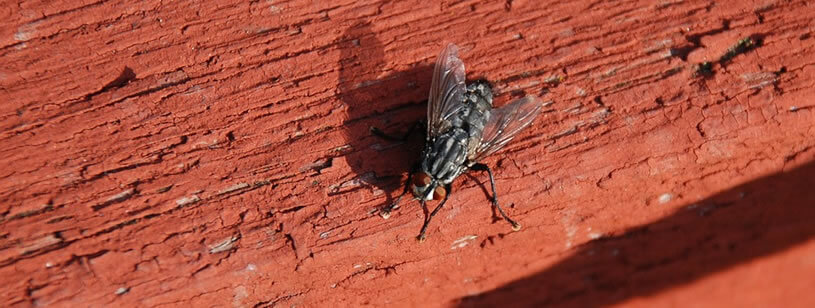
Flies are insects in the order Diptera. Adults have one pair of wings used for flight, with a second pair modified into small balancing organs called halteres. The house fly (Musca domestica) is one familiar example.
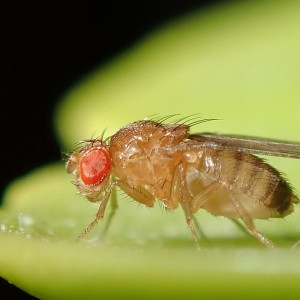
Flies live only a short time but breed very quickly, so their numbers can grow fast where conditions suit them. Some spread diseases, while many others pollinate plants and recycle dead matter. The fruit fly is one of the most important animals in genetic and medical research.
Quick facts
| Common name | Fly |
| Scientific name | Diptera; Musca domestica is the house fly |
| Typical lifespan | About 15-30 days as an adult (house fly) |
| Maximum speed | House fly: about 7-8 km/h; some horse flies are much faster |
| Size | House fly 4-7 mm; flies range from about 0.4 mm to 7 cm |
| Weight | About 12 mg (house fly) |
| Diet type | Varies: rotting matter, fruit, nectar, sweet liquids, blood in some species |
| Main predators | Spiders, lizards, birds, frogs, bats, predatory insects |
| Conservation status | Varies by species; most pest flies are common, while some rare species are threatened |
| Distribution | On all continents, including Antarctica |
| Habitat | Towns, farms, forests, wetlands, tropical and temperate regions |
Interesting facts
- Flies taste with their feet - Taste receptors on their legs let them taste food the moment they land on it.
- Amazing flight - A house fly beats its wings about 200 times per second and can change direction in a fraction of a second.
- All-round vision - Its large compound eyes, each made up of thousands of tiny lenses, give it an almost 360-degree view, so it spots danger quickly.
- Tough survivors - Flies live almost everywhere, and some species breed in very harsh places, such as salty lakes, hot springs and even pools of crude oil.
- Disease carriers - House flies can carry more than 100 kinds of germs, including those that cause typhoid fever, cholera and dysentery.
Records and remarkable features
- Flies are insects in the order Diptera. Adults have one pair of wings used for flight, with a second pair modified into small balancing organs called halteres. The house fly (Musca domestica) is one familiar example.
- One of the largest flies is Gauromydas heros from South America, up to about 7 cm long, while one of the smallest, Euryplatea nanaknihali, is only about 0.4 mm long.
- The only insect native to mainland Antarctica is a fly: the flightless midge Belgica antarctica.
Characteristics
Flies are small but highly adapted insects, with light bodies, fast wings and excellent senses. They detect movement very quickly and react almost instantly to avoid danger.
Main physical characteristics
| Feature | Details |
|---|---|
| Size | House fly (Musca domestica): about 4–7 mm long |
| Weight | About 12 mg (house fly) |
| Wings | One pair of flying wings and a pair of halteres (balancing organs) |
| Flight speed | About 7-8 km/h (house fly) |
| Wingbeats | About 200 per second |
| Eyesight | Compound eyes with thousands of facets |
| Antennae | Used to detect smells and air movements |
| Mouthparts | Sponge-like in house flies, adapted for soaking up liquids; they cannot chew |
Special adaptations
- All-round vision - The fly's compound eyes give it a field of view close to 360 degrees, so it quickly notices movement.
- Lightning-fast reactions - Flies can react to danger in a few hundredths of a second, which is why they are so hard to swat.
- Special mouthparts - House flies cannot chew; they spit saliva onto solid food to dissolve it and then mop it up.
- Agile flight - The halteres, small knobs behind the wings, work like gyroscopes, helping flies keep their balance and make sudden turns.
Habits and behaviour
Flies are very active insects with short lives but a huge ability to reproduce. Many feed on liquid organic matter and are attracted by strong smells, such as those of fermenting food or rotting waste.
Social behaviour
- Solitary but often in crowds - Flies live independently, but many may gather around food and waste.
- Always on the move - They fly constantly and avoid strong wind and extreme temperatures.
- Communication - Males court females with wing movements, and scents (pheromones) help flies find mates.
Feeding and survival methods
- A varied diet - Depending on the species, flies feed on rotting matter, plant juices, nectar, dung or blood.
- Liquid food - House flies dissolve solid food with saliva before sucking it up.
- Living in difficult places - Some species can survive in dry or polluted environments.
Defence and survival strategies
- Escaping predators with fast flight and sudden changes of direction.
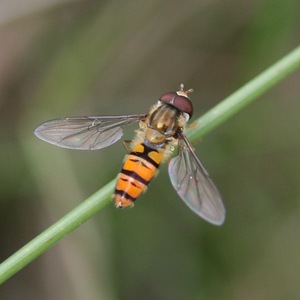
- Mimicry - Many hoverflies have yellow and black stripes like wasps, which scares away predators.
- Living with people - House flies have adapted perfectly to life near humans, using our waste for food and breeding.
Habitat and geographic distribution
Flies live in almost every part of the world, in towns, on farms and in the wild. They adapt easily to different climates, from the tropics to cold regions.
Habitats
| Habitat | Typical places |
|---|---|
| Towns and cities | Homes, restaurants, markets, rubbish dumps |
| Farmland | Farms, barns, pastures, compost heaps |
| Forests and tropical regions | Damp areas with dense vegetation |
| Dry regions | Deserts, savannas, steppes |
| Wetlands and waterside | Rivers, lakes, swamps |
Geographic distribution
- Worldwide - Flies live on every continent.
- North America and Europe - House flies are very common, especially near people and farm animals.
- Asia and Africa - Many tropical flies live there, including tsetse flies, which spread sleeping sickness in Africa.
- Antarctica - A tiny flightless midge is native there, and some flies have been accidentally brought to research stations.
Impact of human activities on fly populations
- Towns help some flies - Cities and farms provide food and shelter for house flies and other pest species.
- Pesticides reduce flies - On farms, pesticides kill flies but also harm their natural predators and useful flies, such as pollinators.
- Climate change - Higher temperatures can speed up the fly life cycle, leading to larger populations in warm seasons.
Flies are very adaptable insects that can live almost anywhere, which explains their evolutionary success and worldwide spread.
Diet and feeding
Flies eat many kinds of food, especially liquids and soft organic matter. Although they are linked with rubbish, they play an important role in nature by breaking down dead plants and animals.
Types of food
| Type of food | Examples |
|---|---|
| Sweet liquids | Nectar, fruit juice, honeydew |
| Organic waste | Rotting fruit, household rubbish, food scraps |
| Dead matter | Dead animals, dung |
| Animal fluids | Tears, sweat, blood (in blood-feeding species) |
Feeding methods
- Digestion outside the body - House flies cannot chew solid food, so they pour saliva and digestive juices onto it and soak up the liquid.
- The proboscis - Their sponge-like mouthparts are specialised for soaking up liquids and soft food.
- Role in the ecosystem - Flies and their maggots help break down and recycle organic matter and are food for many animals.
Reproduction and life cycle
Flies have a very fast life cycle, so their numbers can explode when conditions are right. A female house fly can lay about 500 eggs, sometimes more, in her lifetime.
Life cycle stages
| Stage | Approximate duration | Details |
|---|---|---|
| Eggs | 8-24 hours | Laid in batches of about 75-150 on rotting organic matter. |
| Larva (maggot) | 4-10 days | Maggots feed constantly, grow fast and avoid light. |
| Pupa | 3-6 days | The last larval skin hardens into a case, inside which the maggot turns into an adult. |
| Adult | 15-30 days | Adult flies can breed within a few days of emerging from the pupa. |
Reproductive behaviour
- Females look for nutrient-rich places to lay their eggs, such as rotting matter, dung or dead animals.
- Development is fast, especially in warm, damp conditions; a house fly can go from egg to adult in about a week.
- Rapid growth - In theory, one pair of flies could have millions of descendants in a single summer if all of them survived.
Because of its short life cycle and high breeding rate, the house fly is one of the most widespread insects and one of the hardest to control.
Name and history
People have noticed and written about flies since ancient times, linking them both with death and decay and with toughness and survival.
Origin of the name
- The English word "fly" comes from Old English flēoge, meaning "the one that flies"; the Latin word is musca.
- The scientific name Musca domestica was given by Carl Linnaeus in 1758 and refers to the house fly, the best-known species.
- The order name Diptera means "two wings" in Greek, because flies have only one pair of flying wings.
Taxonomic classification
| Taxonomic category | Name |
|---|---|
| Kingdom | Animalia |
| Phylum | Arthropoda |
| Class | Insecta |
| Order | Diptera |
| Family | Muscidae |
| Genus | Musca |
| Species | Musca domestica |
Flies in history and culture
- Ancient Egypt - The fly was a symbol of persistence and courage, and golden fly pendants were given as military awards for bravery.
- The Bible - Swarms of flies were one of the plagues of Egypt.
- Beelzebub, "Lord of the Flies" - In later Jewish and Christian tradition, Beelzebub became the name of a demon, and his name was interpreted as "lord of the flies".
- Science - The fruit fly Drosophila melanogaster is one of the most important animals in genetic research because it breeds quickly and is easy to study.
Flies are an ancient group of insects that appeared more than 240 million years ago and have adapted to almost every environment, becoming a constant part of human life.
Cultural significance and mythology
Throughout history, flies have been seen both as symbols of decay and disease and as symbols of persistence and survival. They appear often in mythology, literature and art.
Flies in mythology and folk belief
- Ancient Egypt - Flies stood for persistence and courage, and brave soldiers received golden fly-shaped awards, such as those found in the tomb of Queen Ahhotep.
- The Bible and Jewish-Christian tradition - In the plagues of Egypt, swarms of flies are a divine punishment.
- Beelzebub, "Lord of the Flies" - In Christian demonology, Beelzebub is a powerful demon, often linked with flies, decay and corruption.
- Japan - The poet Kobayashi Issa wrote a famous haiku asking people not to swat a fly, because "it wrings its hands, it wrings its feet" as if begging for mercy.
Fly symbolism
- Decay and death - Because flies gather on dead bodies and rubbish, they are linked with decay and moral corruption.
- Persistence and adaptability - Their ability to survive almost anywhere makes them symbols of resilience.
- Time and mortality - Their short lives make flies a symbol of passing time and the fragility of life.
Conservation status and threats
Many flies are among the most widespread and resilient insects on Earth. However, some rare species are threatened by habitat destruction, pesticides and climate change.
Conservation status
| Species or group | Situation |
|---|---|
| House fly (Musca domestica) | Very common worldwide; not threatened |
| Tsetse flies (Glossina spp.) | Controlled or eliminated in some areas because they spread sleeping sickness |
| Hoverflies | Important pollinators; a European assessment found that more than a third of species are threatened |
| Delhi Sands flower-loving fly | A rare Californian fly, the first fly listed as Endangered under US law (1993) |
Factors that affect fly populations
- Climate change - Higher temperatures can speed up the life cycle of pest flies, while harming species adapted to cool habitats.
- Pesticides and insecticides - Chemicals affect not only pest flies but also useful species, such as pollinating hoverflies.
- Habitat change - Deforestation and urban growth can wipe out specialised species, while opportunistic species, such as the house fly, thrive.
- Control programmes - Flies that spread disease, such as tsetse flies, are the target of programmes to reduce their numbers.
Conservation and control efforts
- Controlling harmful flies - In Africa, tsetse flies are fought with traps and by releasing sterile males; this method eliminated them from the island of Zanzibar in 1997.
- Protecting pollinating flies - Scientists monitor hoverflies and other pollinators to reduce the harm caused by pesticides.
- Genetic studies - Researchers study fly genes to develop better ways of controlling pest species.
Despite their bad reputation, flies are an essential part of nature: they pollinate plants, recycle dead matter and feed many other animals.
In popular culture
Flies appear in literature, films and science, either as symbols of decay or as fascinating examples of survival.
Flies in literature
- Lord of the Flies (William Golding, 1954) - A novel about a group of boys stranded on an island whose society falls into violence and chaos.
- The title of Golding's novel is a translation of the name Beelzebub, the demon linked with flies.
Flies in film and television
- The Fly (1958 and 1986) - Science-fiction horror films about a scientist who merges with a fly during a teleportation experiment; the 1986 version was directed by David Cronenberg.
- Breaking Bad ("Fly", 2010) - A famous episode in which a fly in the laboratory becomes a symbol of the hero's guilt and obsession.
- A Bug's Life (1998) - In this Pixar film, flies appear as rowdy circus spectators.
Flies in video games and comics
- Animal Crossing - Flies can be caught near rubbish and rotting food.
- Marvel Comics - The Fly is a Spider-Man villain who gained fly-like powers.
Flies as a cultural symbol
- In art - Painters of the 15th-17th centuries sometimes painted a realistic fly on a picture, as a reminder of death or to show off their skill.
- In science - The fruit fly Drosophila melanogaster is one of the most studied animals in genetics and has helped scientists win several Nobel Prizes.