WolfInteresting facts and information
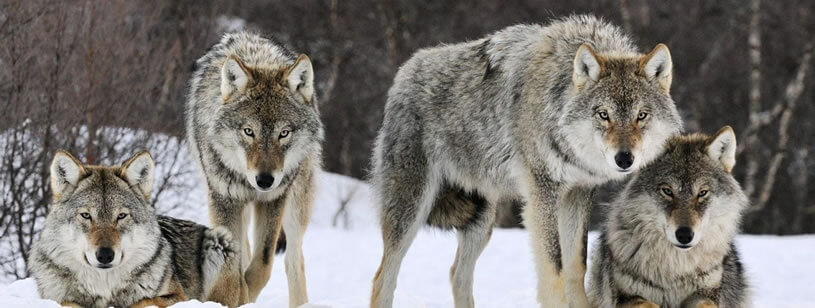
The grey wolf (Canis lupus) is a carnivorous mammal in the dog family (Canidae). It lives in North America, Europe and Asia, including the Arabian Peninsula. Its habitats range from tundra and forests to mountains, steppes and some deserts.
Wolves are known for their complex social life. Most live in family packs that cooperate to hunt and raise their young. Throughout history, wolves have been feared and hunted, but also honoured, and they play a big part in mythology, folklore and popular culture.
Quick facts
| Common name | Wolf |
| Scientific name | Canis lupus |
| Typical lifespan | Usually 6-8 years in the wild, up to about 16 years in captivity |
| Maximum speed | About 50-60 km/h in short bursts |
| Dimensions | 65-85 cm at the shoulder; body length 105-160 cm |
| Weight | 25-80 kg, depending on the region |
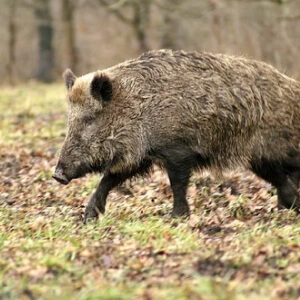
| Diet type | Carnivore (deer, wild boar, elk, hares, rodents) |
| Main predators | Adults have few natural enemies apart from other wolves; humans are the main threat |
| Conservation status | Least Concern (LC) globally; the situation of local populations may differ |
| Distribution | North America, Europe and Asia, including the Arabian Peninsula |
| Habitat | Forests, tundra, mountains, plains, deserts |
- Primary category:Mammals
- Explore this animal's categories:Animals of AsiaAnimals of EuropeAnimals of North AmericaAnimals of RomaniaAnimals of Romania’s forestsAnimals that hunt in groupsAnimals that live in groupsCanidsCarnivoresForest animalsFurry animalsLive-bearing animalsMammalsMammals of RomaniaMountain animals of RomaniaNocturnal animalsPredatory animals of RomaniaProtected animals of RomaniaVertebratesWWild animals
Interesting facts
- A rich language - Wolves communicate with howls, barks, growls, whines, scent and body language.
- The largest member of the dog family - Grey wolves are the largest wild canids, with very powerful jaws.
- Wolves can travel more than 50 km in a day - Thanks to their stamina, they cover huge distances in search of food.
- Hunting tactics vary - Wolves adapt to their habitat and prey: in forests they often use cover to get close, while in open country they may chase prey for long distances.
- Wild wolf packs are usually families: a breeding pair and their offspring from the last few years. The old idea of fierce "alpha" fights comes mainly from studies of unrelated wolves in captivity.
Records and remarkable features
- The grey wolf (Canis lupus) is a carnivorous mammal native to North America and Eurasia. Wild packs are usually family groups in which adults and young cooperate. Behaviour and prey vary between regions.
Characteristics
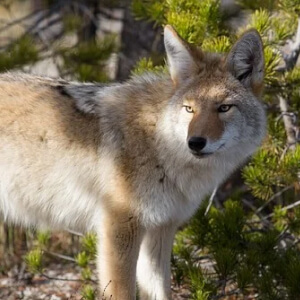
The grey wolf (Canis lupus) is the largest member of the dog family (Canidae). It has a strong body, long legs and great intelligence, which make it a very effective predator. Wolves vary in size, colour and behaviour from region to region, and several subspecies are recognised.
Main physical characteristics
| Feature | Details |
|---|---|
| Size | 65-85 cm at the shoulder; body length 105-160 cm |
| Weight | 25-80 kg, depending on the region |
| Colour | Grey, white, black, reddish or brown |
| Fur | A double coat, thicker in cold regions and thinner in hot ones |
| Ears | Upright and triangular, able to pick up sounds from far away |
| Tail | Bushy; used for communication and balance |
| Paws | Large, helping wolves move over snow and rough ground |
| Senses | Excellent smell and hearing, and eyes that are very good at spotting movement |
Special adaptations
- Fur suited to the climate - Wolves in cold areas have thick, insulating fur, while those in warm areas have shorter, thinner fur.
- Long, strong legs - Allow fast running and great endurance.
- A very strong bite - Powerful enough to crack the bones of prey.
- Feast and famine - Wolves can eat a large amount of meat in one meal and then go for days without food.
The grey wolf and other species called wolves
Grey wolves vary from region to region in size, colour and adaptations. The Arctic wolf (Canis lupus arctos) is a subspecies of the grey wolf. The red wolf and the Ethiopian wolf are recognised as separate species by the Mammal Diversity Database.
| Common name | Scientific name | Classification |
|---|---|---|
| Grey wolf | Canis lupus | Species found in North America and Eurasia |
| Arctic wolf | Canis lupus arctos | Subspecies of the grey wolf |
| Red wolf | Canis rufus | Separate species from North America |
| Ethiopian wolf | Canis simensis | Separate species found only in Ethiopia |
Together, these animals show how wolves have adapted to very different environments, from the Arctic to the African highlands.
Habits and behaviour
Wolves are social animals that usually live in family packs. Pack members cooperate in hunting, defending their territory and raising the young.
Social behaviour
- A typical wild pack is a family: a breeding pair and their offspring from one or more years. The parents usually lead the pack.
- Strong family ties - The whole pack helps raise the pups, which learn hunting skills through play.
- Howling - Wolves howl to keep in contact with pack members and to mark their territory. Each wolf has its own voice.
Feeding and hunting methods
- Flexible meat-eaters - They hunt deer, wild boar, elk, moose and smaller animals such as hares and rodents, and they also eat carrion when food is scarce.
- Hunting as a team - Wolves work together to single out, chase and tire large prey.
- Long journeys - They can travel more than 50 km a day across large territories in search of food.
Defence and survival strategies
- Well-marked territories - A pack's territory is often about 100-1,000 km², and even larger in the Arctic.
- Avoiding other packs - Wolves use howls and scent marks to warn rival packs and avoid fights.
- Protecting the young - The whole pack guards the pups, especially while they are small.
Wolves are highly intelligent and adapt their behaviour to their surroundings.
Habitat and geographic distribution
The grey wolf once had one of the largest ranges of any land mammal. It lives in many habitats, from forests and mountains to tundra and deserts.
Habitat types
| Habitat | Main regions |
|---|---|
| Temperate forests | Europe, North America, Asia |
| Arctic tundra | Canada, Alaska, Greenland, Siberia |
| Mountains | Carpathians, Rocky Mountains, Himalayas |
| Deserts and steppes | Middle East, Central Asia |
Geographic distribution
- North America - Wolves live in Canada, Alaska and parts of the USA, including Yellowstone. A small population of Mexican wolves lives in the southwestern USA and northern Mexico.
- Europe - Wolves live in Romania, Spain, Italy, Poland, Scandinavia and many other countries, and are returning to areas where they had disappeared.
- Asia - Wolves are found in Russia, Mongolia, China, India and elsewhere.
- Arabian Peninsula — Small, desert-adapted grey wolves also live in arid parts of the Middle East. The Ethiopian wolf (Canis simensis) is a separate species, not an African population of the grey wolf.
Human impact on wolves
- Habitat loss - Deforestation and spreading settlements reduce their territories.
- Hunting and conflict with farmers - In some areas, wolves are still killed to protect livestock.
- Recovery - Wolves were reintroduced to Yellowstone National Park in 1995, and in Europe they have spread back naturally into many areas thanks to legal protection.
Wolves are important predators that help keep ecosystems healthy by controlling the numbers of grazing animals.
Diet and feeding
Wolves are opportunistic carnivores. They mainly eat large mammals, but they also take other food when it is available. As top predators, they help regulate populations of herbivores.
Types of food
| Type of prey | Examples and context |
|---|---|
| Large herbivores | Deer, wild boar, elk, moose, bison |
| Small mammals | Hares, rabbits, rodents, marmots |
| Birds and eggs | Pheasants, ducks, geese |
| Fish and marine food | Salmon and seals, eaten by some coastal wolves in North America |
| Carrion | Dead animals they find |
Feeding methods
- Hunting as a team - Wolves use coordinated tactics, tracking, ambushing or surrounding prey.
- Seasonal changes - In summer, they eat more small mammals and even some berries; in winter, they rely more on large herbivores.
- Going without food - When food is scarce, wolves can survive a week or two without eating.
Adaptations for hunting
- A powerful bite - Strong enough to break large bones.
- Sharp teeth - Long canine teeth grip prey, and strong back teeth slice meat.
- Long legs and stamina - Allow them to chase prey over long distances.
Wolves are very efficient hunters, and their teamwork helps the whole pack survive.
Reproduction and life cycle
In most packs, only the parents breed. Their offspring help raise the next litter before many of them leave to start packs of their own.
Life cycle stages
| Stage | Approximate timing | Details |
|---|---|---|
| Mating | January - March | Usually only the breeding pair of the pack mates |
| Pregnancy | About 63 days | The female digs a den or uses a cave or hollow |
| Birth of pups | April - May | Usually 4-6 pups |
| Care of the young | 6-10 months | The whole pack helps feed the pups |
| Maturity | About 2 years | Some young wolves stay in the pack, while others leave |
| Lifespan | Usually 6-8 years in the wild, up to about 16 years in captivity | Many die from starvation, disease, fights with other wolves or human activity |
Reproductive behaviour
- Breeding pairs often stay together for several years, sometimes for life.
- Born in a safe den - The pups are born blind and deaf and depend completely on their mother.
- Learning through play - The pups develop hunting skills by playing with their brothers and sisters.
Because the whole family helps, pups raised in a pack have a better chance of survival.
Name and history
Wolves are among the most studied and most mythologised animals in the world and have appeared in folklore, myths and science for thousands of years.
Origin of the name
- The English word "wolf" comes from Old English wulf, from an ancient root that also gave the Latin lupus.
- The scientific name Canis lupus means "dog wolf": canis is Latin for "dog" and lupus for "wolf".
- Other names - loup in French, lupo in Italian, lup in Romanian and volk (волк) in Russian.
Taxonomic classification
| Taxonomic category | Name |
|---|---|
| Kingdom | Animalia |
| Phylum | Chordata |
| Class | Mammalia |
| Order | Carnivora |
| Family | Canidae |
| Genus | Canis |
| Species | Canis lupus |
Wolves in history
- Romulus and Remus (ancient Rome) - According to legend, the twin founders of Rome were nursed by a she-wolf.
- Norse mythology - The wolves Fenrir, Sköll and Hati are linked with power, chaos and the end of the world.
- Romanian history - The Dacians, ancestors of the Romanians, carried a battle standard with a wolf's head, the Dacian Draco.
- Wolf hunting - Wolves were hunted heavily for centuries and disappeared from much of Western Europe, including Britain.
- The ancestor of the dog - Dogs were domesticated from ancient wolves, probably more than 15,000 years ago.
Wolves have been seen both as protectors and as threats, and they have influenced human culture for thousands of years.
Cultural significance and mythology
Wolves appear in the myths and folklore of many cultures as symbols of strength, intelligence, freedom and danger. Some peoples honoured them, while others feared and persecuted them.
Wolves in mythology and folk belief
- The Dacians - The wolf was an important symbol for the Dacians, and their battle standard, the Draco, had a wolf's head and a serpent's body.
- Roman mythology - Romulus and Remus, the legendary founders of Rome, were said to have been nursed by a she-wolf.
- Norse mythology - The wolves Fenrir, Sköll and Hati are bound up with the fate of the gods and the end of the world (Ragnarök).
- Asian legends - Mongolian legend traces Genghis Khan's ancestry to a blue-grey wolf, and in Japan wolves were honoured at shrines as protectors of crops.
- Medieval European folklore - Wolves were often feared as dangerous beasts or linked with witches and werewolves, which encouraged their persecution.
Wolf symbolism
- Strength and freedom - Wolves are linked with independence and survival in the wild.
- Loyalty and family - Wolf packs are close family groups that work together.
- Danger and fear - In some cultures, wolves are seen as fierce predators, which inspired stories about werewolves and monsters.
Wolves have been both respected and feared, and their cultural influence is still strong today.
Conservation status and threats
Wolves were hunted heavily over the past few centuries and disappeared from many regions. Their numbers have recovered in many places thanks to protection, but some wolf populations and species are still in danger.
Conservation status
| Species | Global IUCN status |
|---|---|
| Grey wolf (Canis lupus) | Least Concern (LC) |
| Ethiopian wolf (Canis simensis) | Endangered (EN) |
| Red wolf (Canis rufus) | Critically Endangered (CR) |
The grey wolf is not threatened globally, but the red wolf and the Ethiopian wolf are separate species and are much rarer.
Main threats
- Habitat loss - Deforestation and human expansion shrink wolf territories.
- Conflict with farmers - Wolves sometimes kill livestock, which leads to revenge killings.
- Less prey - Overhunting of deer and other wild prey reduces wolves' food.
- Poaching - In some areas, wolves are killed illegally for their fur or as trophies.
Conservation efforts
- Reintroduction and recovery - Wolves were reintroduced to Yellowstone National Park (USA) and have returned naturally to many parts of Europe.
- Protection laws - In many countries, wolf hunting is strictly controlled or banned.
- Education and prevention - Programmes promote guard dogs and fences to reduce conflict between people and wolves.
Wolves are recovering in many regions, but in some areas they remain vulnerable.
In popular culture
Wolves in literature
- White Fang (Jack London, 1906) - A novel about a wolf-dog and his struggle to survive.
- The Jungle Book (Rudyard Kipling, 1894) - The boy Mowgli is raised by a pack of wolves.
- Steppenwolf (Hermann Hesse, 1927) - A philosophical novel about human nature, inspired by the image of the lone wolf.
- Little Red Riding Hood - This fairy tale helped make the wolf a frightening villain in children's stories.
Wolves in film and television
- Balto (1995) - An animated film about a half-wolf sled dog who carries medicine to sick children in Alaska.
- Game of Thrones (2011-2019) - Giant direwolves are the symbol of House Stark.
Wolves in video games and other media
- The Legend of Zelda: Twilight Princess - The hero, Link, can transform into a wolf.
- The Witcher - The main character, Geralt of Rivia, is known as the White Wolf and wears a wolf medallion.
- Ōkami (2006) - In this video game, the player controls a white wolf who is the Japanese sun goddess Amaterasu.
Wolves as a cultural symbol
- National symbols - The wolf is a national symbol of Italy and Turkey.
- Tattoos and modern art - The wolf is a popular image of a free spirit and inner strength.
Did you know? About wolf
- To help newborn pups pee and poo, the mother licks their bellies.
- The grey wolf is the largest wild member of the dog family, which also includes domestic dogs, coyotes, dingoes, jackals, foxes and African wild dogs. Related profile: Dog. Related profile: Jackal.
- Wolves walk and run on their toes and can reach about 50-60 km/h in short bursts.
- A wolf's fur has two layers: a coarse outer layer that sheds water and dirt, and a soft, insulating underfur that is shed every year.
- Breeding pairs often stay together for several years, sometimes for life.
- Wolf pups are born with blue eyes, which change to yellow or amber when they are a few months old.
- Pregnancy lasts about 63 days, and the pups are born deaf and blind.
- Wolves have excellent hearing and can hear howls several kilometres away.
- Adult wolves have 42 teeth, adapted for gripping, slicing meat and crushing bone.
- A hungry wolf can eat about 9 kg of meat in one meal.
- Packs can be as small as 2-3 wolves or have more than 20 members.
- Wild wolf packs are usually families: a breeding pair and their offspring from the last few years.
- Coastal wolves can swim between islands. Raincoast researchers report wolf populations on islands up to 13 km (about 8 miles) offshore.
- In Montana alone, more than 80,000 wolves were killed for bounties between 1883 and 1918.
- Wolves often answer people who imitate their howls, which helps scientists count them.
- The smallest grey wolves, in the Arabian Peninsula, weigh about 18 kg, while the largest, in Alaska, Canada and Russia, can weigh up to about 80 kg.
- Wolves howl to contact distant pack members, to gather before a hunt, to warn rival packs away and to find a mate.
- Wolves see fewer colours than people, but they are much better at spotting movement.
- Ravens often follow wolves to feed on the remains of their kills.
- Dogs are descended from ancient wolves that were domesticated more than 15,000 years ago.