LobsterInteresting facts and information
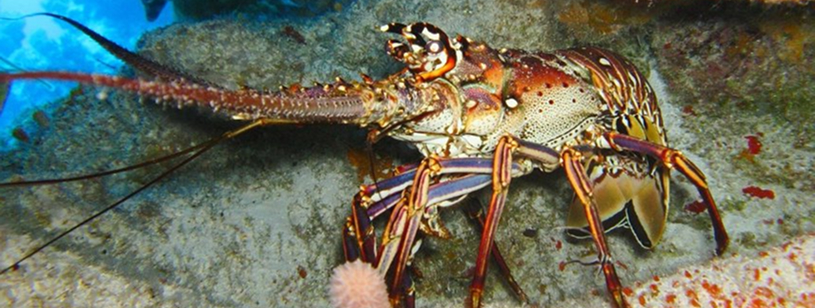
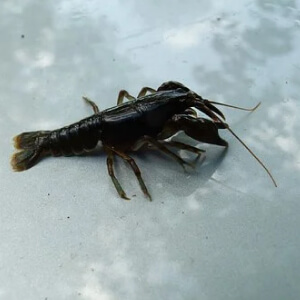
Clawed lobsters are marine crustaceans in the family Nephropidae. They have a hard external skeleton and prominent claws. To grow, they shed their old covering through a process called moulting.
Lobsters are mostly active at night and feed on molluscs, crabs, worms, fish and dead animals. Because their meat is highly valued, they are heavily fished, and lobster fishing is regulated in many countries.
As predators and scavengers, lobsters play an important role in seabed ecosystems.
Quick facts
| Common name | Lobster |
| Scientific name | Nephropidae (clawed lobsters) |
| Typical lifespan | Often several decades; American lobsters may live 50 years or more |
| Maximum speed | Varies with species or individual, distance and conditions |
| Dimensions | Usually about 20 - 60 cm long |
| Weight | Usually about 0.5 - 4 kg (record: about 20 kg) |
| Diet type | Carnivore / Omnivore (molluscs, crabs, worms, fish, sea urchins, some algae) |
| Main predators | Large fish such as cod, seals, octopuses, humans |
| Conservation status | Assess separately by species and population; different taxa and regions have different needs |
| Distribution | North Atlantic and Mediterranean; smaller clawed lobsters in deep waters of other oceans |
| Habitat | Rocky, sandy or muddy seabed, from shallow coasts to deep water |
- Primary category:Crustaceans
- Explore this animal's categories:
Interesting facts
- Long lives - American lobsters (Homarus americanus) are thought to live for 50 years or more, although the age of a lobster is hard to measure.
- They turn red when cooked - Live lobsters are usually greenish-brown or blue-black; cooking frees a red pigment called astaxanthin from the protein that hides its colour.
- Regrowing limbs - If a lobster loses a claw, leg or antenna, it can gradually regrow it over several moults.
- Lobsters can continue growing through moulting, but they are not immortal. Moulting requires energy and can fail.
- Two different claws - A clawed lobster has a heavy "crusher" claw for breaking shells and a sharper "cutter" claw for tearing food.
- A giant lobster - The heaviest lobster on record was an American lobster caught off Nova Scotia, Canada, in 1977; it weighed about 20 kg.
Records and remarkable features
- Clawed lobsters are marine crustaceans in the family Nephropidae. They have a hard external skeleton and prominent claws. To grow, they shed their old covering through a process called moulting.
- Rare colours - About one in two million American lobsters is bright blue, and even rarer lobsters are yellow, orange, half-and-half or almost white.
Characteristics
Lobsters are crustaceans with a segmented body, a hard shell and strong claws. They belong to the order Decapoda, which also includes crabs, shrimps and crayfish.
The lobster's body is built for protection and for handling food, with a hard exoskeleton and two different claws.
Main physical characteristics:
| Characteristic | Details |
|---|---|
| Body shape | Long and segmented, covered by a hard exoskeleton |
| Size | Usually about 20-60 cm long |
| Weight | Usually about 0.5-4 kg; record about 20 kg |
| Colour | Greenish-brown, blue-black or blue; turns red when cooked |
| Claws | A large crusher claw and a smaller cutter claw |
| Antennae | Long antennae for touch and short antennules for smell |
| Legs | 5 pairs of legs, the first pair forming the claws |
| Tail | Powerful, used to shoot backwards when escaping |
Special adaptations:
- Colour variations - Rare genetic variations make some lobsters blue, yellow, orange or almost white.
- Regrowing limbs - A lost claw or leg grows back over several moults.
- Strong claws - The crusher claw can crack the shells of molluscs and crabs.
- Senses - Lobsters smell with their small antennules and taste with tiny hairs on their legs and mouthparts.
- Moulting - To grow, a lobster sheds its whole shell; for some days after, its new shell is soft and it is very vulnerable.
Habits and behaviour
Lobsters are mostly solitary and territorial. They hide in rocky crevices or burrows by day and come out mainly at night to feed.
Social behaviour:
- Territorial - Lobsters defend their shelters and fight rivals with their claws.
- Chemical messages - Lobsters squirt urine from openings near their heads to send chemical signals to other lobsters, for example during fights and courtship.
- Dominance - Large, dominant males hold the best shelters and are preferred by females.
Feed and hunting methods:
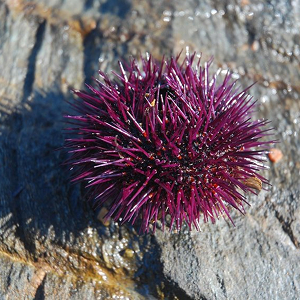
- Bottom predators - They eat molluscs, crabs, sea urchins, worms and fish.
- Scavengers - They also eat dead animals, helping to recycle nutrients.
- Using claws and smell - They find food by smell, crush shells with the large claw and hold or tear food with the smaller one.
Defense and Survival Strategies:
- Backward escape - When in danger, lobsters flip their tails and shoot backwards through the water.
- Camouflage - Their dark colours help them blend in with the seabed.
- Dropping a limb - A lobster caught by a claw or leg can drop it and escape, then grow a new one.
Habitat and geographic distribution
Clawed lobsters live mainly in cold and temperate seas, on rocky, sandy or muddy bottoms where they can hide or dig burrows.
Habitat types:
| Habitat | Predominant regions |
|---|---|
| Rocky bottoms | North Atlantic, Mediterranean |
| Coastal waters | Gulf of Maine, North Sea |
| Muddy bottoms | Norway lobster (Nephrops norvegicus) in the North Atlantic and Mediterranean |
| Deep waters | Some small clawed lobsters live in the deep sea |
Geographic distribution:
- Western North Atlantic - The American lobster (Homarus americanus) lives from Canada to the eastern USA.
- Eastern North Atlantic and Mediterranean - The European lobster (Homarus gammarus) is an important species for fishing.
- Spiny lobsters - Spiny lobsters, such as the Caribbean spiny lobster (Panulirus argus), belong to a different family and live in warmer waters around the world.
- Deep seas - Several small clawed lobster species live in deep waters of other oceans.
Impact of climate change and human activities:
- Ocean warming - Warming has caused the American lobster to decline in southern New England and move northwards.
- Fishing - Lobsters are caught intensively, and some stocks have declined.
- Pollution - Pollutants can affect the development and health of lobsters.
- Ocean acidification - Changes in seawater chemistry may affect the shells of young lobsters.
Diet and feeding
Lobsters are opportunistic predators and scavengers that feed mainly at night on a wide range of bottom animals and some plant matter.
Types of food consumed:
| Food group | Examples |
|---|---|
| Molluscs | Mussels, clams, snails |
| Crustaceans | Crabs, small shrimps, sometimes other lobsters |
| Echinoderms | Sea urchins, sea stars |
| Marine worms | Polychaete worms and other bottom-dwelling animals |
| Fish | Small fish, dead or alive |
| Algae | Seaweed, eaten in small amounts |
Feeding methods:
- Two claws - The crusher claw breaks shells, while the cutter claw holds and tears food.
- Night feeding - Lobsters search for food at night among rocks and on the seabed.
- Scavenging - Eating dead animals helps recycle nutrients in marine ecosystems.
Lobsters are eaten by fish, seals and octopuses, and when food is scarce or in crowded traps, they may eat each other.
Reproduction and life cycle
Female lobsters carry their eggs under their tails for many months. Lobsters keep growing throughout their lives by moulting.
Life cycle stages:
| Stage | Approximate duration | Characteristics |
|---|---|---|
| Mating | Usually summer | A female mates soon after moulting, while her shell is still soft. |
| Carrying eggs | About 9-12 months | The female carries thousands of eggs (up to about 100,000 in large females) under her tail. |
| Planktonic larva | Several weeks | The larvae drift near the surface and moult several times. |
| Juvenile | Several years | Young lobsters settle on the bottom and hide in shelters. |
| Sexual maturity | About 5-8 years | Lobsters can breed and continue to grow. |
Reproductive behavior:
- Choosing a partner - A female visits the den of a dominant male, and they mate after she moults.
- Carrying eggs - The female carries her eggs attached to her swimmerets and keeps them clean and supplied with oxygen.
- Few survivors - Only a tiny fraction of the larvae survive to become adults.
Moulting is essential for growth, but it is risky: for a few days the lobster's new shell is soft and it can easily be eaten.
Name and history
Lobsters have been eaten for thousands of years and have been both cheap everyday food and expensive luxury, depending on the time and place.
Origin and etymology of the name:
- "Lobster" - The word comes from Old English loppestre, which is related to the Latin locusta, used for both locusts and lobsters.
- Scientific name - The family name Nephropidae comes from the genus Nephrops, from the Greek for "kidney eye", after the kidney-shaped eyes of the Norway lobster.
- Other names - In cooking, the Norway lobster is also known as langoustine or scampi.
Taxonomic classification:
| Taxonomic category | Name |
|---|---|
| Kingdom | Animalia |
| Phylum | Arthropoda |
| Class | Malacostraca |
| Order | Decapoda |
| Family | Nephropidae |
Lobsters in history and culture:
- Ancient times - Greeks and Romans ate lobsters and depicted them in mosaics.
- Colonial North America - In the 17th and 18th centuries, lobsters were so plentiful in New England that they were considered cheap food and were even used as fertiliser.
- Luxury food - With the growth of railways and restaurants in the 19th and 20th centuries, lobster became an expensive delicacy.
- Animal welfare - In 2021, the UK recognised lobsters, crabs and other decapods as sentient animals in law.
Cultural significance and mythology
Lobsters appear in art, literature and festivals, as symbols of the sea, of luxury and of the fishing communities that depend on them.
Lobsters in art and popular beliefs:
- Surrealist art - Salvador Dalí's "Lobster Telephone" (1936) is one of the best-known works of surrealism.
- Maine - The lobster is a symbol of the US state of Maine, which holds a famous lobster festival every summer.
- A famous pet - The French poet Gérard de Nerval is said to have walked a pet lobster on a ribbon through Paris.
- Fishing communities - In Canada, the USA and Europe, lobster fishing is an important tradition for many coastal villages.
Lobster symbolism:
- Long life - Because they keep growing and live a long time, lobsters are sometimes used as symbols of longevity.
- Luxury - Lobster is often seen as a symbol of expensive, special meals.
- Lifelong love - In popular culture, the idea that lobsters "mate for life" is a romantic myth; in reality, they do not.
Conservation status and threats
Lobsters are heavily fished, and some stocks have declined. Most clawed lobster species are not threatened, but climate change and fishing affect their future.
Conservation status
| Species | Status (IUCN) |
|---|---|
| American lobster (Homarus americanus) | Least Concern; declining in southern New England |
| European lobster (Homarus gammarus) | Least Concern; heavily fished |
| Caribbean spiny lobster (Panulirus argus), a different family | Data Deficient |
Main threats:
- Overfishing - Lobsters are caught in large numbers, and some stocks have declined.
- Ocean warming - Higher temperatures have caused declines in the southern parts of their range and increase shell disease.
- Marine pollution - Pollutants can harm the development and reproduction of lobsters.
- Ocean acidification - May weaken the shells of larvae and young lobsters.
- Illegal fishing - Catching undersized lobsters or egg-carrying females reduces the number of breeding animals.
Conservation efforts:
- Fishing rules - Many countries have minimum and maximum sizes and closed seasons.
- Protecting egg-bearing females - In some fisheries, egg-carrying females are marked with a notch in the tail and must be released.
- Marine reserves - Protected areas in the North Atlantic and Mediterranean help lobster populations.
- Hatcheries - Some projects raise young lobsters and release them to support wild stocks.
Careful fisheries management is essential to keep lobster populations healthy.
In popular culture
Lobsters in literature:
- "Alice's Adventures in Wonderland" (Lewis Carroll, 1865) - The Mock Turtle and the Gryphon describe a dance called the "Lobster Quadrille".
- "Consider the Lobster" (David Foster Wallace, 2004) - A famous essay about a lobster festival and whether lobsters feel pain.
- "The Lobster Chronicles" (Linda Greenlaw, 2002) - A book about life as a lobster fisherman in Maine.
Lobsters in cinematography and television:
- "The Lobster" (2015) - A film by Yorgos Lanthimos in which single people who do not find a partner are turned into animals; the hero chooses to become a lobster.
- "SpongeBob SquarePants" - Larry the Lobster is a muscular lifeguard.
Lobster as a cultural symbol:
- Luxury food - Lobster is often served in expensive restaurants and at special occasions.
- Maine and Nova Scotia - The lobster is a symbol of these coastal regions and appears on souvenirs, signs and licence plates.