African wild dogLycaon pictus — habitat, diet and reproduction
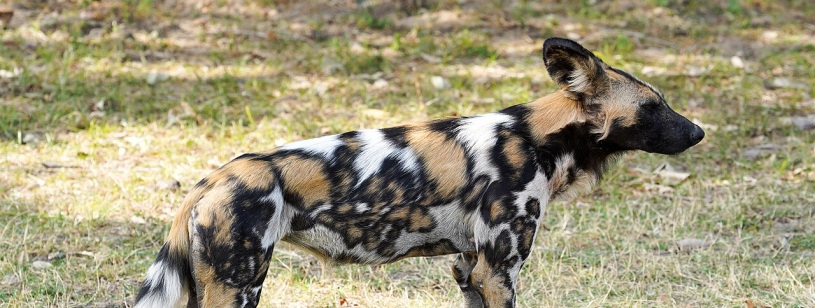
An African wild dog, Lycaon pictus, in the Lupande area of Zambia. · This Photo was taken by Timothy A. Gonsalves. Feel free to use my photos, but please mention me as the author. I would much appreciate if you send me an email tagooty@yahoo.com or write on my talk page, for my information. Please contact me before commercial use. Please do not upload an edited image here without consulting me. I would like to make corrections only at my own source to ensure that the changes improve the image and are preserved.Otherwise you may upload an edited image with a new name. Please use one of the templates derivative or extract. / CC BY-SA 4.0 (https://creativecommons.org/licenses/by-sa/4.0). Cropped and resized.
The African wild dog is a long-legged canid with large ears and a coat patterned in black, brown, yellowish and white patches. Each individual has distinctive markings. Lycaon pictus lives in packs that cooperate in hunting and raising pups. It is neither a hyena nor a domestic dog gone wild.
Quick facts
| Common name | African wild dog; painted dog |
| Scientific name | Lycaon pictus |
| Typical lifespan | Around 10 years in the wild, with variation |
| Diet | Carnivore |
| Main predators | Lions may kill individuals; people are a major threat |
| Conservation status | Endangered (EN) |
| Distribution | Fragmented populations in sub-Saharan Africa |
| Habitat | Savanna, grassland, open woodland and scrub |
| Length | Head and body: approximately 75–110 cm; tail 30–40 cm |
| Weight | Approximately 18–36 kg |
| Family | Canidae |
| Reproduction | Pregnancy around 70 days; pups cared for by the pack |
- Primary category:Canids
- Explore this animal's categories:
Interesting facts
- Coat patterns allow individuals to be recognised.
- Front paws have four toes, unlike those of many other canids.
- Pack members can bring food to pups and animals left at the den.
- Large ears aid hearing and heat loss.
Characteristics
A lean body and long limbs support sustained movement. Large rounded ears and a usually white-tipped tail are characteristic.
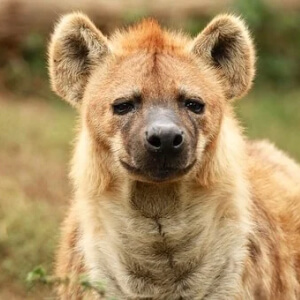
Short fur carries a different pattern on each animal, allowing researchers to recognise individuals in repeated observations. Adults weigh approximately 18–36 kg. A distant resemblance to hyenas does not reflect kinship: hyenas belong to another family and have a different build.
Behaviour
The pack is central to social life. Greetings, calls and physical contact maintain relationships before travel and hunting.
Cooperation continues after the chase. Adults may regurgitate meat for pups and members unable to join a hunt. Dominance relationships exist, and reproduction is often concentrated in a leading pair. Group life is not entirely free of conflict, but mutual support is essential.
Habitat and distribution
Fragmented populations survive across parts of sub-Saharan Africa, using savanna, grassland, scrub and open woodland. Prey and room to travel matter more than one idealised habitat type.
A pack can range over a very large area. Roads and transformed land interrupt routes between suitable places and increase contact with people, making connected habitat important.
Diet and feeding
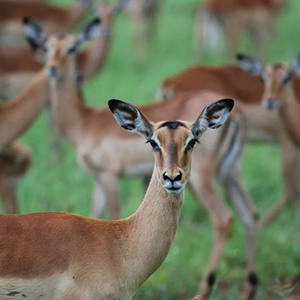
Antelopes and other mammals form the prey base, varying by region. Pack hunting benefits from coordination, endurance and knowledge of the terrain.
Hunts often take place in the morning or towards evening. Success depends on prey, pack size and local conditions rather than a guaranteed capture rate. Food must also support animals remaining at shelter, so a small pack can struggle to feed many pups.
Reproduction and life cycle
Pregnancy lasts around 70 days. Birth takes place in a den, sometimes one originally dug by another animal.
Dependent pups stay near shelter while adults share guarding and feeding duties. Helpers can improve the chances of successful rearing. Disease, food shortages and losses of adult pack members can affect an entire litter. Growing pups increasingly join movements and learn behaviours needed for pack life.
Name and history
Lycaon pictus is associated with the meaning painted wolf. Painted dog describes the natural coat pattern, not human colouring.
This is a distinct canid species, not a feral domestic dog or a spotted African hyena. Recognising animals by their natural markings gives researchers a useful way to monitor them without capture.
Conservation and threats
The species is Endangered. Habitat fragmentation, conflict with people and disease all contribute to decline. Snares intended for other animals can also injure or kill wild dogs.
Conservation projects monitor packs, remove snares and work with communities to reduce conflict. Connected space and sufficient prey are essential: rescuing individuals matters, but packs also need conditions in which to survive and reproduce.
Frequently asked questions
Is the African wild dog a hyena?
No. It is a canid, while hyenas belong to Hyaenidae.
Why is it called a painted dog?
Different-coloured patches form a distinctive pattern on each individual.
Who cares for the pups?
Other pack members assist the mother by guarding pups and providing food.
Is the species threatened?
Yes. Lycaon pictus is classified as Endangered.