MartenInteresting facts and information
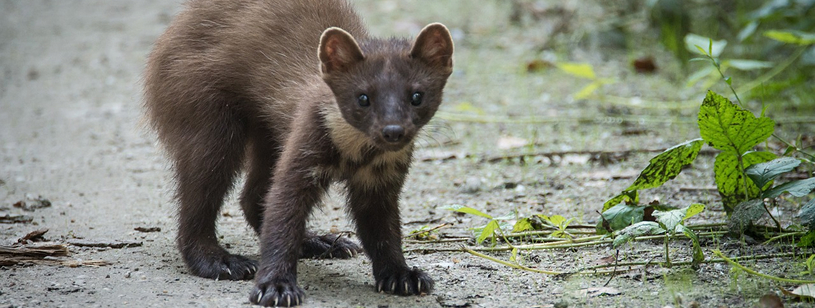
Martens (Martes) are mammals in the weasel family, Mustelidae. Different species live across parts of Europe, Asia and North America. They eat animal prey and, depending on the species and season, plant foods.
Among the best-known species are the pine marten (Martes martes), the stone marten (Martes foina) and the sable (Martes zibellina); the fisher of North America is a close relative. Most martens are not threatened, but deforestation and fur trapping have reduced some populations.
Quick facts
| Common name | Marten |
| Scientific name | Martes spp. |
| Typical lifespan | About 8-12 years in the wild, up to about 18 years in captivity |
| Maximum speed | Fast and agile over short distances, especially in trees |
| Dimensions | Length: about 40-60 cm (plus 15-25 cm tail) |
| Weight | About 0.8 - 2.5 kg, by species |
| Diet type | Omnivore (small mammals, birds, eggs, fruit, insects) |
| Main predators | Eagle-owls, golden eagles, foxes, lynxes, people |
| Conservation status | Assess separately by species and population; different taxa and regions have different needs |
| Distribution | Europe, Asia, North America |
| Living environment | Forests, taiga, rocky areas; the stone marten also lives in villages and towns |
- Primary category:Mammals
- Explore this animal's categories:Animals of AsiaAnimals of EuropeAnimals of North AmericaAnimals of RomaniaAnimals of Romania’s forestsAnimals of the Danube DeltaArboreal animalsForest animalsFurry animalsInsect-eating animalsLive-bearing animalsMMammalsMammals of RomaniaMustelidsNocturnal animalsOmnivoresPredatory animals of RomaniaVertebratesWild animals
Interesting facts
- Expert climbers - Martens are among the best climbers of all carnivores; their sharp, semi-retractable claws let them run up trees and leap between branches.
- Nest raiders - Martens climb to birds' nests and tree holes to take eggs and chicks.
- Scent messages - Martens use scent glands and droppings to mark their territory and communicate.
- Long night journeys - A marten may travel several kilometres in a night in search of food.
- Car trouble - In parts of Europe, stone martens are famous for climbing under car bonnets and chewing cables and hoses.
- Porcupine hunter - The fisher, a large North American relative of the martens, is one of the few predators that regularly kills porcupines, attacking their unprotected face.
Records and remarkable features
- Martens (Martes) are mammals in the weasel family, Mustelidae. Different species live across parts of Europe, Asia and North America. They eat animal prey and, depending on the species and season, plant foods.
- A helpful predator - In Britain and Ireland, returning pine martens help red squirrels by reducing the numbers of introduced grey squirrels.
- Money on four legs - In medieval Eastern Europe, marten pelts were used as money; the Croatian currency until 2023, the kuna, was named after the marten.
Physical characteristics and adaptations
Martens are slender, agile mammals about the size of a cat, with long bodies built for climbing and hunting.
Key physical adaptations
- A long, slim body - Lets them squeeze into tree holes, rock crevices and burrows.
- Thick, soft fur - Protects them against cold; in winter it becomes even denser.
- Semi-retractable claws - Help them climb trees and hold prey.
- Muscular limbs help pine martens move through trees and leap between branches.
- Sharp teeth - Used to kill prey and tear meat.
- A long, bushy tail - Helps with balance while climbing and leaping.
- Excellent senses - Good eyesight, hearing and smell help them hunt at night.
Habits and behaviour
Martens are mostly solitary, territorial animals that are active mainly at night and around dawn and dusk.
Daily life
- Active at night - They usually hunt at night, resting during the day.
- Territories - Their territories range from a few to tens of square kilometres, depending on the species, sex and food supply.
- Scent marking - They mark their territories with scent and droppings to warn off rivals.
- Dens - They rest in tree holes, old squirrel nests, rock crevices and, in the case of stone martens, attics and barns.
Social interactions
- Living alone - Adults usually avoid each other, and males defend their territories against other males.
- Overlapping ranges - A male's territory often overlaps with those of one or more females.
- Sounds - Martens growl, chatter and scream when angry or during the breeding season.
Hunting techniques
- Sudden attacks - They move quietly and pounce on prey with a fast bite to the neck or head.
- Climbing - They climb trees to raid birds' nests and chase squirrels.
- Storing food - They sometimes hide extra food to eat later.
Habitat and geographic distribution
Martens live in many environments, from dense forests to mountains, and the stone marten even lives in villages and towns.
Regional distribution
| Region | Species present |
|---|---|
| Europe and western Asia | Pine marten (Martes martes), stone marten (Martes foina) |
| North America | American marten (Martes americana), Pacific marten; the fisher (Pekania pennanti) is a close relative |
| Northern and eastern Asia | Sable (Martes zibellina), Japanese marten (Martes melampus), yellow-throated marten (Martes flavigula) |
| Southern India | Nilgiri marten (Martes gwatkinsii) |
Habitat types
- Coniferous and mixed forests - The main habitat of the pine marten, American marten and sable.
- Rocky and mountain areas - The stone marten likes rocky slopes and open woodland.
- Taiga - The sable lives in the vast forests of Siberia, which have long, cold winters.
- Villages and towns - The stone marten often lives near people, in barns, attics and gardens.
Climate and habitat change
- Deforestation - Cutting down old forests removes tree holes and other places martens need.
- Climate change - Changes in snow cover may affect martens and their prey in northern regions.
- Traffic - Many martens are killed on roads.
Diet and feeding
Martens are opportunistic predators that also eat a lot of fruit, depending on the season.
What does the marten eat?
| Food group | Examples and context |
|---|---|
| Small mammals | Voles, mice, squirrels, rabbits |
| Birds and eggs | Small birds, chicks and eggs from nests |
| Fruit and nuts | Raspberries, blackberries, bilberries, rowan berries, cherries |
| Insects and other invertebrates | Beetles, wasp larvae, earthworms |
| Carrion | Remains of dead animals |
| Human food | Food scraps, eggs and poultry from farms |
Feeding methods
- Climbing - They climb trees to take eggs and young birds from nests.
- A quick kill - They kill prey with a strong bite to the head or neck.
- Storing food - They sometimes hide food and return to it later.
- Lots of fruit - In late summer and autumn, fruit and berries can make up a large part of their diet.
Reproduction and life cycle
Martens have delayed implantation: after mating, the embryo waits for months before it starts to develop, so the young are born in spring.
Breeding season
- Mating takes place in summer, from about June to August.
- Males may fight for access to females.
- After mating, males take no part in raising the young.
Gestation and birth
| Characteristic | Details |
|---|---|
| Total pregnancy | About 230-290 days (including delayed implantation); actual development takes only about a month |
| Number of young per birth | Usually 1-5 (often 3) |
| Young at birth | About 30 g, blind and almost hairless |
| Nursing period | About 6-8 weeks |
Raising young
- The young are born in a den in spring and depend completely on their mother.
- Their eyes open after about 5-6 weeks, and they start leaving the den at about 7-8 weeks.
- At about 3-6 months, they become independent and look for their own territory.
Survival
- Many young martens die in their first year, from predators, hunger or road accidents.
- Martens can live about 8-12 years in the wild and up to about 18 years in captivity.
Name and history
Origin of the name
- The English word "marten" comes from Old French martre, from an old Germanic word for the animal.
- The genus name Martes is the Latin name for the marten.
Taxonomic classification
| Classification | Name |
|---|---|
| Kingdom | Animalia |
| Phylum | Chordata |
| Class | Mammalia |
| Order | Carnivora |
| Family | Mustelidae |
| Genus | Martes |
Evolution and history
- Martens belong to the weasel family, together with weasels, badgers, otters and wolverines.
- Fossils show that marten-like animals lived in Europe, Asia and North America millions of years ago.
- People have hunted martens for their fur since prehistoric times; sable fur was among the most valuable furs in the world.
Cultural significance and mythology
Martens have long been admired for their agility and their beautiful fur, which has made them important in trade, heraldry and folklore.
The marten in history and popular beliefs
- Fur money - In medieval Russia and the Balkans, marten pelts were used as money; the Croatian currency, the kuna, was named after the marten, which appeared on its coins.
- Royal fur - Sable and marten furs were worn by kings, nobles and church leaders as a sign of wealth.
- Heraldry - The heraldic colour black is called "sable", after the dark fur of the sable.
- Folk tales - In European folklore, the marten is often a clever, sly hunter of chickens.
Modern symbolism
- Cleverness - The marten is seen as quick, clever and hard to catch.
- Wild forests - The return of pine martens to forests is a symbol of nature recovering.
- A nuisance - In towns, stone martens are known as noisy lodgers in attics and as chewers of car cables.
Conservation status and threats
Most marten species are listed as Least Concern, but some populations have declined because of habitat loss and hunting, and the Nilgiri marten is threatened.
Conservation status
| Species | IUCN status | Population information |
|---|---|---|
| Pine marten (Martes martes) | Least Concern | Recovering in parts of western Europe |
| Stone marten (Martes foina) | Least Concern | Widespread |
| Fisher (Pekania pennanti) | Least Concern | Returned to many areas after reintroductions |
| Nilgiri marten (Martes gwatkinsii) | Vulnerable | Small population in the Western Ghats of India |
Main pressures
- Deforestation - The loss of old forests removes the tree holes and cover that martens need.
- Fur trapping - In the past, martens and sables were trapped in huge numbers; trapping is still regulated in many countries.
- Conflict with people - Martens that kill poultry or damage cars and roofs are sometimes killed.
- Poisoning - Martens can be poisoned by baits put out for other animals.
Protection measures
- Legal protection - The pine marten is protected in many European countries, including Britain.
- Forest conservation - Protecting old forests and putting up special den boxes help martens.
- Reintroduction - Pine martens have been reintroduced to Wales and England, and fishers to many parts of North America.
In popular culture
Books and literature
- The Jder Brothers (Mihail Sadoveanu, 1935-1942) - A Romanian historical trilogy whose heroes are a family nicknamed the "Jderi", "the Martens".
- Folk tales - Martens appear in many European folk tales as clever hunters.
Money and symbols
- The Croatian kuna - From 1994 to 2022, Croatia's currency was named after the marten, and the animal appeared on its coins.
- Heraldry - Furs such as sable and ermine were used as symbols of royalty and nobility.