GrasshopperInteresting facts and information
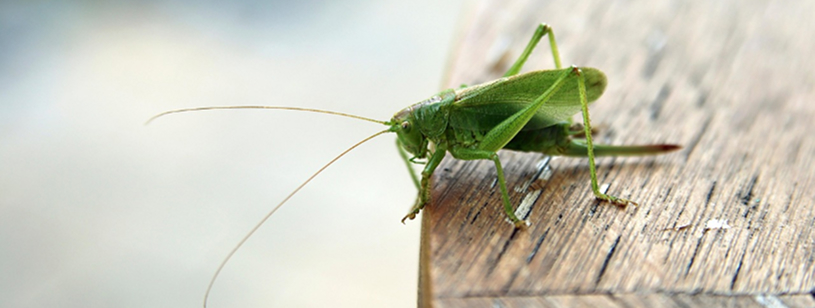
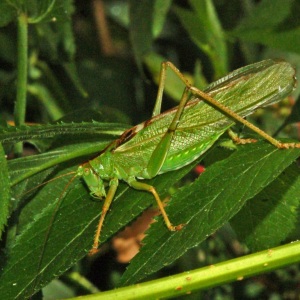
Grasshoppers are insects in the suborder Caelifera. Their powerful hind legs help them jump, and many species also fly. Locusts are certain grasshoppers that can develop a swarming phase under suitable conditions.
In addition to their ecological impact, locusts are also a powerful cultural symbol, being mentioned in mythology, religion and literature throughout history.
Quick facts
| Common name | Grasshopper |
| Scientific name | Caelifera |
| Typical lifespan | Usually a few months; often less than a year |
| Length | About 1-12 cm (depending on species) |
| Weight | About 0.1-3 g |
| Diet type | Herbivore (feeds on leaves, stems, seeds) |
| Main predators | Birds, lizards, spiders, praying mantises, small mammals |
| Conservation status | Assess separately by species and population; different taxa and regions have different needs |
| Distribution | Every continent except Antarctica, especially warm and temperate regions |
| Living environment | Grasslands, savannas, farmland, deserts, open woodland |
Interesting facts
- Big eaters - A desert locust can eat roughly its own weight in fresh plants every day, which is why swarms are so dangerous for crops.
- A record swarm - A swarm of Rocky Mountain locusts in the USA in 1875 was estimated to contain about 12.5 trillion insects; strangely, this species became extinct by the early 1900s.
- Food for people - Grasshoppers and locusts are rich in protein and are eaten in many parts of Africa, Asia and Latin America, for example as chapulines in Mexico.
- Long journeys - Swarms of desert locusts can travel more than 100 km in a day with the wind.
- Great jumpers - A grasshopper can jump up to about 20 times its own body length.
Records and remarkable features
- Grasshoppers are insects in the suborder Caelifera. Their powerful hind legs help them jump, and many species also fly. Locusts are certain grasshoppers that can develop a swarming phase under suitable conditions.
Physical characteristics and adaptations
Grasshoppers are well adapted to open, often dry habitats. Their strong legs and wings let them escape by jumping or flying.
Key physical adaptations
- Powerful hind legs - Allow huge jumps to escape predators.
- Wings - Many species fly well; swarming locusts can travel long distances.
- Strong jaws - Used to cut and chew tough leaves and grasses.
- Short antennae - Unlike crickets and katydids, grasshoppers have short antennae.
- Hearing organs - Grasshoppers have "ears" (tympana) on the sides of the abdomen.
- Camouflage colours - Most grasshoppers are green or brown, which helps them hide in grass and bushes.
Differences between grasshopper types
| Category | Characteristics |
|---|---|
| Non-swarming grasshoppers | Most species; live scattered and do not form swarms |
| Locusts | Can change into a swarming phase, form huge swarms and cause great damage to crops |
| Brightly coloured grasshoppers | Some species are toxic and warn predators with bright colours |
Habits and behaviour
Grasshoppers are active by day, and in locusts behaviour can change completely depending on how crowded they are.
Daily life
- Most grasshoppers live scattered and on their own.
- When locusts become crowded, they enter a "gregarious" phase: they change colour and behaviour and start moving together in swarms.
- They are active by day and need warmth to move and fly well, often basking in the sun in the morning.
Communication and interaction
- Many grasshoppers "sing" by rubbing a row of tiny pegs on their hind legs against their wings, a process called stridulation.
- They also use visual signals and scents (pheromones).
- In swarms, each locust follows the movement of its neighbours, so the whole swarm moves together.
Survival strategies
- They escape predators with fast jumps.
- Some species store toxins from the plants they eat and are poisonous to birds and mammals.
- In dry regions, eggs can remain in the soil until rain arrives.
Habitat and geographic distribution
Grasshoppers occur in many regions worldwide, but not as native terrestrial insects in Antarctica. Habitats and climate needs differ between species.
Distribution context
| Region | Population information | Habitat examples |
|---|---|---|
| Africa | Many species; home of the desert locust | Savannas, deserts |
| Asia | Many species; locust outbreaks in some regions | Steppes, meadows |
| North America | Many species, some crop pests | Prairies, farmland |
| South America | Very many species | Grasslands and forests |
| Europe | Hundreds of species; some declining | Meadows, heaths and farmland |
| Australia | Many species, including the Australian plague locust | Grasslands and dry inland areas |
Habitat types
- Grasslands and savannas - Areas with grasses and patches of bare soil are preferred by most species.
- Farmland - Some species live in crops and can become important pests.
- Deserts - Desert locusts can survive in deserts and breed quickly after rain.
Environmental change
- Unusual rains, linked to weather and climate patterns, can trigger huge locust outbreaks, as in East Africa in 2019-2020.
- Intensive farming and loss of meadows have caused many grassland grasshoppers to decline in Europe.
- Pesticides used against locusts can also harm other insects and wildlife.
Diet and feeding
Grasshoppers are mainly plant-eaters. Normally they are part of the natural balance of grasslands, but in large numbers some can become serious pests.
What do grasshoppers eat?
| Food group | Examples |
|---|---|
| Grasses | Wild grasses, wheat, maize, rice |
| Leaves of flowering plants | Clover, sunflower, legumes |
| Shoots and young stems | Crops and weeds |
| Seeds and fruits | Cereals, vegetables and fruit crops |
| Other insects (occasionally) | Dead insects or weaker locusts, especially when food is scarce |
Feeding methods
- Grasshoppers chew plants with strong jaws.
- Many species prefer certain plants, while locusts in swarms eat almost any green plant.
- A swarm can strip an area of vegetation and then move on to find new food.
Reproduction and life cycle
Grasshoppers can breed quickly, and under good conditions locust populations can grow explosively.
Breeding season
- In temperate regions, they breed in summer; in dry regions, breeding usually follows the rains.
- Males sing to attract females.
- After mating, the female pushes her abdomen into the soil and lays a pod of eggs.
Developmental stages
| Stage | Duration | Characteristics |
|---|---|---|
| Egg | About 2 weeks to several months (many species overwinter as eggs) | Laid in the soil in pods of dozens of eggs |
| Nymph | About 3-6 weeks | Looks like a small adult without wings; moults about 5-6 times |
| Adult | About 1-3 months, sometimes longer | Can fly and reproduce |
Survival strategies
- Laying eggs in the soil protects them from predators and extreme temperatures.
- Incomplete metamorphosis means there is no pupa: the nymphs grow gradually into adults.
- When nymphs are crowded, they can switch to the gregarious phase and form marching bands, which later become flying swarms.
Name and history
Origin of the name
- The English word "grasshopper" comes from Old English gærshoppa, literally "grass hopper".
- The word "locust" comes from the Latin locusta, which meant both locust and lobster.
- The suborder name Caelifera means "chisel-bearing", after the short, chisel-like egg-laying tube of the females.
Taxonomic classification
| Classification | Name |
|---|---|
| Kingdom | Animalia |
| Phylum | Arthropoda |
| Class | Insecta |
| Order | Orthoptera |
| Suborder | Caelifera |
Evolution and fossils
- There are about 11,000 known species of grasshoppers.
- The grasshopper lineage separated from that of crickets and katydids around 250 million years ago.
- Their closest relatives are crickets and katydids, which belong to the same order, Orthoptera.
Cultural significance and mythology
Grasshoppers and especially locusts have had a strong impact on human history, as both a cause of famine and a source of food.
Locusts in myths and symbolism
- The Bible - In the Book of Exodus, a plague of locusts is the eighth of the ten plagues of Egypt.
- Food - According to the Gospels, John the Baptist lived on locusts and wild honey.
- Aesop's fable - "The Ant and the Grasshopper" contrasts the hard-working ant with the carefree grasshopper.
- The Royal Exchange - A golden grasshopper, the emblem of the merchant Thomas Gresham, sits on top of the Royal Exchange in London.
Conservation status and threats
Some locusts are serious pests, but many other grasshoppers are declining, especially in Europe, because of the loss of meadows and grasslands.
Main pressures
- Loss of grassland - Intensive farming, fertilisers and frequent mowing reduce habitats for many species.
- Pesticides - Insecticides used against locusts and other pests also harm bees, butterflies and other insects.
- Climate change - Changes in rainfall and temperature affect both rare species and locust outbreaks.
Ecological benefits
- They help recycle nutrients by eating plants and returning them to the soil as droppings.
- They are important food for many animals, including birds, reptiles, spiders and small mammals.
- Rich grasshopper communities are a sign of healthy meadows.
Control and protection measures
- Monitoring locust populations, for example by the UN Food and Agriculture Organization, to stop swarms early.
- Biological control, such as fungus-based products that target locusts.
- Protecting flower-rich meadows, which helps rare grasshopper species.
Locusts in popular culture
Grasshoppers and locusts in literature
- The Bible - Exodus - A swarm of locusts that destroys the crops of Egypt is one of the ten plagues.
- "The Day of the Locust" (1939) - Nathanael West - A novel about Hollywood; it was made into a film in 1975.
- "The Ant and the Grasshopper" - One of Aesop's best-known fables.
Grasshoppers in movies and television
- "Kung Fu" (1972-1975) - In this television series, the old master calls his young student "Grasshopper".
- "A Bug's Life" (1998) - The villain, Hopper, leads a gang of grasshoppers that bully a colony of ants.
- "The Swarm" (2020) - A French thriller about a farmer who breeds locusts for food.
Grasshoppers as inspiration
- Insects as food - Grasshoppers and locusts are promoted as a sustainable source of protein.
- Robotics - Engineers have studied grasshoppers' jumping to design jumping robots.
- Symbols - The grasshopper is used as a symbol of summer and carefree living.