OstrichInteresting facts and information
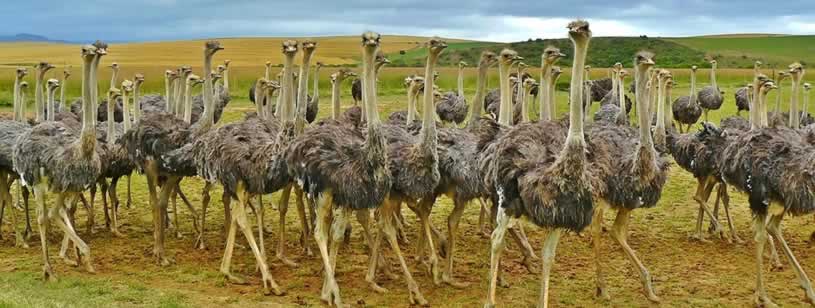
Ostriches are large flightless birds native to Africa. Their long legs help them run, while their wings contribute to balance and display. The common ostrich (Struthio camelus) and Somali ostrich (Struthio molybdophanes) are distinct species.
Ostriches feed on varied plant material and some animal foods. Their strong legs help them run and defend themselves.
Quick facts
| Common name | Ostrich |
| Scientific name | Struthio camelus (common ostrich); Struthio molybdophanes is the Somali ostrich |
| Typical lifespan | About 30-40 years, sometimes longer in captivity |
| Maximum speed | About 70 km/h in sprints; about 50 km/h over long distances |
| Height | 2.1-2.8 metres |
| Weight | About 90-150 kg |
| Diet type | Mainly plants (grass, seeds, fruit, flowers), with some insects and small animals |
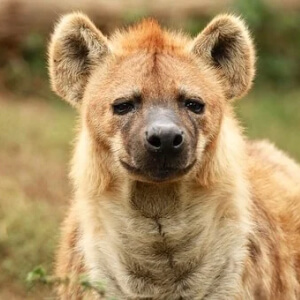
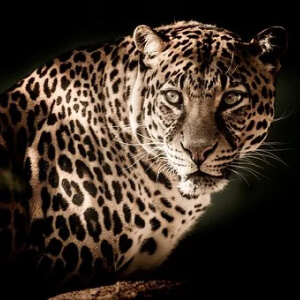
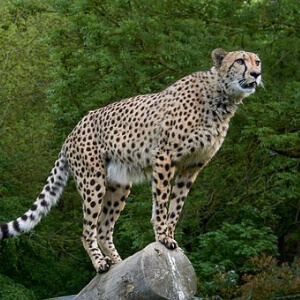
| Main predators | Lions, leopards, cheetahs, hyenas; eggs and chicks are taken by jackals, vultures and other animals |
| Conservation status | Common ostrich Least Concern; Somali ostrich Vulnerable (IUCN) |
| Geographical distribution | Africa (savannas, semi-deserts, grasslands) |
| Habitat | Savannas, semi-deserts, open grasslands, dry bushland |
| Social behaviour | Lives in small groups, but sometimes forms large flocks |
| Special adaptations | High speed, excellent eyesight, strong legs, huge eggs |
- Primary category:Birds
- Explore this animal's categories:
Interesting facts
- The ostrich has the largest eyes of any land animal - Each eye is about 5 cm across, bigger than its brain.
- It can outrun most predators - An ostrich can keep up about 50 km/h over long distances and sprint at about 70 km/h.
- Ostrich eggs are the largest of any living bird - An egg usually weighs about 1.4 kg, as much as about 20-24 chicken eggs.
- Giant strides - When running, an ostrich can cover 3-5 metres in a single stride.
- It can go without drinking for a long time - It is adapted to dry climates and gets much of the water it needs from its food.
- It has only two toes on each foot - Ostriches are the only birds with just two toes, which helps them run fast and steadily.
- The ostrich does not bury its head in the sand - This myth probably comes from its habit of lying flat with its neck on the ground to hide from predators.
Records and remarkable features
- Ostriches are large flightless birds native to Africa. Their long legs help them run, while their wings contribute to balance and display. The common ostrich (Struthio camelus) and Somali ostrich (Struthio molybdophanes) are distinct species.
- The ostrich is the tallest and heaviest living bird and the fastest runner on two legs.
- Ostriches lay the largest eggs of any living bird, although their eggs are the smallest compared with the size of the mother.
Characteristics
The ostrich (Struthio camelus) is a remarkable bird, perfectly adapted for life on land, with a large body, very strong legs and the ability to survive in hot, dry places.
Appearance
- A large, heavy body - It is the largest bird in the world, with a big body covered in soft, loose feathers that are no use for flying.
- Feathers not built for flight - Unlike flying birds, the ostrich has fluffy, loose feathers, which help it control its body temperature.
- A small head and long neck - Its long, flexible neck lets it watch for predators from far away and reach food easily.
- Huge eyes - The ostrich has the largest eyes of any land animal, giving it excellent long-distance vision.
- A short, wide beak - Adapted for pecking food from the ground.
- Muscular legs built for running - The ostrich has the longest and strongest legs of any bird, with only two toes, compared with three or four in other birds.
Special adaptations
- Great speed - The ostrich is the fastest bird on land, reaching about 70 km/h, faster than most predators.
- Dangerous kicks - Its powerful legs and large claw can deliver kicks strong enough to kill a lion or a person.
- Camouflage - The brown females and young blend in with the landscape, especially when lying on the ground.
- Coping with heat - Ostriches survive long periods without drinking by controlling their body temperature with their feathers, bare skin and wings.
Habits and behaviour
Ostriches are social birds that usually live in small groups, but in the dry season they sometimes gather in flocks of 50 or more birds.
Social behaviour
- They usually live in groups of about 5-50 birds, often led by a dominant male and a dominant female.
- They often feed alongside zebras and antelopes; the ostrich's excellent eyesight helps everyone spot predators.
- Males are territorial and can be aggressive, especially in the breeding season.
- The dominant female (the "major hen") chooses the nest, and other females (the "minor hens") lay their eggs in the same nest.
Survival techniques
- Running away is the main defence - When attacked, an ostrich runs off, often zigzagging to confuse predators.
- Kicks are very dangerous - An ostrich can injure or kill a lion with the large claw on its main toe.
- Lying low - When in danger, an ostrich may lie down and stretch its neck flat on the ground to be less visible.
- Water from food - Ostriches can go without drinking for long periods, getting moisture from plants and insects.
Habitat and geographic distribution
Ostriches are native to Africa, where they live in savannas, grasslands and semi-deserts. They once also lived in the Middle East, but today wild ostriches survive only in Africa. Related profile: Desert animals.
| Region | Species or subspecies | Preferred habitat |
|---|---|---|
| East Africa (Kenya, Tanzania) | Struthio camelus massaicus (Masai ostrich) | Savannas, dry grasslands |
| Southern Africa (South Africa, Namibia, Botswana) | Struthio camelus australis (South African ostrich) | Dry areas, semi-deserts |
| North Africa and the Sahel (Niger, Chad, Sudan) | Struthio camelus camelus (North African ostrich) | Semi-deserts, dry grasslands |
| Horn of Africa (Ethiopia, Somalia, Kenya) | Struthio molybdophanes (Somali ostrich) | Dry savannas, bushland |
Types of habitat
- Savannas and grasslands - Ostriches prefer open country, where they can see predators from far away.
- Semi-deserts - They can survive in dry places, coping with heat and lack of water.
- Bushland - Some live in areas with scattered bushes, especially the Somali ostrich.
Human impact and threats
- Overhunting - In the past, ostriches were heavily hunted for their feathers, meat and skin, and they disappeared from large areas.
- Habitat loss - Farming and livestock grazing reduce ostrich habitats.
- Egg collecting and poaching - In some regions, eggs are collected and birds are captured or killed illegally.
- Collisions - Ostriches are sometimes killed on roads and by fences.
Diet and feeding
The ostrich eats mainly plants, such as seeds, leaves, flowers and roots, but it also takes insects and small animals. It can survive long periods without drinking, getting much of the water it needs from its food.
What do ostriches eat?
| Type of food | Notes |
|---|---|
| Grass, leaves and shoots | A large part of the diet |
| Seeds, fruit and flowers | Eaten whenever available |
| Insects (locusts, beetles, termites) | Eaten occasionally, especially in the rainy season |
| Small reptiles and rodents | Rarely |
| Stones and grit | Swallowed to help grind food |
Feeding techniques
- Quick pecking - The ostrich picks food from the ground or from bushes with its beak.
- Swallowing stones - To help digest tough plants, the ostrich swallows pebbles, which grind food in its gizzard; an adult may carry about 1 kg of stones.
- Choosing food - Ostriches pick the most nutritious plants and seeds they can find.
- Occasional hunting - Although they eat mainly plants, ostriches sometimes snap up insects, lizards or small rodents.
Adapting to the food supply
- In the dry season, they eat more juicy plants to meet their water needs.
- In the rainy season, they eat more insects, which are plentiful.
- They can go for days without drinking, getting moisture from their food.
Reproduction and life cycle
Ostriches have an unusual breeding system: a male mates with several females, who all lay their eggs in one nest, but only the dominant female and the male incubate the eggs.
| Feature | Details |
|---|---|
| Age at maturity | 2-4 years |
| Breeding season | Varies with the region; often linked to the rains |
| Type of reproduction | Egg-laying |
| Eggs per nest | About 15-60 (from several females) |
| Incubation | About 42-46 days |
| Egg size | About 15 cm long, usually about 1.4 kg |
| Lifespan | About 30-40 years, sometimes longer in captivity |
Mating
- Males defend their territory aggressively and compete for females.
- Courtship dance - The male's neck and legs turn bright red or pink; he crouches, sways from side to side and fans his black-and-white wings to attract females.
- The dominant female mates with the male and lays her eggs in the central nest, a shallow scrape in the ground.
Incubation and raising chicks
- Both parents incubate the eggs - The black male usually sits at night and the brown female by day, which helps hide the nest from predators.
- The chicks hatch after about six weeks and are active almost immediately; within a few days, they can run with their parents.
- Crèches - Chicks from several families often join together in large groups, guarded by one or a few adults.
Name and history
People have known the ostrich since ancient times, and it appears in mythology, art and historical records.
Origin of the name
- The word "ostrich" comes through Old French from the Latin struthio, from the Greek strouthokamelos, which means "sparrow-camel".
- The scientific name Struthio camelus also means "camel bird", because of the ostrich's long neck, long legs and ability to live in dry places.
The ostrich in human history
- Ancient Egypt - An ostrich feather was the symbol of Maat, the goddess of truth, justice and order.
- Ancient Rome - Ostriches were shown in the games, and the Emperor Commodus is said to have killed ostriches in the arena.
- The Middle Ages - Ostrich feathers became symbols of rank and appeared in heraldry.
- The 19th and 20th centuries - In South Africa, ostriches were farmed on a large scale for their feathers, which were very fashionable in hats and clothes.
The ostrich in folklore
Cultural significance and mythology
- The feather of truth - In ancient Egyptian belief, the heart of a dead person was weighed against Maat's ostrich feather to judge whether they had lived a good life.
- The Prince of Wales's feathers - The famous badge of the heir to the British throne shows three white ostrich feathers.
- Eggshell treasures - For tens of thousands of years, people in Africa have used ostrich eggshells as water containers and made them into beads; ostrich eggs also hang in many Orthodox and Coptic churches.
- "Burying your head in the sand" - This saying, based on a myth about ostriches, means ignoring a problem and hoping it will go away.
Conservation status and threats
The common ostrich is not threatened globally, but some populations are much reduced by habitat loss and hunting, and the Somali ostrich is listed as Vulnerable.
| Status | Species or subspecies | Regions |
|---|---|---|
| Least Concern (LC) | Struthio camelus (common ostrich, as a species) | Much of Africa |
| Vulnerable (VU) | Struthio molybdophanes (Somali ostrich) | Somalia, Ethiopia, Kenya |
| Greatly reduced | Struthio camelus camelus (North African ostrich) | Sahara and Sahel |
| Extinct | Struthio camelus syriacus (Arabian ostrich) | Arabian Peninsula, Middle East (last seen around 1966) |
Main threats
- Hunting for feathers, meat and skin - In the past, ostriches were heavily hunted for fashion and food, and some populations are still hunted.
- Habitat loss - Farming and growing settlements reduce the open land that ostriches need.
- Egg collecting - Eggs are collected for food, decoration and trade.
- Climate change - Droughts reduce food and affect breeding in dry regions.
Conservation efforts
- Protected areas - Ostriches are protected in national parks such as the Serengeti (Tanzania) and Kruger National Park (South Africa).
- Reintroduction - North African ostriches have been bred and released into reserves in countries such as Niger, Morocco and Tunisia.
- Trade rules - CITES controls international trade in North African ostriches and their products.
- Education and awareness - Campaigns help reduce illegal hunting and egg collecting.
In popular culture
- Fantasia (Disney, 1940) - In the "Dance of the Hours" sequence, a troupe of ostriches dances ballet.
- Joust (1982) - A classic arcade game in which knights fly into battle riding ostriches.
- Ostrich racing - In places such as Oudtshoorn in South Africa, people ride ostriches in races as a tourist attraction.