Water shrewInteresting facts and information
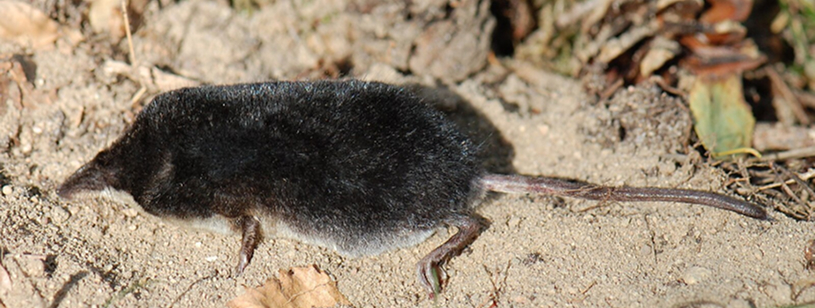
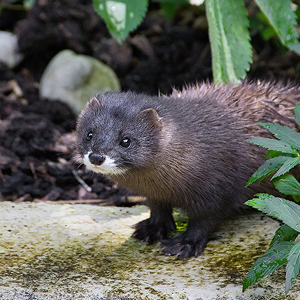
The Eurasian water shrew (Neomys fodiens) is a small mammal that lives near fresh water. It swims and dives to find animal prey, helped by hairs on its feet and tail. It is a shrew, not a rodent, and should be distinguished from other species of Neomys.
The Eurasian water shrew has dense fur and stiff hairs that help it swim. Its saliva contains venom that can help subdue prey.
This small mammal eats animal prey and needs regular feeding to meet its energy requirements. It contributes to food webs around fresh water.
Quick facts
| Common name | Eurasian water shrew |
| Scientific name | Eurasian water shrew: Neomys fodiens; other Neomys are separate species |
| Typical lifespan | Usually up to about 1.5-2 years in the wild |
| Maximum speed | Varies with species or individual, distance and conditions |
| Length | About 7-10 cm (without tail) |
| Length of tail | About 5-8 cm |
| Weight | About 8-23 g |
| Diet type | Carnivore (aquatic insects, crustaceans, snails, small fish, amphibians) |
| Main predators | Owls, herons, pike, otters, mink, foxes, stoats |
| Conservation status | Least Concern (IUCN); declining in some areas |
| Distribution | Europe and northern Asia |
| Living environment | Clean streams, rivers, ponds, lakes, marshes |
Interesting facts
- A venomous mammal - The water shrew is one of the few venomous mammals: its saliva contains a mild venom that helps it subdue prey.
- Short dives - Most of its dives last only a few seconds to about 20 seconds; air trapped in its fur makes it look silvery underwater.
- A fast metabolism - It must eat almost constantly and can eat about its own body weight in food each day.
- A bold hunter - Despite its small size, it attacks prey as large as small fish and frogs.
- Red-tipped teeth - The tips of its teeth are reddish because they contain iron, which makes them harder and more resistant to wear.
- A good swimmer - It swims with fast strokes of its hind feet, which are fringed with stiff hairs.
Records and remarkable features
- The Eurasian water shrew can swim and dive to catch aquatic prey; stiff hairs on its feet and tail help it move through water.
Physical characteristics and adaptations
The Eurasian water shrew is well adapted to semi-aquatic life, with special features that allow it to swim and hunt in water.
Key physical adaptations
- Waterproof fur - Dense, velvety fur traps air, which keeps the skin dry and helps hold body heat.
- Fringed feet - The hind feet have fringes of stiff hairs that act like paddles when swimming.
- A keeled tail - A row of stiff hairs under the tail helps it steer in water.
- Red-tipped teeth - Iron in the enamel makes the tips of the teeth harder.
- Small eyes and long whiskers - Its eyesight is poor, but sensitive whiskers help it find prey underwater.
- Venomous saliva - Glands in its lower jaw produce a mild venom that helps it subdue larger prey.
- Dark and light colours - Black or dark grey above and silvery-white or pale below.
Habits and behaviour
The water shrew is an active, solitary hunter that spends most of its time looking for food.
Daily life
- Active day and night - Because of its fast metabolism, it must feed at short intervals throughout the day and night.
- Territorial and solitary - Each shrew has its own home range along a stream or pond, and it chases away other shrews.
- Scent marking - It uses smelly secretions from its glands to mark its area.
Social interactions
- The female raises the young alone.
- Calls - Water shrews make high-pitched squeaks and twitters, especially when they meet other shrews.
- Shy - It avoids larger animals and quickly escapes into the water or into burrows.
Defence techniques
- Escape - When in danger, it dives into the water or hides in tunnels in the bank.
- Biting - If caught, it bites with its sharp teeth.
- A bad smell - Shrews have a musky smell, and some predators, such as cats, often kill them but do not eat them.
Habitat and geographic distribution
The Eurasian water shrew lives near fresh water, especially clean streams and ponds with plenty of plants on the banks.
Regional distribution
| Region | Species Present |
|---|---|
| Most of Europe and northern Asia | Neomys fodiens (Eurasian water shrew), from Britain and Scandinavia across Russia to Siberia |
| Southern Europe, the Balkans and Turkey | Neomys anomalus (Mediterranean water shrew, a separate species) |
| Caucasus | Neomys teres (Transcaucasian water shrew) and other Neomys species |
Habitat types
- Clean rivers and streams - It prefers fast-flowing, clean streams with thick vegetation on the banks.
- Ponds, lakes and marshes - It also lives by still water with plenty of cover.
- Wet meadows and ditches - It is sometimes found away from water, in damp grassland and woodland.
Climate and habitat change
- Water pollution - Pesticides and other pollutants reduce the number of aquatic insects it eats.
- Loss of wetlands - Straightening rivers, clearing banks and draining marshes take away its habitat.
- Fewer prey - Poor water quality affects the small animals it depends on.
Diet and feeding
The water shrew is a carnivore that eats many kinds of small aquatic and land animals to fuel its fast metabolism.
What does the water shrew eat?
| Food group | Examples and context |
|---|---|
| Aquatic insects | Caddisfly larvae, mayfly larvae, water beetles |
| Small crustaceans | Freshwater shrimps, water lice |
| Small fish | Minnows, sticklebacks and other small fish |
| Amphibians | Tadpoles, small frogs, newts |
| Molluscs | Water snails |
| Land invertebrates | Earthworms, insects, spiders |
| Eggs | Fish and frog spawn |
Hunting methods
- Quick dives - It dives to the bottom and searches among stones and plants, using its whiskers to find prey.
- Venomous bite - Its bite injects a mild venom that weakens prey.
- Hunting on land - It also hunts insects and worms in damp vegetation along the bank.
- Changing diet - It eats whatever prey is most common in each season.
Reproduction and life cycle
Water shrews breed quickly, which helps their populations survive despite their short lives.
Breeding season
- Breeding takes place between April and September, and a female can have two or more litters a year.
- Males travel further in search of females.
- After mating, the female raises the young alone.
Gestation and birth
| Characteristic | Details |
|---|---|
| Gestation | About 20 days |
| Number of young per birth | Usually 3-8, sometimes more |
| Size at birth | About 1 g, blind and hairless |
| Nursing period | About 4 weeks |
Raising young
- The young are born in a nest of grass and leaves in a burrow in the bank.
- They are blind and helpless in their first weeks of life.
- They become independent at about 5-6 weeks old.
- Most young breed for the first time the following spring.
Survival
- Many young shrews are eaten by predators or die in their first winter.
- In the wild, water shrews rarely live more than about 1.5-2 years.
Name and history
Origin of the name
- The English word "shrew" comes from Old English scrēawa.
- Its full English name, "Eurasian water shrew", refers to its range and its semi-aquatic life.
- In the scientific name Neomys fodiens, Neomys is often explained as "swimming mouse" (from Greek), and fodiens is Latin for "digging", referring to its burrows.
Taxonomic classification
| Classification | Name |
|---|---|
| Kingdom | Animalia |
| Phylum | Chordata |
| Class | Mammalia |
| Order | Eulipotyphla |
| Family | Soricidae |
| Genus | Neomys |
| Species | Neomys fodiens (Eurasian water shrew) |
Evolution and fossils
- Shrews are not rodents; they are related to moles and hedgehogs.
- Fossils of the genus Neomys date back several million years.
- The Eurasian water shrew belongs to the red-toothed shrews, a group whose teeth have iron-rich tips.
Cultural significance and mythology
Shrews in general have long been the subject of superstitions in Europe, although the water shrew itself is little known to most people.
The water shrew in myths and legends
- A feared animal - In medieval England, shrews were wrongly believed to be poisonous to farm animals, and a shrew running over a cow was thought to make it lame.
- The "shrew-ash" - As a cure, people sometimes shut a live shrew in a hole in an ash tree; twigs from this "shrew-ash" were then rubbed on sick animals, as described by the naturalist Gilbert White in 1789.
- The word "shrew" - In English, "shrew" also came to mean a bad-tempered, scolding person.
The water shrew in symbolism
- Clean water - Because it needs clean streams full of small animals, the water shrew is a sign of healthy freshwater habitats.
- Small but fierce - Like other shrews, it is often seen as an example of a tiny but bold predator.
- Hidden life - It is rarely seen, so a sighting is a special moment for naturalists.
Conservation status and threats
The Eurasian water shrew is not globally threatened, but its populations are declining in some regions because of habitat loss and pollution.
Conservation status
| Species | Assessment scope | Population information |
|---|---|---|
| Eurasian water shrew (Neomys fodiens) | Least Concern | Declining in some areas |
| Mediterranean water shrew (Neomys anomalus) | Least Concern | Scattered populations |
Main pressures
- Water pollution - Agricultural chemicals and other pollutants reduce aquatic insects, its main food.
- Habitat destruction - Clearing riverbanks and draining marshes reduce the places where it can live and hunt.
- Climate change - Droughts and changes in streams may affect its habitat.
- Predators - Cats, mink and other predators kill water shrews.
- Isolation - Small, separated populations are more vulnerable.
Protection measures
- Protecting wetlands - Nature reserves and protected riverbanks preserve its habitat.
- Cleaner rivers - European laws on water quality and pesticides help aquatic wildlife.
- Legal protection - In Britain, for example, water shrews may not be trapped without a licence.
- Monitoring - Scientists study water shrews using special feeding tubes, droppings and DNA in water samples.
In popular culture
The water shrew is not as well known as many other mammals, but it appears in nature programmes and books about wildlife.
Mascots and symbols
- Nature television - Underwater footage of hunting water shrews has been shown in wildlife programmes such as the BBC's "Springwatch".
- River conservation - The water shrew is sometimes used as an example of the small animals that depend on clean rivers.