OrcaInteresting facts and information
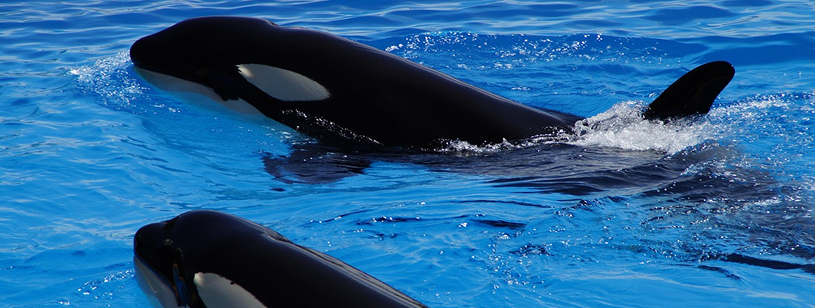
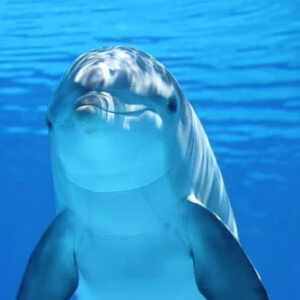
The orca, or killer whale (Orcinus orca), is the largest member of the dolphin family. Orcas are predators whose diets and hunting methods differ among populations.
Many orcas live in stable family groups, often called pods. Some populations cooperate while hunting and retain learned feeding and communication traditions.
Orcas occur in every ocean. Some populations specialise in fish, while others feed on marine mammals or other prey. These differences matter for conservation.
Quick facts
| Common name | Orca (killer whale) |
| Scientific name | Orcinus orca |
| Typical lifespan | About 50 years, up to 80-90 (females); about 30 years, up to 50-60 (males) |
| Length | About 6-9 m (males), 5-7 m (females) |
| Weight | About 3-6 tonnes (males), 2-4 tonnes (females) |
| Diet type | Carnivore (fish, squid, marine mammals, seabirds, sharks) |
| Main predators | No natural predators; humans are the main threat |
| Conservation status | Data Deficient (IUCN, 2017); some populations, such as the Southern Residents, are endangered |
| Distribution | All oceans, from the Arctic to Antarctica |
| Living environment | Coastal waters, open ocean, polar seas and fjords |
- Primary category:Mammals
- Explore this animal's categories:
Interesting facts
- Vocal traditions – Different orca groups use distinctive calls that are learned socially; they are not identical to human languages.
- Top predators - Adult orcas have no natural predators; they are at the top of the ocean food chain.
- Shark hunters - Some orcas turn sharks upside down, which can put them into a still, trance-like state called "tonic immobility".
- Learned hunting - Calves learn hunting techniques from older members of their group, so different populations have their own hunting traditions.
- Menopause - Female orcas stop breeding around 40 years of age but can live for decades longer; older females often lead their families to food.
Records and remarkable features
- Largest dolphin – The orca is the largest living member of the family Delphinidae.
- Fast swimmers - Orcas can reach about 45-55 km/h in short bursts, making them some of the fastest marine mammals.
- Different diets – Some populations specialise in fish, while others take marine mammals or other prey; not every orca eats the full list.
- Longevity – Females generally live longer than males. The famous J2 “Granny” age estimates were uncertain, so 105 years is not presented as a confirmed record.
Physical characteristics and adaptations
The orca has a strong, streamlined body built for speed and power, large teeth and very good hearing, which make it an effective predator.
Key physical adaptations
- A streamlined body - Its torpedo-like shape reduces drag, so orcas swim fast and efficiently.
- A tall dorsal fin - Adult males have a straight, triangular dorsal fin up to about 1.8 metres tall; females have a shorter, curved fin.
- Strong teeth - Orcas have about 40-56 cone-shaped teeth, each up to about 10 cm long, used to grip and tear prey.
- Black-and-white colours - The black back, white belly and white eye patches help break up the orca's outline in the water.
- Echolocation - Orcas send out clicks and listen to the echoes to find prey and obstacles.
- Breathing - They can stay underwater for more than 10 minutes, but usually surface to breathe every few minutes.
Dimensions and variations between sexes
| Characteristic | Males | Females |
|---|---|---|
| Body length | About 6-9 m | About 5-7 m |
| Weight | About 3-6 tonnes, rarely more | About 2-4 tonnes |
| Dorsal fin | Up to about 1.8 m (straight) | About 0.9 m (curved) |
| Life expectancy | About 30 years, up to 50-60 | About 50 years, up to 80-90 |
Habits and behaviour
Orcas are intelligent, social animals that live in close family groups and have learned hunting methods and calls.
Daily life
- Pods - Orcas live in groups called pods, which are usually led by older females.
- Different cultures - Orca populations have different hunting techniques, calls and behaviours that are passed on by learning.
- Strong bonds - In 2018, a female known as J35 (Tahlequah) carried her dead calf for 17 days, behaviour often described as grieving.
Social organisation
- Matrilines - The basic family unit is a mother and her offspring, often with several generations travelling together.
- Lifelong families - In some fish-eating populations, both sons and daughters stay with their mothers for life, which is very rare in mammals.
- Larger gatherings - Several pods sometimes come together, for example when food is plentiful or to mate.
Communication
- Different sounds - Orcas use clicks for echolocation, and whistles and pulsed calls for social contact.
- Dialects - Each group has its own set of calls, which are passed down from generation to generation.
- Body language - Slapping the tail, leaping and touching other orcas are also ways of communicating.
Defense techniques
- Group hunting - Orcas work together and use coordinated tactics to surround and tire out prey.
- Speed - Short bursts of speed help them chase prey.
- Helping each other - Group members stay close together and protect calves.
Habitat and geographic distribution
Orcas live in all the world's oceans, from the polar seas to the tropics, but they are most common in cold, productive waters.
Distribution context
| Region | Type of orca |
|---|---|
| Arctic and Antarctic Oceans | Several types; some hunt seals and penguins, others fish |
| North Pacific | Fish-eating "residents", mammal-eating "Bigg's" (transient) orcas and "offshore" orcas that also eat sharks |
| North Atlantic | Mixed populations; some hunt herring and mackerel, others seals and other marine mammals |
| Tropical seas | Present but less common, often far offshore |
Habitat types
- Coastal areas - Fish-eating orcas often live where salmon or herring are plentiful.
- Open ocean - Some populations range widely across the open ocean.
- Polar regions - Orcas also hunt along the edge of the sea ice.
Environmental change
- Ocean pollution - Orcas build up PCBs and other pollutants in their bodies, which can harm their health and breeding.
- Climate change - Changing ocean temperatures and melting sea ice affect where their prey lives.
- Underwater noise - Ship traffic makes it harder for orcas to echolocate and communicate.
Diet and feeding
Orcas are carnivores, but each population tends to specialise. Some eat almost only fish, while others hunt marine mammals, birds or sharks.
What do the orcas eat?
| Food group | Examples and context | Groups of orcas |
|---|---|---|
| Fish | Salmon (especially Chinook), herring, mackerel, cod | Resident orcas and many North Atlantic orcas |
| Cephalopods | Squid and octopus | Various populations |
| Marine mammals | Seals, sea lions, porpoises, dolphins, whales | Bigg's (transient) orcas and some Antarctic orcas |
| Seabirds | Penguins and other seabirds | Some orcas in the Southern Hemisphere |
| Sharks and rays | Great white sharks, sleeper sharks, rays | Offshore orcas and some other populations |
Hunting methods
- Cooperative hunting - Orcas in the same group coordinate their attacks to catch prey.
- Wave-washing - In Antarctica, groups of orcas swim side by side to create a wave that washes seals off ice floes.
- Shark hunting - Some orcas turn sharks upside down to make them still, or tear out their nutrient-rich livers.
- Intentional stranding - In Patagonia and the Crozet Islands, orcas briefly slide onto beaches to grab young sea lions or seals.
- Attacks on large whales - Groups of orcas hunt whale calves and have even been recorded killing adult blue whales.
Reproduction and life cycle
Orcas breed slowly: a female has a single calf every few years, and calves grow up within their family group.
Breeding season
- Orcas can breed at any time of year, although in some populations most mating takes place in summer.
- Mating usually happens between members of different pods, which helps avoid inbreeding.
- Calves can be born in any season.
Gestation and birth
| Characteristic | Details |
|---|---|
| Gestation | About 15-18 months |
| Number of calves per birth | 1 calf |
| Weight at birth | About 160-180 kg |
| Length at birth | About 2-2.5 m |
| Nursing | At least 1-2 years |
| Sexual maturity | About 10-15 years (females), about 15 years (males) |
Raising young
- Calves stay very close to their mothers, but other family members also help look after them.
- Young orcas learn hunting techniques and calls from the adults.
- Older females and grandmothers help their families find food, especially when food is scarce.
Different gender longevity
- Females live longer - Many live to about 50 years, and some to 80-90 years.
- Males live shorter lives - Usually about 30 years, rarely more than 50-60 years.
Name and history
Origin of the name
- The name "killer whale" is thought to come from Spanish sailors of the 18th century, who called the orca "asesina ballenas", meaning "whale killer", after seeing it hunt large whales.
- The scientific name Orcinus orca comes from Latin: Orcinus means "of the underworld" (from Orcus, the Roman god of the dead), and orca was a Latin word for a kind of whale.
- In many Indigenous cultures, orcas are symbols of family, strength and protection.
Taxonomic classification
| Classification | Name |
|---|---|
| Kingdom | Animalia |
| Phylum | Chordata |
| Class | Mammalia |
| Order | Artiodactyla (cetaceans) |
| Family | Delphinidae |
| Genus | Orcinus |
| Species | Orcinus orca |
Evolution and fossils
- Fossils of extinct relatives in the genus Orcinus date back about 5 million years.
- Orcas are the largest members of the dolphin family and share common ancestors with other dolphins.
- Like all whales and dolphins, orcas descend from land mammals that returned to the sea more than 50 million years ago.
Cultural significance and mythology
The orca has long been respected by coastal peoples, especially along the North Pacific coast of North America.
Orca in myths and symbolism
- Pacific Northwest - Among peoples such as the Haida, Tlingit and Kwakwaka'wakw, the orca is an important crest animal shown on totem poles, masks and other art.
- Guardians of the sea - In some Indigenous stories, orcas are powerful beings of the ocean that can help or protect people.
- Symbol of family - Because orcas live in close family groups, they are often seen as symbols of loyalty and family ties.
Orca in modern symbolism
- Intelligence and teamwork - The orca is often linked with cleverness and cooperation.
- Power and freedom - Its image is used as a symbol of strength and of the wild ocean.
- Environmental protection - Orcas have become a symbol of the need to protect the oceans.
Conservation status and threats
Orca conservation must be assessed by population. Some populations are endangered and face interacting pressures from prey shortages, pollution and disturbance.
Conservation status
| Region | Assessment scope | Tendency |
|---|---|---|
| Species as a whole | Data Deficient (IUCN, 2017) | Unknown |
| Southern Resident orcas (North-East Pacific) | Endangered (USA and Canada) | About 70-75 animals; low numbers |
| Antarctic orcas | Population-specific assessment required | Not well known |
Main pressures
- Pollution - Orcas build up PCBs and other chemicals in their bodies, which harm their health and breeding.
- Lack of food - Fewer Chinook salmon is a major problem for the Southern Resident orcas.
- Underwater noise - Ship traffic interferes with echolocation and communication.
- Captivity - Orcas kept in marine parks usually live shorter lives than wild orcas.
- Climate change - Changes in the ocean affect the distribution of their prey.
Protection measures
- Recovery programmes in Canada and the USA for the Southern Resident orcas.
- Fishing limits in areas that are important for orcas.
- Rules that make ships slow down and keep their distance in orca areas, to reduce noise and disturbance.
- Bans on keeping orcas in captivity in some countries, such as Canada since 2019.
In popular culture
Thanks to its striking looks and intelligence, the orca is one of the best-known marine animals and appears in films, documentaries and logos.
Films and documentaries
- "Free Willy" (1993) - A family film about a boy who helps a captive orca escape; its star, the orca Keiko, was later returned to the sea near Iceland.
- "Blackfish" (2013) - A documentary about the orca Tilikum and orcas kept at marine parks, which led to wide public debate about captivity.
- "Orca" (1977) - A thriller in which an orca seeks revenge on a fisherman.
Orcas as symbols
- "Shamu" - The name of SeaWorld's orca shows made orcas famous around the world.
- Vancouver Canucks - The ice hockey team's logo shows an orca, inspired by the art of the Pacific Northwest.