RaccoonInteresting facts and information
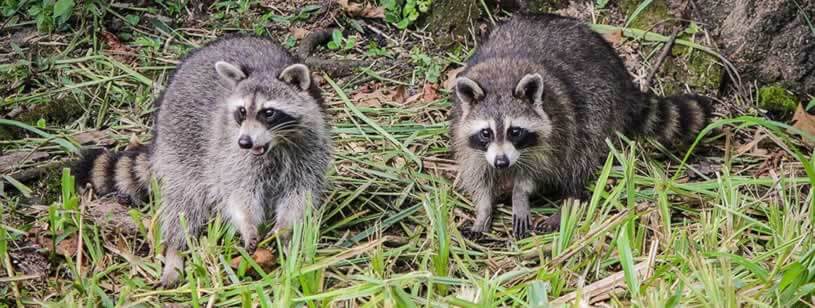
The raccoon (Procyon lotor) is a mammal native to North and Central America, with introduced populations elsewhere. It has a dark facial mask, a ringed tail and sensitive front paws. Its varied diet helps it use many habitats, including towns.
Raccoons can handle objects with their front paws and are quick to take advantage of food in towns and villages. Rubbish that is easy to reach attracts them.
They are good climbers and swimmers and live in a wide range of natural and human-altered habitats.
Quick facts
| Common name | Raccoon |
| Scientific name | Procyon lotor |
| Typical lifespan | Usually 2-3 years in the wild, up to about 20 years in captivity |
| Maximum speed | About 24 km/h |
| Length | About 40-70 cm (without tail); the tail adds 20-40 cm |
| Weight | About 3-9 kg, depending on the season and habitat |
| Diet type | Omnivore (fruit, nuts, invertebrates, fish, food scraps) |
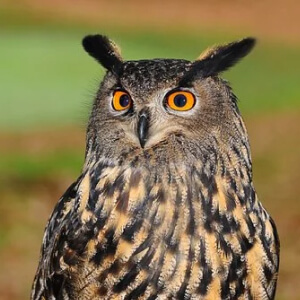
| Main predators | Coyotes, bobcats, owls, alligators, humans |
| Conservation status | Least Concern (IUCN); the related Cozumel raccoon is Critically Endangered |
| Geographical distribution | North and Central America; introduced in Europe and Asia |
| Habitat | Forests, wetlands, coasts, cities, farmland |
| Social behaviour | Mostly solitary, but related females share areas and males may form small groups |
| Special adaptations | Sharp claws for climbing, very sensitive paws, high intelligence |
Interesting facts
- Raccoons can open latches and lids - Studies show that they can solve puzzles and remember the solutions for years.
- They have an extraordinary sense of touch - Their front paws are packed with sensitive nerve endings, so they can feel food underwater.
- They do not really wash their food - Raccoons often dabble food in water, which seems to make their paws even more sensitive.
- They are tough - Thanks to their flexible bodies, raccoons have survived falls from about 10-12 metres without serious injury.
- They are mostly nocturnal, but adaptable - In towns, raccoons change their activity to match when food is available.
- They are very vocal - Raccoons make dozens of different sounds, including purrs, whistles, growls, hisses and screams.
- They have an excellent memory - They remember places, dangers and solutions to problems for a long time.
Records and remarkable features
- The raccoon (Procyon lotor) is a mammal native to North and Central America, with introduced populations elsewhere. It has a dark facial mask, a ringed tail and sensitive front paws. Its varied diet helps it use many habitats, including towns.
Characteristics
The raccoon is a medium-sized, sturdy and very agile mammal, adapted for climbing and swimming. It is easy to recognise by the black "mask" around its eyes and its ringed tail.
Appearance
- A compact, muscular body - Gives strength and flexibility for climbing and exploring.
- Thick fur - A dense underfur protects it from cold and wet weather.
- Very nimble front paws - With five long fingers, rather like human hands, they are remarkably dexterous.
- A long, bushy, ringed tail - Helps with balance when climbing and stores fat for winter.
- Eyes adapted to night vision - Raccoons see well in dim light, which helps them forage at night.
- Sharp, non-retractable claws - Help them climb trees fast and dig for food.
Special adaptations
- An exceptional sense of touch - A large part of the sensory area of a raccoon's brain is devoted to touch, so it "sees" the world with its hands.
- Climbing head first - Raccoons can turn their hind feet backwards, so they can climb down trees head first.
- A good memory - They remember places, food sources and routes for years.
- Surviving falls - They can drop from heights of about 10-12 metres without being hurt.
Habits and behaviour
Raccoons are mostly nocturnal, intelligent animals with flexible behaviour that suits life both in the wild and in towns.
Social behaviour
- Often solitary - Adult males usually live alone, while females stay with their young for several months.
- Loose groups - Related females often share an area, and unrelated males sometimes form small groups, especially in towns where food is plentiful.
- Home ranges - Raccoons use regular areas and leave scent marks and latrines (communal toilet sites).
- Many sounds - They purr, snarl, whistle and scream, depending on their mood.
Feeding and survival techniques
- Curious explorers - Raccoons open doors, bins, boxes and even zips to reach food.
- Hand-like paws - They grab and handle small objects and can unscrew some lids.
- Flexible diet - They eat everything from fruit and insects to leftovers in towns.
- Many hiding places - They den in tree holes, rock crevices, under bridges and even in attics.
- Winter rest - In cold regions, raccoons do not hibernate, but they sleep for long periods in their dens in winter, living on stored fat.
Habitat and geographic distribution
Raccoons are among the most adaptable mammals and live in forests, wetlands, coasts and even city centres.
| Region | Species | Preferred habitat |
|---|---|---|
| North America | Common raccoon (Procyon lotor) | Forests, rivers, cities |
| Central and South America | Crab-eating raccoon (Procyon cancrivorus) | Tropical forests, swamps, mangroves |
| Europe (introduced) | Procyon lotor | Forests, towns, especially in Germany |
| Asia (introduced) | Procyon lotor | Forests and farmland, especially in Japan |
Types of habitat
- Deciduous and mixed forests - Provide shelter and many kinds of food.
- Coasts and mangroves - Crab-eating raccoons feed on crabs, shellfish and fish.
- Towns and suburbs - Raccoons find food in bins and gardens and shelter in buildings.
- Farmland - They can become pests by eating crops and raiding chicken coops.
Human impact and threats
- Spreading towns - Destroy some natural habitats, although many raccoons adapt to city life.
- Hunting and trapping - In some areas, raccoons are hunted for fur or to protect crops.
- Disease - Raccoons can carry rabies and the raccoon roundworm, which can be dangerous to people and pets.
- Climate change - Affects habitats and food, and may help raccoons spread further north.
Diet and feeding
The raccoon is an opportunistic omnivore that eats a huge range of foods, from fruit and seeds to crayfish, insects and leftovers in towns.
What do raccoons eat?
| Type of food | Examples |
|---|---|
| Fruit and crops | Apples, pears, berries, maize |
| Nuts and seeds | Acorns, walnuts, peanuts, sunflower seeds |
| Insects and other invertebrates | Crickets, beetles, larvae, worms |
| Fish and crustaceans | Crabs, crayfish, small fish |
| Eggs and birds | Duck eggs, young birds, poultry |
| Small animals | Mice, frogs, young squirrels |
| Food waste | Leftovers from bins |
Feeding techniques
- Feeling for food - Raccoons use their paws to find food underwater or in cracks.
- Opening things - They can open bins, jars and doors to reach food.
- "Washing" - They often dabble food in water, which increases the sensitivity of their paws.
- Hunting - Raccoons catch mice, birds, frogs and other small animals.
- Fattening up - In autumn, they eat a lot and can put on a thick layer of fat for winter.
Adapting to food supply
- In forests, they eat fruit, nuts and invertebrates.
- Near water, they prefer crayfish, crabs and fish.
- In towns, they search for food scraps and rubbish.
- Before winter, they eat as much as they can to build up fat reserves.
Reproduction and life cycle
Raccoons breed once a year, and females are protective mothers that look after their young for several months.
| Feature | Details |
|---|---|
| Age at maturity | About 1 year |
| Breeding season | Mainly January - March |
| Pregnancy | About 63–65 days |
| Young per litter | Usually 2-5, sometimes up to 7 |
| Time with mother | About 4-6 months, sometimes over the first winter |
| Litters per year | 1 |
| Lifespan | Usually only 2-3 years in the wild, up to about 20 years in captivity |
Breeding
- Searching for mates - In the breeding season, males travel widely to find females and may fight rivals.
- A hidden den - The female gives birth in a tree hole, burrow or other sheltered place.
- Helpless young - The young, called kits, are born with fine fur, and their eyes open after about three weeks.
- Learning from mother - The kits learn from their mother how to find food and avoid danger.
- Leaving home - After about 4-6 months, young raccoons start to become independent, although they may stay nearby until the next year.
Survival strategies
- The mother moves her young to a new den if she senses danger.
- The kits call to their mother with chirps and whistles to stay in contact.
- When food is scarce, some females do not breed that year.
Name and history
The raccoon has a long history with the Indigenous peoples of North America and with European settlers.
Origin of the name
- The English word "raccoon" comes from the Powhatan word aroughcun, meaning "one who scratches with its hands".
- The scientific name Procyon lotor combines the Greek procyon ("before the dog") and the Latin lotor ("washer"), after its habit of dabbling food in water.
- In German, the raccoon is called Waschbär, "washing bear", and in Japanese araiguma, also meaning "washing bear".
Raccoons in human history
- Indigenous peoples of North America - Raccoons appear in many stories and were hunted for meat and fur.
- European settlers - Raccoon fur was used for clothing, and the coonskin cap became a symbol of the American frontier.
- The 20th century - Raccoons were introduced to Europe, Japan and other places, where they have spread widely.
- Today - Raccoons are popular characters in modern culture, appearing in films and video games.
Raccoons in folklore
Cultural significance and mythology
- A trickster - In the stories of many Native American peoples, the raccoon is a clever trickster who outwits other animals.
- A symbol of cleverness - Because of its skilful hands and problem-solving, the raccoon is often seen as a symbol of curiosity and resourcefulness.
- The "masked bandit" - Its black mask has made the raccoon a popular image of a mischievous little thief.
Conservation status and threats
The common raccoon is not endangered, but it faces some threats, especially from conflict with people. One close relative, the Cozumel raccoon, is critically endangered.
| IUCN status | Species | Range |
|---|---|---|
| Least Concern (LC) | Common raccoon (Procyon lotor) | North and Central America; introduced in Europe and Asia |
| Least Concern (LC) | Crab-eating raccoon (Procyon cancrivorus) | Central and South America |
| Critically Endangered (CR) | Cozumel raccoon (Procyon pygmaeus) | Cozumel Island, Mexico |
Main threats
- Habitat loss - Deforestation and development reduce safe places for raccoons, especially on Cozumel Island.
- Hunting for fur - In some regions, raccoons are still hunted for their fur.
- Conflict with farmers - Raccoons are often seen as pests because they damage crops and attack poultry.
- Disease - Raccoons can catch and spread rabies, distemper and parasites.
- Road accidents - Many raccoons are killed by cars every year.
Conservation and management
- Protecting habitats - Reserves on Cozumel Island help protect the rare Cozumel raccoon.
- Living with raccoons - Campaigns teach people to secure rubbish and avoid feeding raccoons, reducing conflicts in towns.
- Disease control - Rabies vaccine baits are used in some areas to protect wildlife and people.
- Managing invasive populations - In Europe and Japan, introduced raccoons are monitored and controlled to protect native wildlife.
In popular culture
- Rascal - Sterling North's 1963 book about a boy and his pet raccoon became a popular Japanese anime in 1977, which led to many raccoons being imported to Japan as pets.
- Rocket Raccoon - A gun-loving, wisecracking raccoon in Marvel's Guardians of the Galaxy.
- Meeko (Pocahontas, Disney, 1995) - Pocahontas's mischievous raccoon companion.
- RJ (Over the Hedge, 2006) - A clever raccoon who leads a group of animals in raiding a suburb for food.