WhaleInteresting facts and information
Whales are fully aquatic mammals within the cetaceans. They include very different animals, from smaller toothed whales to the enormous blue whale. They breathe air, give birth to live young and feed their calves with milk.
Two main cetacean groups are represented in this overview:
- Baleen whales (Mysticeti) filter food using keratin plates called baleen. Different species consume krill, small fish or other prey.
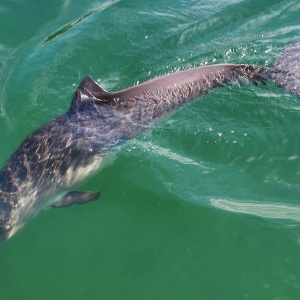
- Toothed cetaceans (Odontoceti) include toothed whales, dolphins and porpoises. Diet differs between species and populations.
Known species of whales
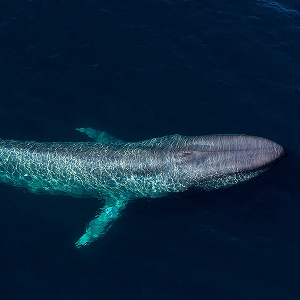
- Blue whale (Balaenoptera musculus) – The largest living animal.
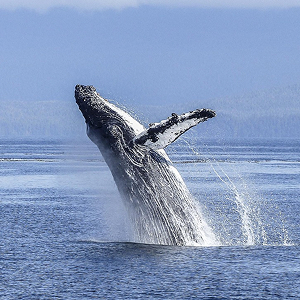
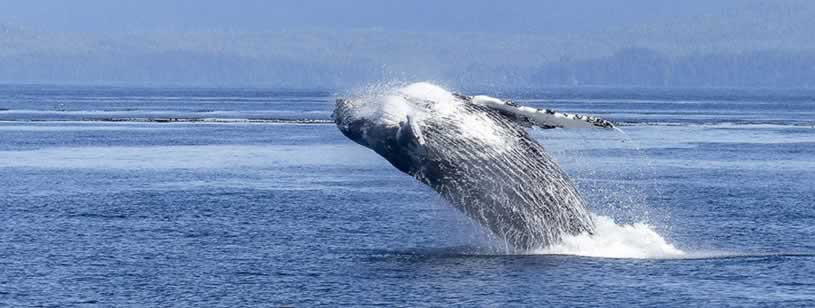
- Humpback whale (Megaptera novaeangliae) – Known for long pectoral fins, songs and breaching.
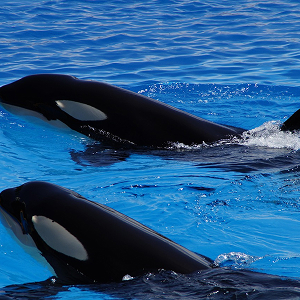
- Orca (Orcinus orca) – The largest member of the dolphin family, within the toothed cetaceans.
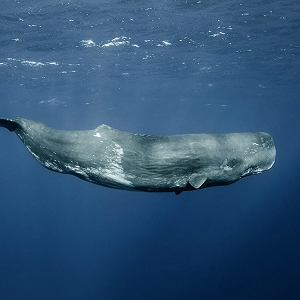
- Sperm whale (Physeter macrocephalus) – A large toothed whale known for deep diving.
- Bowhead whale (Balaena mysticetus) – An Arctic whale with evidence of exceptional longevity.
- Minke whale (Balaenoptera acutorostrata) – A relatively small baleen whale.
Whale behaviour varies greatly. Communication, migration and feeding patterns must be described by species rather than attributed to all whales.
Quick facts
| Common name | Whale |
| Scientific name | Cetaceans (Cetacea); baleen whales and toothed cetaceans are different groups |
| Typical lifespan | About 40 to more than 200 years (depending on species) |
| Length | About 4-30 m (depending on species) |
| Weight | Varies greatly by species; blue whales are exceptionally large |
| Diet type | Carnivore (krill, fish, squid) |
| Main predators | Orcas (for some species), humans (whaling) |
| Conservation status | Ranges from Least Concern to Critically Endangered, depending on the species |
| Distribution | Oceans and seas around the world |
| Living environment | Deep and coastal waters, from the tropics to the polar regions |
- Primary category:Mammals
- Explore this animal's categories:
Interesting facts
- The blue whale is the largest animal that has ever lived on Earth, larger even than the biggest dinosaurs.
- A blue whale's heart is about the size of a small car and beats only a few times a minute during a deep dive.
- Whales sing - Many species, especially humpback whales, produce long, complex songs to communicate.
- Resting and breathing – Cetaceans surface to breathe. Sleep patterns differ; observations from dolphins should not be assumed to apply identically to every whale.
- Humpback whales make one of the longest migrations of any mammal, travelling thousands of kilometres between feeding and breeding areas every year.
Records and remarkable features
- The largest animal on Earth - The blue whale (Balaenoptera musculus) can be more than 30 metres long and weigh more than 150 tonnes.
- The longest-lived whale - The bowhead whale (Balaena mysticetus) can live for more than 200 years.
- Deep diving – Sperm whales make very deep dives, but they do not hold every cetacean diving record.
- The loudest voice in the ocean - Blue whale calls can reach about 188 decibels, louder than a jet engine.
- Fast swimmers - Fin and sei whales are among the fastest great whales, reaching speeds of around 40 km/h.
Physical characteristics and adaptations
Whales are mammals that are highly adapted to life in the ocean. Their ancestors lived on land, but they evolved into superb swimmers with remarkable physical features.
Key physical adaptations
- A streamlined body - Long and smooth, allowing fast, efficient swimming.
- Thick skin and blubber - Insulate whales from the cold water.
- Large, efficient lungs - Allow long dives and fast exchange of air at the surface.
- Flippers and dorsal fin - Provide stability and control in the water.
- A powerful tail (flukes) - The main source of propulsion, allowing whales to reach high speeds.
- Baleen or teeth - Baleen whales filter their food, while toothed whales actively hunt.
Differences between baleen whales and toothed whales
| Feature | Baleen whales (Mysticeti) | Toothed cetaceans (Odontoceti) |
|---|---|---|
| Size | Mostly large (e.g. blue whale) | From small porpoises to the large sperm whale |
| Mouth | Baleen plates for filtering | Teeth for catching prey |
| Feeding | Filter krill, plankton and small fish | Hunt fish, squid and, in some species, seals |
| Sounds | Low calls and, in some species, complex songs | Use echolocation clicks to find their way and their prey |
| Social life | Often alone or in small groups | Often in large, stable groups (e.g. orcas) |
Habits and behaviour
Whales are intelligent and social animals with complex ways of communicating, migrating and hunting.
Daily life
- Some species, such as the blue whale, are usually seen alone or in pairs, while others live in family groups (e.g. orcas).
- Many whales migrate, travelling thousands of kilometres between feeding and breeding areas.
- Whales are often seen leaping out of the water (breaching) or slapping the surface with their tails or flippers.
Communication and interaction
- Songs - Male humpback whales sing long, complex songs, and whales in the same region share and gradually change their song.
- Echolocation - Toothed whales, such as sperm whales and orcas, use clicks to find their way and detect prey.
- Cooperation - Some species, such as orcas, hunt in organised teams using sophisticated strategies.
Survival strategies
- Long dives - The sperm whale can stay underwater for up to about 90 minutes.
- Defence - Large whales can use their powerful tails to fight off predators.
- Helping others - Humpback whales have been seen interfering with orca attacks on seals and other whales.
Habitat and geographic distribution
Whales live in all the world's oceans, from the tropics to the polar regions. Each species has its preferred habitats, depending on the season and its breeding needs.
Distribution
| Region | Example species | Habitat |
|---|---|---|
| Arctic Ocean | Bowhead whale | Cold waters and sea ice |
| Atlantic Ocean | Blue whale, humpback whale | Temperate and tropical waters |
| Pacific Ocean | Sperm whale, grey whale | Coastal and deep waters |
| Indian Ocean | Blue whale, orca | Warm and tropical waters |
| Southern Ocean | Blue whale, minke whale | Cold waters rich in krill |
Habitat types
- Deep, open ocean - Blue whales and sperm whales prefer the open sea.
- Coasts and lagoons - Humpback whales, grey whales and orcas are often seen close to shore.
- Polar seas - Bowhead whales and minke whales are adapted to icy waters.
Environmental change
- Climate change is affecting migration routes and food-rich feeding areas.
- Noise from shipping interferes with whale communication.
- Commercial whaling drastically reduced some species, although many are now protected by international agreements.
Diet and feeding
All whales are carnivores, but they feed in very different ways. Baleen whales filter their food, while toothed whales are active predators that hunt fish and squid.
What do whales eat?
| Type of whale | Food | Examples |
|---|---|---|
| Baleen whales (Mysticeti) | Plankton, krill, small fish | Blue whale, humpback whale |
| Toothed cetaceans (Odontoceti) | Fish, squid, marine mammals | Sperm whale, orca, dolphins |
Feeding methods
- Filtering through baleen - Whales take in huge mouthfuls of water and push it out through their baleen plates, keeping the food inside.
- Swallowing whole - Toothed whales catch their prey and swallow it whole, without chewing.
- Group hunting - Orcas and dolphins work together to surround schools of fish or other prey.
- Bubble nets - Humpback whales blow rings of bubbles to trap schools of fish, then lunge up through them.
Reproduction and life cycle
Whales breed slowly: females usually give birth to a single calf after a long pregnancy.
Breeding season
- Many baleen whales breed in warmer tropical and subtropical waters.
- Male humpback whales sing during the breeding season, and a single song can last up to about 30 minutes before it is repeated.
- Competition is intense, and males often fight or chase each other for access to females.
Life cycle stages
| Stage | Timing | What happens |
|---|---|---|
| Pregnancy | About 10-18 months | Usually one calf every few years |
| Newborn calf | 2-7 m long, depending on species | Feeds on very rich milk |
| Young calf | 6 months - 2 years | Stays with its mother for protection and to learn |
| Maturity | About 5-15 years | Depends on the species |
Survival strategies
- Whale milk is very rich, often containing 30-50% fat, so calves grow quickly.
- Calves stay with their mothers for up to about two years, learning migration routes and how to feed.
- Females usually give birth only every 2-3 years, so populations recover very slowly after heavy hunting.
Name and history
Origin of the name
- The English word "whale" comes from Old English hwæl. The scientific name Cetacea comes from the Greek kētos, meaning "sea monster" or "large sea creature".
- Related words for whale exist in many Germanic languages, reflecting how important whales were to coastal peoples.
Taxonomic classification
| Classification | Name |
|---|---|
| Kingdom | Animalia |
| Phylum | Chordata |
| Class | Mammalia |
| Order | Cetacea (often placed within Artiodactyla) |
| Suborders | Mysticeti (baleen whales), Odontoceti (toothed whales) |
Evolution and fossils
- The ancestors of whales were land mammals distantly related to hippos, which began returning to the water about 50 million years ago.
- Fossils show the gradual change from four-legged land animals to fully aquatic mammals with flippers.
- Pakicetus is one of the oldest known whale relatives, and Basilosaurus was an early whale that still had tiny hind legs.
Cultural significance and mythology
Whales have been important figures in mythology, religion and popular culture, seen either as sacred creatures or as sea monsters. They appear in the legends of many peoples and were deeply respected by communities that depended on them for food and materials.
- The story of Jonah - In the Bible, the prophet Jonah is swallowed by a great fish, often imagined as a whale, and survives for three days inside it.
- Paikea - In Māori tradition, the ancestor Paikea travelled to New Zealand on the back of a whale.
- Arctic peoples - For the Inuit and other Arctic communities, whale hunting has been central to life and is surrounded by customs of respect.
Conservation status and threats
Whales were hunted intensively over past centuries, which caused dramatic declines in some species. Although many are now protected by international agreements, they still face many threats.
Main pressures
- Whaling - Commercial whaling is banned by an international moratorium, but a few countries, such as Japan, Norway and Iceland, still hunt some whales.
- Pollution - Plastic and toxic chemicals affect whale health and can cause disease and reduced fertility.
- Underwater noise - Large ships and military sonar disturb whale communication and can affect navigation and migration.
- Climate change - Warming seas affect krill populations, the main food of many baleen whales.
- Ship strikes and nets - Whales are often hit by large ships or become entangled in fishing gear.
Threatened whale species
| Species | IUCN status | Approximate population |
|---|---|---|
| Blue whale (Balaenoptera musculus) | Endangered | About 5,000-15,000 mature animals |
| Bowhead whale (Balaena mysticetus) | Least Concern | Tens of thousands |
| North Atlantic right whale (Eubalaena glacialis) | Critically Endangered | About 370 animals |
| Sperm whale (Physeter macrocephalus) | Vulnerable | Hundreds of thousands |
| Common minke whale (Balaenoptera acutorostrata) | Least Concern | Hundreds of thousands |
Protection measures
- A ban on commercial whaling through the International Whaling Commission, created under the International Convention for the Regulation of Whaling.
- Reducing vessel risks – Shipping measures and protected areas can reduce risks, but cannot guarantee that whales are safe from collisions or fishing gear.
- Reducing noise pollution by limiting industrial activities in important whale areas.
- Research on the effects of climate change on marine ecosystems.
Whales in popular culture
Whales have inspired books, films, music and art and have become symbols of the mystery of the ocean, freedom and the greatness of nature.
Whales in literature
- Moby-Dick (Herman Melville, 1851) - One of the most famous novels about a whale, telling the story of Captain Ahab's obsession with a huge white sperm whale.
- Twenty Thousand Leagues Under the Seas (Jules Verne, 1870) - Whales appear as part of the fascinating world of the oceans.
Whales in film and music
- Free Willy (1993) - A film about a boy who befriends a captive orca and helps him escape to the sea.
- Songs of the Humpback Whale (1970) - A best-selling album of whale songs that helped launch the "Save the Whales" movement.
Whales as symbols
- A symbol of ocean protection - Many environmental organisations use whales in campaigns to protect the oceans.
- A symbol of freedom and the power of nature - Whales are often linked with the vastness of the ocean and the strength of the natural world.
Did you know? About whale
- The number of recognised cetacean species changes with taxonomic research; whales, dolphins and porpoises are all cetaceans.
- Belugas use a wide range of sounds, but an apparent response to music does not show a human-like musical taste.
- The blue whale is the largest living animal. Exact size records require reliable measurements.
- Evidence for lifespans of more than 200 years concerns bowhead whales, not sperm whales.
- Blue whales give birth to large calves after a pregnancy lasting roughly a year. Calf size and weight vary.
- Whale calves drink their mother's milk. The amount depends on the species, age and individual.
- Sperm whales have the largest brains of any animal; this does not establish a simple ranking of intelligence.
- Sperm whales have been seen resting in groups while floating almost vertically; this is one observed resting posture, not the only one.
- Dive length and breathing intervals differ greatly between whale species and activities.
- Baleen whales filter food through baleen plates. Toothed cetaceans have teeth instead.
- A whale's blow is exhaled air and moisture at the surface, not water deliberately expelled from its lungs.
- Humpback social associations can change between activities and seasons; this does not make every association equivalent to human friendship.
- Many humpbacks feed intensively in feeding areas and use stored energy during migration or breeding; patterns vary between populations.
- The orca, also known as the killer whale, is one of the top predators of the oceans.
- Pilot whales and killer whales have "whale" in their names, but they are actually members of the dolphin family. Related profile: Dolphin.
- Killer whale diets vary between populations: some specialise in fish, while others hunt marine mammals or other prey.
- Like other cetaceans, orcas may rest with one eye open and half of the brain awake.