Tibetan sand foxInteresting facts and information
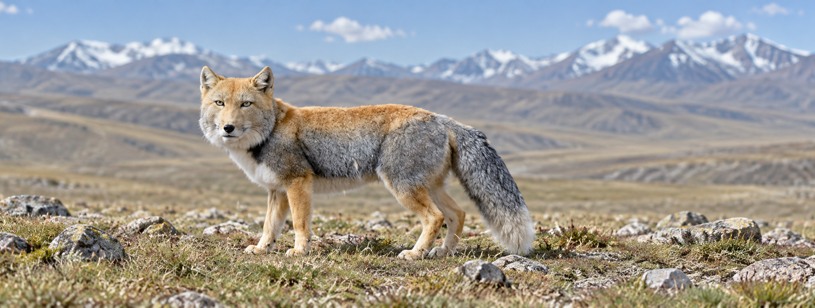
AI illustration of tibetan sand fox.
The Tibetan sand fox is a high-plateau fox recognised by its broad cheeks, small ears and compact body. It lives on the Tibetan Plateau and in nearby Asian regions, where it hunts mainly pikas, small mammals related to rabbits.
Its scientific name is Vulpes ferrilata. Despite “sand” in the English name, it inhabits alpine grasslands, steppe and cold semi-desert rather than hot dunes.
Quick facts
| Species | Vulpes ferrilata |
| Class / order / family | Mammalia / Carnivora / Canidae |
| Distribution | The Tibetan Plateau and neighbouring highlands, including Nepal and Ladakh |
| Habitat | Alpine grasslands, steppe and cold high-altitude semi-desert, at about 3,500–5,200 m |
| Size | Approximately 3–4.6 kg; head and body around 49–65 cm |
| Diet | Predominantly carnivorous; pikas are central to the diet |
| Reproduction | Gestation around 50–60 days; 2–5 pups |
| Young | Born alive and raised in a den |
| Conservation | Least Concern (LC), global status |
- Primary category:Mammals
- Explore this animal's categories:
Interesting facts
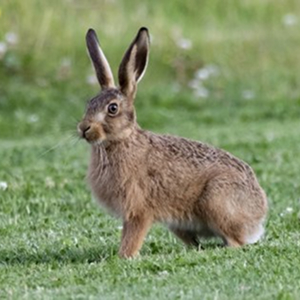
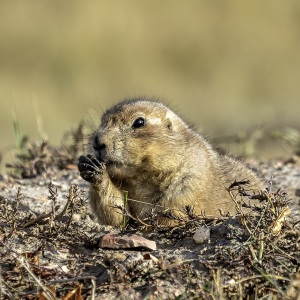
- Pikas are not rodents. They belong to Lagomorpha, alongside rabbits and hares.
- The face looks almost square. Thick cheek fur accentuates this outline.
- It can hunt during the day. Activity reflects prey behaviour as well as other conditions; foxes are not all nocturnal.
- The ears are relatively small. Its outline differs greatly from that of the huge-eared fennec.
- It can catch pikas flushed from cover by a bear. This observation does not demonstrate a planned agreement between the species.
Records and remarkable features
Its facial appearance is more unusual than its size. The Canid Specialist Group reports approximately 3–4.6 kg and a head-and-body length of around 49–65 cm, excluding the tail, for the animals described.
It lives at about 3,500–5,200 m above sea level, higher than almost any other fox.
Life at high altitude is an important adaptation. Semi-deserts can be cold, with wind and frost. The habitat name primarily describes dryness and vegetation, rather than a fixed temperature.
Characteristics
The head has a narrow muzzle, short ears and thick cheek fur. Its square, serious-looking face has made it a popular internet meme.
The back and head have reddish-brown or yellowish tones, while the flanks are grey. The bushy tail has a pale tip. The legs appear short compared with the bulky fur.
| Feature | Distinctive feature |
| Broad cheeks | Give the head an almost square outline |
| Small ears | Different from desert foxes with very large ears |
| Grey flanks | Contrast with the more reddish upper body |
| Dense fur | Important in the plateau’s cold environment |
It is distinct from the corsac fox. Corsacs are linked mainly to lower-elevation steppe and semi-desert, and have a different face shape. The vague name “sand fox” does not reliably identify a species.
Habits and behaviour
Tibetan sand foxes can be active by day, searching for pikas and other small animals. Field observations do not support a simple description as exclusively nocturnal.
They may be encountered alone or in pairs. They use dens and other shelters, moving through areas where prey is available.
While investigating an area, a fox stops, watches and listens. Hunting involves attention and a careful approach as well as running. Pikas can quickly retreat underground, so attack timing matters.
Foxes have been seen catching pikas escaping from places excavated by brown bears. This offers a feeding opportunity. This is not true teamwork: the fox simply takes advantage of the bear's digging.
Habitat and geographic distribution
The species is associated with the Tibetan Plateau and neighbouring highlands. Its range includes large parts of western China and extends into Nepal and Ladakh in India.
Habitats include alpine grasslands, steppe, stony terrain and cold semi-desert. Low vegetation allows prey detection, while tunnels and shelters provide refuges.
- High-altitude grasslands can support pika populations.
- Steppe and open ground allow prey searching.
- Ground with burrow systems provides food and shelter opportunities.
- Connected habitat allows use of several feeding areas.
Where pikas are plentiful, Tibetan foxes are usually common too.
Diet and feeding
Pikas are central to the Tibetan sand fox’s diet. Studies in Qinghai found a strong association between fox presence and these small mammals. Other animals may also be eaten, without removing the importance of the main prey.
Pikas eat plants and use tunnel networks. A fox must surprise them outside shelter or while they move between entrances. Waiting and approaching carefully can work better than a long chase.
The menu can include rodents, birds or carrion when opportunities arise. However, its diet is predominantly carnivorous.
Its reliance on pikas has conservation implications. Campaigns that greatly reduce prey can affect the predator too. Protecting foxes requires understanding the relationships between plants, small herbivores and carnivores.
Reproduction and life cycle
Tibetan sand foxes form pairs and raise their pups in shelters. Zoological literature reports gestation of approximately 50–60 days and litters of 2–5 pups, with variation between observations.
Mating usually takes place in late winter, and pups are born in spring, around April–May; timing differs slightly between regions.
| Stage | Main needs |
| Birth | Shelter and adult care |
| Early weeks | Milk, warmth and protection |
| First outings | Exploring nearby ground |
| Growth | Animal food and practising movement |
Pups develop in an environment of wind, cold and changing food availability. Watch occupied shelters from a distance so adults can travel and provision the family without interruption.
Name and history
The name Tibetan fox identifies the region closely associated with the species. Tibetan sand fox can misleadingly suggest dunes, although it describes an animal of high plateaus.
The scientific name Vulpes ferrilata distinguishes it from other foxes sometimes called sand foxes. Common names are not always precise, especially when translated literally.
The species was scientifically described in 1842 by the British naturalist Brian Houghton Hodgson, who studied the wildlife of Nepal and Tibet.
Conservation status and threats
The global status is Least Concern (LC), according to the Canid Specialist Group. Some population information remains limited, and local conditions can vary between regions.
Prey control, grassland change, habitat degradation and local pressures on wildlife can affect the species. Changes in its food base are especially important for a predator closely linked to pikas.
Conservation involves monitoring foxes, prey and habitat. Large-scale poisoning of pikas on Chinese grasslands has been a particular concern, because it removes the foxes' main food.
Discover other foxes
Read about Red fox or explore: Culpeo · Pale fox · Blanford's fox · Cape fox · Corsac fox · Swift fox · Kit fox · Bengal fox · Fennec fox · Arctic fox.
Frequently asked questions
- Where does the Tibetan sand fox live? On the Tibetan Plateau and neighbouring Asian highlands. It uses alpine grasslands, steppe and cold semi-desert, rather than typical hot dunes.
- Why is its face almost square? Thick cheek fur, small ears and a narrow muzzle create the outline. It has also made the fox a popular internet meme.
- What does it eat? Mainly pikas, alongside other small animals and locally available food. Qinghai studies found a strong association with its principal prey.
- Are pikas rodents? No. Pikas belong to Lagomorpha, alongside rabbits and hares. They are small, plant-eating mammals that use tunnels in high-altitude habitats.
- Does it hunt only at night? No. It can hunt pikas during the day. Fox species do not all share the same activity pattern or live exclusively at night.
- Is it the same species as the corsac fox? No. The Tibetan sand fox is Vulpes ferrilata and the corsac is Vulpes corsac. They differ in appearance, habitat and feeding, although both are Asian canids.
- How does it reproduce? Pairs raise pups in shelters. Literature reports approximately 50–60 days’ gestation and 2–5 pups, while breeding timing varies between regions.
- Is it threatened with extinction? Its global status is Least Concern. Major reductions in pika populations and habitat change can affect foxes locally because predator and prey are closely linked.