DolphinInteresting facts and information
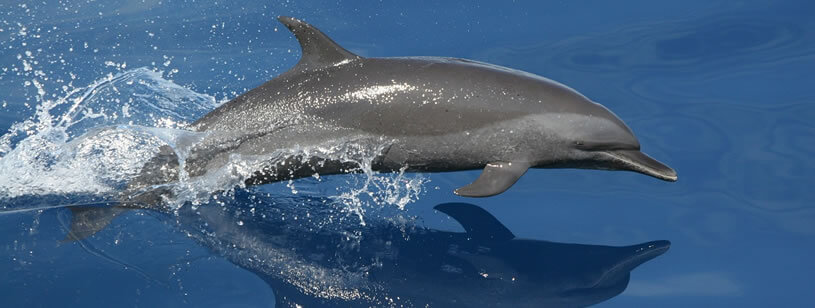
Dolphins are toothed whales adapted to life in water. Oceanic dolphins belong to the family Delphinidae, while several river-dolphin lineages belong to other families. Species differ in habitat, diet, social behaviour and conservation status; the orca is a member of the oceanic dolphin family.
Dolphins include oceanic species and several separate river-dolphin lineages. Their ranges and conservation status vary, so river dolphins should not all be placed in the family Delphinidae.
Quick facts
| Common name | Dolphin |
| Scientific name | Delphinidae and several river-dolphin lineages |
| Typical lifespan | 20-60 years (depending on species) |
| Maximum speed | Usually up to about 30-40 km/h in short bursts, depending on the species |
| Length | 1.5 - 4 m for most species (the orca is much larger) |
| Weight | 50 - 650 kg for most species |
| Diet type | Carnivore (fish, squid, crustaceans) |
| Main predators | Sharks, orcas, humans |
| Conservation status | Varies by species and population; some river dolphins are Endangered or Critically Endangered |
| Distribution | Oceans and seas around the world; a few large rivers |
| Habitat | Tropical and temperate waters, coasts, estuaries, large rivers |
Interesting facts
- Dolphins sleep with half their brain at a time - To keep breathing and stay alert, a dolphin rests one half of its brain while the other half stays awake.
- They are among the most intelligent animals - Studies show that bottlenose dolphins can recognise themselves in a mirror, a rare ability in animals.
- They "see" with sound - Dolphins send out clicks and listen to the echoes, which lets them find their way and hunt even in total darkness.
- They have names - Each bottlenose dolphin develops its own signature whistle, which others can use rather like a name.
- They love to play and leap - Their acrobatic jumps may be part of play or communication, or a way of getting rid of parasites on the skin.
- They sometimes help other animals - There are reports of dolphins protecting swimmers from sharks or staying close to people in trouble, although such stories are hard to verify.
- They make sounds while they play - During play, dolphins can make bursts of sound that some researchers compare to laughter.
- They raise their young with great care - Dolphin mothers look after their calves for several years, and other females in the group may help protect them.
- Some dolphins use tools - In Shark Bay, Australia, some bottlenose dolphins wear marine sponges on their beaks to protect them while searching for food on the seabed.
- They have complex social lives - Dolphins form long-term friendships and alliances and cooperate when hunting.
Records and remarkable features
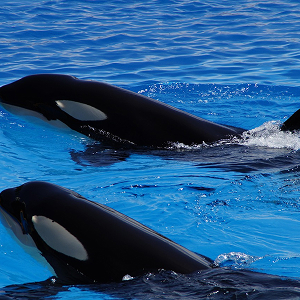
- The orca (Orcinus orca) is the largest living member of the oceanic dolphin family.
Characteristics
Dolphins are marine mammals that are highly adapted to life in water. Their bodies allow them to swim fast, communicate efficiently and find prey with great accuracy.
Main physical features:
- Streamlined, elongated body - Reduces water resistance so that dolphins can swim fast.
- Dorsal fin and flippers - The dorsal fin gives stability, and the flippers help with steering and braking.
- Powerful tail (flukes) - Drives the dolphin through the water and powers its spectacular leaps.
- Smooth, elastic skin - Reduces friction with the water and renews itself quickly, which helps prevent infections.
- No sweat glands and almost no hair - Unlike most mammals, dolphins do not sweat, and newborns have only a few bristles on the snout, which soon fall out.
Special adaptations for survival:
- Conscious breathing - Dolphins must come to the surface to breathe, and they control each breath voluntarily.
- Very efficient lungs - They can exchange up to about 80-90% of the air in their lungs with each breath, compared with about 15% in humans.
- Good vision in water and air - Dolphins can see well both underwater and above the surface.
- Extremely sharp hearing - They hear very high-frequency sounds, which they use for echolocation.
- Keeping warm - A layer of blubber under the skin protects them from cold water.
Habits and behaviour
Dolphins are highly social and intelligent. They live in groups called pods, where they form complex relationships based on cooperation and communication.
Social behaviour:
- Groups from a few animals to hundreds - Large groups are usually made up of smaller, organised subgroups.
- Cooperative hunting - Dolphins coordinate their attacks to round up schools of fish.
- Long-term alliances - Males may form alliances to compete for females.
- Helping each other - Dolphins have been seen supporting injured companions at the surface so they can breathe.
Breeding season:
- No fixed season - Many dolphins can mate at any time of year.
- Courtship - It can involve leaps, touching and special sounds.
- Usually one calf at a time - Females typically give birth every 2-3 years, after a pregnancy of about 10-12 months.
Defence and survival methods:
- Speed and agility - Dolphins can move away quickly to escape predators.
- Echolocation - Helps them detect objects, prey and danger in murky or dark water.
- Fighting as a group - When threatened by sharks, dolphins may attack together, ramming the predator with their beaks.
Habitat and geographic distribution
Dolphins live in almost all the world's oceans and seas, and a few species live in large rivers.
Habitat types:
- Coastal waters - Favoured by species such as the bottlenose dolphin (Tursiops truncatus), where food is plentiful.
- Open ocean - Species such as the common dolphin (Delphinus delphis) live in deep water and can travel long distances.
- River dolphins include species such as Platanista gangetica and Inia geoffrensis; these are not members of the oceanic dolphin family Delphinidae.
Geographic distribution:
| Region | Examples of species | Situation |
|---|---|---|
| Atlantic Ocean | Common dolphin, bottlenose dolphin, striped dolphin | Widespread; some populations are affected by fishing nets |
| Pacific Ocean | Pacific white-sided dolphin, orca, spinner dolphin | Some populations declined because of fishing |
| Mediterranean and Black Seas | Common dolphin, bottlenose dolphin | Several populations are threatened; status depends on the species and area |
| Rivers of South America and Asia | Amazon river dolphin, Ganges river dolphin | Threatened; each species is assessed separately |
Impact of climate change and human activities:
- Habitat loss - Pollution and dams harm river dolphins in particular.
- Accidental capture in fishing nets - One of the main causes of dolphin deaths.
- More shipping - Noise from boats disturbs dolphin communication, and collisions can be fatal.
Dolphins are resilient animals, but today's threats mean that strong protection is needed to ensure their survival.
Diet and feeding
Dolphins are carnivores, and their diet depends on where they live and what food is available. They are very efficient hunters that use complex strategies and echolocation to find prey.
Main food:
- Fish - Anchovies, mackerel, sardines, herring and many other species.
- Squid and other cephalopods - An important food for species that feed in deep water.
- Crustaceans and other invertebrates - Some species occasionally eat crabs and shrimps.
- Birds and marine mammals - Orcas, which belong to the dolphin family, can hunt seals, penguins and even other whales.
Diet by species:
| Species | Main food |
|---|---|
| Common dolphin (Delphinus delphis) | Small schooling fish, squid |
| Bottlenose dolphin (Tursiops truncatus) | Fish, crustaceans, octopus |
| Amazon river dolphin (Inia geoffrensis) | River fish, such as catfish and piranhas, and freshwater crabs |
| Orca (Orcinus orca) | Large fish, seals, other whales |
Hunting methods:
- Group hunting - Dolphins work in teams to surround schools of fish and drive them towards the surface.
- Echolocation - They send out sound waves that help them find prey in murky or dark water.
- Tail slaps - Dolphins sometimes hit fish with their tails to stun them and catch them more easily.
- Working with people - In a few places, dolphins and fishermen cooperate, with the dolphins driving fish towards the nets.
Reproduction and life cycle
Dolphins have complex courtship, and mothers take great care of their calves. Calves are born in the water, and the mother, sometimes helped by other females, guides them to the surface to breathe.
Mating:
- No fixed season - Many dolphins mate throughout the year.
- Courtship - Males try to impress females with leaps, special sounds and gentle touches.
- Social and mating arrangements differ between dolphin species and populations; one system does not describe every dolphin.
Pregnancy and birth:
- Pregnancy - About 10-12 months in many species, and up to about 17 months in the orca.
- Birth underwater - Dolphins usually give birth to a single calf, which is born tail first.
- Help at birth - Other females in the group may help the calf reach the surface for its first breath.
How calves develop:
- Nursing - Calves drink their mother's milk for about 1-2 years, sometimes longer.
- Learning to hunt - Calves copy their mother and gradually learn to hunt on their own.
- Independence - Young dolphins usually become independent at 3-6 years old.
Lifespan:
- In the wild - From about 20 to more than 60 years, depending on the species.
- In captivity - Some dolphins have lived for more than 50 years.
Name and history
People have known and admired dolphins since ancient times, and they appear in mythology, literature and scientific research.
Origin of the name:
- The word "dolphin" comes from the Greek delphis, which is related to delphys, "womb"; it is often explained as "a fish with a womb", a sign that the ancient Greeks knew dolphins give birth to live young.
- The scientific name Delphinidae is the name of the oceanic dolphin family.
Taxonomic classification:
| Taxonomic rank | Name |
|---|---|
| Kingdom | Animalia |
| Phylum | Chordata |
| Class | Mammalia |
| Order | Cetacea |
| Family | Delphinidae |
| Main species | Tursiops truncatus, Delphinus delphis, Orcinus orca |
Discovery and documentation:
- Ancient Greece - Dolphins were seen as messengers of the gods, and killing one was considered wrong.
- The Middle Ages - Sailors believed dolphins brought good luck and guided ships safely.
- The 20th century - Scientific studies revealed the complex mental abilities of dolphins.
The role of dolphins in mythology and culture:
- Greek mythology - Dolphins were sacred to the god Apollo and were linked with rescuing shipwrecked sailors.
- The Romans saw them as protectors of the sea - Many mosaics and statues show dolphins alongside sea gods.
- Asian traditions - In some cultures, river dolphins are seen as protective spirits of the water.
Dolphins have always been part of human culture and are seen as symbols of friendship, protection and wisdom.
Cultural significance and mythology
Dolphins have featured in human myths and culture for thousands of years as symbols of wisdom, freedom and protection. They appear in sailors' legends and ancient religions and are treated as sacred in some cultures.
Dolphins in mythology and religion:
- Greek mythology - Dolphins were sacred to Apollo and Poseidon and were said to rescue shipwrecked sailors, as in the legend of the poet Arion. In another myth, the god Dionysus turned the pirates who had captured him into dolphins.
- Roman art - Dolphins were linked with the sea and the journey of souls, and they often appear in Roman mosaics and frescoes.
- India - The Ganges river dolphin (Platanista gangetica) is linked with the river goddess Ganga and is India's national aquatic animal.
- Polynesian legends - Dolphins were seen as messengers of the gods and protectors of fishermen.
- European folklore - Dolphins were sometimes believed to carry the souls of people lost at sea.
What dolphins symbolise:
- Intelligence and knowledge - As some of the most intelligent animals, dolphins stand for quick thinking and wisdom.
- Protection and luck - Sailors have long seen dolphins as a sign of good luck and safe travel at sea.
- Freedom and joy - Their active, playful lives make dolphins symbols of freedom.
Conservation status and threats
Dolphins are vulnerable to human activities, and some species are critically endangered. Although many populations are still stable, pollution and fishing threaten their survival.
Conservation status
- Widespread species (e.g. bottlenose dolphin, common dolphin) - Populations are relatively stable but affected by pollution and fishing.
- Threatened species (e.g. Hector's dolphin and its subspecies, Māui dolphin) - Declining because of habitat loss and accidental capture in nets.
- Threatened river dolphins – Pollution, accidental capture and habitat change affect freshwater populations.
Main threats:
- Accidental capture in fishing nets - Dolphins get caught in nets set for other species and drown.
- Water pollution - Plastic, heavy metals and pesticides harm dolphins' health and can cause disease and breeding problems.
- Tourism and shipping - More boats mean more noise, which disturbs dolphin communication, and collisions can be fatal.
- Climate change - Warming oceans change where fish live, which can reduce dolphins' food.
- Captivity - Dolphins kept in marine parks and dolphinariums may suffer from stress and disease.
Conservation efforts:
- Safer fishing - International rules require safer fishing gear to reduce the number of dolphins caught by accident.
- Protecting marine habitats - Marine protected areas help conserve dolphins and their food.
- Monitoring - Scientists follow dolphin movements and numbers to understand changes in marine ecosystems.
- Education campaigns - Conservation groups work to reduce pollution and to end the keeping of dolphins for entertainment.
In popular culture
Dolphins are among the best-loved sea creatures and appear in books, films, video games and adverts because of their intelligence and friendly behaviour.
Dolphins in literature:
- The Day of the Dolphin (Robert Merle, 1967) - A science-fiction novel about experiments in communicating with dolphins.
- Ancient writings - Dolphins appear in the works of Herodotus and Pliny the Elder as rescuers of people lost at sea.
Dolphins in film and television:
- Flipper (1963 film, 1964-1967 TV series, 1996 film) - Stories about a clever dolphin who helps people and saves lives.
- The Cove (2009) - An Oscar-winning documentary about dolphin hunting in Taiji, Japan.
Dolphins in video games and comics:
- Ecco the Dolphin (Sega, 1992) - A classic video game about a dolphin exploring the oceans to save its world.
- Children's books and comics - Dolphins often appear in children's magazines and picture books as friendly, curious characters.
Dolphins in sport and emblems:
- Miami Dolphins (NFL) - A famous American football team whose logo shows a dolphin leaping through a hoop.
- Swimming clubs - Many swimming clubs use a dolphin as their symbol because of its speed and grace in water.
- Logos of marine organisations - Dolphins often appear in the logos of groups working on ocean protection and marine research.
Dolphins in art:
- Paintings and sculptures - Dolphins have appeared in art from ancient times to today, in Greek frescoes, Roman mosaics and modern sculpture.
- Dolphin tattoos - Often chosen as symbols of freedom, intelligence and protection.