CrayfishInteresting facts and information
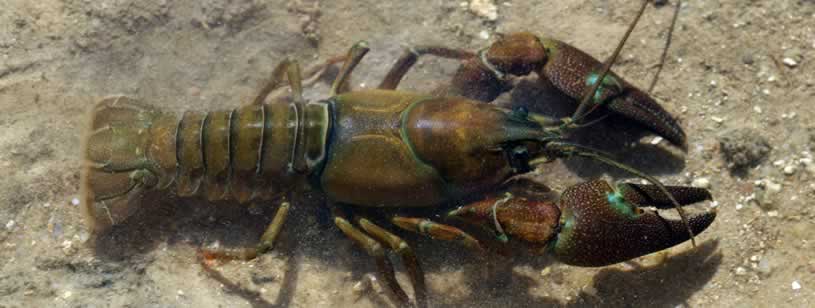
Crayfish are freshwater crustaceans with a hard outer skeleton, jointed legs and a pair of large claws. They live in rivers, lakes, wetlands and other freshwater habitats. Diet, size and lifespan differ considerably between species.
Crayfish are opportunistic omnivores that eat dead matter, plants, small fish and water insects, helping to keep freshwater ecosystems in balance. Some species, such as the noble crayfish (Astacus astacus), are threatened by pollution and invasive species, while others, such as the signal crayfish (Pacifastacus leniusculus), have spread aggressively into new rivers and lakes.
Crayfish are important in cooking, aquaculture and scientific research, and because they are sensitive to pollution, they are also used as indicators of water quality.
Quick facts
| Common name | Crayfish |
| Scientific name | Astacoidea and Parastacoidea (freshwater crayfish) |
| Typical lifespan | Often 5-20 years; the Tasmanian giant crayfish can live 40 years or more |
| Size | From a few centimetres to about 80 cm (Tasmanian giant crayfish) |
| Weight | From a few grams to several kilograms (Tasmanian giant crayfish) |
| Diet type | Omnivore (dead matter, plants, snails, insect larvae, small fish) |
| Main predators | Fish (such as eels and pike), otters, mink, herons, raccoons, humans |
| Conservation status | Assess separately by species and population; different taxa and regions have different needs |
| Geographical distribution | North America, Europe, Asia, Australia, South America, Madagascar |
| Habitat | Fresh water: rivers, streams, lakes, ponds, marshes |
| Social behaviour | Solitary, territorial |
| Special adaptations | Regrowth of lost limbs, fast backward escape, burrowing to survive droughts |
- Primary category:Crustaceans
- Explore this animal's categories:
Interesting facts
- Crayfish can regrow lost limbs - If they lose a claw or a leg, a new one grows back over the next few moults.
- They are faster backwards than forwards - When in danger, crayfish flick their tail and shoot backwards through the water.
- Some crayfish live for decades - The giant freshwater crayfish of Tasmania (Astacopsis gouldi) can live for 40 years or more.
- They are territorial and quarrelsome - Crayfish often fight, and dominant animals defend their hiding places with their powerful claws.
- Some can survive dry spells - Burrowing crayfish dig deep tunnels down to damp soil or groundwater, where they can survive when ponds and streams dry up.
- They breathe with gills, but can leave the water - As long as their gills stay moist, crayfish can survive out of water for hours.
- They sense danger with their antennae - Their long, sensitive antennae pick up tiny movements and chemicals in the water.
Records and remarkable features
- Crayfish are freshwater crustaceans with a hard outer skeleton, jointed legs and a pair of large claws. They live in rivers, lakes, wetlands and other freshwater habitats. Diet, size and lifespan differ considerably between species.
- The Tasmanian giant freshwater crayfish is the largest freshwater invertebrate in the world; big individuals can weigh several kilograms.
- There are more than 600 species of crayfish, and about half of them live in North America.
Characteristics
The crayfish is a crustacean adapted to life in fresh water, with a segmented body protected by a hard exoskeleton made of chitin and calcium. It has powerful claws, used for defence and feeding, and long antennae that sense vibrations and chemicals in the water.
Appearance
- A segmented body - Divided into two main parts: the cephalothorax (head and chest joined together) and the abdomen, or "tail".
- A hard exoskeleton - Protects the crayfish from predators, but must be shed regularly, because it does not grow with the animal.
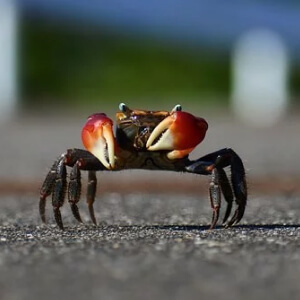
- Large, powerful claws - Used to catch food, fight and defend themselves.
- Long, sensitive antennae - Detect movement, vibrations and chemicals in the water, helping the crayfish find food and avoid danger.
- Eyes on stalks - Their movable eyestalks give a wide view and help them spot fast movements.
- Gills - Take oxygen from the water; if kept moist, they also let crayfish breathe out of water for a while.
- A broad, strong tail - Used to swim quickly backwards to escape danger.
Special adaptations
- Regrowing limbs - A crayfish can regrow a lost claw or leg over several moults.
- Sensing danger - Its antennae detect water vibrations and chemical changes.
- Moulting to grow - Young crayfish shed their exoskeleton many times a year; they grow quickly before the new shell hardens.
- Tough survivors - Some species can cope with poor water quality, a wide range of temperatures and even short periods out of water.
Habits and behaviour
Crayfish are mostly solitary and territorial. They live in burrows or hiding places on the bottom, which they leave mainly at night to look for food.
Social behaviour
- Solitary and aggressive - Crayfish avoid each other, and when food is short they may eat other crayfish.
- Fights between males - Males often fight over hiding places and females, using their claws as weapons.
- Chemical signals - Crayfish release chemicals in their urine to signal their strength and status to rivals.
Defence and survival techniques
- A threat display - When threatened, a crayfish raises its claws to look bigger and more dangerous.
- Swimming backwards - If danger continues, it flicks its tail and shoots backwards to escape.
- Hiding - Crayfish live under rocks, among roots or in holes dug in the bottom, which protects them from predators.
Habitat and geographic distribution
Crayfish live in fresh water on every continent except Antarctica and mainland Africa, in lakes, rivers, marshes and ponds.
| Region | Example species | Preferred habitat |
|---|---|---|
| Europe | Noble crayfish (Astacus astacus), white-clawed crayfish (Austropotamobius pallipes), narrow-clawed crayfish (Pontastacus leptodactylus) | Clean water with plants and hiding places |
| North America | Red swamp crayfish (Procambarus clarkii); virile crayfish (Orconectes virilis, also classified as Faxonius virilis) | Rivers, lakes and swamps |
| East Asia | Cambaroides crayfish | Cool streams and lakes |
| Australia | Yabby (Cherax destructor), Tasmanian giant freshwater crayfish (Astacopsis gouldi) | Dams, rivers, cool forest streams |
| South America and Madagascar | Parastacus crayfish, Astacoides crayfish | Wet meadows, streams, rivers |
Types of habitat
- Clear rivers and streams - Many crayfish prefer well-oxygenated water with plenty of plants.
- Lakes and ponds - They live on the bottom, hiding under rocks and logs.
- Marshes - Some species dig deep burrows to survive the dry season.
Human impact and threats
- Pollution and habitat destruction - Crayfish are very sensitive to pesticides and industrial pollution.
- Invasive species - American crayfish, such as the red swamp crayfish and the signal crayfish, have invaded Europe and Asia and spread a deadly disease called crayfish plague to native species.
- Overharvesting - In some places, crayfish are caught heavily for food, which can reduce wild populations.
Diet and feeding
The crayfish is an opportunistic omnivore with an important role in freshwater ecosystems, where it helps clean up dead plants and animals. Its diet changes with the season and what is available.
What do crayfish eat?
| Type of food | Examples |
|---|---|
| Dead matter | Dead fish, rotting leaves and plants |
| Snails and small invertebrates | Snails, insect larvae, worms, small shrimps |
| Small fish and amphibians | Tadpoles, fish eggs, young fish |
| Algae and water plants | Leaves and roots of underwater plants |
| Water insects | Mosquito larvae, water beetles |
| Food in captivity | Pellets, cooked vegetables, small pieces of fish |
Feeding techniques
- Using their claws - Crayfish use their claws to tear food and pass it to their mouths.
- Feeding at night - Most crayfish are active at night, when they are safer from predators.
- Cleaning up - Crayfish eat dead plants and animals, helping to keep rivers and lakes clean.
- Hunting - They also catch small fish, tadpoles and other invertebrates.
Adapting to the food supply
- In clean lakes and rivers, they eat plants and small invertebrates.
- Where there is plenty of dead matter, they eat leftovers and dead animals.
- In captivity, they can be fed vegetables, fish and prepared food.
Reproduction and life cycle
Most crayfish breed once a year, and the timing depends on water temperature and the food supply.
| Feature | Details |
|---|---|
| Age at maturity | About 1-4 years, depending on the species |
| Breeding season | In European species, usually autumn |
| Incubation | From a few weeks to several months; in European crayfish, the eggs are carried through the winter |
| Eggs per female | About 50-700, depending on the species and size |
| Young with the mother | A few days to a few weeks after hatching |
| Lifespan | Often 5-20 years, depending on the species |
Breeding process
- Mating in autumn - The male turns the female over, holding her with his claws, and attaches a packet of sperm to her body.
- Eggs under the tail - The female carries the fertilised eggs stuck to the small legs under her tail.
- Hatching - In European crayfish, the young hatch in late spring or early summer and cling to their mother for a while before becoming independent.
- Moulting and growth - Young crayfish moult many times in their first year and grow quickly.
Survival strategies
- Females fan their eggs with their tail and swimmerets to keep them clean and supplied with oxygen.
- Young crayfish are vulnerable after hatching and hide among plants and stones until they are bigger.
- When food is scarce, crayfish may eat smaller crayfish.
Name and history
People have eaten crayfish for thousands of years, and they appear in cooking, folk sayings and stories.
Origin of the name
- The English word "crayfish" comes from the Old French crevice, a word for a crab or crayfish; English speakers changed the ending to "fish". In North America, crayfish are also called crawfish or crawdads.
- The Romanian word rac comes from Slavic; because crayfish often move backwards, Romanians say that someone who goes backwards "walks like a crayfish". The scientific names Astacoidea and Parastacoidea come from the Greek astakos, "lobster".
Crayfish in human history
- The Middle Ages - In Europe, crayfish were eaten on religious fast days, when meat was not allowed.
- Scandinavia - Crayfish became so popular in Sweden that, from the 19th century, people held special crayfish parties in late summer.
- A crayfish crisis - In the late 19th century, crayfish plague, a disease brought from North America, wiped out many native crayfish populations in Europe.
- Modern aquaculture — In Louisiana, experiments with farming crayfish were underway by the mid-20th century. Pond culture includes the red swamp crayfish (Procambarus clarkii), raised for food.
Crayfish in folklore
Cultural significance and mythology
- Swedish crayfish parties - In August, people in Sweden and Finland hold kräftskiva, parties where they eat boiled crayfish, wear funny paper hats and sing drinking songs.
- Louisiana - The crawfish is the official state crustacean of Louisiana, and crawfish boils are a famous part of Cajun culture.
- Going backwards - In Romanian and several other languages, comparing someone to a crayfish means they are going backwards instead of forwards.
Conservation status and threats
Although some crayfish species are very common, many others are threatened by pollution, invasive species and overfishing.
| IUCN status | Species | Regions |
|---|---|---|
| Least Concern (LC) | Red swamp crayfish (Procambarus clarkii); virile crayfish (Orconectes virilis, also classified as Faxonius virilis) | North America; invasive in Europe and Asia |
| Vulnerable (VU) | Noble crayfish (Astacus astacus) | Northern, central and eastern Europe |
| Endangered (EN) | White-clawed crayfish (Austropotamobius pallipes) | Western Europe, including Britain, France, Spain and Italy |
| Endangered (EN) | Tasmanian giant freshwater crayfish (Astacopsis gouldi) | Tasmania, Australia |
Main threats
- Water pollution - Farm and industrial chemicals harm crayfish, which are very sensitive to toxins.
- Overfishing - In some countries, crayfish are caught in large numbers for food, which can make populations fall.
- Invasive species - American crayfish, such as the red swamp crayfish and the signal crayfish, compete with native species and spread crayfish plague.
- Climate change - Higher temperatures and droughts lower water levels and damage crayfish habitats.
Conservation efforts
- Fishing restrictions - Several European countries strictly limit the catching of native crayfish.
- Reintroduction - Projects return native species, such as the noble crayfish and the white-clawed crayfish, to suitable rivers and lakes, sometimes in "ark sites" safe from invasive crayfish.
- Controlling invasive species - Campaigns try to stop the spread of American crayfish in Europe.
- Improving water quality - Reducing pollution is essential for wild crayfish.
In popular culture
- "The Swan, the Pike and the Crayfish" (Ivan Krylov, 1814) - A famous Russian fable about three animals trying to pull a cart: the swan pulls up, the pike pulls into the water and the crayfish pulls backwards, so the cart never moves.
- Where the Crawdads Sing (Delia Owens, 2018) - A best-selling novel, later a film (2022), whose title uses the American nickname for crayfish.
- "Crawfish" (1958) - A song sung by Elvis Presley in the film King Creole, set in New Orleans.