CormorantInteresting facts and information
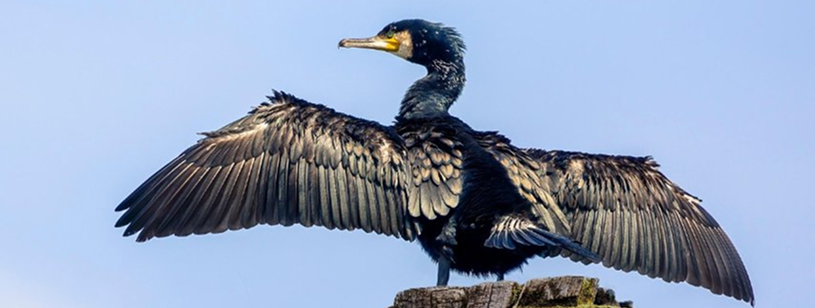
Cormorants are fish-eating waterbirds in the family Phalacrocoracidae. They dive and use their feet to swim underwater. Species differ in size, habitat and range; the great cormorant is only one member of the family.
Different cormorants use coastlines, lakes or rivers. Plumage and diving behaviour vary between species.
Quick facts
| Common name | Cormorant |
| Scientific name | Phalacrocoracidae |
| Typical lifespan | Often 10 - 15 years in the wild; some more than 20 |
| Maximum speed | Varies with species or individual, distance and conditions |
| Size | About 45 - 100 cm long (depending on species) |
| Weight | About 0.5 to 5 kg |
| Diet type | Carnivorous (fish, crustaceans, amphibians) |
| Main predators | Eagles, foxes, gulls and crows (eggs and chicks), sea lions, humans |
| Conservation status | Assess separately by species and population; different taxa and regions have different needs |
| Habitat | Coasts, lakes, rivers, estuaries |
| Distribution (Continents) | All continents, including Antarctic coasts |
- Primary category:Birds
- Explore this animal's categories:Animals of AfricaAnimals of AntarcticaAnimals of AsiaAnimals of AustraliaAnimals of EuropeAnimals of North AmericaAnimals of South AmericaAnimals of the Danube DeltaBirdsBirds of RomaniaCCarnivoresEgg-laying animalsFeathered animalsFish-eating animalsFlying animalsVertebratesWaterbirdsWetland animals
Interesting facts
- Underwater hunters - Cormorants chase fish underwater, usually in dives of about half a minute to a minute; some species can dive more than 100 metres deep.
- Fishing with people - In China and Japan, fishermen have used trained cormorants for centuries; a snare around the bird's neck stops it swallowing large fish.
- Wet feathers - Cormorant feathers are only partly waterproof, which helps them dive, so after fishing they often stand with their wings spread to dry.
- Big mouthfuls - Cormorants swallow whole fish, sometimes surprisingly large ones.
- A flightless cormorant - The Galápagos cormorant has such small wings that it cannot fly.
Records and remarkable features
- Cormorants propel themselves underwater with their feet while pursuing fish.
- Deep divers - Some southern shags have been recorded diving to well over 100 metres.
Physical characteristics and adaptations
Cormorants are birds built for hunting underwater, with a streamlined body, a hooked bill and large webbed feet.
Distinguishing physical appearance
- A long, slim body - Helps them swim fast underwater.
- Partly wettable feathers - The outer parts of the feathers get wet, which makes the birds less buoyant and helps them dive, while a layer of air stays near the skin.
- A hooked bill - The long bill has a sharp hook at the tip for gripping slippery fish.
- Large webbed feet - All four toes are joined by webbing; the feet, set far back on the body, drive them through the water.
- Eyes for two worlds - Cormorants can change the shape of their eye lens to see clearly underwater as well as in the air.
Adaptations for diving and hunting
- Holding their breath - Most dives last less than a minute, but some last longer.
- Controlling buoyancy - Dense bones and wettable feathers help them sink; some also swallow small stones.
- Keeping warm - A layer of air trapped next to the skin helps keep them warm in cold water.
Habits and behaviour
Cormorants are social birds that nest in colonies, often of hundreds or thousands of birds, although they usually hunt alone or in small groups.
Life mode and daily routine
- Fishing - They spend part of the day diving for fish.
- Drying their wings - Between fishing trips, they often rest on rocks, posts or trees with their wings spread out.
- Roosts - In the evening, many cormorants gather to roost together in trees or on cliffs.
Social behaviour and interactions
- Colonies - Many species nest in large colonies in trees, on cliffs or on islands.
- Courtship - Males display to females with special postures, such as raising their wings and throwing back their heads.
- Group fishing - Some species fish together, herding schools of fish.
Defence strategies
- Safety in numbers - Living in colonies helps protect them from predators.
- Defending the nest - Parents defend their nests and chicks from intruders.
- Safe nesting sites - Many nest on islands, cliffs or tall trees, out of reach of land predators.
Habitat and geographic distribution
Cormorants live on every continent, along coasts and on lakes and rivers. There are about 40 species.
Geographical distribution
| Region | Examples |
|---|---|
| North America | Double-crested cormorant on coasts, the Great Lakes and rivers |
| South America | Neotropic cormorant, guanay cormorant of Peru, flightless cormorant of Galápagos |
| Europe | Great cormorant, European shag, pygmy cormorant (for example in the Danube Delta) |
| Africa | Cape cormorant, reed cormorant, white-breasted cormorant |
| Asia | Great cormorant, Japanese cormorant, Indian cormorant |
| Australia, New Zealand and the Antarctic | Many cormorants and shags, including the Antarctic shag |
Habitats
- Coasts and estuaries - Many species fish in the sea near the coast.
- Lakes and rivers - Others live on lakes, rivers and wetlands.
- From the tropics to the poles - Cormorants live in many climates, from tropical lakes to Antarctic coasts.
Habitat threats
- Conflict with fishermen - Cormorants are often blamed for taking fish and are sometimes shot or their nests destroyed.
- Loss of wetlands - Drainage and building reduce breeding sites.
- Pollution - Oil spills and plastic harm diving birds.
- Fishing nets - Many cormorants drown in fishing nets.
Diet and feeding
Cormorants feed mainly on fish, but they also eat crustaceans, amphibians and other aquatic animals.
What do cormorants eat?
| Food type | Examples |
|---|---|
| Fish | Carp, roach, perch, eels, herring, sand eels, anchovies |
| Crustaceans | Small crabs, shrimps |
| Amphibians | Frogs, tadpoles |
| Molluscs | Small squid and octopuses |
| Other invertebrates | Marine worms, aquatic insects |
Method of feeding
- Diving - Cormorants dive from the surface and swim underwater, kicking with their webbed feet.
- Catching fish - They grab fish with their hooked bill, bring them to the surface and swallow them head first.
- Group hunting - Some species work together to drive schools of fish into shallow water.
- Fishing for people - In China and Japan, trained cormorants with a snare around the neck catch fish for fishermen.
Daily food needs
- A great cormorant eats about 400-500 g of fish a day.
- When feeding chicks, parents need to catch much more.
Reproduction and life cycle
Cormorants are usually monogamous during a breeding season and nest in colonies.
Mating and laying of eggs
| Characteristic | Details |
|---|---|
| Sexual maturity | About 2-4 years |
| Breeding season | Varies with region, species and local seasons |
| Eggs | Usually 3-4, sometimes 2-6 |
| Incubation | About 25-35 days |
| Independence | About 2-3 months after hatching |
Reproductive behaviour
- Nest building - Nests are made of sticks, seaweed and other materials on rocks, in trees or on islands; the male often brings material and the female builds.
- Courtship - Males show off by raising their wings, pointing their bills upwards and calling.
- Feeding the chicks - Chicks feed by putting their heads into their parents' throats to take partly digested fish.
- Shared care - Both parents incubate the eggs and feed the chicks.
Longevity
- In the wild, cormorants often live about 10-15 years; some have lived more than 20 years.
- Many young birds die in their first year.
Name and history
Origin of the name "Cormorant"
- The word comes from the medieval Latin corvus marinus, meaning "sea raven", because of the bird's dark colour.
Taxonomic Classification
| Kingdom | Animalia |
|---|---|
| Phylum | Chordata |
| Class | Aves |
| Order | Suliformes |
| Family | Phalacrocoracidae |
| Main genera | Phalacrocorax, Microcarbo, Leucocarbo |
History and first documentations
- Cormorant fishing - In Japan, fishing with cormorants (ukai) has been practised for more than 1,000 years and is still shown to tourists, for example on the Nagara River.
- China - Cormorant fishing is also a long tradition in southern China, for example on the Li River near Guilin.
- Literature - In John Milton's "Paradise Lost" (1667), Satan sits "like a cormorant" in the Tree of Life, which made the bird a symbol of greed.
- Guano - In Peru, the droppings of guanay cormorants and other seabirds were harvested as a valuable fertiliser.
Cultural significance and mythology
Cormorants have been seen in many ways, from symbols of greed to skilled partners of fishermen.
Cormorant in mythology and folklore
- Northern Norway - According to a local belief, people lost at sea could return to visit their families in the form of cormorants.
- A symbol of greed - Because of its big appetite and Milton's poem, the cormorant became a symbol of greed in English.
- Fishing partner - In China and Japan, cormorants are valued as skilled fishing birds.
- Liverpool - The Liver Bird, the symbol of the city of Liverpool, is often thought to be a cormorant.
Cormorant in cultural symbolism
| Culture | Meaning |
|---|---|
| Northern Norway | A link with those lost at sea |
| English literature (Milton) | Greed and cunning |
| Chinese and Japanese tradition | A skilled fishing partner |
| Liverpool | The Liver Bird, symbol of the city |
Conservation status and threats
Many cormorants are common, and some have increased in recent decades, but several species with small ranges are threatened.
Main threats
- Persecution - Cormorants are sometimes shot or their colonies disturbed because they eat fish.
- Food shortages - Overfishing and warming seas can reduce the fish they depend on.
- Pollution - Oil spills and plastic harm cormorants.
- Bycatch - Many drown in fishing nets.
Conservation status (IUCN)
| Species | Status |
|---|---|
| Phalacrocorax carbo (great cormorant) | Least Concern |
| Phalacrocorax capensis (Cape cormorant) | Endangered |
| Nannopterum harrisi (flightless cormorant, Galápagos) | Vulnerable |
Conservation efforts
- Protected areas - Many cormorant colonies are protected in wetlands and nature reserves.
- Managing conflicts - Some countries allow limited control of cormorants near fish farms while protecting colonies elsewhere.
- Seabird protection - Measures against oil spills and bycatch help cormorants and other seabirds.
In popular culture
Thanks to their unusual behaviour and their long history with people, cormorants appear in literature, art and games.
Cormorant in literature and art
- "Paradise Lost" - John Milton (1667) - Satan sits like a cormorant in the Tree of Life.
- Japanese art - Cormorant fishing at night by torchlight is a famous subject of Japanese prints and poems, including haiku by Matsuo Bashō.
- The Liver Bird - Statues of the Liver Bird stand on top of the Royal Liver Building in Liverpool.
Cormorant in films and television
- Nature documentaries often show cormorants hunting underwater and drying their wings.
- Travel programmes about China and Japan often show cormorant fishermen.
Cormorant in video games
- "Pokémon" - Cramorant is a cormorant-like Pokémon that catches fish and spits them at opponents.