CobraInteresting facts and information
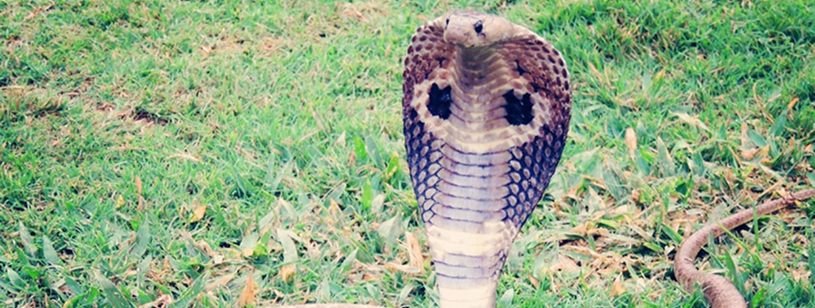
Cobras are venomous snakes best known for expanding a hood when threatened. The name includes true cobras of the genus Naja and some other elapid snakes. King cobras belong to Ophiophagus, a different genus, and not every cobra spits venom.
Cobras belong to the family Elapidae. The common name covers more than one genus, and taxonomy changes as researchers revise species.
- Indian cobra (Naja naja) – A venomous species of the Indian subcontinent.
- Egyptian cobra (Naja haje) – A symbol of royalty in ancient Egypt.
- King cobras (Ophiophagus) are different from true cobras of the genus Naja. A 2024 taxonomic revision recognised four king cobra species.
- Spitting cobras (such as Naja mossambica and Naja nigricollis) – able to spray venom towards the eyes of an attacker.
Cobras play an important role in their ecosystems as predators of rodents and other reptiles.
Quick facts
| Common name | Cobra |
| Scientific name | Naja and other hooded elapid snakes |
| Typical lifespan | About 15-20 years in the wild, up to about 30 years in captivity |
| Maximum speed | Varies with species or individual, distance and conditions |
| Length | About 1.2 - 5.5 m (depending on species) |
| Weight | About 1 to 9 kg |
| Diet type | Carnivore (small mammals, birds, eggs, frogs, other reptiles) |
| Main predators | Mongooses, secretary birds, snake eagles, other snakes, humans |
| Conservation status | Assess separately by species and population; different taxa and regions have different needs |
| Habitat | Tropical forests, savannas, deserts, swamps, farmland |
| Distribution (Continents) | Africa, Asia, Middle East |
- Primary category:Types of snakes
- Explore this animal's categories:
Interesting facts
- King cobras (Ophiophagus) are long venomous snakes that feed substantially on other snakes. Older sources treated the group broadly as Ophiophagus hannah.
- Not all cobra species can spit venom, but those that can spray it about 2-3 metres, aiming at the eyes of an attacker.
- A sacred snake - In India, the cobra is linked with the god Shiva, and during the Nag Panchami festival people honour snakes with offerings.
- Powerful venom - Cobra venom contains nerve toxins that can paralyse the muscles, including those used for breathing, and in many species also toxins that damage tissue.
- Warning before biting - Cobras usually try to escape; raising the front of the body and spreading the hood is a warning to keep away.
Records and remarkable features
- Cobras can expand a hood as a warning display; not every cobra spits venom.
- The longest venomous snake - King cobras can reach about 5.5 metres, more than any other venomous snake.
Physical characteristics and adaptations
Cobras are adaptable snakes with distinctive features, from their famous hood to their powerful venom.
Distinguishing physical appearance
- A long, slender body - Most cobras are about 1.2-2.5 metres long, while king cobras can reach about 5.5 metres.
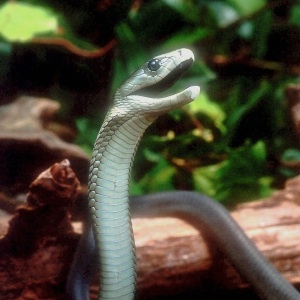
- The hood - Long ribs behind the head can be spread sideways to form the famous hood when the snake feels threatened.
- Round pupils - Unlike vipers, cobras have round pupils.
- Varied colours - From yellow and brown to black, sometimes with bands or markings on the hood, such as the "spectacle" pattern of the Indian cobra.
Adaptations for survival
- Spitting venom (in spitting species) - Some species spray venom at the eyes of predators, causing intense pain and sometimes blindness.
- Camouflage - Their colours often match their surroundings.
- Threat posture - When threatened, a cobra raises the front of its body, spreads its hood and hisses loudly.
- Fixed front fangs - Cobras have short, fixed fangs at the front of the upper jaw.
- Long fasts - After a large meal, a cobra can go for weeks without eating.
Habits and behaviour
Despite their dangerous reputation, cobras usually avoid people and bite mainly in self-defence.
Life mode and daily routine
- Active by day or at dusk - Many cobras hunt in the morning, evening or at night, depending on the species and the heat.
- On the ground and in trees - Most cobras live on the ground, but some, such as king cobras, also climb trees and swim well.
- Shelters - They hide in old burrows, termite mounds, hollow logs or among rocks.
- Active hunting - Many cobras actively search for prey using their sense of smell.
Social behaviour and interactions
- Solitary - Cobras live alone, but in the breeding season males may wrestle each other for females.
- The defensive posture - They raise their body and spread their hood to look bigger.
- Warning sounds - Cobras hiss loudly, and the king cobra makes a low "growling" hiss.
- Learning - Cobras in captivity can learn to recognise their keepers and feeding routines.
Defence strategies
- Spitting - Spitting cobras aim their venom accurately at the eyes of an attacker.
- Biting - If the threat continues, they bite and inject venom.
- Playing dead - The rinkhals of southern Africa may roll onto its back and pretend to be dead.
- Escaping - Whenever possible, cobras retreat into vegetation or burrows.
Habitat and geographic distribution
Cobras live in Africa and Asia, in habitats ranging from rainforests and savannas to deserts and farmland.
Geographical distribution
| Region | Examples and habitats |
|---|---|
| South and Southeast Asia | India, Thailand, Malaysia, Indonesia - forests, farmland and villages |
| Africa | Egypt, Kenya, South Africa - savannas, dry areas and forests |
| Middle East and Central Asia | Arabian Peninsula, Iran, Central Asia - dry and semi-desert areas |
| China | Southern China - forests, hills and farmland |
Habitats
- Tropical forests - King cobras prefer moist forests, often near streams.
- Savannas and dry areas - The Egyptian cobra and the Cape cobra live in dry and semi-desert areas.
- Farmland - Some species live near villages and fields, where they hunt rats and mice.
Habitat threats
- Habitat loss - Farming and building reduce natural habitats and bring cobras into contact with people.
- Trade - Cobras are caught for their skins, for traditional medicine and for the food and pet trades.
- Killing out of fear - Many cobras are killed when they are found near homes.
Diet and feeding
Cobras are predators that eat small mammals, birds, eggs, frogs and other reptiles. King cobras feed mainly on other snakes, including venomous ones.
What do cobras eat?
| Type of prey | Examples |
|---|---|
| Small mammals | Mice, rats, small rabbits |
| Birds and eggs | Ground-nesting birds, chickens, eggs |
| Reptiles | Lizards, other snakes (including venomous ones) |
| Amphibians | Frogs and toads |
| Fish (occasionally) | Some species catch fish in wet habitats |
Hunting methods
- Searching - Cobras find prey mainly by smell, flicking their tongues.
- A venomous bite - They bite and hold or release the prey while the venom takes effect.
- Swallowing whole - Their stretchy jaws let them swallow prey whole.
- Snake hunters - King cobras actively hunt other snakes, such as rat snakes, kraits and even other cobras.
Food behaviour
- Infrequent meals - Adult cobras may eat only once every few days or weeks.
- Spitting is for defence - Spitting cobras use their spray to defend themselves, not to catch food.
- Natural pest control - Many cobras eat large numbers of rats and mice.
Reproduction and life cycle
Most cobras lay eggs, and the king cobra is the only snake known to build a nest for them.
Breeding and birth
| Characteristic | Details |
|---|---|
| Sexual maturity | About 2 - 4 years |
| Breeding season | Varies with species and region |
| Incubation | About 45 - 80 days |
| Eggs | About 10 - 50, depending on species |
| Hatchlings | Independent and venomous from hatching |
| Life expectancy | About 15-20 years in the wild, up to about 30 in captivity |
Reproductive behaviour
- Male combat - Males wrestle by raising their bodies and trying to push each other down, usually without biting.
- Laying eggs - Females lay their eggs in hidden places, such as burrows, termite mounds or piles of leaves.
- A nesting snake - The female king cobra gathers leaves into a nest mound, lays her eggs inside and guards them.
- Venomous babies - Hatchlings are about 30-50 cm long and can hunt straight away.
Development and maturation
- Young cobras grow quickly in their first years.
- No parental care after hatching - The young must look after themselves.
Name and history
Origin of the name "Cobra"
- The name comes from the Portuguese cobra de capelo, meaning "snake with a hood"; Portuguese travellers in India used it for the Indian cobra.
Taxonomic Classification
| Kingdom | Animalia |
|---|---|
| Phylum | Chordata |
| Class | Reptilia |
| Order | Squamata |
| Family | Elapidae |
| Main genera | Naja (true cobras); Ophiophagus (king cobras); Hemachatus (rinkhals) |
History and documentation
- Ancient Egypt - The Egyptian cobra (Naja haje) appeared as the uraeus on the crowns of the pharaohs, a symbol of divine protection.
- India - The cobra is honoured in Hindu tradition and linked with the god Shiva and the festival of Nag Panchami.
- Snake charmers - Cobras were traditionally used by snake charmers; in India, this practice has been banned under wildlife protection law since 1972.
- Older references used Ophiophagus hannah for a broader king cobra complex. A taxonomic revision published in 2024 recognised four species.
Cultural significance and mythology
The cobra is an important symbol in many cultures, linked with power, protection, danger and the divine.
Cobra in mythology and traditions
- Ancient Egypt - The cobra goddess Wadjet protected Lower Egypt and the pharaoh, and the rearing cobra (uraeus) was worn on royal crowns. According to tradition, Cleopatra died from the bite of an "asp", possibly an Egyptian cobra.
- Hinduism - Shiva is often shown with the serpent Vasuki around his neck, and during Nag Panchami people honour snakes for protection and good fortune.
- Buddhism - According to legend, the serpent king Mucalinda sheltered the meditating Buddha from a storm with his hood.
- Southeast Asia - Nāgas, serpent beings often shown with cobra hoods, guard the stairs of many temples in Thailand, Cambodia and Laos.
Cobra in cultural symbolism
| Culture | Meaning |
|---|---|
| Ancient Egypt | Royalty and divine protection |
| Hinduism | Linked with Shiva, power and renewal |
| Buddhism | A protector of the Buddha |
| Southeast Asia | Nāga guardians of temples and water |
| Western culture | Danger and deadly power |
Conservation status and threats
Many cobra species are still widespread, but some are threatened by habitat loss and trade.
Main threats to cobras
- Habitat loss - Deforestation and farming reduce natural habitats and push cobras closer to people.
- Trade - Cobras are caught for their skins, meat, venom and traditional medicine.
- Killing out of fear - Many cobras are killed whenever people find them.
- Snake charming and shows - Cobras used in shows often have their fangs removed and suffer poor treatment.
Conservation status (IUCN)
| Species | Status |
|---|---|
| Ophiophagus hannah (king cobra, in the broad sense) | Vulnerable |
| Naja siamensis (Indochinese spitting cobra) | Vulnerable |
| Naja naja (Indian cobra) | Least Concern |
| Naja haje (Egyptian cobra) | Least Concern |
Conservation efforts
- Legal protection - In India and other countries, cobras are protected by wildlife laws.
- Trade controls - International trade in several cobra species is controlled under CITES.
- Education - Campaigns teach people how to avoid snakebites and reduce unnecessary killing of snakes.
In popular culture
The cobra appears in many films, books, games and brand names as a symbol of danger, speed and power.
Cobra in movies and television
- "Raiders of the Lost Ark" (1981) - Indiana Jones, who hates snakes, faces a cobra in the Well of Souls.
- "Cobra Kai" (2018-2025) - A television series about the aggressive karate dojo from the "Karate Kid" films.
Cobra in literature and comics
- "Rikki-Tikki-Tavi" (Rudyard Kipling, 1894) - A story about a brave mongoose who fights two cobras, Nag and Nagaina.
- "G.I. Joe" - The villainous organisation in the toys, comics and cartoons is called Cobra.
Cobra in sports and symbolism
- Shelby Cobra - A famous American sports car of the 1960s.
- Yoga - The "cobra pose" (bhujangasana) is named after the snake raising its head.
Cobra in video games
- "Pokémon" - Arbok is a cobra-like Pokémon with a face-like pattern on its hood.
- "Metal Gear Solid 3" - The Cobra Unit is a team of enemy soldiers named after the snake.