FrogInteresting facts and information
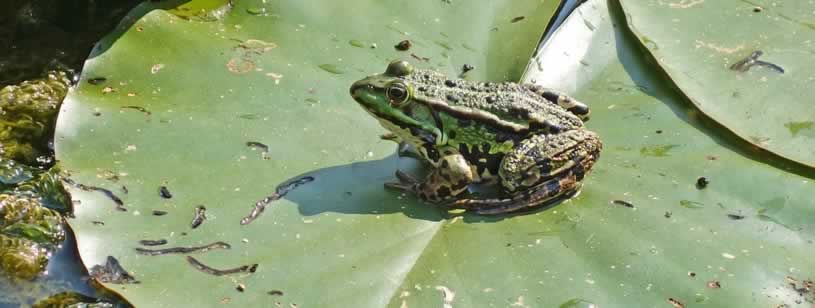
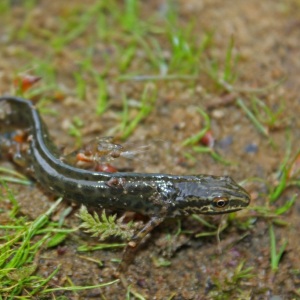
Frogs are amphibians in the order Anura. Their body forms and life cycles vary widely: many have powerful hind legs for jumping, while others are adapted to climbing, swimming or burrowing. Species occur in habitats from tropical forests to seasonally dry areas.
Frogs eat other animals and are themselves food for many predators. Their skin and life cycles can make them sensitive to environmental changes, so researchers study them when assessing ecosystem health.
Many frog species are threatened by habitat loss, disease, pollution or changing climate. Threats and conservation status must be considered for each species.
Quick facts
| Common name | Frog |
| Scientific name | Anura (order) |
| Typical lifespan | 5-10 years (some species live over 20 years) |
| Length | From about 7 mm to 32 cm (depending on the species) |
| Weight | From under 1 g to about 3.3 kg |
| Diet type | Carnivorous as adults (insects, invertebrates, small vertebrates); most tadpoles eat plants |
| Main predators | Birds, snakes, mammals, large fish, other frogs |
| Conservation status | Ranges from Least Concern to Critically Endangered (IUCN) |
| Distribution | On all continents except Antarctica |
| Living environment | Fresh water, tropical forests, marshes, grasslands, deserts |
- Primary category:Amphibians
- Explore this animal's categories:AmphibiansAnimals of AfricaAnimals of AsiaAnimals of AustraliaAnimals of EuropeAnimals of North AmericaAnimals of South AmericaAquatic animalsEgg-laying animalsFFreshwater animalsHibernating animalsInsect-eating animalsJungle animalsOmnivoresPredatory animals of RomaniaReptiles and amphibians of RomaniaVertebratesWetland animals
Interesting facts
- The Goliath frog (Conraua goliath) is the largest frog in the world - It lives in West-Central Africa and can grow to about 32 cm long (not counting the legs) and weigh over 3 kg.
- Defensive toxins – Some frogs, including the golden poison frog (Phyllobates terribilis), have potent skin toxins. They are poisonous; they do not inject venom with a bite or sting.
- Frogs do not drink with their mouths - They absorb water through their skin, mainly through a special patch on the belly.
- Champion jumpers - Many frogs can leap more than ten times their own body length.
- Tadpoles breathe with gills - As they grow, the gills disappear, and adult frogs breathe with their lungs and through their skin.
Records and remarkable features
- The largest frog - The Goliath frog (Conraua goliath), about 32 cm long and up to about 3.3 kg.
- The smallest frogs - The Brazilian flea toad (Brachycephalus pulex), about 7 mm long, and Paedophryne amauensis from Papua New Guinea, about 7.7 mm long, are among the smallest vertebrates in the world.
- Potent skin toxins – Some poison frogs have powerful chemical defences. Claims about a fixed number of people killed by one frog are misleading.
- Long jumps - The South African sharp-nosed frog (Ptychadena oxyrhynchus) can cover more than 3 metres in a single leap.
- Long lives - Some toads, such as the common toad, have lived for about 40 years in captivity.
Physical characteristics and adaptations
Frogs are very varied amphibians, with many shapes, colours and sizes depending on their habitat and way of life.
Key physical adaptations
- A compact, muscular body - Ideal for fast jumps, which help them escape danger.
- Moist, thin skin - Lets them breathe through their skin and take in water.
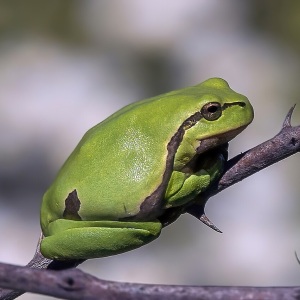
- Large, bulging eyes - Give a very wide field of view, so they quickly spot predators and prey.
- Long, strong hind legs - Allow spectacular jumps and fast swimming.
- A sticky tongue - Attached at the front of the mouth, it flips out to catch insects and other small prey.
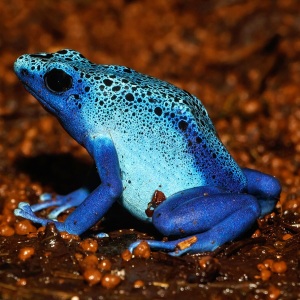
- Varied colours - Some species are perfectly camouflaged, while others have bright colours that warn predators they are toxic.
What do frogs look like?
| Feature | Details |
|---|---|
| Colour | Green, brown, yellow, blue, red (depending on the species) |
| Length | From about 7 mm to 32 cm (Goliath frog) |
| Weight | From under 1 g to about 3.3 kg |
| Skin | Moist; smooth in many frogs, rough and warty in toads |
| Eyes | Large and bulging, with pupils of different shapes |
| Legs | Strong, adapted for jumping, swimming, climbing or digging |
| Toes | Webbed in water frogs; tree frogs have sticky toe pads for climbing |
Habits and behaviour
Many frogs are active at night and live alone, but in the breeding season they gather in large numbers.
Daily life
- Life near water - Most frogs live near lakes, rivers or marshes, but some live in trees, forests or even deserts.
- Insect-eaters - They eat large numbers of insects, including mosquitoes and crop pests.
- Hiding by day - Many frogs hide during the day and come out at night to avoid drying out and predators, although poison frogs are active by day.
- Calling - Males call to attract females and defend their territory; each species has its own call.
- Winter rest - In cold climates, frogs hibernate under water, in mud or under leaves until spring.
Specific behaviours
- Camouflage and warning colours - Green and brown frogs hide easily, while brightly coloured ones warn predators that they are toxic.
- Escape jumps - Some species can leap 10-20 times their body length.
- Skin defences - Some frogs release toxic or bad-tasting substances from their skin.
- Breathing two ways - Frogs breathe with their lungs and through their skin, especially underwater.
Survival strategies
- Fast jumps to escape predators.
- Toxic or irritating skin secretions to avoid being eaten.
- Hibernation in cold climates and summer rest underground in hot, dry climates.
- Puffing up the body to look bigger and harder to swallow.
Habitat and geographic distribution
Frogs live on every continent except Antarctica, in habitats ranging from tropical forests to deserts and mountains.
Distribution context
| Region | Notable species | Habitat examples |
|---|---|---|
| South and Central America | Poison dart frogs (Dendrobatidae) | Humid tropical forests |
| North America | American bullfrog (Lithobates catesbeianus) | Lakes and rivers |
| Europe | Common frog (Rana temporaria), common toad (Bufo bufo) | Forests, meadows, ponds |
| Africa | Goliath frog (Conraua goliath) | Fast-flowing rivers |
| Asia | Gliding tree frogs, including Rhacophorus species | Tropical forests |
| Australia | Australian green tree frog (Litoria caerulea) | Damp areas, gardens |
Habitat types
- Wetlands - Water frogs prefer lakes, rivers and marshes.
- Tropical forests - Tree frogs, such as flying frogs, live high in the trees.
- Grasslands and plains - Some frogs dig burrows where they hide during the day.
- Deserts - Some species can survive for months buried in the soil, waiting for rain.
Environmental change
- Water pollution harms tadpole development.
- Deforestation and urban growth destroy natural habitats.
- Climate change affects hibernation and breeding.
- Noise from roads and cities can drown out frog calls.
Diet and feeding
Adult frogs are carnivores that mainly eat insects and other invertebrates, but large species also eat small fish, birds, mice and even other frogs.
What do frogs eat?
| Food group | Examples |
|---|---|
| Insects | Flies, mosquitoes, crickets, grasshoppers, beetles |
| Other invertebrates | Snails, worms, spiders, crustaceans |
| Small vertebrates | Small fish, mice, small snakes, other frogs (large species) |
| Amphibians and reptiles | Young lizards, tadpoles |
| Plants (tadpoles) | Algae and other plant matter |
Feeding methods
- Sit-and-wait - Frogs wait for prey to come close, then catch it with their sticky tongue.
- Pouncing - Large species, such as the bullfrog, leap onto their prey.
- Swallowing whole - Frogs swallow their prey whole, pulling their eyes down into their head to help push the food down their throat.
- Plant-eating tadpoles - Most tadpoles feed on algae and other matter in the water.
Ecological role
- Controlling insects - Frogs eat large numbers of mosquitoes and other pests.
- Food for other animals - Birds, snakes, fish and mammals eat frogs.
- Indicators of ecosystem health - Because frogs are sensitive to pollution, their disappearance warns of environmental problems.
Reproduction and life cycle
Frogs have a complex life cycle with metamorphosis, passing through several very different stages.
Breeding season
- In temperate climates, frogs usually breed in spring; in the tropics, often in the rainy season.
- Males call to attract females and mark their territory.
- Most frogs breed in water, where females lay their eggs, but some lay eggs on land or in trees.
Developmental stages
| Stage | Duration | Details |
|---|---|---|
| Egg | 3-25 days | Laid in water, in clumps (frogspawn) or strings (toads) |
| Tadpole | About 6-12 weeks (much longer in some species) | Has gills and a tail and lives underwater |
| Metamorphosis | Several weeks | Legs grow, the tail shrinks and lungs develop |
| Froglet | After about 3-4 months | Starts living on land and breathing with lungs |
| Adult | After 1-3 years | Able to breed |
Survival strategies
- Many eggs - Some species lay thousands of eggs, because only a few tadpoles survive.
- Quick change - Turning from tadpole to frog within a few months lets them leave the water, where many predators live.
- Parental care - Some species guard their eggs or carry their tadpoles on their backs to water.
Name and history
Origin of the name
- The English word "frog" comes from Old English frogga, a Germanic word of uncertain origin.
- The scientific name Anura comes from Greek and means "without a tail", because adult frogs have no tail.
Taxonomic classification
| Classification | Name |
|---|---|
| Kingdom | Animalia |
| Phylum | Chordata |
| Class | Amphibia |
| Order | Anura |
| Families | More than 50 families |
| Species | More than 7,500 species |
Evolution and fossils
- Frogs have an ancient evolutionary history documented by fossils and genetic research.
- Amphibians evolved from lobe-finned fish that began to live on land; one of the earliest frog-like animals, Triadobatrachus, lived about 250 million years ago.
- Fossils of giant frogs have been found, such as Beelzebufo, a Cretaceous frog about 40 cm long that may have eaten small dinosaurs.
Cultural significance and mythology
In many cultures, frogs are important symbols of fertility, transformation, luck and rain.
Frogs in myths and symbolism
- A symbol of transformation - Because tadpoles turn into frogs, frogs often stand for change and new beginnings.
- Ancient Egypt - Heqet, the goddess of fertility and childbirth, was shown as a frog or with a frog's head.
- European folklore - Frogs and toads were linked with magic and witches, and fairy tales tell of princes turned into frogs.
Frogs in folk belief
- Japan - The word for frog, kaeru, also means "return", so small frog charms are carried to bring travellers home safely.
- Rain - In many cultures, people believe that loud frog choruses mean rain is coming.
- China - The three-legged "money toad" is a popular good-luck symbol of wealth.
Conservation status and threats
Many amphibians face serious threats. Broad percentages must identify the group, assessment date and source rather than being applied to all frogs without context. The second Global Amphibian Assessment (2023) found that about two in five amphibian species are threatened.
Main pressures
- Habitat loss - Deforestation and urban growth destroy the wetlands where frogs live and breed.
- Water pollution - Farm chemicals harm tadpoles and can cause deformities.
- Chytrid disease - A deadly fungal disease that has wiped out many frog populations around the world.
- Climate change - Extreme temperatures and droughts dry up the ponds where frogs breed.
- Trade - Some species are collected for the pet trade, for food or for traditional medicine.
Protection efforts
| Measure | Organisation / action |
|---|---|
| Protecting wetlands | WWF, Ramsar Convention |
| Monitoring threatened species | IUCN Red List |
| Research on chytrid disease | Universities and conservation centres |
| Captive breeding | Zoos and amphibian rescue centres |
Threatened species
- Panamanian golden frog (Atelopus zeteki) - Critically Endangered and possibly extinct in the wild because of chytrid disease; it survives in captive breeding programmes.
- Darwin's frog (Rhinoderma darwinii) - A unique frog whose males raise the tadpoles inside their vocal sac; threatened by habitat loss and disease.
- Golden poison frog (Phyllobates terribilis) – Habitat loss threatens this Colombian species.
Frogs in popular culture
Frogs are famous characters in fairy tales, films, cartoons and games, often linked with magic, transformation and fun.
Frogs in literature
- "The Frog Prince" (Brothers Grimm) - A classic fairy tale in which a princess helps a prince who has been turned into a frog.
- "The Frog and the Ox" (Aesop) - A fable about a frog that puffs itself up to look as big as an ox, a lesson about pride.
- The Wind in the Willows (Kenneth Grahame, 1908) - Mr Toad of Toad Hall is one of the most famous toads in literature.
- The Tale of Mr. Jeremy Fisher (Beatrix Potter, 1906) - A story about a frog who goes fishing.
Frogs in films, cartoons and games
- Kermit the Frog (The Muppets) - Created in 1955, he is one of the most famous frogs in pop culture.
- The Princess and the Frog (Disney, 2009) - A film inspired by the classic fairy tale of the frog prince.
- "Froggy Went A-Courtin'" - An old English and American folk song about a frog who goes to woo a mouse.
- Frogger (1981) - A classic arcade game in which a frog must cross a busy road and a river.
Frogs as symbols
- Good luck - Frog charms are popular in Japan and China.
- Nature conservation - Frogs are used as symbols of clean water and healthy wetlands.
- Heraldry - Frogs and toads appear on some coats of arms.