PonyInteresting facts and information
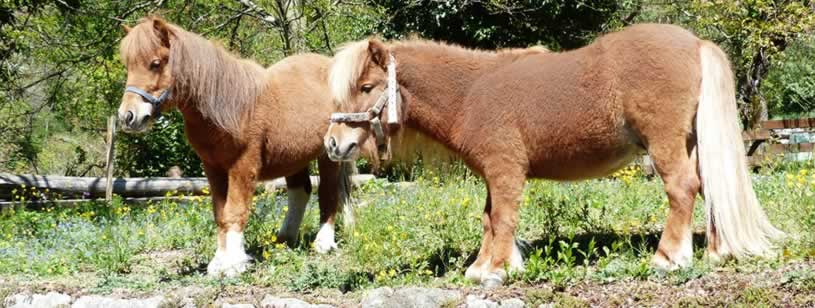
Ponies are domestic horses. Their height and build differ between breeds, but they are not a separate subspecies.
Throughout history, ponies have been used for riding, transport, farming and even sport. Today the pony is a popular companion for children and an active participant in equestrian sport.
Quick facts
| Common name | Pony |
| Scientific name | Equus caballus (domestic horse; also Equus ferus caballus) |
| Typical lifespan | 25-35 years |
| Maximum speed | Varies with the breed, the individual and the conditions |
| Height | Usually under about 147 cm at the withers (common international pony limit) |
| Weight | About 150-400 kg (varies by breed) |
| Diet type | Herbivore (grass, hay, small amounts of grain) |
| Main predators | Wolves, bears and pumas (for free-living ponies) |
| Conservation status | Domestic animal; conservation of domestic breeds is separate from the assessment of wild relatives |
| Geographical distribution | Worldwide; adapts to many climates |
| Social behaviour | Lives in groups with a clear social order |
| Special adaptations | Strong legs, stamina, efficient metabolism |
- Primary category:Mammals
- Explore this animal's categories:
Interesting facts
- Ponies are very strong for their size - Thanks to their dense muscles and sturdy build, they can pull and carry surprisingly heavy loads for their weight.
- Ponies are clever and can be stubborn - They are often more independent than horses and can be tricky to train, but once trained they become loyal and hard-working.
- They cope with harsh conditions - Hardy breeds, such as the Shetland pony and the Yakutian horse, survive extreme cold thanks to their thick coats and efficient metabolism.
- They help in therapy - Calm ponies are used in therapeutic riding for children and adults with autism, disabilities or movement problems.
- Some are tiny - Miniature horses can be no bigger than a large dog, and some are trained as guide animals.
- The smallest horse on record was tiny - Thumbelina, a miniature horse, was only about 43 cm tall.
Records and remarkable features
- A pony is a small domestic horse, not a separate subspecies. Pony breeds differ in build, coat and temperament. Height limits depend on the convention or competition rules being used.
Characteristics
Ponies are sturdy, strong and adaptable, with features that set them apart from larger horses.
Appearance
- Compact size - Ponies are usually under about 147 cm tall at the withers, ranging from tiny miniatures to larger riding and working ponies.
- A sturdy build - Compared with larger horses, ponies have relatively thicker bones, shorter legs and dense muscles, which make them very strong for their size.
- A thick, weatherproof coat - Many pony breeds grow a thick winter coat and a full mane and tail, which help them cope with harsh weather.
- Strong legs and hard hooves - Ponies are known for tough hooves that suit rough ground, and many do not need shoes.
- A relatively broad head - Ponies often have a short head with a broad forehead, expressive eyes and small ears.
Special adaptations
- An efficient metabolism - Ponies need less food than large horses and can survive on poor grazing; on rich grass they easily become overweight.
- Stamina - They can work for long periods, which made them valuable for farming and transport.
- An independent temperament - Many ponies are clever but stubborn and need patient training.
- Sure-footedness and a good sense of direction - Ponies remember routes and find their way home, which makes them useful in mountains and difficult terrain.
Habits and behaviour
Ponies are social and intelligent animals with a clear social order within their herds.
Social behaviour
- They live in small herds - In free-living herds, an experienced mare often leads the group, while a stallion protects it.
- They form close bonds - Ponies can become very attached to people, other horses and even other farm animals.
- Playful and curious - Ponies are playful and like to investigate new objects around them.
- Body language - A relaxed, interested pony holds its ears forward, while an annoyed pony pins them back.
Defence and survival techniques
- Running from danger - Ponies are watchful and react quickly to any threat.
- Biting and kicking - If they are attacked or provoked, ponies may bite or kick with their hind legs.
- Blending in - The natural coat colours of breeds such as the Exmoor pony help them blend into moorland.
- Coping with cold - Ponies in cold areas grow a dense double coat that protects them from snow and rain.
Habitat and geographic distribution
Ponies are very adaptable and are found on every inhabited continent, from the British Isles to the steppes of Mongolia.
| Region | Example breeds | Typical environment |
|---|---|---|
| Europe | Shetland, Connemara, Highland, Exmoor, Hucul | Hills, moorland, grassland |
| North America | American Miniature Horse, Pony of the Americas, Chincoteague pony | Pastures, coastal islands |
| Asia | Yakutian horse, Mongolian horse | Tundra, steppes |
| Australia and Asia-Pacific | Australian Pony, Timor Pony | Dry and tropical areas |
| Africa | Basuto pony | Mountains |
Types of habitat
- Mountains and cold areas - Breeds such as the Highland and Shetland ponies live in rocky, cold areas and rely on their thick coats.
- Steppes and wide pastures - Mongolian horses, which are pony-sized, live on vast grasslands.
- Moorland and rough ground - Exmoor ponies are adapted to moors and boggy ground, with strong hooves.
Human impact and threats
- Habitat loss - When grazing land is turned into farmland, free-living ponies lose space.
- Past overwork - Many ponies once worked in mines and on farms in hard conditions.
- Crossbreeding - Some traditional pony breeds are threatened because they are crossed with larger horses.
Diet and feeding
Ponies are herbivores whose diet is based mainly on grass, hay and other fibrous plants. Because of their efficient metabolism, they need less food than large horses.
What do ponies eat?
| Type of food | Examples |
|---|---|
| Grass | Natural pasture |
| Hay | Essential in the cold season |
| Leaves and twigs | Willow leaves, hedgerow plants |
| Grain (in small amounts) | Oats, barley, bran |
| Treats | Apples, carrots, beet |
| Mineral supplements | Salt licks, mineral blocks |
Feeding habits
- Slow, steady chewing - Ponies grind their food well with their cheek teeth; unlike cattle, they do not chew the cud.
- Choosing food - Ponies usually avoid poisonous plants, but they are curious and may try unsuitable food if it is available.
- Grazing for many hours - They feed for up to about 16 hours a day, eating small amounts almost continuously.
- Preparing for winter - Ponies in cold regions put on fat in autumn to help them through difficult times.
Adapting to food supply
- Surviving on poor pasture - Ponies cope well with sparse grazing.
- Fat reserves - In cold regions, ponies build up fat and grow thick coats to cope with low temperatures.
- Eating tough plants - Their digestive system copes with coarse, fibrous plants.
Reproduction and life cycle
Ponies breed like other horses, but they often live longer than many larger breeds.
| Feature | Details |
|---|---|
| Age at maturity | About 2-3 years |
| Breeding season | Spring and summer |
| Type of reproduction | Live birth (mammal) |
| Foals per pregnancy | 1 (twins are rare) |
| Pregnancy | About 320-365 days (about 11 months) |
| Nursing | About 4-6 months |
| Lifespan | 25-35 years, sometimes more than 40 |
Breeding
- Stallions and their mares - In free-living herds, a stallion usually lives with several mares.
- A long pregnancy - Mares are pregnant for almost a year, so the foal is well developed at birth.
- Foals are well developed - They can stand and run within hours of birth.
- Nursing - Foals start nibbling grass in their first weeks but drink their mother's milk for several months.
- Weaning - Foals are weaned at about 6-12 months, but in free-living herds they may stay with the group for years.
Survival strategies
- Protective mothers - A mare is very protective of her foal and defends it from danger.
- Learning through play - Foals play together, practising running and fighting skills.
- Safety in the herd - Foals stay close to the group for protection.
Name and history
People have used ponies for thousands of years in farming, transport and even war.
Origin of the name
- The word "pony" probably comes from the Scots word powny, from the old French poulenet, meaning "little foal".
- Ponies belong to the same species as other domestic horses, Equus ferus caballus; they are simply small breeds with special adaptations.
Ponies in human history
- Ancient times - Small, hardy horses were used by early peoples for riding, carrying loads and pulling carts.
- The Middle Ages - In Europe, ponies were important to farmers because they were cheaper to keep than large horses.
- The 19th century - Shetland ponies and other "pit ponies" worked in coal mines because of their small size and great strength.
- The 20th and 21st centuries - Ponies became popular for leisure, children's riding and competitions.
Ponies in folklore
- Scottish folklore - The kelpie, a shape-shifting water spirit, was sometimes said to appear as a pony or horse to lure people into the water.
- Pit ponies - In mining communities, ponies were often much-loved companions, and many stories are told about their cleverness.
Cultural significance and mythology
Ponies appear in folk tales, children's stories and traditions around the world, where they stand for courage, loyalty and great strength in a small body.
Ponies in culture and tradition
- Mongolia - The small, tough horses of the steppes carried the armies of Genghis Khan and are still central to Mongolian life and festivals such as Naadam.
- Britain - Native pony breeds, such as the Exmoor, Dartmoor and New Forest ponies, are seen as living parts of the landscape and cultural heritage.
- Iceland - The Icelandic horse, which is pony-sized, has been bred pure for about a thousand years and is a national symbol.
Ponies in folk beliefs
- A symbol of freedom - Ponies running freely on moors and islands are often seen as symbols of wildness and freedom.
- Weather lore - Some country sayings claim that restless ponies sniffing the air are a sign that a storm is coming.
Conservation status and threats
Domestic ponies are common worldwide, but some traditional breeds are rare because of habitat loss and crossbreeding. The IUCN does not assess domestic breeds; their status is tracked by breed organisations and national rare-breed lists.
| Breed situation | Example breeds | Regions |
|---|---|---|
| Common | Shetland, Welsh, Connemara | Europe, North America |
| Rare or at risk | Exmoor pony, Dülmen pony | United Kingdom, Germany |
| Very rare | Caspian horse, Sorraia | Iran, Portugal |
| Critically rare | Skyros pony, Newfoundland pony | Greece, Canada |
Main threats
- Loss of grazing land - Natural pastures and moorland are turned into farmland or developed.
- Uncontrolled crossbreeding - Many traditional breeds are at risk because they are crossed with larger horses.
- Neglect - Some people buy ponies without knowing how to care for them properly.
- Small populations - Some breeds have so few animals left that inbreeding becomes a problem.
Conservation efforts
- Breeding programmes - In countries such as Britain, native pony breeds are protected and carefully bred.
- Rare breed organisations - Groups such as the Rare Breeds Survival Trust work to preserve threatened breeds.
- Conservation grazing - Free-living ponies are used to graze nature reserves, which helps both the ponies and the wildlife.
- Education - Responsible ownership is promoted to prevent ponies from being abandoned or neglected.
In popular culture
Ponies are popular characters in books, films, cartoons and video games, thanks to their charming appearance and friendly nature.
Literature
- Black Beauty (Anna Sewell, 1877) - Although the book is about a horse, one of the best-loved characters is Merrylegs, a gentle pony who carries children.
- Misty of Chincoteague (Marguerite Henry, 1947) - A story based on the real wild ponies of Chincoteague and Assateague islands in the USA.
- Pony Pals (Jeanne Betancourt, from 1994) - A series of children's books about three girls and their ponies.
Films and cartoons
- My Little Pony (from 1983) - The most famous pony franchise, with colourful characters and fantasy adventures.
- The Saddle Club (2001-2009) - A children's television series about friends at a riding club.
Video games
- Star Stable - An online game in which players ride and care for horses and ponies in an open world.
Ponies as symbols
- Logos - Ponies appear in the logos of riding centres, farms and toy brands.
- National parks - In Britain and the USA, free-living ponies are symbols of places such as Exmoor, Dartmoor, the New Forest and Assateague Island.
- Toys - My Little Pony toys have been among the most popular children's toys for decades.