RattlesnakeInteresting facts and information
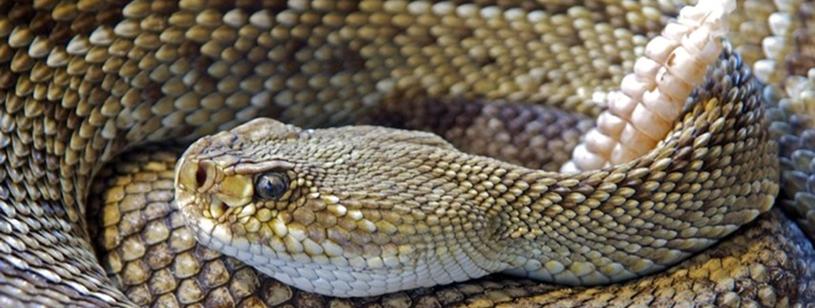
Rattlesnakes are venomous snakes in the genera Crotalus and Sistrurus, native to the Americas. Their rattles are made of interlocking keratin segments. They give birth to live young; the number of rattle segments is not a reliable measure of age.
Examples of rattlesnake species include:
- Eastern diamondback rattlesnake (Crotalus adamanteus)
- Western diamondback rattlesnake (Crotalus atrox)
- Mojave rattlesnake (Crotalus scutulatus)
- Pygmy rattlesnake (Sistrurus miliarius)
These snakes play an important role in the ecosystem, helping to control rodent populations.
Quick facts
| Common name | Rattlesnake |
| Scientific name | Crotalus and Sistrurus spp. |
| Typical lifespan | About 10-25 years in the wild, over 30 years in captivity |
| Maximum speed | Varies with species or individual, distance and conditions |
| Length | About 50 cm - 2.4 m (depending on species) |
| Weight | About 0.1 - 5 kg |
| Diet type | Carnivore (rodents, birds, lizards) |
| Main predators | Kingsnakes, roadrunners, hawks, eagles, coyotes, humans |
| Conservation status | Assess separately by species and population; different taxa and regions have different needs |
| Habitat | Deserts, prairies, forests, rocky hills, mountains |
| Distribution (continents) | North America, Central America and South America |
- Primary category:Types of snakes
- Explore this animal's categories:
Interesting facts
- A built-in warning - Rattlesnakes are the only snakes with a rattle; special muscles can shake it 50-90 times a second, producing a loud buzz.
- Different venoms - The Mojave rattlesnake (Crotalus scutulatus) often has a venom that attacks the nerves, while many other species have venoms that mainly damage blood and tissue.
- A growing rattle - A new segment is added to the rattle each time the snake sheds its skin, which can happen several times a year; old segments can break off.
- Heat vision - Pits between the eyes and nostrils let rattlesnakes sense the body heat of prey, even in complete darkness.
- Dangerous bites - A rattlesnake bite needs urgent medical treatment; with antivenom, most people survive.
Records and remarkable features
- Rattlesnakes are venomous snakes in the genera Crotalus and Sistrurus, native to the Americas. Their rattles are made of interlocking keratin segments. They give birth to live young; the number of rattle segments is not a reliable measure of age.
- A rattlesnake without a rattle - The Santa Catalina rattlesnake, found on a single island in Mexico, has lost its rattle.
Physical characteristics and adaptations
Rattlesnakes are well adapted to many environments, with features that help them find prey, defend themselves and survive harsh conditions.
Distinguishing physical appearance
- A heavy body - Most rattlesnakes have a thick body covered in rough, keeled scales.
- The rattle - Made of loosely linked segments of keratin that click together when the tail shakes.
- A triangular head and heat pits - Like other pit vipers (subfamily Crotalinae), they have heat-sensing pits between the eyes and nostrils.
- Folding fangs - Their long, hollow fangs fold back against the roof of the mouth and swing forward when they bite.
- Camouflage patterns - Brown, grey, green or reddish colours with diamonds, bands or blotches help them blend in.
Adaptations for survival
- A warning system - The rattle warns large animals away, helping the snake avoid being stepped on or attacked.
- Heat sensing - The pits let them strike accurately at warm-blooded prey in the dark.
- Controlling venom - Rattlesnakes can control how much venom they inject, and some defensive bites are "dry", with little or no venom.
- Long fasts - They can go for months without eating, especially during hibernation.
Habits and behaviour
Rattlesnakes are mostly solitary ambush predators that use their rattle to avoid confrontations.
Life mode and daily routine
- Active at different times - In hot weather they are active mainly at dusk and night; in cooler weather, by day.
- Winter dens - In cold regions, many rattlesnakes spend the winter together in rocky dens, sometimes with other snake species.
- Waiting for prey - They often wait motionless for hours beside rodent trails.
Social behaviour and interactions
- Mostly solitary - Outside the denning and breeding seasons, rattlesnakes usually live alone.
- Avoiding people - They usually try to escape or warn before biting.
- Male combat - Males compete by raising their bodies and pushing each other down, without biting.
Defence strategies
- The rattle - The buzz can be heard several metres away and warns predators.
- Striking - If the warning does not work, they strike very quickly.
- Hiding - When they can, they retreat under rocks or into bushes.
Habitat and geographic distribution
Rattlesnakes live only in the Americas, from southern Canada to Argentina, in habitats from deserts to forests and mountains. There are about 50 species, most of them in Mexico and the south-western USA.
Geographical distribution
| Region | Examples and habitats |
|---|---|
| North America | USA, Mexico, southern Canada - deserts, prairies, forests and mountains |
| Central America | Guatemala, Honduras, Costa Rica - dry forests and savannas |
| South America | The South American rattlesnake (Crotalus durissus), from Colombia and Venezuela to Argentina - dry open habitats |
Habitats
- Deserts - The western diamondback (Crotalus atrox) and the sidewinder live in deserts such as the Sonoran Desert.
- Forests - The timber rattlesnake (Crotalus horridus) lives in forests and rocky hills of the eastern USA.
- Savannas and dry forests - The South American rattlesnake prefers dry, open habitats rather than rainforest.
Habitat threats
- Building and roads - Development destroys habitats, and many snakes are killed on roads.
- Killing out of fear - Many rattlesnakes are killed whenever they are seen.
- Climate change - Changing temperatures may affect hibernation and breeding.
Diet and feeding
Rattlesnakes are predators that use their venom and heat-sensing pits to catch prey, mainly small mammals.
What do rattlesnakes eat?
| Type of prey | Examples |
|---|---|
| Small mammals | Mice, rats, ground squirrels, chipmunks, young rabbits |
| Birds and eggs | Ground-nesting birds, quail, eggs |
| Reptiles | Lizards (especially for young snakes) |
| Amphibians | Frogs and toads |
| Arthropods (rarely) | Large insects, mainly eaten by young snakes |
Hunting methods
- Ambush - The rattlesnake waits motionless, hidden in vegetation or among rocks.
- Strike and release - It strikes in a fraction of a second, injects venom and usually lets the prey go.
- Following the trail - The snake then follows the scent trail of the bitten animal until it finds it dead.
- Swallowing whole - It swallows the prey head first, thanks to its flexible jaws.
Food behaviour
- Few meals - A rattlesnake may eat only once every few weeks.
- Big meals - A single large meal can last a long time.
- Water - They get some water from their prey and also drink from puddles and from rain on their own bodies.
Reproduction and life cycle
Female rattlesnakes give birth to live young. Reproduction and the time between litters differ between species and environmental conditions.
Breeding and birth
| Characteristic | Details |
|---|---|
| Sexual maturity | About 2 - 6 years, depending on species and climate |
| Breeding season | Spring and/or late summer |
| Gestation | About 3 - 7 months |
| Number of young | Usually 5 - 20 |
| Birth | Live young |
| Independence of young | Soon after birth; in some species the young stay near their mother until their first shed |
Reproductive behaviour
- Male combat - Males wrestle for access to females, without using their fangs.
- Storing sperm - Females of some species can store sperm for months before fertilising their eggs.
- Slow breeding - In cold regions, females may give birth only every two or three years.
- Venomous babies - The young are born with venom and fangs and a single "button" instead of a full rattle.
Longevity
- In the wild, rattlesnakes can live about 10-25 years.
- In captivity, some have lived more than 30 years.
Name and history
Origin of the name "Rattlesnake"
- The name comes from the rattle at the end of the tail, which makes a warning sound.
- The scientific name of the main genus, Crotalus, comes from the Greek krotalon, meaning "rattle" or "castanet".
- The genus Sistrurus, which includes the massasaugas and pygmy rattlesnakes, means "rattle-tail", from sistrum, an ancient rattling musical instrument.
Taxonomic Classification
| Kingdom | Animalia |
|---|---|
| Phylum | Chordata |
| Class | Reptilia |
| Order | Squamata |
| Family | Viperidae |
| Subfamily | Crotalinae (pit vipers) |
| Main genera | Crotalus and Sistrurus |
History and documentation
- Indigenous cultures - Many Native American peoples gave the rattlesnake an important place in their beliefs and ceremonies.
- A symbol of America - During the American Revolution, the rattlesnake appeared on the Gadsden flag with the words "Don't Tread on Me", and Benjamin Franklin praised it as a symbol of the colonies.
- Persecution - Rattlesnakes have been killed in large numbers by settlers and farmers, and "rattlesnake roundups" are still held in some places.
Cultural significance and mythology
Rattlesnakes are powerful symbols in the Americas, linked with danger, warning, healing and rain.
- The Hopi Snake Dance - In a traditional ceremony, Hopi dancers in Arizona handled live snakes, including rattlesnakes, to carry prayers for rain.
- Mesoamerica - The feathered serpent Quetzalcoatl was often shown with features of a rattlesnake, and the snake on the coat of arms of Mexico is usually shown as a rattlesnake.
- The Gadsden flag - The coiled rattlesnake and the motto "Don't Tread on Me" became a symbol of resistance and independence in the USA.
Conservation status and threats
Many rattlesnakes are still common, but some species have declined because of killing, habitat loss and roads.
Main threats to rattlesnakes
- Killing out of fear - Many people kill rattlesnakes on sight, although they bite mainly in self-defence.
- Habitat loss - Building and farming destroy habitats and bring snakes into contact with people.
- Collection - Rattlesnakes are collected for their skins, rattles and the pet trade.
- Rattlesnake roundups - In some places in the USA, events are held where many snakes are captured and killed.
- Climate change - Changing temperatures may affect hibernation and breeding.
Conservation status
| Species | Status |
|---|---|
| Crotalus catalinensis (Santa Catalina rattlesnake) | Critically Endangered (IUCN) |
| Crotalus unicolor (Aruba rattlesnake) | Critically Endangered (IUCN) |
| Sistrurus catenatus (eastern massasauga) | Listed as threatened in the USA since 2016 |
| Crotalus horridus (timber rattlesnake) | Widespread, but protected in many US states where it has declined |
Conservation efforts
- Protected areas - Reserves in the USA, Mexico and Aruba protect rare rattlesnakes and their dens.
- Education - Campaigns teach people how to avoid bites and why rattlesnakes are useful predators of rodents.
- Legal protection - Several US states protect declining species such as the timber rattlesnake.
In popular culture
Rattlesnakes as symbols
- The Gadsden flag (1775) - A coiled rattlesnake with the motto "Don't Tread on Me".
- Westerns - The rattlesnake is a classic danger in American Western films and stories.
Rattlesnakes in film and animation
- "Toy Story" (1995) - Sheriff Woody's pull-string says, "There's a snake in my boot!"
- Nature documentaries often show rattlesnakes hunting with their heat-sensing pits.