RavenInteresting facts and information
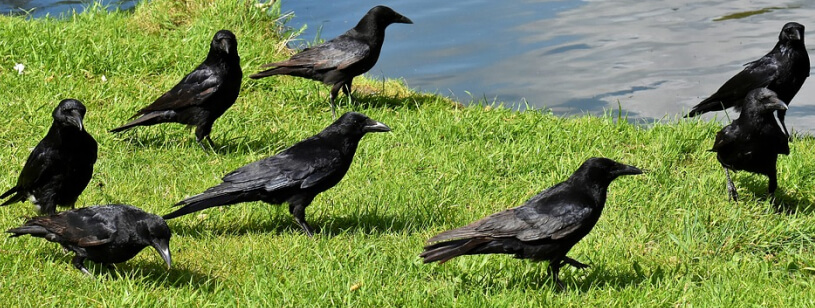
The common raven (Corvus corax) is the largest member of the crow family and the largest perching bird in the world. It has glossy black plumage, a strong bill and a very varied diet.
Ravens live across the Northern Hemisphere, from the Arctic to deserts and mountains. They are famous for their intelligence, their playfulness and their important place in myths and legends.
Quick facts
| Common name | Raven |
| Scientific name | Corvus corax |
| Typical lifespan | Usually 10-15 years in the wild, up to 40 years or more in captivity |
| Maximum speed | About 40-80 km/h in flight |
| Wingspan | About 115 - 150 cm |
| Length | About 56 - 78 cm |
| Weight | About 0.7 - 2 kg |
| Diet type | Omnivore (carrion, fruit, seeds, insects, small vertebrates) |
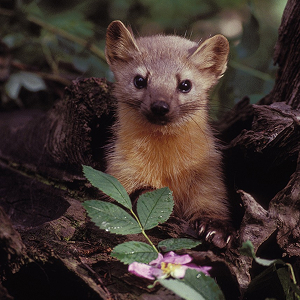
| Main predators | Eagles, eagle-owls, martens and wolves (mainly for eggs and chicks), people |
| Conservation status | Least Concern (IUCN) |
| Distribution | North America, Europe, Asia, North Africa |
| Habitat | Forests, mountains, tundra, deserts, coasts, towns |
- Primary category:Birds
- Explore this animal's categories:
Interesting facts
- Ravens recognise human faces - They can tell people apart and remember those who have treated them badly for a long time.
- Problem solvers - In experiments, ravens solve puzzles, use tools and even plan ahead, choosing a tool they will need later.
- A rich vocabulary - Ravens make dozens of different calls, from deep croaks to knocks, gurgles and alarm calls.
- Talented mimics - In captivity, ravens can learn to imitate human words and other sounds.
- Playful birds - Ravens have been seen sliding down snowy roofs, playing with sticks and teasing other animals.
- "Wolf-birds" - Ravens often follow wolves to share their kills, and may lead wolves to carcasses they cannot open themselves.
- Reactions to death - Ravens sometimes gather around a dead raven, which may help them learn about danger.
- Hiding food - Ravens hide food for later and remember where they put it; they also watch other ravens and steal from their hiding places.
- Birds of Odin - In Norse mythology, Odin's ravens Huginn and Muninn, "Thought" and "Memory", flew around the world and brought him news.
- Long-lived - Ravens can live more than 20 years in the wild and 40 years or more in captivity.
Records and remarkable features
- The common raven is a large corvid with a varied diet and complex learning abilities.
- The largest songbird - The common raven is the largest passerine, or perching bird, in the world, together with the thick-billed raven of Ethiopia.
- One of the most widespread birds - It lives across the Northern Hemisphere, from the Arctic to deserts.
Characteristics
The common raven (Corvus corax) is the largest member of the crow family. Its size, complex social life and intelligence make it one of the most studied birds in the world.
Main physical characteristics:
- Size and weight - Ravens are about 56-78 cm long and weigh about 0.7-2 kg, roughly twice as heavy as a carrion crow.
- Wingspan - About 115-150 cm, allowing them to soar and fly long distances.
- Glossy black plumage - It shines with blue and purple tints in the sunlight.
- A large, strong beak - Used for tearing meat, cracking food and handling objects.
- Shaggy throat feathers - The long throat feathers help tell a raven from a crow.
- Wedge-shaped tail - In flight, the tail looks like a diamond or wedge, unlike the rounded tail of crows.
Special adaptations for survival:
- Excellent memory - Ravens remember where they hid food and who they can trust.
- Vocal skills - They can imitate sounds from their surroundings, and in captivity even human words.
- Clever strategies - Ravens steal food from other animals and plan their actions to avoid danger.
- Living almost anywhere - From Arctic tundra to hot deserts, ravens eat whatever food they can find.
Habits and behaviour
Ravens are among the most social and intelligent birds, with complex behaviour that includes cooperation, learning by watching others and play.
Social behaviour:
- Pairs for life - Adult ravens form pairs that usually stay together for life and defend a territory.
- Communication - They use many different calls, including warnings about predators and social calls.
- Living with predators - Ravens follow wolves and other predators to feed on their kills.
- Young gangs - Young ravens without a territory live in flocks and share information about food.
Breeding season:
- Ravens breed early in the year, usually from about February to April, depending on the climate.
- Sky dances - Pairs perform acrobatic flights together, tumbling and even flying upside down.
- Large nests - Built from sticks and lined with wool, fur and moss, on cliffs, in tall trees or on buildings.
Defence and survival methods:
- Warning others - When a raven sees a predator, it gives alarm calls.
- Moving with the seasons - Ravens are mostly resident, but young birds wander widely in search of food.
- Learning through play - Young ravens develop their skills through play, for example by dropping and catching objects.
Habitat and geographic distribution
Ravens are very adaptable and can live in many environments, from the Arctic tundra to deserts and even cities.
Habitat types:
- Mountains and forests - Wooded mountains provide safe places for nests.
- Open country - Ravens like open landscapes where they can spot food from the air.
- Tundra and polar regions - They are among the few birds that stay in the high Arctic all winter.
- Deserts - They live in deserts such as those of the south-western United States, North Africa and the Middle East.
- Towns - In some regions, ravens have moved into towns, where they find food scraps.
Geographic distribution and estimated population:
| Region | Countries present | Estimated population |
|---|---|---|
| North America | USA, Canada, Mexico, Greenland | Widespread and increasing |
| Europe | From Iceland and Scandinavia to Spain, Romania and Russia | Widespread; returning to areas where it was once wiped out |
| Asia | Siberia, Central Asia, Mongolia, China, Japan, the Himalayas | Widespread |
| North Africa | Morocco, Algeria, Egypt | Present, especially in mountains and deserts |
Impact of climate change and urbanisation:
- Spreading again - In parts of Europe and North America, ravens are returning to areas where they had been wiped out by persecution.
- Towns - Cities and rubbish dumps provide new sources of food.
- Food from predators - Where wolves return, as in Yellowstone, ravens gain more carcasses to feed on.
The raven is a tough, adaptable bird that can live almost anywhere, which makes it one of the most successful birds in the world.
Diet and feeding
Ravens are opportunistic omnivores with a very varied diet. They are known for their cleverness in finding food and for quickly learning new ways of getting it.
Main food:
- Carrion - Ravens eat dead animals, helping to clean up the environment.
- Insects and invertebrates - Grasshoppers, beetles, snails, earthworms and other small animals.
- Small animals - They catch mice, lizards and young birds, and take eggs.
- Fruit and seeds - Berries, grain and acorns are common in autumn.
- Human food waste - Ravens search rubbish bins and dumps and steal food from campsites.
- Stored food - They hide food in caches and come back to it later.
Diet by season:
| Season | Main food type |
|---|---|
| Spring | Eggs, chicks, insects |
| Summer | Fruit, rodents, reptiles, insects |
| Autumn | Seeds, acorns, berries, carrion |
| Winter | Carrion, food scraps |
Feeding methods:
- Stealing - Ravens steal food from other birds and animals, even from eagles and wolves.
- Teamwork - Pairs sometimes work together, one distracting a bird or animal while the other takes its food or eggs.
- Following predators - They follow wolves, bears and even hunters to feed on what is left of their kills.
Reproduction and life cycle
Ravens form pairs for life, and both partners build the nest and care for the young.
Mating:
- The breeding season - About February - April, depending on the climate.
- Courtship - Pairs perform acrobatic flights, and the male brings food to the female.
- Territory - The pair defends its nesting territory against other ravens.
Eggs and hatching:
- Number of eggs - Usually about 3-7.
- Incubation - About 18-21 days; the female sits on the eggs and is fed by the male.
- Hatching - The chicks are born blind and naked and depend completely on their parents.
The development of the chicks:
- The first weeks - Both parents feed the chicks with food carried in their throat.
- At about 5-7 weeks - The young leave the nest.
- After a few months - They become independent and join flocks of other young ravens.
Longevity:
- In the wild - Usually about 10-15 years; the oldest known wild raven lived more than 22 years.
- In captivity - Up to 40 years or more.
Name and history
Ravens have appeared in mythology, religion and culture throughout history, linked both with death and with wisdom.
Origin and etymology of the name:
- The English word "raven" comes from Old English hræfn, an old Germanic name that probably imitated the bird's croaking call.
- The scientific name Corvus corax combines the Latin corvus, "raven", and the Greek korax, also meaning "raven".
Taxonomic classification:
| Taxonomic category | Name |
|---|---|
| Kingdom | Animalia |
| Phylum | Chordata |
| Class | Aves |
| Order | Passeriformes |
| Family | Corvidae |
| Genus | Corvus |
| Species | Corvus corax |
Discovery and Documentation:
- Antiquity - Greeks and Romans saw ravens as messengers of the gods and used their flight and calls to predict the future.
- The Middle Ages - Ravens were linked with battlefields, death and witchcraft.
- Modern science - Research since the late 20th century has shown how intelligent ravens are; some tests suggest they are as clever as great apes at certain tasks.
Role of ravens in mythology and culture:
- Norse mythology - Odin's two ravens, Huginn ("Thought") and Muninn ("Memory"), brought him news from all over the world.
- The Tower of London - According to legend, if the ravens ever leave the Tower, the kingdom will fall, so at least six ravens are always kept there by the Ravenmaster.
- Literature - Edgar Allan Poe made the raven a famous symbol of mystery and grief in his poem "The Raven".
Ravens have played an important role in human cultures, seen as protectors or as birds of ill omen, but always as very intelligent animals.
Cultural significance and mythology
Ravens appear in the myths and traditions of many peoples, as symbols of intelligence and wisdom or as messengers of death and fate. This is partly because they are clever, can imitate sounds and often appear on battlefields and near dead animals.
Ravens in mythology and religion:
- Norse mythology - Odin was accompanied by two ravens, Huginn and Muninn, who brought him news from all over the world.
- Celtic mythology - Ravens and crows were linked with the Morrígan, a goddess of war and fate who could appear on the battlefield as a bird.
- Greek mythology - According to legend, the raven was once white, but Apollo turned it black for bringing him bad news.
- Native peoples of the Pacific Northwest - Raven is a powerful trickster and creator who, in many stories, stole the sun and gave light to the world.
- The Bible - Noah first sent a raven out of the ark, and ravens brought bread and meat to the prophet Elijah in the wilderness.
Raven symbolism:
- Wisdom and knowledge - Because of their intelligence, ravens are seen as wise birds.
- Death and fate - In many superstitions, ravens are linked with bad luck and death.
- Guides and creators - In some cultures, the raven is a spirit guide or even the creator of the world.
Conservation status and threats
The common raven is listed as Least Concern by the IUCN, with a large and growing population. However, it faces some local threats.
Conservation status
- Global population - Large and widespread, with millions of birds across the Northern Hemisphere.
- Returning - In many areas, ravens are returning to places from which they had been wiped out.
Main threats:
- Persecution - In some regions, ravens are still shot or poisoned because they are thought to harm lambs or game birds.
- Poisoning - Ravens can be poisoned by baits put out for other animals and by lead from bullets in carcasses.
- Climate change - Changes in food may affect their distribution in the long term.
Conservation efforts:
- Legal protection - Ravens are protected by law in many countries.
- Research - Studies of raven intelligence help people understand and appreciate them.
- Education - Campaigns explain the useful role of ravens in cleaning up carcasses.
In popular culture
Ravens have appeared in literature, films, art and music for centuries, often linked with mystery, death, wisdom and the supernatural.
Ravens in literature:
- "The Raven" (Edgar Allan Poe, 1845) - The most famous poem about a raven, which repeats the word "Nevermore".
- A Song of Ice and Fire / Game of Thrones (George R. R. Martin) - Ravens carry messages, and the mysterious "three-eyed raven" plays an important role.
- Folk tales - Ravens appear in many folk stories as wise helpers or magical creatures.
Ravens in cinematography and television:
- The Crow (1994) - A film based on a comic book, in which a crow brings a murdered man back to life to seek revenge.
- It's a Wonderful Life (1946) - Features Jimmy the Raven, a famous animal actor said to have appeared in hundreds of films.
- Maleficent (2014) - Maleficent's companion Diaval is a raven who can be turned into a man.
Ravens in video games and comic books:
- Assassin's Creed Valhalla - The hero's raven, Sýnin, helps the player explore the world.
- Raven (DC Comics) - A superhero of the Teen Titans with dark magical powers.
- God of War (2018) - Players hunt for glowing ravens sent by Odin to spy on them.
Ravens in sports and emblems:
- Baltimore Ravens (NFL) - The American football team is named after Edgar Allan Poe's poem; Poe is buried in Baltimore.
- Heraldry - Ravens appear on many coats of arms, including the banners of Viking warriors.
Ravens in music and art:
- Vikings - The raven banner was carried into battle by Viking leaders.
- Native art - Ravens are a common figure on the totem poles of the Pacific Northwest.
- Modern art - Ravens are popular in paintings, sculptures and tattoos because of their strong symbolism.