AnteaterInteresting facts and information
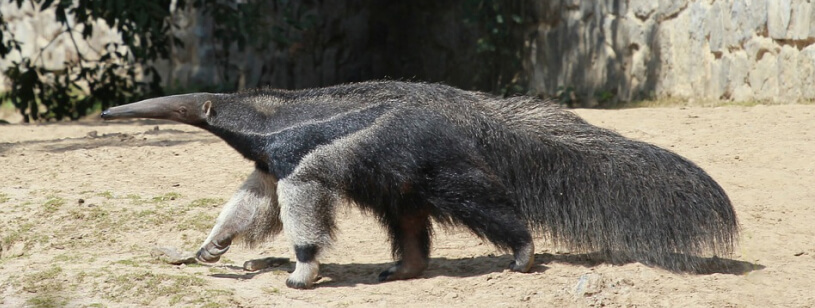
Anteaters are insect-eating mammals in the group Vermilingua, within the order Pilosa. Their long snouts and sticky tongues help them collect ants and termites. The group includes giant anteaters, tamanduas and silky anteaters, which differ in size and daily activity.
Giant anteaters can eat tens of thousands of ants and termites in a day. Anteaters have no teeth; their muscular stomach helps process the insects they swallow.
Anteaters live in Central and South America. The giant anteater is listed as Vulnerable because of habitat loss, fires, road accidents and hunting.
Quick facts
| Common name | Anteater |
| Scientific name | Vermilingua (anteaters within the order Pilosa) |
| Typical lifespan | Giant anteaters about 15 years in the wild and up to about 25 years in captivity; varies by species |
| Maximum speed | Varies by species; no single maximum applies to the whole group |
| Dimensions | Varies greatly: from about 35 cm (silky anteaters) to about 2.2 m (giant anteater), including the tail |
| Weight | From a few hundred grams in silky anteaters to about 40-50 kg in giant anteaters |
| Diet type | Insectivore (ants and termites) |
| Main predators | Jaguars, cougars, large snakes, harpy eagles (for smaller species) |
| Conservation status | Varies by species; the giant anteater is Vulnerable |
| Distribution | Central and South America, from southern Mexico to northern Argentina |
| Habitat | Rainforests, savannas, grasslands, dry forests and scrub |
Interesting facts
- Anteaters have no teeth – They swallow insects whole, and their muscular stomach, helped by swallowed sand and grit, grinds them up.
- A giant tongue – The giant anteater's tongue can stick out about 60 cm, one of the longest tongues of any mammal compared with its body size.
- A powerful nose – Anteaters find insects mainly by smell, which is far better than ours; their eyesight is poor.
- Dangerous claws – When attacked, a giant anteater rears up and slashes with its huge front claws, which can badly injure jaguars, cougars, dogs and even people.
- A cool body – The giant anteater's body temperature, about 33 °C, is one of the lowest of any placental mammal, which helps it save energy.
- Good swimmers – Giant anteaters can swim across wide rivers.
- Small, tree-dwelling anteaters – Silky anteaters weigh only a few hundred grams and live mainly in trees.
- Short feeding visits – A giant anteater usually spends only a brief time at a nest before moving on; it is not immune to ant bites.
- Babies on board – Mothers carry their young on their backs, where the baby's stripe lines up with the mother's, making it hard to see.
Records and remarkable features
- Largest species of anteater – The giant anteater (Myrmecophaga tridactyla) can reach about 2.2 metres in length, including its bushy tail, and weigh up to about 40-50 kg.
- Small anteaters – Silky anteaters are small, tree-dwelling relatives of the giant anteater.
- A specialised tongue – The giant anteater flicks its long, sticky tongue in and out up to about 150 times a minute.
- Climbing anteaters – Tamanduas are adapted to climbing and use trees for feeding and shelter.
- Insect-rich meals – A giant anteater can eat about 30,000 ants and termites in a day.
Characteristics
Anteaters are mammals specially adapted for eating ants and termites. Their long tongues, powerful claws and excellent sense of smell make them highly specialised insect hunters.
Main physical characteristics:
| Characteristic | Details |
|---|---|
| Length | About 35 cm (silky anteaters) to 2.2 m (giant anteater), including the tail |
| Weight | About 200 g (silky anteaters) to about 40-50 kg (giant anteater) |
| Tongue length | Up to about 60 cm (giant anteater) |
| Speed | Usually slow, but a giant anteater can gallop quickly for short distances |
| Main sense | Smell, far better than in humans |
| Claws | Large, curved claws on the front feet; giant anteaters walk on their knuckles to protect them |
| Body temperature | Low, about 33 °C in the giant anteater |
| Teeth | None; food is ground in the stomach |
Special adaptations:
- A long, sticky tongue – Covered in sticky saliva and tiny backward-pointing spines, it picks up hundreds of insects at a time.
- No teeth – Anteaters grind their food in their muscular stomach, helped by swallowed sand.
- Strong claws for digging and defence – Used to rip open ant nests and termite mounds and to fight off predators.
- Coarse hair – The giant anteater's thick, shaggy fur helps protect it from insect bites.
- Standing up to fight – Although it looks slow, the giant anteater can rear up on its hind legs, using its tail for balance, to defend itself.
Habits and behaviour
Anteaters are solitary mammals that spend most of their time feeding, walking long distances between insect nests, and sleeping.
Social behavior:
- Living alone – Adults meet mainly to mate; mothers live with their young.
- Scent marking – Anteaters leave scent marks on trees and the ground.
- Riding on mother – The young ride on their mother's back for several months.
Feeding methods:
- Many nests a day – Anteaters feed briefly at each nest and move on, so the colonies survive and can be visited again.
- A fast tongue – The giant anteater flicks its tongue in and out up to about 150 times a minute, eating quickly before the insects attack.
- Choosing prey – Anteaters tend to avoid ants and termites with strong bites, stings or chemical defences.
Self-defense:
- Claws as weapons – In danger, the giant anteater rears up and slashes with its claws, or hugs the attacker with them.
- Strong smells – Tamanduas can release a very strong, unpleasant smell when threatened.
- Few predators – Jaguars and cougars are the main predators of adult giant anteaters, but they risk serious injury.
Habitat and geographic distribution
Anteaters are native to Central and South America, where they live in rainforests, savannas, grasslands and dry scrub.
Habitat types:
| Habitat | Predominant species |
|---|---|
| Rainforests | Tamanduas, silky anteaters (Cyclopes) |
| Savanna and grasslands | Giant anteater (Myrmecophaga tridactyla) |
| Dry forests and scrub | Southern tamandua (Tamandua tetradactyla), northern tamandua (Tamandua mexicana) |
Geographic distribution:
- South America – Brazil, Argentina, Paraguay, Bolivia, Venezuela, Colombia, Peru and other countries.
- Central America and Mexico – The northern tamandua and silky anteaters live from southern Mexico southwards.
- Lost areas – The giant anteater has disappeared from parts of Central America and from Uruguay.
Impact of climate change and human activities:
- Habitat loss – Deforestation can reduce the feeding and resting areas available to anteaters.
- Road accidents – Giant anteaters are often hit by cars where roads cross their habitat.
- Hunting – Anteaters are sometimes hunted for meat or killed because of fear or local beliefs.
Anteaters play an important role in their ecosystems by helping to keep ant and termite numbers in check, but they face many threats from human activities.
Diet and feeding
Anteaters are insectivores that eat mainly ants and termites. Their bodies are built to take insects from nests quickly without destroying the colonies.
Types of food consumed:
| Food group | Anteaters that eat it |
|---|---|
| Ants | All species |
| Termites | Giant anteater, tamanduas |
| Insect larvae and bees | Occasionally, especially tamanduas |
| Fruit and honey | Occasionally, especially in captivity |
Feeding methods:
- A long, sticky tongue – The tongue can flick out up to about 150 times a minute to catch insects quickly.
- Brief feeding stops – A giant anteater often moves between insect nests rather than feeding for a long time at one site.
- A muscular stomach – Having no teeth, the anteater swallows sand and grit, which help grind the insects.
- Day or night – Giant anteaters may be active by day or night, depending on temperature and disturbance by people; tamanduas are often nocturnal.
Reproduction and life cycle
Anteater reproduction varies between species. A female usually gives birth to one young, which depends on her care.
Life cycle stages:
| Stage | Approximate duration | Characteristics |
|---|---|---|
| Gestation | About 5-6 months (giant anteater about 190 days) | The female gives birth to a single young. |
| Birth | Any time of year in many areas | The baby is born with fur and soon climbs onto its mother's back. |
| Young on the back | Several months | The young rides on its mother's back for protection. |
| Maturity | About 2-4 years | It becomes independent and can breed. |
Care of the young:
- Riding on the back – The baby's markings line up with its mother's, which helps hide it.
- Milk first – The young drinks milk for several months and gradually starts eating insects.
- Independence – At about a year or more, the young leaves its mother to find its own home range.
Anteaters breed slowly, so their populations are vulnerable when their habitat is destroyed.
Name and history
Anteaters amazed the first European explorers of South America with their strange appearance.
Origin and etymology of the name:
- The word "anteater" simply describes its diet of ants.
- The scientific name Myrmecophaga comes from the Greek myrmex ("ant") and phagein ("to eat").
- The name "tamandua" comes from the Tupi language of Brazil and is usually translated as "ant catcher".
Taxonomic classification:
| Taxonomic category | Name |
|---|---|
| Kingdom | Animalia |
| Phylum | Chordata |
| Class | Mammalia |
| Order | Pilosa (with sloths) |
| Families | Myrmecophagidae (giant anteater, tamanduas), Cyclopedidae (silky anteaters) |
| Species | The giant anteater, two tamanduas and several silky anteater species |
Anteaters in history and culture:
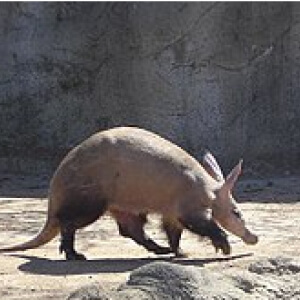
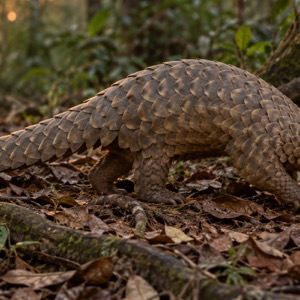
Anteaters are closely related to sloths and more distantly to armadillos; animals such as aardvarks and pangolins, which also eat ants, are not related to them but evolved similar features.
Cultural significance and mythology
With their strange shape, anteaters have long fascinated people, from Indigenous peoples of South America to modern artists.
Anteater symbolism:
- Nature's balance – As a predator of ants and termites, the anteater is seen as a symbol of balance in nature.
- Art – The surrealist painter Salvador Dalí was famously photographed walking a giant anteater on a lead in Paris in 1969.
- Local beliefs – In parts of South America, people traditionally feared the giant anteater's claws and told stories about its strength.
Conservation status and threats
Anteaters are threatened by habitat destruction, road accidents, fires and hunting. Tamanduas and silky anteaters are still widespread, but the giant anteater is declining.
Conservation status
| Species | Status (IUCN) |
|---|---|
| Giant anteater (Myrmecophaga tridactyla) | Vulnerable |
| Southern tamandua (Tamandua tetradactyla) | Least Concern |
| Silky anteater (Cyclopes didactylus) | Least Concern; some recently described silky anteater species are little known |
Main threats:
- Habitat destruction – Forests and savannas are being turned into farmland, leaving anteaters less space and food.
- Vehicle collisions – Giant anteaters are often hit by cars on roads through their habitat.
- Hunting – In some regions, anteaters are hunted or killed out of fear.
- Fires – Grassland and forest fires kill many giant anteaters, which move slowly and have flammable fur.
- Climate change – May affect the insects they eat and their habitats.
Conservation efforts:
- Protected areas – National parks and reserves in Brazil, Argentina and other countries protect anteater habitats.
- Rescue and release – Rescue centres care for injured and orphaned anteaters and release them back into the wild.
- Reintroduction – In Argentina, giant anteaters have been reintroduced to the Iberá wetlands, where they had disappeared.
- Safer roads – Wildlife crossings and campaigns help reduce road deaths.
Habitat protection, safer roads and measures to reduce hunting can help conserve giant anteaters.
In popular culture
Anteaters appear in cartoons, video games and sport, thanks to their unusual appearance.
Anteaters in literature:
- Children's books – Anteaters are popular characters in picture books about unusual animals.
- Nature books – Anteaters are often used as examples of animals with very specialised diets.
Anteaters in Cinema and Television:
- The Ant and the Aardvark (1969) – A classic cartoon about a hungry "aardvark", who actually looks more like an anteater, trying to catch a clever ant.
- Nature documentaries – Giant anteaters often appear in documentaries about South American wildlife.
Anteaters in sport and video games:
- UC Irvine Anteaters – The sports teams of the University of California, Irvine, are named after the anteater, and their mascot is Peter the Anteater.
- Animal Crossing (Nintendo) – Several village characters in the game are anteaters.