QuetzalInteresting facts and information
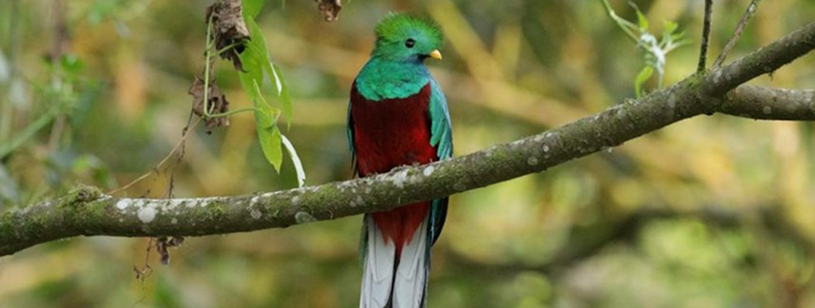
Quetzals are colourful birds in the trogon family. Species in the genus Pharomachrus live in forests in the Americas. The resplendent quetzal (Pharomachrus mocinno) is especially known for the long green upper tail-coverts of adult males.
The genus Pharomachrus includes several species of quetzals, but the best known is the resplendent quetzal, which lives in the cloud forests of southern Mexico and Central America. Quetzals are important seed dispersers, especially of wild avocado trees.
Quick facts
| Common name | Quetzal |
| Scientific name | Pharomachrus spp.; Pharomachrus mocinno is the resplendent quetzal |
| Typical lifespan | Probably about 10 years or more in the wild |
| Maximum speed | Varies with species or individual, distance and conditions |
| Size | About 36 - 40 cm long (without the train) |
| Tail length (males) | Train up to about 65 cm |
| Weight | About 200 - 225 g |
| Diet type | Mainly fruit, but also insects and small animals |
| Main predators | Hawks, owls; squirrels and other animals take eggs and chicks |
| Conservation status | Assess separately by species and population; different taxa and regions have different needs |
| Habitat | Mountain cloud forests |
| Distribution | Resplendent quetzal: southern Mexico and Central America; other quetzals in South America |
- Primary category:Birds
- Explore this animal's categories:
Interesting facts
- A spectacular train - In the breeding season, adult male resplendent quetzals grow a train of green feathers up to about 65 cm long, much longer than their body.
- A legend of freedom - According to an old legend, the quetzal dies if caged, which made it a symbol of freedom; in reality it is very hard to keep, but it has been bred in a few zoos.
- Agile in the forest - Its broad, rounded wings let it fly skilfully among the trees of mountain cloud forests.
- Avocado lovers - Quetzals eat mainly fruit, especially small wild avocados and other fruits of the laurel family, and also some insects, lizards and frogs.
- Less colourful females - Females are duller green and grey and have no long train.
Records and remarkable features
- Quetzals are colourful birds in the trogon family. Species in the genus Pharomachrus live in forests in the Americas. The resplendent quetzal (Pharomachrus mocinno) is especially known for the long green upper tail-coverts of adult males.
Physical characteristics and adaptations
The resplendent quetzal is famous for its brilliant colours and the male's long train, and it is well adapted to life in mountain cloud forests.
Distinguishing physical appearance
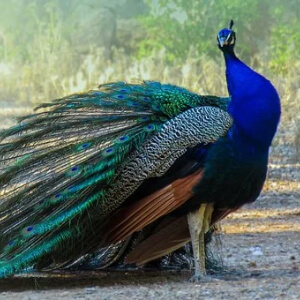
- Brilliant colours - Males have shining emerald-green feathers on the head, back and wings, a crimson belly and a long green train; their colours change in the light.
- A crest - Males have a short, rounded crest of green feathers on the head.
- Differences between sexes - Females are duller, with a grey breast and no train.
- A short, broad bill - Yellow in males, dark in females; wide enough to swallow fruits whole.
Adaptations for survival
- Delicate feathers - Their soft feathers and thin skin are easily damaged.
- Agile flight - Broad wings allow them to move skilfully through dense branches.
- Seed dispersal - Quetzals swallow fruits whole and spit out the large seeds, helping forest trees to spread.
- Feet for perching - Like other trogons, quetzals have two toes pointing forward and two backward, which is good for perching but not for walking.
Habits and behaviour
The quetzal is usually seen alone or in pairs and is most active in the morning.
Daily behaviour
- Active in the morning - Much of its feeding and calling happens early in the day.
- Short flights - It flies short distances between trees, often snatching fruit in flight.
- Sitting still - It often perches quietly for long periods, which makes it hard to spot despite its colours.
Social behaviour and territorial
- Territorial in the breeding season - Pairs defend the area around their nest.
- Courtship flights - Males fly up above the canopy and then dive down, with their train rippling behind them.
- Seasonal movements - Outside the breeding season, quetzals move up and down the mountains following ripe fruit.
Defence strategies
- Camouflage - Seen from behind, the green feathers blend in with the leaves.
- Quick escape - When threatened, it flies quickly into cover.
- Alertness - Quetzals watch out for hawks, owls and other predators.
Habitat and geographic distribution
The resplendent quetzal lives in the mountain cloud forests of southern Mexico and Central America, usually between about 1,200 and 3,000 metres above sea level. Other quetzal species live in South America.
Geographical distribution
| Country | Presence of the resplendent quetzal |
|---|---|
| Mexico | Yes (cloud forests of Chiapas and Oaxaca) |
| Guatemala | Yes (mountain forests; national bird) |
| Honduras, El Salvador and Nicaragua | Yes (mountain regions) |
| Costa Rica | Yes (for example, Monteverde and the Talamanca mountains) |
| Panama | Yes (western highlands) |
| South America | No; other quetzal species, such as the golden-headed and crested quetzals, live there |
Habitats
- Cloud forests - Cool, wet mountain forests often covered in mist and full of mosses and epiphytes.
- Forest edges and clearings - Quetzals often feed at forest edges where fruit trees grow.
- Old trees - They need dead or rotting trees for nesting.
Habitat threats
- Deforestation - The loss of cloud forests in Central America is the biggest threat.
- Habitat fragmentation - Farms and roads split forests into small patches.
- Illegal capture - Quetzals are sometimes caught for the illegal bird trade.
- Climate change - Warmer temperatures may push cloud forests and their fruit trees higher up the mountains.
Diet and feeding
The quetzal eats mainly fruit, but also insects and small animals, especially when feeding its chicks. It is an important seed disperser in cloud forests.
What does the quetzal eat?
| Food type | Examples |
|---|---|
| Fruit | Wild avocados and other fruits of the laurel family, figs, berries |
| Insects | Beetles, caterpillars, wasps and other insects |
| Small animals | Lizards, small frogs, snails |
Food behaviour
- Feeding in the trees - Quetzals rarely come down to the ground.
- Snatching fruit in flight - They often fly up to a fruit, pluck it and return to a perch.
- Swallowing fruits whole - They swallow small wild avocados whole and later regurgitate the large seeds, helping new trees to grow.
- Feeding chicks - Young chicks are fed mainly insects and other small animals, which provide protein.
Reproduction and life cycle
Quetzals nest in holes in dead or rotting trees, and both parents share the work of raising the chicks.
Mating and laying of eggs
| Characteristic | Details |
|---|---|
| Sexual maturity | About 3 years (males grow their full train) |
| Breeding season | About March - June |
| Number of eggs | Usually 2 pale blue eggs |
| Incubation | About 17-19 days |
| Time spent in the nest | About 3-4 weeks |
Reproductive behaviour
- Display flights - Males fly up above the trees and swoop down to attract females.
- Nest holes - Both parents dig or enlarge a hole in a rotting tree trunk.
- Shared care - Both parents incubate the eggs and feed the chicks; when the male sits on the eggs, his long train often sticks out of the hole.
- Leaving the nest - The young leave the nest after about 3-4 weeks and are fed by their parents for some time afterwards.
Longevity
- Quetzals probably live about 10 years or more in the wild.
- They are very difficult to keep in captivity because of their special diet and sensitivity to stress.
Name and history
Origin of the name "Quetzal"
- The word "quetzal" comes from the Nahuatl word quetzalli, which meant a long, shining tail feather and also "precious".
- The scientific name Pharomachrus mocinno honours the Mexican naturalist José Mariano Mociño, who explored the region in the late 18th century.
Taxonomic Classification
| Kingdom | Animalia |
|---|---|
| Phylum | Chordata |
| Class | Aves |
| Order | Trogoniformes |
| Family | Trogonidae |
| Genus | Pharomachrus |
| Species | Pharomachrus mocinno (best known) |
History and documentation
- The feathered serpent - The quetzal's feathers were linked with the god known to the Aztecs as Quetzalcoatl and to the Maya as Kukulkan, the "feathered serpent".
- A national symbol of Guatemala - The quetzal appears on the flag and coat of arms of Guatemala, and the country's currency is called the quetzal.
- Feathers for rulers - Maya and Aztec rulers wore headdresses of quetzal feathers; a famous feather headdress linked with the Aztec ruler Moctezuma is kept in a museum in Vienna.
- Ecotourism - Today, many people visit cloud forests in Costa Rica and Guatemala especially to see quetzals.
Cultural significance and mythology
The quetzal was one of the most important birds in Mesoamerican culture, and today it is a national symbol of Guatemala.
- Feathers worth more than gold - For the Maya and Aztecs, quetzal feathers were extremely precious and were used by rulers and priests; it is said that the birds were caught, their long feathers plucked, and then released.
- The legend of Tecún Umán - A Guatemalan legend says that the quetzal's breast became red with the blood of the K'iche' Maya leader Tecún Umán, who was killed fighting the Spanish in 1524.
- A symbol of freedom - Because of the belief that it cannot live in a cage, the quetzal became a symbol of liberty in Guatemala.
Conservation status and threats
The resplendent quetzal is listed as Near Threatened by the IUCN, mainly because of the loss of cloud forests.
Main threats
- Deforestation - The loss of cloud forests reduces breeding and feeding areas.
- Fragmentation - Farms and roads split populations into isolated groups.
- Illegal capture - Some quetzals are still caught for the illegal bird trade.
- Climate change - Changing temperatures and rainfall affect mountain forests and their fruit trees.
Conservation status (IUCN)
| Species | Status |
|---|---|
| Pharomachrus mocinno (resplendent quetzal) | Near Threatened |
| Pharomachrus antisianus (crested quetzal, South America) | Least Concern |
Conservation efforts
- Protected areas - National parks and reserves protect cloud forests in Guatemala, Costa Rica, Mexico and Panama, including the Quetzal Biotope in Guatemala.
- Legal protection - Hunting and trading quetzals is illegal.
- Nest boxes and forest restoration - Planting native fruit trees and providing nest sites help quetzals.
- Ecotourism - Birdwatching tourism brings money to local communities and encourages them to protect the forest.
In popular culture
Quetzal as a symbol
- Guatemala - The quetzal appears on the national flag, coins and banknotes, and the currency itself is called the quetzal.
- Mesoamerican art - The quetzal and the feathered serpent appear on ancient temples, such as those at Teotihuacan and Chichén Itzá.
- Birdwatching - The resplendent quetzal is one of the most sought-after birds for birdwatchers in Central America.