HummingbirdInteresting facts and information
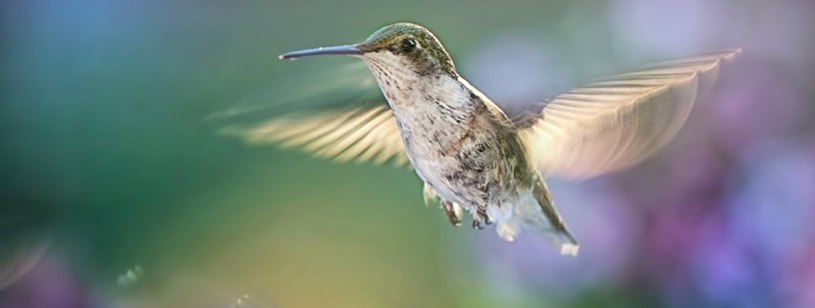
Hummingbirds are small, agile birds capable of sustained hovering and controlled backward flight. The family includes the world’s smallest living bird, the bee hummingbird. They can move forward, backward and sideways while feeding or manoeuvring.
Hundreds of hummingbird species are native to the Americas. Iridescent feathers have earned them the description “flying jewels”. They pollinate many flowering plants and are familiar images of speed and energy.
Examples include:
- Ruby-throated hummingbird (Archilochus colubris): a North American species whose adult male has a brilliant reddish throat.
- Giant hummingbirds (Patagona): unusually large Andean hummingbirds weighing around 20 g. Research distinguishing northern and southern forms means older accounts treating them all as Patagona gigas need taxonomic care.
- Green-tailed trainbearer (Lesbia nuna): notable for the adult male’s long, forked tail.
- Snowcap (Microchera albocoronata): the adult male has a striking white crown contrasting with its dark, wine-purple body.
Quick facts
| Common name | Hummingbirds |
| Scientific name | Trochilidae (family) |
| Typical lifespan | Often a few years; some individuals live for more than a decade |
| Maximum speed | Varies by species and flight type; no single maximum represents the family |
| Wingbeat rate | Varies greatly between species and activities; often several dozen beats per second |
| Size | From roughly 5 cm in the smallest species to around 20 cm or more in large or long-tailed forms |
| Weight | Roughly 2 g in very small species to around 20 g or more in giant forms |
| Diet type | Nectar and small arthropods, including insects and spiders |
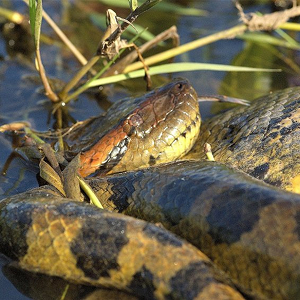
| Main predators | Hawks, falcons, snakes, large praying mantises, cats |
| Conservation status | Varies by species; some are threatened |
| Habitat | Tropical forests, open habitats, gardens and mountains across the Americas |
- Primary category:Birds
- Explore this animal's categories:
Interesting facts
- Rapid wingbeats: small hummingbirds can beat their wings about 50-80 times a second, while the giant hummingbird beats them only about 10-15 times a second.
- Flying backwards: their wing movements allow them to hover and to fly forwards, sideways and even backwards.
- Racing hearts: a hummingbird's heart can beat more than 1,000 times a minute when it is active, and it must feed many times a day.
- Torpor saves energy: on cold nights, many hummingbirds go into torpor, a deep sleep-like state in which their body temperature and metabolism drop sharply.
- Long journeys: ruby-throated hummingbirds can fly non-stop across the Gulf of Mexico, about 800 km, and rufous hummingbirds migrate between Alaska and Mexico.
- Good memory: hummingbirds remember where flowers are and how long it takes them to refill with nectar.
Records and remarkable features
- The smallest living bird: Cuba’s bee hummingbird (Mellisuga helenae) is approximately 5–6 cm long and weighs around 2 g.
- The largest hummingbirds: giant hummingbirds of the Andes (Patagona) reach about 20 cm and 20 g or more; in 2024, scientists separated them into a northern and a southern species.
- A record-breaking dive: during courtship dives, male Anna's hummingbirds cover about 385 times their body length per second, one of the fastest movements relative to body size of any animal.
- A remarkably long bill: the sword-billed hummingbird (Ensifera ensifera) is the only bird with a bill longer than its body (not counting the tail).
- Life at high elevation: some hummingbirds live in the high Andes above 4,500 m, where nights are freezing.
Physical characteristics and adaptations
Hummingbirds combine adaptations for agile flight, nectar feeding and very high energy use.
Distinctive appearance
- Small size: the family ranges from the tiny bee hummingbird, about 5–6 cm long, to giant and long-tailed species of 20 cm or more.
- Iridescent colours: microscopic structures in the feathers reflect light, so colours flash and change with the viewing angle.
- Specialised bills: bill length and shape differ between species and match the flowers they feed on.
- Tiny feet: hummingbirds use their feet for perching and can barely walk.
Survival adaptations
- Hovering flight: their wings can rotate at the shoulder, producing lift on both the forward and the backward stroke.
- Powerful flight muscles: flight muscles make up about a quarter of their body weight.
- Colour vision: hummingbirds can see ultraviolet light and colours that people cannot.
- A forked tongue: the tip of the tongue splits into two fringed tubes that trap nectar; a hummingbird can lick about 15-20 times a second.
- Torpor: in some Andean species, body temperature can fall to just a few degrees above freezing during torpor.
Habits and behaviour
Hummingbirds need to feed often during the day, but they also spend much time perched, resting and watching their territory.
Activity patterns
- Flight and perching: hummingbirds alternate short feeding flights with long periods of perching.
- Daytime feeding: they feed throughout the day, especially in the early morning and before dusk.
- Night rest: at night, many species save energy by going into torpor.
Territorial behaviour
- Defending food: many hummingbirds aggressively defend patches of flowers or feeders from rivals.
- Aerial chases: they chase intruders at high speed, sometimes bumping or jabbing them with their bills.
Communication and interactions
- Calls and sounds: hummingbirds chirp and squeak, and some males make loud sounds with their tail feathers during display dives.
- Pollination: while feeding, hummingbirds carry pollen between flowers and are important pollinators of many plants.
Habitat and geographic distribution
Hummingbirds live only in the Americas, from Alaska to Tierra del Fuego and in the Caribbean. There are about 360 species, most of them in the tropical Andes.
Geographic distribution
| Region | Example species |
|---|---|
| North America | Archilochus colubris — ruby-throated hummingbird |
| Central America | Amazilia tzacatl — rufous-tailed hummingbird |
| South America | Giant hummingbirds (Patagona) and sword-billed hummingbird (Ensifera ensifera) |
| Caribbean | Mellisuga helenae — bee hummingbird |
Habitat types
- Tropical forests: many species live in rainforests and cloud forests.
- Mountains: some live above 4,500 m, where it is cold and the air is thin.
- Gardens and parks: some species visit gardens, flowers and feeders.
Habitat pressures
- Deforestation: forest loss removes feeding and nesting areas, especially for species with small ranges.
- Pesticides: chemicals reduce the insects that hummingbirds feed to their chicks.
- Climate change: changes in flowering times can leave hummingbirds without food when they need it.
Diet and feeding
Hummingbirds have very high energy needs. Nectar gives them sugar for energy, while insects and spiders provide protein and other nutrients.
What do hummingbirds eat?
| Food type | Examples |
|---|---|
| Nectar | Many flowers, often red or orange tube-shaped ones, such as salvias and fuchsias |
| Insects and other arthropods | Small flies, gnats, aphids and spiders |
| Pollen | Carried between flowers and sometimes swallowed by accident |
| Tree sap, occasionally | Some hummingbirds use sap wells opened by woodpeckers |
Feeding techniques
- Collecting nectar: the forked tongue traps nectar between its fringes and carries it into the mouth.
- Many flower visits: a hummingbird may visit hundreds or even more than a thousand flowers a day.
- Hovering to feed: they usually hover in front of a flower but sometimes perch while feeding.
- Catching insects: they catch small insects in the air or pick them from leaves and spider webs.
Reproduction and life cycle
In most hummingbirds, the male does not help to build the nest or raise the young; the female does everything herself.
Mating and egg laying
| Characteristic | Details |
|---|---|
| Sexual maturity | Usually about one year old |
| Breeding season | Varies with region and species |
| Eggs | Usually two in a clutch |
| Egg size | About the size of a coffee bean or a pea |
| Incubation | About 2-3 weeks |
| Leaving the nest | About 3-4 weeks after hatching; the mother keeps feeding them for a while |
Breeding behaviour
- Courtship displays: males of many species perform dives, shuttle flights and sound displays.
- Nest building: females build tiny cup-shaped nests of plant down and moss, held together with spider silk so they can stretch as the chicks grow.
- Tiny eggs: the bee hummingbird lays the smallest eggs of any bird.
Raising chicks
- Helpless hatchlings: chicks hatch with closed eyes and almost no feathers.
- Feeding: the mother feeds them a mixture of nectar and insects, pushing her bill deep into their throats.
- First flight: the young leave the nest after about 3-4 weeks.
Longevity
- Many hummingbirds live only a few years, but some ringed birds have lived more than 10 years.
- Hummingbirds are wild birds with special needs; in many countries it is illegal to keep them without a permit.
Name and history
Hummingbirds appear in the art, myths and traditions of many peoples of the Americas.
The name “hummingbird”
- The English name comes from the humming sound of their wings. In many other languages they are called "colibri".
- The family name Trochilidae comes from the Greek trochilos, the name of a small bird mentioned by ancient writers.
Taxonomic classification
| Kingdom | Animalia |
|---|---|
| Phylum | Chordata |
| Class | Aves |
| Order | Apodiformes |
| Family | Trochilidae |
Historical and cultural accounts
- The Aztecs - The name of the Aztec god Huitzilopochtli is usually translated as "hummingbird of the south", and fallen warriors were believed to return as hummingbirds.
- The Nazca Lines - One of the famous ancient figures drawn on the desert ground in southern Peru is a giant hummingbird.
- The Caribbean - Trinidad and Tobago is known as the "land of the hummingbird", and hummingbirds appear on its coat of arms; the red-billed streamertail is Jamaica's national bird.
- Conservation - Some hummingbirds with very small ranges, such as the Juan Fernández firecrown of Chile, are critically endangered.