CamelInteresting facts and information
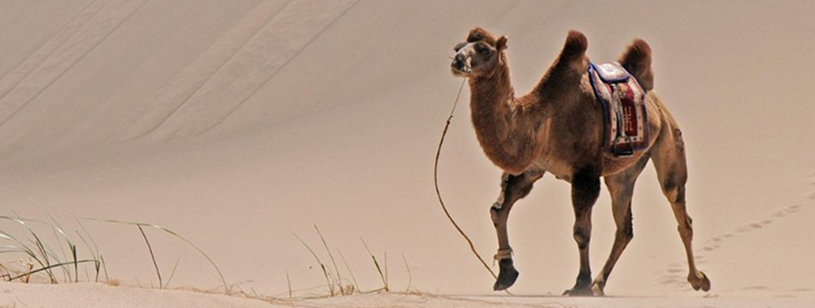
Camels (Camelus) are large herbivorous mammals adapted to dry environments. The domestic dromedary (Camelus dromedarius) has one hump, while the domestic Bactrian camel (Camelus bactrianus) has two. The wild camel (Camelus ferus) is a separate, Critically Endangered species. Related profile: Desert animals.
Three living camel species are commonly distinguished: the dromedary (Camelus dromedarius), domestic Bactrian camel (Camelus bactrianus) and wild camel (Camelus ferus). The wild camel is a distinct species, not simply a feral domestic Bactrian camel.
Quick facts
| Common name | Camel |
| Scientific name | Camelus |
| Typical lifespan | About 40 years, sometimes more |
| Maximum speed | About 65 km/h in short sprints; about 40 km/h over longer distances (dromedary) |
| Height | About 1.7-2.1 m at the shoulder |
| Length | About 2.3-3.5 m |
| Weight | About 300-1,000 kg, depending on the species |
| Diet type | Plant food, including grasses, leaves and dry or thorny vegetation, depending on habitat |
| Main predators | Wolves; in the past also tigers and lions; humans |
| Conservation status | Wild camel (Camelus ferus): Critically Endangered; domestic camels are managed livestock |
| Main species | Dromedary (Camelus dromedarius); domestic Bactrian camel (Camelus bactrianus); wild camel (Camelus ferus) |
| Habitat | Deserts, dry steppes and other arid or semi-arid habitats |
- Primary category:Mammals
- Explore this animal's categories:
Interesting facts
- Humps contain fat – The hump stores fat rather than a reservoir of liquid water. Using fat supplies energy and produces metabolic water.
- Huge drinkers - A very thirsty camel can drink more than 100 litres of water in about 10-15 minutes, quickly rehydrating after a long time without water.
- Sand protection - Camels have three eyelids and two rows of long eyelashes, which protect their eyes from blowing sand.
- A water-saving nose - Their nose recovers moisture from the air they breathe out, so they lose less water.
- Closing nostrils - Camels can close their nostrils to keep out sand during sandstorms.
- Coping with extremes - Camels can live in places where temperatures range from well below freezing to about 50 °C.
- Milk – Camel milk is used as food. Composition varies, and no universal vitamin comparison or medical benefit is claimed.
- Feet made for sand - Their two-toed feet spread out on wide, leathery pads, which stop them sinking into the sand.
- Survivors of thirst - Camels can lose about a quarter of their body weight in water without serious harm, far more than most mammals.
- Talkative animals - Camels grunt, bellow and moan to communicate with each other.
Records and remarkable features
- Bactrian camels are large mammals; body size varies by sex and individual. No unverified exceptional-size record is assigned here.
- Dromedaries can move quickly, but speed depends on distance and conditions.
- Going without water - In cool weather, when they eat juicy plants, camels can go for weeks or even months without drinking.
- Ancient helpers - Dromedaries were probably domesticated about 3,000 years ago in the Arabian Peninsula.
- Salt-water drinkers - Wild camels in the Gobi Desert can drink salty water that other mammals cannot.
Characteristics
Camels are large, sturdy mammals perfectly adapted to survive in deserts. Their best-known feature is the hump (one or two), which stores energy as fat, not water as many people think.
Main physical characteristics
- The humps - The dromedary (Camelus dromedarius) has one hump, and the Bactrian camel (Camelus bactrianus) has two. The fat in the humps provides energy when food is scarce, and the hump shrinks and flops over when the fat is used up.
- Insulating fur - Camel fur protects them from the burning sun by day and the cold at night; Bactrian camels grow a thick, shaggy winter coat.
- Feet for sand - Long legs and wide, padded feet stop them sinking into sand and let them travel long distances with little effort.
- Special nostrils - Camels can close their nostrils completely to keep out sand.
- A tough mouth and stomach - They can eat thorny, dry plants that many other animals avoid, and their stomach has several chambers that help digest tough food.
- Protected eyes - Three eyelids and two rows of long eyelashes keep out sand.
- Tolerance of dehydration - Camels can lose about a quarter of their body weight in water without suffering serious harm.
Special adaptations for survival
- Tolerance of extreme temperatures - Dromedaries live in very hot deserts, and Bactrian camels survive freezing winters in Central Asia.
- Using water efficiently - Camels can drink huge amounts quickly and then go a long time without drinking.
- A changing body temperature - A camel's body temperature can rise by several degrees during the day, so it sweats less and saves water.
Habits and behaviour
Camels are very hardy animals, with habits that help them survive harsh conditions. They are usually calm, but they can become aggressive when provoked or in the breeding season.
Social behaviour
- Herds - Wild and free-ranging camels often live in groups of about 6-20 animals, usually with one dominant male, several females and their young.
- Bonds - Camels recognise the members of their group and form social attachments.
- Communication - They grunt, moan, bellow and make other sounds to signal danger or communicate.
Survival methods
- Resisting thirst - Camels can go a long time without drinking by saving water in many ways.
- "Spitting" - When annoyed, camels may bring up and spray the contents of their stomach, mixed with saliva, mainly as a warning.
- Resting in the heat - In very hot weather, camels move less and often face the sun to reduce the area of their body exposed to it.
Interaction with people
Camels have been domesticated for about 3,000 years or more and have long been essential for desert peoples. They are used for:
- Transport, from trading caravans to desert tourism
- Milk, meat, wool and leather
- Camel racing, especially in the Middle East
Habitat and geographic distribution
Camels live in dry and semi-dry regions and are very well adapted to deserts and dry steppes.
Habitat types
- Hot deserts - Dromedaries are common in the deserts of North and East Africa, the Arabian Peninsula, the Middle East and India.
- Steppes and cold deserts - Bactrian camels live in the cold, dry regions of Mongolia, China and Central Asia.
- The Gobi Desert - The last wild camels live in remote parts of the Gobi, in Mongolia and China.
Geographic distribution
| Region | Species | Situation |
|---|---|---|
| North and East Africa | Dromedary | Most of the world's camels live in Africa, especially in Somalia, Sudan and Kenya |
| Arabian Peninsula and the Middle East | Dromedary | Common; important in culture and racing |
| Central Asia, Mongolia and China | Domestic Bactrian camel | A few million animals |
| Gobi Desert (Mongolia and China) | Wild camel | Only about 1,000 left; Critically Endangered |
| Australia | Feral dromedary | Hundreds of thousands of feral camels, descended from animals brought in the 19th century |
Impact of climate change and human activities
- Less food - Droughts and overgrazing reduce the plants that camels eat.
- Threats to wild camels - The wild camel (Camelus ferus) is one of the rarest large mammals in the world.
- Changes in water sources - Rising temperatures and falling rainfall affect water and plants, forcing herders and their camels to move.
Camels remain essential for people in desert regions, but habitat loss and climate change threaten the last wild camels.
Diet and feeding
Camels are herbivores with a very varied diet, adapted to the harsh conditions of the desert. They can eat many plants that other animals avoid, including thorny, dry and salty plants.
Main food
- Dry grasses and shrubs - Camels can live on poor-quality plants, thanks to their efficient stomach.
- Thorny plants - Their thick, tough lips let them eat thorny plants without being hurt.
- Acacia leaves and shoots - In semi-desert areas, camels browse on the leaves of desert trees.
- Salty plants - Camels eat salty plants, which helps them get the minerals they need.
- Fruit and seeds - They eat fruit and seeds when available, such as dates.
Digestive adaptations
- Water from plants - When plants are fresh and juicy, camels can go a long time without drinking.
- A multi-chambered stomach - Helps them digest tough fibres; like ruminants, camels chew the cud.
- Eating almost anything green - Camels can eat bitter and salty plants that other livestock refuse.
Diet by season
| Season | Main food |
|---|---|
| After the rains | Fresh grass, leaves, flowers |
| Dry season | Dry shrubs, thorny plants, tree leaves |
| All year | Salty plants, acacia leaves |
| Cold winter (Bactrian camels) | Dry grass, shrubs; snow as a source of water |
Reproduction and life cycle
Camels breed slowly: pregnancy is long, and the calves are well developed at birth.
Mating
- Dominant males defend their females and become aggressive in the breeding season, biting and pushing rivals.
- The breeding season varies with the climate and food supply, and often comes during the cooler, wetter months.
- Showing off - In the breeding season, a male dromedary inflates a large, pink sac from his mouth, called a dulla, and gurgles loudly to impress females and warn rivals.
Pregnancy and birth
- Pregnancy lasts about 13 months, one of the longest among land mammals.
- Females usually give birth away from the herd, in a quiet place.
- Usually a single calf is born; twins are very rare.
- The calf can stand and walk within a few hours of birth.
Development of the calves
- Calves nurse for about 1-1.5 years, depending on the species and food supply.
- Young camels stay with their mother for several years, learning to survive in the desert.
- Camels become adults at about 3-5 years old, and young males must compete for a place in the herd.
Lifespan
- Camels can live about 40 years, and sometimes longer.
- Wild camels usually live shorter lives because of predators, hunger and thirst.
Name and history
Camels are among the oldest domestic animals, and their history is closely linked to the development of civilisations in desert regions.
Origin of the name
- The English word "camel" comes from the Latin camelus, from the Greek kamēlos, which came from a Semitic word such as the Hebrew gāmāl.
- In Arabic, the camel is called jamal, and in Persian shotor.
Evolution and domestication
- The earliest relatives of camels lived in North America about 40-45 million years ago.
- Camels later spread to Asia across the land bridge where the Bering Strait is today; their South American cousins became llamas, alpacas, guanacos and vicuñas.
- The dromedary was probably domesticated about 3,000 years ago in the Arabian Peninsula, where it became the main means of transport for nomadic peoples.
- The Bactrian camel was domesticated in Central Asia and carried goods along the Silk Road.
Taxonomic classification
| Taxonomic category | Name |
|---|---|
| Kingdom | Animalia |
| Phylum | Chordata |
| Class | Mammalia |
| Order | Artiodactyla |
| Family | Camelidae |
| Genus | Camelus |
| Main species | Camelus dromedarius, Camelus bactrianus, Camelus ferus |
Historical importance
- "Ships of the desert" - For centuries, camel caravans were the main way to cross the Sahara and the deserts of Arabia and Asia.
- The Roman Empire - The Roman army used camel units, called dromedarii, in its desert provinces.
- The Silk Road - Bactrian camels were essential for trade between China and the West.
- Arabian trade routes - Camel caravans carried incense, spices, gold and textiles across Arabia.
Cultural role
- In Arab culture, camels are symbols of endurance, wealth and loyalty, and there are hundreds of Arabic words for camels.
- In Mongolia, the Bactrian camel is a symbol of nomadic life.
- In many stories, camels stand for patience and survival.
Camels are still essential for many people in desert regions, providing transport, milk, meat and wool.
Cultural significance and mythology
Camels play an important role in the stories and cultures of desert regions, as symbols of endurance, adaptability and wealth.
Camels in religion and stories
- The Bible - Camels appear in many stories, for example as the wealth of Abraham and Job, and Jesus said that it is easier for a camel to go through the eye of a needle than for a rich man to enter the kingdom of God.
- Islam - The Prophet Muhammad's camel, Al-Qaswa, is well known in Islamic tradition, and for centuries many pilgrims travelled to Mecca by camel caravan.
- Just So Stories - In Rudyard Kipling's "How the Camel Got His Hump", a lazy camel gets his hump as a punishment for refusing to work.
Camel symbolism
- Endurance and survival - Camels stand for the ability to keep going despite hardship.
- Wealth and prosperity - In many cultures, owning many camels was a sign of wealth.
- Journeys - Camels are symbols of long journeys, trade and pilgrimage.
Conservation status and threats
Domestic camels are very numerous and are not threatened, but the wild camel (Camelus ferus) is one of the rarest mammals in the world and is listed as Critically Endangered.
Conservation status
- Dromedary (Camelus dromedarius) - Fully domesticated, with no truly wild native populations, although feral herds live in Australia.
- Domestic Bactrian camel (Camelus bactrianus) - Common as livestock in Central Asia.
- Wild camel (Camelus ferus) - Critically Endangered, with only about 1,000 animals left in Mongolia and China.
Main threats
- Habitat loss - Mining, roads and other human activities reduce the land available for wild camels.
- Hunting - Wild camels are sometimes killed illegally, especially when they compete with livestock for water.
- Competition with livestock - Domestic animals use the same scarce water and grazing.
- Interbreeding - Mixing with domestic Bactrian camels threatens the purity of the wild species.
- Climate change - Rising temperatures and less rain reduce water and plants.
Conservation efforts
- Protected areas - The Great Gobi A Strictly Protected Area in Mongolia and the Lop Nur Wild Camel Reserve in China protect wild camels.
- Hunting bans - China and Mongolia have strict laws against killing wild camels.
- Captive breeding - A breeding centre in Mongolia raises wild camels to help save the species.
In popular culture
Camels often appear in literature, films and art, as symbols of the desert and adventure.
Camels in film and documentaries
- Lawrence of Arabia (1962) - A classic film about a British officer in the Arabian desert, with famous scenes of camel journeys.
- The Story of the Weeping Camel (2003) - A moving documentary about a Mongolian family helping a mother camel accept her calf.
- Mad Max Beyond Thunderdome (1985) - Camels appear in the desert scenes of this post-apocalyptic film.
Camels in literature
- One Thousand and One Nights - Many of these Middle Eastern tales include camel caravans crossing the desert.
- Just So Stories (Rudyard Kipling, 1902) - "How the Camel Got His Hump" is a famous children's story.
Camels in sport and festivals
- Camel racing - Popular in the Middle East and North Africa, with large prizes; today, many races use small robot jockeys.
- The Pushkar Camel Fair - A huge annual fair in Rajasthan, India, where thousands of camels are traded, decorated and paraded.
Camels as symbols
- Coats of arms - Camels appear on the coats of arms of some cities and countries in Africa and Asia.
- Brands - A camel has been the logo of the Camel cigarette brand since 1913.
- Art - Camels are popular symbols of travel and freedom.