Beluga sturgeonHuso huso — habitat, diet and reproduction
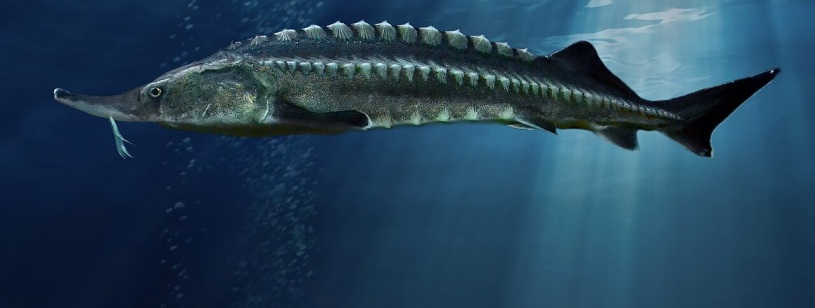
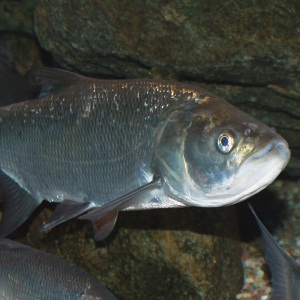
Beluga sturgeon (Huso huso) in an aquarium. · Максим Яковлєв / CC BY-SA 4.0 (https://creativecommons.org/licenses/by-sa/4.0). Cropped and resized.
The beluga sturgeon is the largest of all sturgeons and the largest fish living in Romanian waters. It spends most of its life in the Black Sea and swims up the Danube only to spawn. It can live more than a hundred years, but overfishing for its black caviar has pushed it to the brink of extinction.
Quick facts
| Common name | Beluga sturgeon |
| Scientific name | Huso huso |
| Lifespan | Can exceed 100 years; the oldest reported was 118 |
| Length | Fish caught today are usually 1.4–3.3 m; the record is 7.2 m |
| Weight | Usually 19–264 kg; the accepted record is 1,571 kg |
| Diet | Carnivore: fish (shad, anchovy, gobies), crustaceans |
| Predators | Adults have no natural predators; people through fishing and poaching |
| Conservation status | Critically Endangered (CR) |
| Distribution | Black Sea, Caspian Sea and their rivers; formerly the Adriatic |
| Habitat | Open sea; large, deep rivers for spawning |
| Family | Acipenseridae |
| Reproduction | Eggs laid on deep river beds |
- Primary category:Fish
- Explore this animal's categories:
Interesting facts
- The largest beluga accepted by scientists was caught in 1827 on the Volga: 7.2 m and 1,571 kg.
- The beluga has no ordinary scales but five rows of bony plates along its body.
- A female matures only after 15–20 years.
- Beluga roe, known as beluga caviar, is among the most expensive foods in the world.
Characteristics
The beluga has a massive, elongated body, dark grey above and white below. Its head is relatively small, with a short pointed snout and a large crescent-shaped mouth underneath.
Four flattened barbels hang under the snout. It has no ordinary scales but five rows of bony plates called scutes. Its skeleton is largely cartilage, as in all sturgeons.
Behaviour
The beluga spends its growing years in the Black Sea, hunting fish. When mature, after many years, it heads for the mouth of the Danube.
Some enter the river in spring, others in autumn and overwinter there. They swim hundreds of kilometres upstream to deep areas with gravel beds, spawn and then return to the sea.
Habitat and distribution
The beluga lives in the Black and Caspian Seas and migrates up the rivers that flow into them: the Danube, Volga and Ural. It once lived in the Adriatic too.
In the Danube it once swam into Hungary and even up tributaries such as the Tisza and Mureș. Today the Iron Gates dams stop it, and it passes through the Danube Delta on its way to spawning grounds.
Diet and feeding
The beluga is a predator. Adults mainly eat fish such as shad, anchovy, gobies and other small and medium fish, as well as crustaceans.
Young belugas first eat insect larvae and small crustaceans. During the river migration, adults eat little.
Reproduction and life cycle
The beluga breeds very slowly. Females mature only after 15–20 years and do not spawn every year.
Eggs are laid in spring at depths of 8–20 m on gravel and clay river beds with strong current. The young then drift to the sea. This late maturity makes the species very vulnerable to fishing.
Name and history
The Romanian name “morun” has long been used by fishers. The scientific name Huso huso comes from Latin, and in many languages the fish is called “beluga”, from Russian, roughly “the white one”.
The beluga belongs to the sturgeon family, fish that have existed for more than a hundred million years. It is unrelated to the white whale also called beluga.
Conservation and threats
The beluga is Critically Endangered. Overfishing for black caviar, poaching and dams blocking access to spawning grounds have greatly reduced its populations.
In Romania, commercial fishing of wild sturgeon has been banned for years, and farm-reared young are released into the Danube to rebuild the population. International trade in beluga products is controlled under CITES.
Frequently asked questions
How big can a beluga sturgeon be?
The accepted record is 7.2 m and 1,571 kg, but fish caught today are usually 1.4–3.3 m.
How long does it live?
It can exceed 100 years; the oldest reported age is 118.
Can belugas be fished in Romania?
No. Commercial fishing of wild sturgeon is banned, and the beluga is Critically Endangered.
Are the beluga sturgeon and beluga whale the same?
No. They share a name but are unrelated: one is a fish, the other a whale.