MegalodonOtodus megalodon — habitat, diet and reproduction
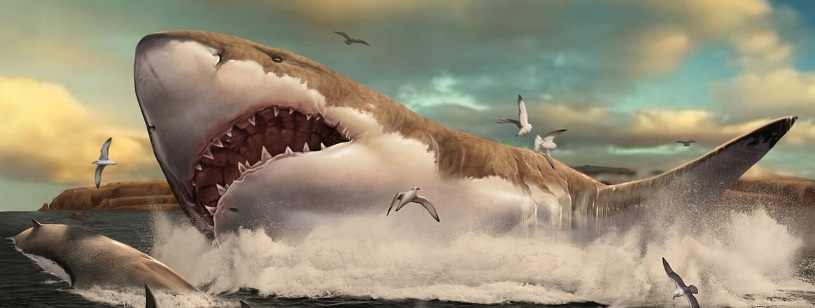
Reconstruction of the megalodon shark (Otodus megalodon). · Hugo Saláis / CC BY 4.0 (https://creativecommons.org/licenses/by/4.0). Cropped and resized.
The megalodon was one of the largest predators in Earth’s history: a giant shark that lived about 23 to 3.6 million years ago. The largest individuals are estimated at 14–20 metres or more, several times the length of a great white shark. We know it mainly from fossil teeth as big as a hand.
Quick facts
| Common name | Megalodon |
| Scientific name | Otodus megalodon |
| Lifespan | Not known precisely |
| Length | Largest individuals estimated at 14–20 m or more |
| Weight | Estimated at tens of tonnes |
| Diet | Carnivore: whales, dolphins, seals, sea turtles |
| Predators | Adults had none; young may have been eaten by other sharks |
| Conservation status | Extinct (EX), about 3.6 million years ago |
| Distribution | Warm and temperate oceans worldwide |
| Habitat | Coastal waters and open ocean |
| Family | Otodontidae |
| Teeth | Up to about 18 cm |
- Primary category:Fish
- Explore this animal's categories:
Interesting facts
- The name “megalodon” means “big tooth”.
- Megalodon had a cartilage skeleton, which rarely fossilises, so it is known mainly from teeth and vertebrae.
- Bite marks from megalodon teeth have been found on fossil whale bones.
- The megalodon no longer exists; films showing it in today’s oceans are fiction.
Characteristics
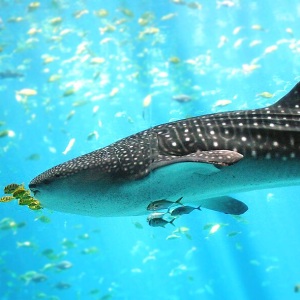
The megalodon probably looked like a massive shark with a robust body and short head. Its exact shape is unknown because no complete skeleton has been found.
Its triangular teeth had saw-like serrated edges for cutting flesh and bone. One megalodon shed thousands of teeth in its lifetime, so tooth fossils are fairly common.
Behaviour
The megalodon probably hunted large marine animals, attacking bony parts such as flippers and tails to immobilise prey.
Its bite force is estimated to be among the strongest in the animal world. Researchers think young lived in shallow coastal waters, safer from predators.
Habitat and distribution
Megalodon fossils have been found on almost every continent, showing it lived in warm and temperate oceans worldwide.
It probably favoured coastal waters rich in whales and seals but also crossed the open ocean.
Diet and feeding
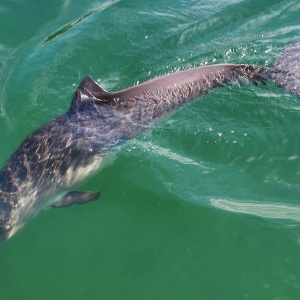
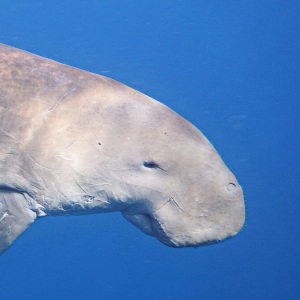
The megalodon fed on large animals: small and medium whales, dolphins, seals, dugongs and sea turtles.
Some fossil whale bones show deep tooth marks and healed wounds, proving that some animals escaped. The megalodon was at the top of the food chain.
Reproduction and life cycle
Like many living sharks, the megalodon probably gave birth to live young. Researchers have found fossil nursery areas with many small teeth, where young lived in shallow water.
Growth rings in vertebrae suggest newborns were already about two metres long.
Name and history
The scientific name Otodus megalodon comes from Greek: “megalodon” means “big tooth”. It was long thought to be a close relative of the great white shark, but it is now placed in a separate, extinct family.
In the past, fossil megalodon teeth were called “tongue stones” and believed to be petrified dragon tongues.
Conservation and threats
The megalodon became extinct about 3.6 million years ago. Probable causes are a cooling climate, fewer suitable whale prey and competition with other predators, including ancestors of the great white shark.
Today its living relatives, the sharks, are themselves threatened by overfishing.
Frequently asked questions
Does the megalodon still exist?
No. It became extinct about 3.6 million years ago, and there is no evidence it lives in today’s oceans.
How big was the megalodon?
Estimates for the largest individuals are 14–20 m or more; most were smaller.
How do we know what it looked like?
Mainly from fossil teeth and vertebrae, compared with living sharks.
What did the megalodon eat?
Whales, dolphins, seals and sea turtles.