PythonInteresting facts and information
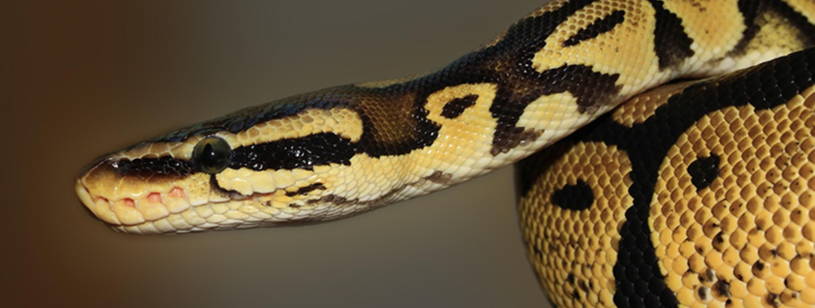
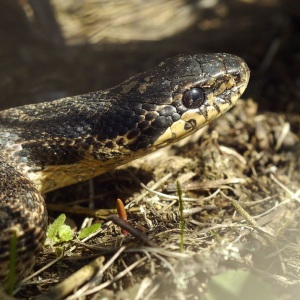
Pythons (Pythonidae) are non-venomous snakes of Africa, Asia and Australia. They restrain prey with body coils. Constriction can disrupt blood circulation; it should not be described simply as squeezing air out of the lungs.
There are more than 40 species of pythons, and the best known include:
- Reticulated python (Malayopython reticulatus) — a very long snake; exceptional measurements need a clearly identified record source.
- Burmese python (Python bivittatus) — a large Asian python that has become invasive in Florida.
- African rock python (Python sebae) — the largest snake in Africa.
- Indian python (Python molurus) — closely related to the Burmese python, but smaller.
Although they are feared because of their size, pythons rarely attack people, and they play an important role in ecosystems by controlling rodents and other animals.
Quick facts
| Common name | Python |
| Scientific name | Pythonidae |
| Typical lifespan | About 15-25 years in the wild, over 40 years in captivity |
| Maximum speed | Varies with species or individual, distance and conditions |
| Length | About 1 to 7 metres (depending on species) |
| Weight | From under 1 kg to well over 100 kg |
| Diet type | Carnivore (mammals, birds, reptiles) |
| Main predators | Crocodiles, big cats, monitor lizards and birds of prey (young pythons), people |
| Conservation status | Assess separately by species and population; different taxa and regions have different needs |
| Habitat | Tropical forests, savannas, marshes, semi-deserts |
| Distribution (continents) | Africa, Asia, Australia; introduced to North America (Florida) |
- Primary category:Types of snakes
- Explore this animal's categories:
Interesting facts
- The longest snake - The reticulated python is the world's longest snake; wild individuals can exceed 6 metres, and a captive snake was measured at about 7.7 metres.
- Huge meals - Large pythons can swallow prey as big as deer, wild pigs and even small crocodiles.
- No venom, but a strong grip - Pythons are not venomous; they hold prey with many sharp, backward-curving teeth and kill it by constriction.
- Invaders in Florida - Burmese pythons released or escaped from captivity have spread in the Everglades, where they have caused large declines in small mammals.
- Heat-sensing pits - Most pythons have pits along their lips that detect the body heat of prey, helping them hunt at night.
Records and remarkable features
- Pythons (Pythonidae) are non-venomous snakes that capture prey with their jaws and body coils. Constriction can interrupt blood circulation. Species range from relatively small snakes to very large animals.
- Warming their eggs - Females of some species, such as the Burmese python, coil around their eggs and "shiver" their muscles to keep them warm.
Physical characteristics and adaptations
Pythons are powerful snakes well adapted to ambush hunting. From their large size to their heat-sensing pits, they are very effective predators.
Distinguishing physical appearance
- A muscular body - Built for constriction, a python can squeeze its prey very hard.
- Eyes with vertical pupils - Typical of snakes that are often active at night.
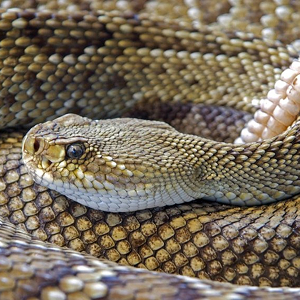
- Patterned skin - Net-like, blotched or diamond-shaped patterns give excellent camouflage.
- Large size - The biggest species can reach more than 6 metres in length and weigh well over 100 kg.
- Tiny spurs - Pythons have small claw-like spurs near the tail, the remains of hind legs.
Adaptations for hunting and survival
- Heat pits - Pits in the scales along the lips detect warmth from prey, even in complete darkness.
- Stretchy jaws - The two halves of the lower jaw are not joined at the front, and stretchy ligaments let pythons swallow very large prey.
- A changing metabolism - After a big meal, a python's organs grow and its metabolism speeds up to digest the food; then it can go for months without eating.
- Camouflage - Their patterns help them hide in vegetation or among rocks.
Habits and behaviour
Pythons are solitary ambush predators that spend long periods resting.
Life mode and daily routine
- Active mainly at dusk and night - Many pythons hunt after dark and rest by day.
- Slow movers, fast strikers - They move slowly, but they can strike and coil around prey in a split second.
- Hiding places - They rest in dense vegetation, among rocks, in burrows or in trees; some are good swimmers.
Social behaviour and interactions
- Solitary - Pythons live alone and meet only to mate.
- Defence - When disturbed, they hiss, coil and may strike, but they rarely attack people.
- Caring mothers - Unlike most snakes, female pythons coil around and guard their eggs.
Defence strategies
- Camouflage - They rely on their patterns to stay hidden.
- Biting and constricting - A large python can defend itself by biting and coiling.
- Escape - If they can, they prefer to slip away.
Habitat and geographic distribution
Pythons live in Africa, southern Asia and Australia, in habitats from rainforests to dry grasslands. There are more than 40 species.
Geographical distribution
| Region | Examples and habitats |
|---|---|
| Africa | African rock python, ball python - savannas, forests, near water |
| South and Southeast Asia | Reticulated, Burmese and Indian pythons - forests, wetlands, farmland |
| Australia and New Guinea | Carpet pythons, green tree python, woma - forests, deserts, rocky areas |
| North America (introduced) | Burmese python in southern Florida - Everglades marshes |
Habitats
- Tropical forests - The reticulated python lives in rainforests and often near water.
- Savannas - The African rock python lives in savannas and grasslands, often near rivers and swamps.
- Wetlands - Burmese pythons live in marshes in Asia and, as an invasive species, in the Florida Everglades.
Habitat threats
- Habitat loss - Farming and building reduce their habitats.
- Hunting and trade - Pythons are killed for their skins, meat and traditional medicine, and caught for the pet trade.
- Conflict with people - Large pythons are sometimes killed because they take livestock or pets.
Diet and feeding
Pythons restrain prey with body coils. Constriction can disrupt blood circulation; it should not be described simply as squeezing air out of the lungs.
What do pythons eat?
| Type of prey | Examples |
|---|---|
| Mammals | Rats, rabbits, monkeys, wild pigs, deer, antelopes |
| Birds and eggs | Waterbirds, chickens and other birds |
| Reptiles | Lizards, small crocodiles and alligators, other snakes |
| Amphibians and fish | Occasionally, especially for young pythons |
Hunting methods
- Ambush - Pythons wait motionless until prey comes close.
- A grip - Their backward-curving teeth stop the prey escaping.
- Constriction - They wrap their coils around the victim and tighten them each time it breathes out, stopping its blood circulation.
- Swallowing whole - They swallow prey whole, usually head first.
Food behaviour
- Long fasts - After a large meal, an adult python may not need to eat for weeks or months.
- Fast digestion - A python's stomach and intestines grow quickly after a meal to digest it.
- Patience - Some pythons wait in the same place for days for prey to pass.
Reproduction and life cycle
Pythons lay eggs, and many females guard them until they hatch.
Breeding and birth
| Characteristic | Details |
|---|---|
| Sexual maturity | About 2 - 5 years |
| Breeding season | Varies with species and region; often the cooler or dry season |
| Number of eggs | About 10 - 100 eggs, depending on species and size |
| Type of reproduction | Egg-laying |
| Incubation period | About 2 - 3 months |
Reproductive behaviour
- Finding a mate - Males follow the scent trails of females.
- Nest sites - Females lay their eggs in hidden places, such as burrows, hollow logs or under vegetation.
- Guarding the eggs - Females coil around their eggs, and some warm them by shivering their muscles.
- Independent young - After hatching, the young leave and look after themselves.
Longevity
- In the wild, pythons often live about 15-25 years.
- In captivity, some have lived more than 40 years.
Name and history
Origin of the name "Python"
- The name comes from Greek mythology, where Python was a giant serpent killed by the god Apollo at Delphi.
- Naturalists later used the name for large constricting snakes of the Old World.
Taxonomic Classification
| Kingdom | Animalia |
|---|---|
| Phylum | Chordata |
| Class | Reptilia |
| Order | Squamata |
| Family | Pythonidae |
| Main genera | Python, Malayopython, Morelia, Aspidites |
History and documentation
- Pythons and boas - Pythons live in the Old World and lay eggs, while boas live mainly in the Americas and give birth to live young.
- Scientific description - Many pythons were described by European naturalists in the 18th and 19th centuries.
- Florida - Burmese pythons were first found breeding in the Everglades in the late 1990s and early 2000s; today they are a serious invasive species.
Cultural significance and mythology
Pythons have been important in the myths and traditions of many cultures, as symbols of power, fertility and the earth.
Python in mythology and traditions
- Ancient Greece - The giant serpent Python guarded Delphi until Apollo killed it; afterwards the oracle's priestess was called the Pythia, and the Pythian Games were held in Apollo's honour.
- West Africa - In Ouidah, Benin, a Temple of Pythons is dedicated to the royal python, which is sacred in the Vodun religion.
- Australia - In many Aboriginal stories, the Rainbow Serpent, a powerful creator being linked with water, is often imagined as a giant python.
- Africa - In several African cultures, pythons are linked with ancestors, rain and fertility.
Python in cultural symbolism
| Culture | Meaning |
|---|---|
| Ancient Greece | A monster defeated by Apollo at Delphi |
| West Africa (Vodun) | A sacred animal |
| Aboriginal Australia | The Rainbow Serpent, creator and protector of water |
| Modern culture | Strength and danger |
Conservation status and threats
Many pythons are still widespread, but some are threatened by habitat loss, hunting and trade.
Main threats to pythons
- Habitat loss - Deforestation and farming reduce natural habitats.
- The skin trade - Millions of python skins have been traded for bags, shoes and other luxury goods.
- The pet trade - Many pythons are caught from the wild and sold as pets.
- Food and medicine - In some regions, pythons are eaten or used in traditional medicine.
Conservation status (IUCN)
| Species | Status |
|---|---|
| Malayopython reticulatus (reticulated python) | Least Concern |
| Python bivittatus (Burmese python) | Vulnerable in its native range |
| Python molurus (Indian python) | Near Threatened |
Conservation efforts
- Trade controls - International trade in pythons and their skins is controlled under CITES.
- Protected areas - Reserves protect python habitats in Asia, Africa and Australia.
- Controlling invasive pythons - In Florida, programmes such as the Florida Python Challenge pay and encourage people to remove Burmese pythons from the wild.
In popular culture
Pythons are symbols of danger and mystery and often appear in films, books and even technology.
Python in films and television
- "Harry Potter and the Philosopher's Stone" (2001) - In the film, Harry talks to a Burmese python at the zoo and sets it free.
- Nature documentaries often show pythons hunting and the problem of invasive pythons in Florida.
Python in literature and myths
- "The Jungle Book" (Rudyard Kipling, 1894) - Kaa is a huge, wise Indian python and a friend of Mowgli.
- Greek mythology - The story of Apollo and the serpent Python is one of the best-known Greek myths.
Python in technology and other uses
- The Python programming language - It was named after the comedy group Monty Python, not directly after the snake, but the snake became its logo.
- Colt Python - A famous American revolver is named after the snake.