CowInteresting facts and information
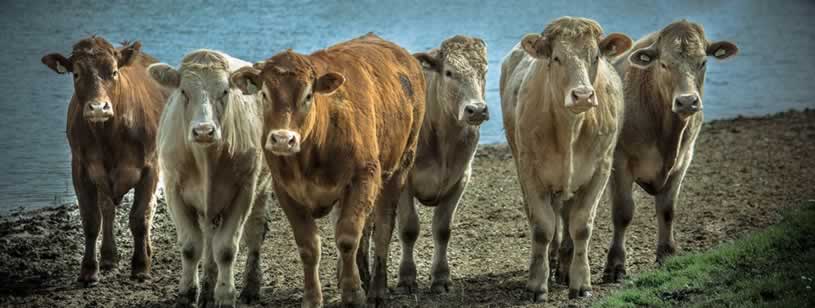
Domestic cattle (Bos taurus) are plant-eating mammals kept for milk, meat and other uses. A cow is an adult female; the wider group also includes bulls and young cattle. Their stomach has four compartments that help digest fibrous food.
Cattle are ruminants. Microbes in the stomach help break down fibrous plants, and the animals bring food back up and chew the cud as part of digestion.
Quick facts
| Common name | Cow |
| Scientific name | Bos taurus (domestic cattle) |
| Typical lifespan | Can reach 15-20 years, up to about 25 years in good conditions |
| Maximum speed | About 25-40 km/h over short distances |
| Height | 120–150 cm at the shoulder, depending on breed |
| Weight | 300–1,200 kg, depending on breed and sex |
| Diet | Herbivorous ruminant |
| Main predators | Predators differ by region; human uses are separate from natural predation |
| Conservation status | Domestic animal; conservation of individual cattle breeds is a separate issue |
| Geographic distribution | Farming regions across much of the world |
| Habitat | Grasslands, pastures and farms |
| Social behaviour | Social; usually kept in herds |
| Special adaptations | Four stomach compartments and microbial fermentation help digest fibrous plants |
- Primary category:Mammals
- Explore this animal's categories:
Interesting facts
- Cows have a good social memory - They can recognise many members of their herd and remember good and bad experiences with people.
- They make huge amounts of saliva - A cow can produce more than 100 litres of saliva a day, which helps it digest its food.
- They can doze standing up - Cows can rest while standing, but they need to lie down for deep sleep.
- They see almost all the way around - Their eyes are on the sides of the head, so cows can watch for danger from almost every direction.
- They recognise each other's voices - Each cow's moo is slightly different, and calves recognise their mothers by their calls.
Records and remarkable features
- Domestic cattle (Bos taurus) are plant-eating mammals kept for milk, meat and other uses.
Characteristics
The cow (Bos taurus) is a large plant-eating mammal with a remarkable digestive system that lets it digest plants efficiently. Breeds differ a lot depending on whether they were developed for milk, meat or work.
Appearance
- Very different sizes - From about 90 cm tall at the shoulder (Vechur cattle, India) to about 1.8 m (Chianina cattle, Italy).
- A short coat in many colours - White, black, red, brown or patched, depending on the breed.
- Curved or straight horns - Found in many breeds; used in defence and in setting the herd's pecking order.
- A strong neck and shoulders - Especially well developed in breeds used for draught work, where yokes were attached.
Special adaptations
- A complex digestive system - The stomach has four compartments (rumen, reticulum, omasum and abomasum), which allow plant fibre to be fermented and digested.
- Teeth adapted for grazing - Cows have no upper front teeth, and their broad, flat cheek teeth grind plants.
- They live in many environments - From alpine pastures to tropical and semi-dry regions.
- Communication with sounds and body language - Cows use different calls when they are stressed, hungry or calling other cows.
Habits and behaviour
Cows are social animals that live in herds with a clear social order. They have good memories, recognise other members of the group and form stable relationships.
Social behaviour
- Hierarchy - Each herd has a pecking order, which cows establish by pushing and other social interactions.
- Close friendships - Cows have preferred companions and like to spend time with the same herd members.
- Individual voices - Each cow sounds slightly different, and calves recognise their mothers' voices.
- Grooming each other - Cows lick and groom their herd mates, a sign of friendship.
Daily routine
- Several hours a day grazing - Much of their day is spent grazing and chewing the cud.
- Plenty of rest - Cows lie down for many hours a day, which helps them ruminate.
- Most active in the morning and evening - They avoid the hottest part of the day.
Reactions to predators and danger
- Watchful and protective as a group - When danger approaches, cows bunch together for protection.
- Protective mothers - A cow will defend her calf, pushing an attacker with her head or horns.
- Curious but cautious - Cows investigate new things, but sudden noises or fast movements can easily frighten them.
Habitat and geographic distribution
Domestic cattle are among the most widespread large mammals in the world, raised on farms, in villages and on pastures on almost every continent. There are about 1.5 billion cattle worldwide.
| Region | Main uses | Typical habitat |
|---|---|---|
| North America | Beef and milk | Ranges, pastures, large farms |
| Europe | Milk and beef | Mountain pastures, farmland |
| South America | Mainly beef | Large grasslands, savannas |
| Asia | Milk, draught work, meat | Tropical regions, steppes, mountains |
| Africa | Milk, meat, wealth and status | Semi-dry regions, grasslands |
| Australia | Mainly beef | Huge cattle stations, specialised farms |
Types of habitat
- Alpine and mountain pastures - Suited to hardy breeds such as Simmental and Montbéliarde.
- Temperate farmland - Ideal for dairy and beef breeds such as Holstein and Angus.
- Hot and dry areas - Suited to heat-tolerant breeds such as zebu and Brahman cattle.
Human impact and problems
- Intensive farming - Has reduced genetic diversity and raised animal welfare concerns.
- Overgrazing - Can cause soil erosion and damage habitats.
- Methane emissions - Cattle produce methane during digestion, which contributes to climate change.
- Conflict with wildlife - In some regions, cattle are attacked by wolves, lions or bears, which leads to conflict with predators.
Diet and feeding
Cows are ruminant herbivores, with a complex digestive system that breaks down plants and absorbs their nutrients. Their diet consists mainly of grass, hay and other fibrous plants, but on farms it may also include concentrated feed.
What do cows eat?
| Type of food | Approximate share of the diet | Role |
|---|---|---|
| Fresh grass and pasture | 50-70% | Main source of fibre and energy |
| Hay and alfalfa | 20-30% | Essential in winter for balanced nutrition |
| Silage (fermented maize, wheat or barley) | 10-15% | An energy-rich food used on farms |
| Concentrates (grain, soya, bran) | 5-10% | Support milk and meat production |
| Root vegetables (beet, carrots, pumpkin) | 1-5% | Extra vitamins and minerals |
How cows feed
- Rumination - Cows chew their food twice: they swallow it, bring it back up and chew it again for better digestion.
- Time spent feeding - A cow may graze for about 6-8 hours a day and spend another 8-10 hours chewing the cud.
- Amount eaten - A cow can eat about 25-50 kg of grass and feed a day, depending on the breed and milk production.
Reproduction and life cycle
Cows have a regular reproductive cycle, and on farms, breeding is carefully managed for milk and meat production.
| Feature | Details |
|---|---|
| Age at maturity | About 8-12 months (bulls), 12-18 months (cows) |
| Breeding season | All year round (on farms) |
| Type of reproduction | Live birth (mammal) |
| Pregnancy | About 9 months (about 280 days) |
| Calves per birth | Usually 1 (twins are uncommon) |
| Weight at birth | About 25-50 kg |
| Nursing | 6-10 months in natural conditions; dairy calves are usually separated much earlier |
| Lifespan | Can reach 15-20 years; dairy cows are often slaughtered after a few years |
Mating
- Natural mating or artificial insemination - Many farms use artificial insemination to breed from selected bulls.
- The breeding cycle - A cow comes into heat about every 21 days, and each period lasts less than a day.
- Pregnancy - Lasts about 9 months, and most births happen without complications.
Birth and growth of calves
- A calf can walk within a few hours of birth and starts drinking colostrum, its mother's first milk, which is rich in antibodies.
- In natural conditions, calves suckle for many months, but on dairy farms they are usually separated from their mothers soon after birth.
- Many male calves are raised for meat, while females are kept for milk or breeding.
Name and history
Cattle were among the first domesticated animals. People have lived with them for more than 10,000 years, and they appear in almost every human culture.
Origin of the name
- The English word "cow" comes from Old English cū, which has ancient roots shared with many other Indo-European languages.
- The scientific name Bos taurus comes from Latin: bos means "ox" and taurus means "bull".
- In India, the cow is called gau and is sacred in Hinduism.
Domestication and history
- The first domestic cattle - Cattle were domesticated about 10,000 years ago in the Near East and, separately, in the Indus Valley, for milk, meat and farm work.
- The aurochs (Bos primigenius), the wild ancestor of domestic cattle — The last known aurochs died in Poland in 1627.
- Ancient Egypt - The goddess Hathor was often shown as a cow or with cow's horns and was linked with motherhood and fertility.
- Medieval Europe - Cattle were a key source of milk and meat, and in many places they were a measure of wealth.
- Industrial farming - In the 20th century, milk and meat production increased through selective breeding and controlled feeding.
Cows in folklore and superstition
Cultural significance and mythology
- Hinduism - The cow is sacred in Hinduism, and the wish-fulfilling cow Kamadhenu is seen as the mother of all cows.
- Norse mythology - The giant cow Auðumbla fed the first giant, Ymir, with her milk at the beginning of the world.
- Ancient Egypt - The goddess Hathor was linked with the cow, motherhood and joy.
Conservation status and threats
Domestic cattle are not threatened, but modern farming raises environmental and animal welfare concerns.
| Status | Population estimate | Range |
|---|---|---|
| Domestic animal, not threatened | About 1.5 billion cattle | Worldwide |
Environmental and ethical issues
- Methane emissions - Cattle produce large amounts of methane, a greenhouse gas that contributes to global warming.
- Deforestation for pasture - The expansion of cattle ranching is one of the main causes of deforestation in the Amazon.
- Animal welfare - Intensive farming raises concerns about space, feeding and veterinary care.
- Antibiotics and hormones - In some countries, cattle are given growth hormones and large amounts of antibiotics, which raises concerns for human health.
Conservation efforts and sustainable solutions
- Sustainable farming - Farming methods that reduce environmental impact are being promoted.
- Rotational grazing - Moving herds between pastures helps the soil recover and reduces erosion.
- Eating less beef - Environmental campaigns encourage people to eat less meat and more plant-based food.
- Animal welfare - Some farms raise cattle in more natural and humane conditions.
- Rare breeds - Many traditional cattle breeds are protected to preserve their genetic diversity.
In popular culture
- "Hey Diddle Diddle" - A famous English nursery rhyme in which "the cow jumped over the moon".
- Milka - The lilac cow has been the symbol of this chocolate brand since the 1970s.
- The Laughing Cow - A French cheese brand, created in 1921, famous for its smiling red cow.
- Ermintrude - A gentle, flower-eating cow in the children's television series The Magic Roundabout.