OpossumInteresting facts and information
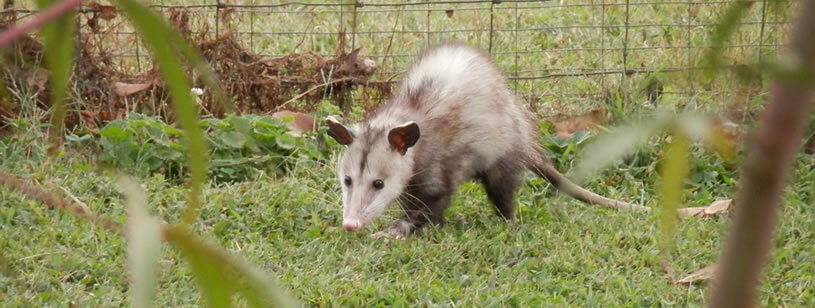
Opossums are marsupials native to the Americas. The group includes many species with different sizes and habits. The Virginia opossum (Didelphis virginiana) is well known for its defensive response of appearing dead.
Opossums are mostly solitary and active at night, and they play a useful role in their ecosystems. They are adaptable opportunists that can live both in forests and in towns. Rabies is very rare in opossums, Virginia opossums resist the venom of many snakes, and they eat large numbers of insects, snails and other small animals.
Quick facts
| Common name | Opossum |
| Scientific name | Didelphimorphia; Didelphis virginiana is one species |
| Typical lifespan | Usually 1-2 years in the wild; up to about 4-5 years in captivity |
| Maximum speed | About 7 km/h (Virginia opossum) |
| Height | From mouse-sized to about the size of a house cat (Virginia opossum) |
| Length | From about 10 cm to about 1 m (including tail) |
| Weight | From about 10 g to about 6 kg, depending on the species |
| Diet type | Omnivore (fruit, insects, small animals, eggs, carrion, human food) |
| Main predators | Coyotes, foxes, owls, hawks, large snakes, dogs; road traffic |
| Conservation status | Assess separately by species and population; different taxa and regions have different needs |
| Geographical distribution | North, Central and South America |
| Social behaviour | Solitary, mostly nocturnal |
| Special adaptations | Playing dead to avoid predators, gripping tail, resistance to snake venom |
- Primary category:Mammals
- Explore this animal's categories:
Interesting facts
- Opossums "play dead" when threatened - This involuntary response, called thanatosis, makes the opossum fall over, go limp, slow its breathing and release a foul smell, which puts off many predators.
- They rarely get rabies - Their low body temperature, about 34-36 °C, may make it harder for the rabies virus to survive, so rabies is very rare in opossums.
- Resistant to snake venom - Virginia opossums can survive bites from rattlesnakes and other pit vipers, thanks to a substance in their blood that neutralises the venom.
- The shortest pregnancy of any mammal - Female Virginia opossums give birth after only about 12-13 days; the tiny babies continue to grow in their mother's pouch.
- A gripping tail - Opossums use their long, bare tail to help them climb and to carry bundles of leaves and grass to their nests.
- Nature's clean-up crew - They eat insects, rodents, carrion and fallen fruit, helping to clean up their surroundings.
- City dwellers - Opossums are very adaptable and often live in towns and suburbs, where they find food in bins and gardens.
Records and remarkable features
- Opossums are marsupials native to the Americas. The group includes many species with different sizes and habits. The Virginia opossum (Didelphis virginiana) is well known for its defensive response of appearing dead.
- The Virginia opossum is the only marsupial living north of Mexico.
- Opossums have 50 teeth, more than any other land mammal in North America.
- The water opossum, or yapok, is the only living marsupial in which both males and females have a pouch; the female's can be closed watertight when she swims.
Characteristics
Opossums are small to medium-sized marsupials adapted to life on the ground and in trees. They have soft fur, a long pointed snout, thin, hairless ears and, in many species, a gripping tail used for climbing.
Appearance
- Very different sizes - The smallest opossums weigh only about 10-20 g, while the Virginia opossum (Didelphis virginiana) can weigh up to about 6 kg and be almost 1 metre long, including the tail.
- Thick fur - Most opossums are grey, brown or black, which helps camouflage them.
- A long, flexible tail - Prehensile in many species and used to hold on while climbing and to carry nesting material.
- A long snout and sensitive whiskers - Opossums have an excellent sense of smell, which helps them find food.
- Grasping feet - Their hind feet have an opposable "thumb" without a claw, which helps them grip branches.
Special adaptations
- A pouch - In most species, females carry their young in a pouch, where they keep developing after birth.
- A useful tail - It works like an extra hand when climbing.
- Low body temperature - May help explain why rabies is so rare in opossums.
- Venom resistance - A protein in their blood protects Virginia opossums from the venom of many snakes, such as rattlesnakes.
Habits and behaviour
Opossums are mostly nocturnal, solitary and opportunistic, and they can survive in many environments. They are famous for "playing dead", an unusual defence in the animal world.
Social behaviour
- Solitary - Apart from mating and raising young, opossums live alone.
- Sounds and smells - They hiss, growl, click and screech to warn off enemies or find mates.
- Wanderers - Virginia opossums usually do not hold fixed territories; they move around a home range and often use different dens.
Defence techniques
- "Playing possum" (thanatosis) - When very frightened, an opossum may fall over, go stiff, drool, stick its tongue out and release a foul-smelling fluid, sometimes for hours.
- Bluffing - Before playing dead, an opossum often hisses and bares its 50 teeth to scare off attackers.
- Climbing - Opossums are slow runners, reaching only about 7 km/h, but they are good climbers.
Interaction with people
- Living in towns - Opossums often live in cities and suburbs, finding food in bins, gardens and sheds.
- Harmless to people - They usually avoid people and are useful because they eat insects, snails and rodents.
- Road victims - Because they are active at night and move slowly, many opossums are hit by cars.
Habitat and geographic distribution
Opossums are marsupials native to North, Central and South America, where they live in many habitats, from tropical forests to towns. The animals called "possums" in Australia are different marsupials.
| Region | Example species | Preferred habitat |
|---|---|---|
| North America | Didelphis virginiana (Virginia opossum) | Woodland, farmland, towns |
| Central America | Philander opossum (grey four-eyed opossum), Caluromys derbianus (Central American woolly opossum) | Tropical forests, swamps |
| South America | Chironectes minimus (water opossum), Gracilinanus agilis (agile gracile opossum) | Tropical forests, savannas, streams |
| Caribbean islands | Marmosa robinsoni (Robinson's mouse opossum) | Forests and gardens in Trinidad, Tobago and Grenada |
Types of habitat
- Tropical and temperate forests - Most opossums live in forests, where they find food and safe places to nest.
- Rivers and swamps - The water opossum is semi-aquatic and lives along forest streams, where it catches fish and crayfish.
- Towns and suburbs - The Virginia opossum has adapted to cities and is often seen in gardens and backyards.
Human impact and threats
- Road traffic - One of the main causes of death for Virginia opossums.
- Habitat loss - Deforestation in Central and South America threatens many forest species.
- Persecution - In some areas, opossums are killed because they raid chicken coops or gardens.
Diet and feeding
Opossums are opportunistic omnivores that eat a wide range of foods, depending on the season, habitat and what is available. They can survive in difficult environments by eating almost anything they find.
What do opossums eat?
Opossums eat fruit, insects, small animals, carrion and food scraps. This varied diet helps them thrive in the wild and in towns.
| Type of food | Examples |
|---|---|
| Fruit and plants | Berries, persimmons, apples, grapes, maize |
| Insects and other invertebrates | Beetles, grasshoppers, earthworms, snails, slugs |
| Eggs and small birds | Birds' eggs, chicks |
| Small animals | Mice, frogs, lizards, small snakes |
| Carrion | Dead animals, including roadkill |
| Human food | Scraps from bins, cat and dog food |
| Fungi and seeds | Mushrooms, acorns, grain |
Feeding techniques
- Raiding nests - They climb trees and search the ground for birds' eggs and chicks.
- Digging - They dig in leaf litter and soil for insects, worms and larvae.
- Scavenging in towns - They search bins and gardens for food.
- Eating carrion - They help clean up dead animals.
Adapting to the food supply
- A flexible diet - They switch between foods depending on the season.
- Night feeding - They feed at night, when there is less competition and fewer predators.
- Winter fat - Virginia opossums store fat before winter, although their thin ears and bare tail often suffer frostbite in cold regions.
Reproduction and life cycle
Opossums are marsupials: their young are born tiny and undeveloped and continue to grow in their mother's pouch.
| Feature | Details (Virginia opossum) |
|---|---|
| Age at maturity | About 6-8 months |
| Breeding season | Late winter to summer; often two litters a year |
| Pregnancy | About 12-13 days, the shortest of any mammal |
| Young born | Up to about 20, but the mother has only 13 teats, so only that many can survive |
| Time in the pouch | About 2 months |
| Total time with the mother | About 3-4 months |
| Lifespan | Usually 1-2 years in the wild, up to about 4-5 years in captivity |
Breeding process
- Mating - Males and females meet only to mate and then separate.
- Birth - The newborns, called joeys, are about the size of a honeybee and weigh only about 0.2 g; they crawl into the pouch on their own.
- In the pouch - Each joey attaches to a teat and drinks milk, growing for about 8-10 weeks.
- Leaving the pouch - At about 2 months, the young start to come out and ride on their mother's back.
- Independence - At about 3-4 months, the young leave their mother and live alone.
Survival strategies
- Many young - Large litters make up for the high death rate.
- The pouch - Protects the babies during their first weeks.
- Fast development - Young opossums can breed before they are a year old.
Name and history
Opossums belong to an ancient group of marsupials whose relatives have lived in the Americas for tens of millions of years.
Origin of the name
- The word "opossum" comes from the Powhatan language of Virginia, from a word meaning roughly "white animal".
- The English explorer John Smith described the Virginia opossum in the early 17th century.
- The scientific name Didelphis comes from Greek and means "two wombs", referring to the female's pouch.
Opossums in natural history
- An ancient lineage - Opossum-like marsupials have lived in the Americas for a very long time and are among the oldest surviving groups of marsupials.
- A northern pioneer - The Virginia opossum spread north from Central America and is still expanding its range northwards.
- The only one in the north - Didelphis virginiana is the only marsupial living north of Mexico.
Opossums in Indigenous cultures and folklore
- Mesoamerica - In stories of the Mazatec and other peoples of Mexico, the opossum (tlacuache) stole fire and brought it to humans, burning the hair off its tail.
- Cherokee stories - In the tale "Why the Possum's Tail Is Bare", the vain opossum loses the beautiful fur of its tail after a trick by the rabbit and the cricket.
- Modern times - Opossums are often unfairly seen as pests, although they help control insects and rodents.
Cultural significance and mythology
Opossums appear in the myths and cultures of many Indigenous peoples of the Americas, where they are linked with survival, cleverness and trickery.
Opossums in myths and legends
- The fire-bringer (Mexico) - According to Mazatec and other Mesoamerican stories, the opossum stole fire from the gods and carried it to people in its tail, which is why the tail is bare.
- A trickster - In many stories, the opossum survives by cunning, for example by pretending to be dead.
- A vain animal (Cherokee) - The Cherokee tell how the opossum, too proud of its bushy tail, was tricked into losing its fur.
Modern symbolism
- Survival - Because it is so adaptable, the opossum is a symbol of toughness and resilience.
- "Playing possum" - In English, this phrase means pretending to be asleep or dead, or pretending not to notice something, to avoid trouble.
- An unloved helper - In many places, opossums are seen as rubbish-eaters, although they play a useful role in nature.
Conservation status and threats
Most opossum species are adaptable and have stable populations, but some species with small ranges in South and Central America are threatened by habitat loss.
| IUCN status | Example species |
|---|---|
| Least Concern (LC) | Didelphis virginiana (Virginia opossum), Philander opossum, Chironectes minimus (water opossum) |
| Critically Endangered (CR) | Handley's slender mouse opossum (Marmosops handleyi), known from a tiny area in Colombia |
| Other threatened species | Several small forest opossums with very small ranges |
Main threats
- Habitat loss - Deforestation threatens species in the Amazon, the Andes and the Atlantic Forest.
- Road traffic - Many opossums are hit by cars, especially in towns and suburbs.
- Hunting - In some places, opossums are hunted for meat.
- Pollution and poisons - Rat poisons and contaminated food harm opossums living near people.
Conservation efforts
- Wildlife crossings - Tunnels and bridges help opossums and other animals cross roads safely.
- Education - Campaigns explain the useful role of opossums in nature.
- Wildlife rescue - Orphaned joeys are often found in the pouches of mothers killed on roads, and rescue centres raise them and release them back into the wild.
In popular culture
Although they are less famous than many mammals, opossums appear in comics, films and internet culture, usually as funny or odd characters.
Stories and comics
- Pogo (Walt Kelly, from 1948) - A famous American comic strip whose hero, Pogo, is a kind-hearted opossum living in a swamp.
- Native American stories - Passed down orally, these tales often show the opossum as a clever trickster or a vain animal.
Films and cartoons
- Ice Age: The Meltdown (2006) - Crash and Eddie, two mischievous opossum brothers, are the adopted brothers of Ellie the mammoth.
- Over the Hedge (2006) - Ozzie the opossum is an expert at playing dead, and his daughter Heather is embarrassed by it.
The opossum in modern culture
- Internet memes - Pictures of opossums screaming or playing dead have made them popular symbols of stress and survival.
- "Playing possum" - The phrase is widely used in English, even in sport and politics.
- Wildlife rescue - Social media posts from wildlife rescuers have helped many people see opossums in a more friendly light.