Eurasian siskinSpinus spinus — habitat, diet and reproduction
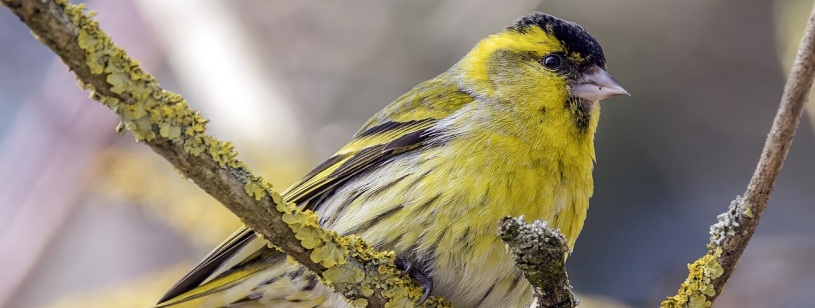
Male Eurasian siskin (Spinus spinus) on a branch. · Charles J. Sharp / CC BY-SA 4.0 (https://creativecommons.org/licenses/by-sa/4.0). Cropped and resized.
The Eurasian siskin is a small yellow-green songbird of the finch family. It feeds on tiny seeds pulled from alder, birch and spruce cones, often hanging upside down. In winter it appears in noisy flocks, including in parks.
Quick facts
| Common name | Eurasian siskin |
| Scientific name | Spinus spinus |
| Lifespan | Usually 2–3 years in the wild |
| Length | About 11–12.5 cm |
| Weight | About 12–18 g |
| Diet | Mainly seeds; chicks also fed insects |
| Predators | Sparrowhawks and hobbies; martens and squirrels raid nests |
| Conservation status | Least Concern (LC), globally |
| Distribution | Europe and temperate Asia |
| Habitat | Conifer and mixed forest; alders and birches in winter |
| Family | Fringillidae |
| Nest | High in conifers, near branch tips |
- Primary category:Birds
- Explore this animal's categories:
Interesting facts
- It can hang upside down like a tit to reach seeds.
- The male’s song mixes trills and twitters and ends with a wheezy note.
- Some winters bring thousands of siskins from the north; in others they are almost absent.
- Its thin, pointed bill suits small seeds in cones.
Characteristics
The siskin is smaller than a sparrow. The male is yellow-green with a black cap and chin and two yellow bars on black wings. The female is greyer and more streaked, with no black on the head.
The tail is short and forked, with yellow at the base. The bill is thin and pointed, longer than in many other finches.
Behaviour
It is a social bird. Outside the breeding season it lives in flocks that move quickly from tree to tree, keeping contact with short whistles.
When food is plentiful, siskins stay put. When seeds are scarce, flocks move to other regions, so numbers vary greatly from year to year.
Habitat and distribution
The species breeds in conifer and mixed forests across Europe and Asia. In winter, many populations move south and west.
In Romania it breeds mainly in mountain spruce forests. In autumn and winter it descends to lowlands, parks and riverbanks with alders.
Diet and feeding
The main foods are alder, birch, spruce and pine seeds. It also eats seeds of weeds and flowers such as dandelions and thistles.
In spring and summer it takes small insects, especially aphids, and chicks are fed softened seeds and insects. In winter it visits feeders, preferring hulled sunflower hearts and nyjer seed.
Reproduction and life cycle
The nest is a small cup of twigs, moss and lichen lined with hair and down. It sits high in a conifer near a branch tip and is hard to see from below.
The female usually lays 3–5 eggs and incubates them for about 12 days. Both parents feed the chicks, which fly after about two weeks. A pair may raise two broods a year.
Name and history
The scientific name Spinus spinus comes from an old Greek name for a small bird. The species was long placed in Carduelis, alongside goldfinches.
Siskins were once trapped and kept as cage birds for their song. Today, catching and keeping wild birds is illegal in Romania.
Conservation and threats
The species has a very large population and is assessed globally as Least Concern.
Local threats include large-scale felling of conifers and illegal trapping. Planting alders and birches near water and keeping mature spruce forests help siskins.
Frequently asked questions
How do you tell a siskin from a goldfinch?
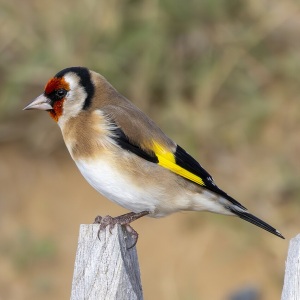
The siskin is yellow-green and the male has a black cap. The goldfinch has a red face and black wings with a broad yellow band.
Do siskins stay in Romania in winter?
Yes. They are even easier to see in winter, when flocks come down from the mountains and birds arrive from the north.
Which seeds do siskins prefer?
Alder, birch and spruce seeds. At feeders they choose small seeds such as nyjer.
Can a siskin be kept in a cage?
No. It is a protected wild bird, and catching or keeping it is illegal.