RhinocerosInteresting facts and information
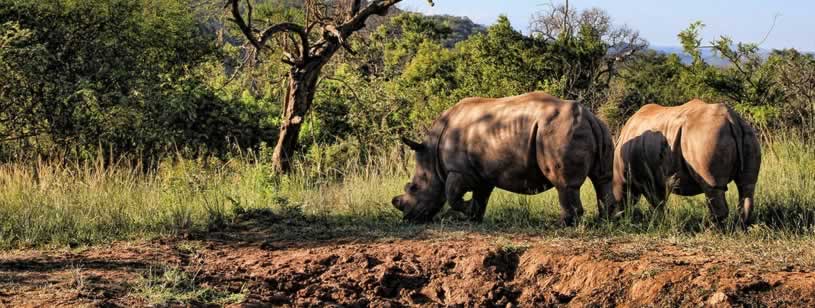
Rhinoceroses are large plant-eating mammals in the family Rhinocerotidae. Five living species occur in Africa and Asia. They have one or two horns made of keratin, and their habitats and conservation needs differ between species.
- African species: white rhinoceros (Ceratotherium simum) and black rhinoceros (Diceros bicornis).
- Asian species: greater one-horned rhinoceros (Rhinoceros unicornis), Sumatran rhinoceros (Dicerorhinus sumatrensis) and Javan rhinoceros (Rhinoceros sondaicus).
Rhinos and their relatives have a history of more than 50 million years, but today they are seriously threatened by poaching and habitat loss. Although they eat only plants, rhinos can be very aggressive when they feel threatened and are known for their great strength and surprising speed.
Quick facts
| Common name | Rhinoceros |
| Scientific name | Rhinocerotidae |
| Typical lifespan | About 35-50 years in the wild |
| Maximum speed | About 40-50 km/h when charging |
| Height at the shoulder | About 1.4 - 1.9 m (depending on species) |
| Length | About 2.5 - 4 m |
| Weight | About 800 - 2,500 kg; large white rhinos can exceed 3,500 kg |
| Number of horns | 1 or 2 (depending on species) |
| Diet type | Herbivore (grasses, leaves, twigs, fruit) |
| Main predators | Humans (poaching); lions, hyenas and tigers may kill calves |
| Conservation status | Varies by species: from Near Threatened to Critically Endangered |
| Geographical distribution | Africa and Asia |
| Habitat | Savannas, grasslands, tropical forests, swamps |
| Social behaviour | Mostly solitary; females live with their calves, and white rhinos may form small groups |
| Special adaptations | Thick skin, keratin horns, excellent smell and hearing |
- Primary category:Mammals
- Explore this animal's categories:
Interesting facts
- Rhino horns are made of keratin - The same protein found in our hair and nails, but packed into a dense, solid horn.
- Rhinos can outrun a person - Although they look heavy, they can charge at speeds of about 40-50 km/h.
- They see poorly but smell and hear very well - Because of this, they may charge at anything that startles them.
- Their skin is thick but sensitive - It can be up to about 5 cm thick, yet it burns in the sun and is bitten by insects, so rhinos wallow in mud for protection.
- Rhinos and oxpeckers - These birds eat ticks and other parasites from rhinos' skin and give loud alarm calls when danger approaches, although they also peck at wounds.
- The Sumatran rhino is the hairy one - It is covered in reddish-brown hair, while the other species are almost hairless.
- Giant relatives once lived - Paraceratherium, an extinct hornless relative of rhinos, stood about 5 metres tall at the shoulder and was one of the largest land mammals ever.
Records and remarkable features
- Rhinoceroses are large plant-eating mammals in the family Rhinocerotidae. Five living species occur in Africa and Asia. They have one or two horns made of keratin, and their habitats and conservation needs differ between species.
Characteristics
Rhinos are huge mammals with special adaptations for life in many habitats, from dry savannas to dense tropical forests. With their sturdy bodies, thick skin and impressive horns, they are among the most remarkable land herbivores.
Appearance
- A massive, muscular body - Rhinos can weigh more than 2,000 kg, with powerful muscles to support their weight.
- Thick, tough skin - Up to about 5 cm thick, but sensitive to sun and insects, so rhinos wallow in mud.
- Keratin horns - Unlike the horns of cattle or antelopes, they have no bony core and keep growing throughout life.
- Strong legs with three toes - Their sturdy legs carry their great weight and still let them run fast.
- A large head with a broad or pointed lip - The shape depends on diet: the white rhino has a wide, square lip for grazing grass, while the black rhino has a pointed, hooked lip for grasping leaves and twigs.
Special adaptations
- Horns that regrow - If a horn breaks or is cut off, it slowly grows back.
- Small eyes and poor vision - Rhinos rely more on smell and hearing than on sight.
- Coping with harsh conditions - Different species live in wet forests or dry savannas, and some can survive long dry spells.
- Low-pitched calls - Rhinos communicate with snorts, grunts and very low sounds, and they also leave scent messages in dung heaps.
Habits and behaviour
Rhinos are mostly solitary and territorial, with complex ways of communicating and defending themselves.
Social behaviour
- Territorial males - Adult males defend territories that can cover several square kilometres or more.
- More sociable females - Females sometimes live in small groups with their calves; white rhinos are the most sociable species.
- Scent marking - Rhinos mark their territory with urine and with communal dung heaps called middens.
- Breeding season fights - Males become aggressive and may fight fiercely for access to females.
Defence and survival techniques
- Rhinos rely on smell and hearing to detect danger.
- They can charge quickly and violently if provoked and are strong enough to damage a vehicle.
- Mud baths protect their skin from sun and parasites, so rhinos spend a lot of time wallowing.
- Oxpeckers on their backs often warn them of danger with loud calls.
Habitat and geographic distribution
Rhinos live in Africa and Asia, in habitats ranging from savannas and rainforests to swamps and hills.
| Region | Species | Preferred habitat |
|---|---|---|
| Africa | White rhino, black rhino | Savannas, grasslands, bush |
| India and Nepal | Greater one-horned (Indian) rhino | Floodplain grasslands, forests |
| Sumatra and Borneo (Indonesia) | Sumatran rhino | Dense tropical forests |
| Java (Indonesia) | Javan rhino | Tropical lowland forest in Ujung Kulon National Park |
Types of habitat
- Open savannas and grasslands - Favoured by African rhinos (white and black rhinos).
- Dense rainforests - Home of the Sumatran and Javan rhinos.
- Wet grasslands and swamps - Favoured by the greater one-horned rhino, which lives in lush floodplains.
Human impact and threats
- Poaching for horns - Rhinos are killed illegally for their horns, which are used in traditional medicine and as status objects, especially in parts of Asia.
- Habitat destruction - Deforestation has greatly reduced the space available to Asian rhinos.
- Conflict with people - In some regions, rhinos raid crops, which leads to conflict with farmers.
- Climate change - Long droughts affect food and water supplies.
Diet and feeding
Rhinos are herbivores that eat grasses, leaves and twigs, depending on their habitat and species. These huge animals need large amounts of food every day to maintain their body weight.
What do rhinos eat?
| Type of food | Species |
|---|---|
| Short grasses | White rhino |
| Leaves, twigs and shoots | Black rhino, Sumatran rhino, Javan rhino |
| Tall grasses and reeds | Greater one-horned rhino |
| Fruit | Sumatran and Javan rhinos |
| Water plants | Greater one-horned rhino |
Feeding techniques
- Grazing (white rhino) - Uses its broad, flat lips to crop short grass.
- Browsing (black rhino) - Its pointed, flexible upper lip lets it grasp branches and strip leaves.
- Powerful chewing - Rhino cheek teeth are specialised for grinding tough plants.
- Feeding in cooler hours - In hot areas, rhinos feed mostly in the early morning, evening and at night.
Adapting to food supply
- African rhinos are adapted to drier areas but usually need to drink every day or two.
- Asian forest rhinos eat a wider range of leaves, shoots and fruit.
- In droughts, rhinos eat tougher plants such as bark and woody twigs.
Reproduction and life cycle
Rhinos breed slowly, which makes them very vulnerable to poaching and habitat loss.
| Feature | Details |
|---|---|
| Age at maturity | About 5-7 years for females, 8-10 years for males |
| Breeding season | All year round |
| Pregnancy | About 15-16 months |
| Calves per birth | 1 |
| Time with mother | About 2-3 years |
| Interval between calves | Usually 2-4 years |
| Lifespan | About 35-50 years in the wild, sometimes longer in captivity |
Breeding
- Rough courtship - Males often fight for females, and courtship can be noisy and rough.
- Large, well-developed calves - At birth, calves weigh about 40-65 kg and can walk within hours.
- Protective mothers - Mothers stay with their calves for up to about 3 years, until a new calf is born.
- Long gaps between births - Because pregnancy is long and calves stay with their mothers for years, rhinos have few young.
Survival strategies
- Calves stay close to their mothers, because they are vulnerable to lions, hyenas and tigers.
- Mothers defend their calves fiercely and charge at any possible threat.
- Calves learn by copying their mothers, discovering which plants to eat and where to find water.
Name and history
People have known rhinos for tens of thousands of years, and they appear in art, mythology and literature.
Origin of the name
- The word "rhinoceros" comes from the Greek rhinokerōs: rhis, rhinos means "nose" and keras means "horn".
- The family name Rhinocerotidae is based on the same Greek word.
Rhinos in human history
- Cave art - Rhinos appear in cave paintings more than 30,000 years old, such as those in the Chauvet Cave in France.
- Marco Polo - In the 13th century, he described the Sumatran rhinos he saw as ugly "unicorns".
- Old myths - In medieval and Renaissance Europe, people believed that rhinos were the natural enemies of elephants.
- The Lisbon rhino - An Indian rhino brought to Lisbon in 1515 was one of the first seen in Europe since Roman times and inspired Albrecht Dürer's famous woodcut.
Rhinos in folklore and superstition
Cultural significance and mythology
- Traditional medicine - For centuries, rhino horn has been used in some Asian traditional medicines, although it has no proven medical effect; this demand drives poaching today.
- A symbol of strength - In many African and Asian cultures, the rhino stands for power, determination and endurance.
- A national symbol - The greater one-horned rhino is a symbol of the state of Assam in India and of conservation success in Kaziranga National Park.
Conservation status and threats
Despite their size and strength, rhinos are among the most endangered large mammals in the world, mainly because they are hunted for their horns.
| IUCN status | Species | Region |
|---|---|---|
| Near Threatened (NT) | White rhino (Ceratotherium simum) | Africa |
| Vulnerable (VU) | Greater one-horned rhino (Rhinoceros unicornis) | India, Nepal |
| Critically Endangered (CR) | Black rhino (Diceros bicornis) | Africa |
| Critically Endangered (CR) | Javan rhino (Rhinoceros sondaicus), Sumatran rhino (Dicerorhinus sumatrensis) | Indonesia |
Main threats
- Poaching - Hundreds of rhinos are killed every year for their horns, which are traded illegally.
- Habitat loss - Deforestation greatly reduces the space for rhinos, especially in Southeast Asia.
- Conflict with people - Some communities see rhinos as a threat to crops and farmland.
- Climate change - Droughts affect rhinos' food and water.
- Low genetic diversity - Tiny, isolated populations, such as the Javan rhino, which survives only in one national park, face a very high risk of extinction.
Conservation efforts
- Protected areas - Countries such as South Africa, Kenya, India and Nepal have special reserves for rhinos.
- Anti-poaching patrols - Armed rangers protect rhinos in national parks, and some rhinos are dehorned to make them less attractive to poachers.
- Breeding programmes - Zoos and special sanctuaries work to increase rhino numbers, including the critically endangered Sumatran rhino.
- Education - Global campaigns try to reduce demand for rhino horn.
In popular culture
- Rhinoceros (Albrecht Dürer, 1515) - A famous woodcut of a rhino, drawn from a description, that shaped how Europeans pictured rhinos for centuries.
- "How the Rhinoceros Got His Skin" (Rudyard Kipling, 1902) - One of the Just So Stories, explaining the rhino's folds of skin.
- Rhinoceros (Eugène Ionesco, 1959) - A famous play in which the people of a town turn into rhinos, a symbol of mass conformity.
- Comics and cartoons - Rhinos appear as tough characters, such as Rhino in Spider-Man and Rocksteady in Teenage Mutant Ninja Turtles.