AlligatorInteresting facts and information
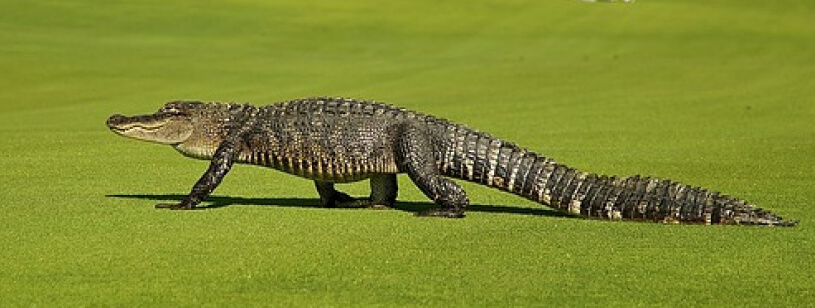
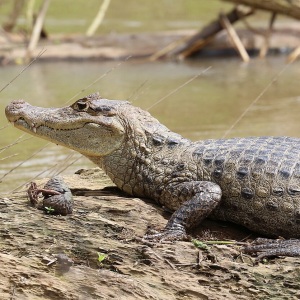
Alligators are semi-aquatic reptiles in the genus Alligator. The American alligator (Alligator mississippiensis) occurs in the southeastern United States, while the Chinese alligator (Alligator sinensis) has a much smaller native range in eastern China.
Alligators are crocodilians with broad snouts and powerful jaws. They mainly use freshwater habitats, although American alligators can sometimes enter brackish water. Their feeding and nesting activities influence wetland ecosystems. Crocodile.
Quick facts
| Common name | Alligator |
| Scientific name | Alligator (genus): Alligator mississippiensis and Alligator sinensis |
| Typical lifespan | About 35-50 years in the wild, 70 years or more in captivity |
| Maximum speed | About 15-18 km/h on land (short bursts), about 30 km/h in water |
| Height | Up to about 50 cm (body height) |
| Length | About 3.4-4.5 m (male American alligators), about 2.6-3 m (females); Chinese alligators under 2 m |
| Weight | About 200-450 kg (large males), much less for females and Chinese alligators |
| Diet type | Carnivore (opportunistic) |
| Main predators | Adults have few; young are eaten by herons, raccoons, large fish and larger alligators |
| Conservation status | American alligator: Least Concern; Chinese alligator: Critically Endangered |
| Distribution | South-eastern USA; eastern China (lower Yangtze) |
| Living environment | Freshwater swamps, marshes, rivers, lakes and ponds |
Interesting facts
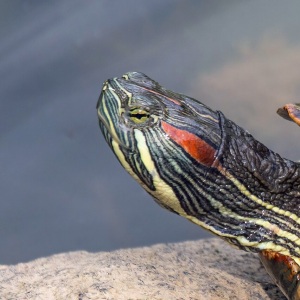
- A crushing bite - American alligators have one of the strongest bites ever measured, about 9,500 newtons (over 2,000 pounds of force), strong enough to crack turtle shells, one of their foods. But the muscles that open the jaws are weak, so a person can hold an alligator's mouth shut with bare hands. Turtle.
- Surviving under the ice - When water freezes, alligators can keep just their nostrils above the surface and wait, slowing their body down in a winter rest called brumation.
- Eyes that shine at night - A reflective layer behind the eyes, the tapetum lucidum, helps alligators see in the dark; in torchlight, their eyes glow red or orange.
- Dancing water - In the breeding season, males "bellow" with such deep sounds that drops of water dance on their backs.
- Different conservation situations – American alligators recovered with protection and management, while Chinese alligators face much greater conservation pressures. Wild-population figures need a dated assessment.
- Endless teeth - An alligator has about 80 teeth at a time and replaces them throughout its life, using up to 2,000-3,000 teeth in total.
- Caring mothers - Unlike most reptiles, female alligators guard their nests and protect their young for months, sometimes even carrying them gently in their mouths.
- Rarely dangerous - Alligators usually avoid people; attacks are rare and often involve alligators that have been fed by people. Saltwater and Nile crocodiles are much more dangerous. Crocodile.
Records and remarkable features
- Large individuals – American alligators can grow to several metres. Exceptional size records require a reliable measurement and clearly identified record category.
- A record bite - The American alligator's bite is among the strongest measured in any living animal, stronger than that of lions and many sharks. Lion. Shark.
- The oldest alligator - Muja, an American alligator at Belgrade Zoo in Serbia, arrived there in 1937 and was still alive in the 2020s, making it one of the oldest known alligators.
- Clever hunters - Alligators have been seen balancing sticks on their snouts in the nesting season, apparently to lure birds looking for nest material.
- Huge numbers - Louisiana and Florida each have more than a million wild alligators.
Physical characteristics and adaptations
Alligators are large reptiles with tough, scaly skin that protects them from predators and from other alligators. They are often confused with crocodiles, but can be told apart by several features.
Differences between alligators and crocodiles
| Characteristic | Alligator (Alligatoridae) | Crocodile (Crocodylidae) |
|---|---|---|
| Shape of the snout | Broad and rounded, U-shaped | Narrower and more pointed, V-shaped |
| Skin colour | Dark, usually blackish or dark grey-brown | Often lighter, olive or tan |
| Habitat | Mainly fresh water | Many species also live in salt or brackish water |
| Visible teeth | The lower teeth are mostly hidden when the mouth is closed | The large fourth lower tooth shows when the mouth is closed |
Physical and functional adaptations
- Armoured skin - Alligator skin contains bony plates called osteoderms, which protect them.
- A powerful bite - Strong jaws crush turtle shells and the bones of large prey.
- Eyes and nostrils on top - The alligator can lie almost completely hidden in the water while still seeing and breathing.
- A muscular tail - It makes up about half of the body length and is used for swimming and for digging "gator holes".
- New teeth - Each tooth can be replaced many times during the alligator's life.
See also information about monitor lizards: Komodo dragon.
Habits and behaviour
Alligators are opportunistic, territorial predators. They spend much of their time resting, but can move quickly and are excellent swimmers.
Territorial behaviour
- Large males defend territories, especially in the breeding season.
- The size of a territory depends on the food and water available.
- Alligators communicate with bellows, hisses, head slaps on the water and body postures.
Hunting and feeding mode
- Ambush - Alligators lie still in the water and strike suddenly at prey that comes close.
- The "death roll" - With large prey, they spin their bodies to tear off pieces of meat, because they cannot chew.
- Gator holes - In dry seasons, alligators dig pools that hold water, which also help fish, turtles and birds survive.
Brumation and the seasons
- In cold weather, alligators become sluggish, stop eating and rest in burrows or deep water until it gets warmer.
- When the surface freezes, some alligators keep their snouts poking through the ice so they can breathe.
Social behaviour
- Alligators often bask together on riverbanks, especially outside the breeding season.
- They communicate with sounds, vibrations in the water and body positions.
Habitat and geographic distribution
Alligators live in many freshwater habitats, from swamps and lakes to rivers, ponds and even golf-course ponds and canals.
Regional distribution
| Region | Species | Population information |
|---|---|---|
| South-eastern USA (Florida, Louisiana, Georgia, South Carolina, Texas, Alabama, Mississippi, Arkansas, North Carolina, Oklahoma) | Alligator mississippiensis (American alligator) | Several million; more than a million each in Louisiana and Florida |
| Eastern China (lower Yangtze River, Anhui Province) | Alligator sinensis (Chinese alligator) | Only a few hundred in the wild, boosted by releases of captive-bred animals |
Habitat adaptations
- American alligators live in freshwater swamps, marshes, rivers and lakes, and dig dens where they shelter in bad weather.
- Chinese alligators are smaller, usually under 2 m long, and spend the cold winter in burrows.
- Both species can enter brackish water for short periods, but they lack the working salt glands that help many crocodiles live in the sea.
Climate and habitat change
- Loss of wetlands to building and farming affects alligator populations.
- The Chinese alligator has been hit hardest, because most of its wetlands along the Yangtze have been turned into rice fields and towns.
Diet and methods of hunting
Alligators are opportunistic predators that eat whatever prey is available. They are mainly carnivores, but sometimes also eat fruit.
What do alligators eat?
| Type of prey | Examples and context |
|---|---|
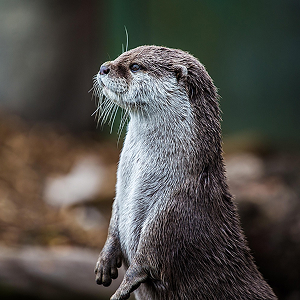
| Mammals | Deer, raccoons, coypu, otters, beavers, wild pigs. Raccoon. Otter. Beaver. |
| Birds | Ducks, herons, chicks that fall from nests |
| Fish and water animals | Fish, crustaceans, molluscs and other aquatic invertebrates |
| Amphibians and reptiles | Frogs, snakes, turtles |
| Invertebrates | Snails, crayfish, large insects (eaten especially by young alligators) |
| Carrion | Dead animals found in the water or on land |
Hunting and feeding methods
- Ambush - Alligators wait almost motionless in the water and grab prey with a sudden lunge.
- Drowning - They drag larger prey into the water and hold it under until it drowns.
- The "death roll" - With large prey, they bite and spin quickly to tear off pieces of meat.
- Swallowing whole - Small prey is swallowed whole; alligators also swallow stones, which may help digestion.
Reproduction and life cycle
Alligators have complex breeding behaviour, and the females care for their young, which is unusual among reptiles.
Breeding season
- The breeding season is in spring, from about April to June, when males bellow loudly and send vibrations through the water to attract females.
- After mating, the female builds a large nest mound of plants and mud, where she lays her eggs.
Eggs and hatching
| Characteristic | Details |
|---|---|
| Incubation | About 60-70 days |
| Eggs | Usually about 20-50 eggs per nest |
| Sex of the young | Depends on the nest temperature: warmer nests (about 34 °C) produce males, cooler nests (about 30 °C or less) produce females |
| Hatching | The young call from inside their eggs, and the mother opens the nest and carries them to the water. |
Care of the young
- Unlike most reptiles, alligator mothers protect their young for months, sometimes until the next breeding season.
- The young stay close to their mother, who guards them from herons, raccoons, snakes, large fish and other alligators.
- Gradually, the young become independent and move away to find their own place.
Growth and maturity
- Young alligators grow quickly, reaching about 1 m in length by about 2-3 years.
- They become mature when they are about 1.8 m long, usually at about 10-12 years old.
- In the wild, they usually live about 35-50 years, and in captivity they can live 70 years or more.
Discover all wild animals.
Name and history
Alligators belong to an ancient group of reptiles with a long history.
Origin of the name
- The word "alligator" comes from the Spanish el lagarto, "the lizard", the name Spanish explorers gave to the animals they met in the Americas.
- The American alligator was scientifically described by the French naturalist François Marie Daudin in 1802, and the Chinese alligator in 1879.
Taxonomic classification
| Classification | Name |
|---|---|
| Kingdom | Animalia |
| Phylum | Chordata |
| Class | Reptilia |
| Order | Crocodylia |
| Family | Alligatoridae |
| Genus | Alligator |
| Species | Alligator mississippiensis (American), Alligator sinensis (Chinese) |
Fossils and evolution
- Alligators are part of an ancient crocodilian lineage; modern species are not unchanged copies of their distant ancestors.
- The alligator family has existed for more than 60 million years, and the genus Alligator for about 30-40 million years.
Cultural significance and mythology
Alligators have long been feared and admired, and in the south-eastern United States they are a symbol of the wild swamps.
Superstition and symbolism
- Strength and survival - In many cultures, alligators are symbols of power, patience and survival.
- A Southern symbol - In the south of the United States, the alligator is linked with the swamps and bayous; it is the state reptile of Florida, Louisiana and Mississippi.
- Chinese dragons - Some researchers believe that the Chinese alligator may have helped inspire ancient Chinese images of dragons.
Conservation status and threats
The two alligator species face very different situations: the American alligator is a conservation success story, while the Chinese alligator is critically endangered.
Current situation
| Species | Conservation status (IUCN) | Population information |
|---|---|---|
| American alligator (Alligator mississippiensis) | Least Concern | Several million in the wild |
| Chinese alligator (Alligator sinensis) | Critically Endangered | Only a few hundred in the wild; thousands in captivity |
Major threats
- Habitat destruction - Building and farming destroy the wetlands where alligators feed and nest.
- Water pollution - Pesticides and other chemicals can harm alligators' health.
- Illegal hunting - Although hunting is regulated, alligators are still sometimes killed illegally for their skin and meat.
- Conflict with people - As towns spread into wetlands, alligators turn up in pools and gardens and are sometimes removed or killed.
Conservation measures
- Legal protection — The American alligator was listed as endangered in 1967. Conservation work helped it recover, and its federal status was reclassified in 1987.
- Reintroduction - In China, captive-bred Chinese alligators are being released into protected wetlands.
- Farming and managed hunting - In the United States, alligator farms and strictly controlled hunting reduce pressure on wild populations and give people a reason to protect wetlands.
In popular culture
Alligators appear in films, books, sport and urban legends, often as dangerous predators.
Films and shows
- Alligator (1980) - A horror film about a giant alligator living in the sewers of a city.
- Crawl (2019) - A thriller about a father and daughter trapped in a flooded house with alligators during a hurricane.
- Documentaries - Alligators often star in wildlife programmes about the Everglades and other swamps.
Comics, books and songs
- "See You Later, Alligator" (Bill Haley & His Comets, 1956) - A famous rock 'n' roll song based on a well-known rhyming goodbye.
- “Killer Croc” – This DC Comics character is fictional and should not be treated as a description of real alligators.
Urban legends and stories
- Alligators in the sewers - A famous urban legend says that alligators live in the sewers of New York City after being flushed away as pets.
- The Florida Gators - The University of Florida's sports teams are named after the alligator.
Did you know? About alligator
- The word "alligator" comes from the Spanish "el lagarto", which means "the lizard".
- Alligators have about 80 teeth at a time; new teeth replace worn ones throughout life, and an alligator may use 2,000-3,000 teeth in total.
- Alligators have powerful bites, but a numerical comparison requires a defined species, individual and measurement method.
- An alligator’s digestive system can break down many components of prey, including bone. Digestion time depends on prey size and conditions.
- Although many people fear alligators, they usually avoid people and rarely attack unless threatened or used to being fed.
- Alligator blood contains powerful substances that fight bacteria and viruses.
- Despite their short legs, alligators can climb trees if the trunk is not too steep.
- Scientists have seen alligators balancing sticks on their snouts in the nesting season, apparently to lure birds looking for nest material.