European mole cricketGryllotalpa gryllotalpa — habitat, diet and reproduction
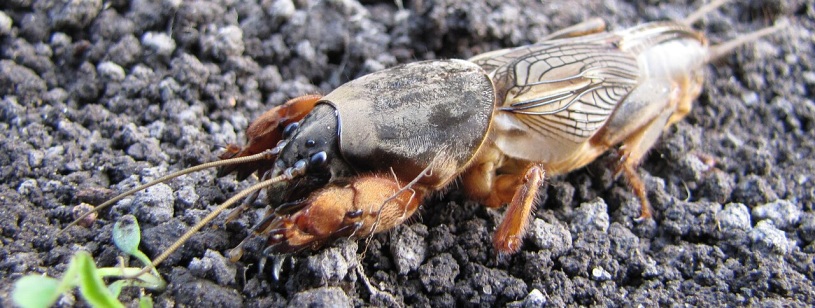
Brown European mole cricket with broad digging forelegs on the ground. · Jacek Proszyk / Wikimedia Commons / CC BY-SA 4.0 (https://creativecommons.org/licenses/by-sa/4.0/). Cropped and resized. Source: https://commons.wikimedia.org/wiki/File:Gryllotalpa_gryllotalpa_on_the_ground_1.jpg
The European mole cricket (Gryllotalpa gryllotalpa) is a cricket relative adapted to underground life. Shovel-like front legs open tunnels through soil. It eats invertebrates and plant material. On warm evenings, a male may be heard calling from its burrow.
Quick facts
| Common name | European mole cricket |
| Scientific name | Gryllotalpa gryllotalpa |
| Life cycle | Development around 2–3 years, depending on conditions |
| Length | Approximately 3.5–5 cm |
| Appearance | Brown cylindrical body with specialised digging forelegs |
| Diet | Omnivorous: invertebrates, roots and other plant parts |
| Activity | Mostly underground; often surfaces at night |
| Conservation status | Least Concern in Europe, with regional threats |
| Distribution | Europe, North Africa and western Asia |
| Habitat | Loose moist soil in meadows, banks, gardens and farmland |
| Family | Gryllotalpidae |
| Reproduction | Eggs in an underground chamber tended by the female |
Interesting facts
- Females guard and clean the egg chamber.
- Burrow chambers help amplify male calls.
- Adults can fly and swim despite their mainly subterranean life.
- Broad front legs push soil aside during digging.
Records and extremes
Mole crickets combine burrowing with flight and swimming. An elongated body fits narrow galleries and powerful forelegs rapidly move loose soil.
Calls are easier to detect than the insect itself. Males rub their forewings to produce sound, which the burrow helps amplify.
Females maintain conditions around their eggs and may remain with newly hatched nymphs for a short time.
Characteristics
Fine hairs give the brown body a velvety appearance. A robust shield protects the front. Antennae and rear appendages help sense nearby surroundings.
The front pair of legs is broadened and armed for digging; the other legs assist movement. Adults have flight wings, while young nymphs lack developed wings.
Behaviour
Most activity takes place in galleries. At night, the insect may surface or move elsewhere. It retreats deeper into soil during cold weather.
Males give prolonged trills in the breeding season. Temperature and humidity influence activity, and disturbance may interrupt a call.
Tunnels serve feeding, shelter and reproduction. Shallow excavation can disturb the roots of young plants.
Habitat and distribution
The range covers large parts of Europe, North Africa and western Asia. Loose soil and sufficient moisture support underground life.
Wet meadows, banks and ditches provide natural habitat. Gardens and cultivated ground are also used. Very dry or compacted soil makes conditions harder.
Diet and feeding
Earthworms, insect larvae and other soil animals provide food. Roots and shoots are also eaten, making the diet omnivorous.
Garden damage can result from both feeding and excavation. Young plants with fragile roots are especially exposed. The insect also consumes other invertebrates.
One sighting alone does not establish the scale of damage. Identifying tracks and affected plants helps assess the situation.
Reproduction and life cycle
Females excavate nest chambers and may lay several hundred eggs. They guard and clean the developing brood.
Hatching may occur after around three weeks in suitable conditions. Nymphs initially stay near the nest before feeding independently.
Repeated moults lead to adulthood without a pupal stage. Development takes around two or three years, and both young and adults can overwinter underground.
Name and history
Linnaeus described the species in 1758 as Gryllus gryllotalpa. It is now placed in Gryllotalpa, family Gryllotalpidae.
The name mole cricket reflects digging limbs and burrowing habits. Similarity to a mammal results from adaptation to a similar environment.
Conservation and threats
The European assessment is Least Concern, although some regional populations have declined sharply. Local conditions differ from the wider assessment.
Drainage, pesticides and intensive agriculture reduce suitable habitat. Drying or compacting soil affects tunnels and nests.
Retaining moist habitat and avoiding unnecessary disturbance supports soil wildlife. Listening for evening calls can reveal the species without excavating nests.
Frequently asked questions
Is it related to a mole?
It is an insect related to crickets; similar digging limbs reflect similar habitat demands.
Can it fly?
Adults can fly, although they mainly live underground.
Does it eat only roots?
Earthworms, larvae and other invertebrates also provide food.
Which sex sings?
Males produce calling trills using their forewings.
Does the female tend eggs?
Yes, she guards and cleans the underground nest chamber.
Why is it rarely seen?
It spends much of its life in tunnels and often surfaces at night.