CockatooCacatuidae — habitat, diet and reproduction
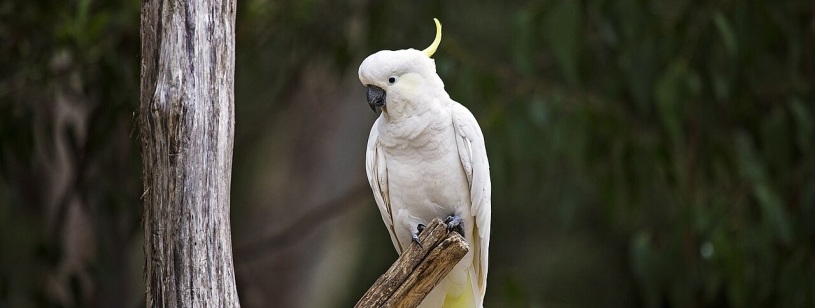
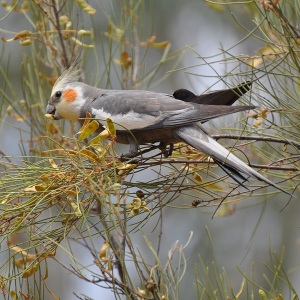
Sulphur-crested cockatoo (Cacatua galerita) on a branch. · Ffyfejam / CC BY-SA 4.0 (https://creativecommons.org/licenses/by-sa/4.0). Cropped and resized.
Cockatoos are parrots recognised by their movable crests and powerful bills. They live in Australia and several nearby island regions. Some species are white, while others are black, grey or pink. The photograph shows Cacatua galerita, the white sulphur-crested cockatoo.
Quick facts
| Common name | Cockatoo |
| Scientific name | Cacatuidae, a family containing several species |
| Lifespan | Variable; large species can live for several decades |
| Length | 45–50 cm in Cacatua galerita |
| Diet | Seeds, fruit, nuts, roots and sometimes invertebrates |
| Predators | Birds of prey; eggs and chicks are more vulnerable |
| Conservation status | Varies by species; some are threatened |
| Distribution | Australia, New Guinea and other nearby islands |
| Habitat | Forests, savannas, open country and some urban areas |
| Family | Cacatuidae |
| Distinctive feature | Movable crest |
| Nest | Usually a tree hollow |
- Primary category:Birds
- Explore this animal's categories:
Interesting facts
- The crest is part of visual communication.
- Some urban sulphur-crested cockatoos have learned from other birds to open wheelie-bin lids.
- Palm cockatoos use pieces of wood to drum on trees.
- While a flock feeds on the ground, some birds watch for danger from higher positions.
Characteristics
Crest feathers can be raised or lowered. Their position changes with attention or excitement, alongside body posture. The hooked bill opens tough foods and assists climbing.
Sulphur-crested cockatoos have white bodies, yellow crests and dark bills. Other species look very different: galahs combine pink and grey, while black cockatoos may have coloured tail patches. Feet grip branches and hold food during feeding.
Behaviour
Many cockatoos are social and communicate through loud calls. Flocks use shared roosts, and partners maintain close relationships. Abundant food can attract large gatherings.
Australian urban research documented the spread of bin-opening among sulphur-crested cockatoos. Birds learned from others, with local variation in technique. This is a concrete example of social learning.
In human care, strong bills and exploratory behaviour require robust, safe objects. Noise, flight space and daily interaction are significant considerations.
Habitat and distribution
The family occurs in Australia, New Guinea and island regions including parts of Indonesia and the Philippines. Habitats range from rainforest and eucalyptus woodland to mangroves and open country.
Sulphur-crested cockatoos occur in northern and eastern Australia and New Guinea, using parks and gardens as well. Some other cockatoos occupy much smaller island ranges.
Diet and feeding
Food varies with species and habitat. Seeds, fruit, nuts, roots and insect larvae may be eaten. Some species forage on the ground; others work through fruit or cones in trees.
Sulphur-crested cockatoos feed together in grassland and cultivated areas. Watchful birds give alarm calls when danger approaches. Urban food sources can also create conflict with people.
Reproduction and life cycle
Cockatoos usually nest in hollows, making old cavity-bearing trees valuable resources. Pairs may prepare the floor with wood fragments.
Sulphur-crested cockatoos typically lay one to three eggs. Both parents incubate and care for the chicks. Incubation takes around 30 days, followed by approximately 65 days in the nest.
Young remain associated with their family afterwards. Reproductive timing and parental roles differ in other cockatoo species.
Name and history
Cockatoo refers to several species in Cacatuidae. The cockatiel also belongs to this family. Scientific names help distinguish similar white birds with yellow crests.
Observations of urban cockatoos have revealed how new behaviours spread. Reports from local people can support this research.
Conservation and threats
The family contains both widespread and threatened species. A bird common in Australian parks does not represent the conservation position of another cockatoo restricted to islands.
Forest loss, removal of hollow-bearing trees and capture for trade are major pressures. Conservation therefore protects birds and the places where they can reproduce.
Frequently asked questions
Are all cockatoos white?
Some species are black, grey or pink. Colour and crest shape help with identification.
What does a raised crest mean?
It can signal attention, excitement or agitation. Body posture, movement and context matter too.
Why do cockatoos chew wood?
Their bills are used for exploration, climbing, feeding and nest preparation. Chewing is a natural behaviour.
Do sulphur-crested cockatoos live in cities?
They use parks and gardens in parts of their range. Large trees and food sources help support them.