CockatielNymphicus hollandicus — habitat, diet and reproduction
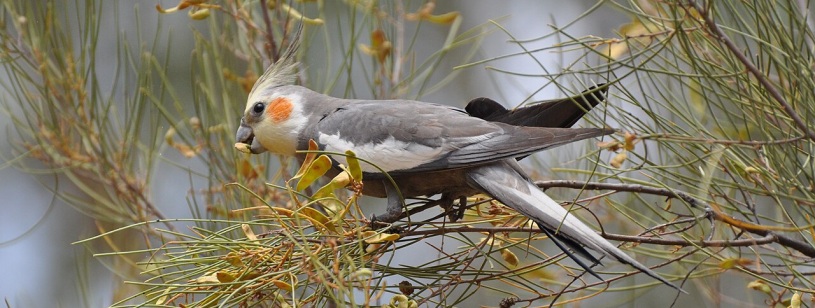
A wild cockatiel feeding on a branch. · Ganatron / CC BY-SA 4.0 (https://creativecommons.org/licenses/by-sa/4.0). Cropped and resized.
The cockatiel is an Australian parrot with a slender crest, a long tail and orange cheek patches. Wild birds search for seeds in flocks and move as water and food become available. In human care, their whistles and expressive crest movements are particularly familiar.
Quick facts
| Common name | Cockatiel |
| Scientific name | Nymphicus hollandicus |
| Lifespan | Variable; birds in human care may exceed 20 years |
| Length | About 29–33 cm, including the tail |
| Weight | About 80–100 g |
| Diet | Mainly seeds and other plant foods |
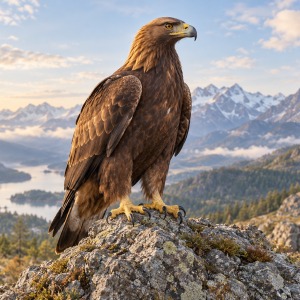
| Predators | Birds of prey |
| Conservation status | Least Concern (LC), globally |
| Distribution | Mainland Australia |
| Habitat | Wooded grassland, scrub and open woodland |
| Family | Cacatuidae |
| Nest | Tree hollow |
- Primary category:Birds
- Explore this animal's categories:
Interesting facts
- The crest rises and falls during social interactions; body posture helps interpret it.
- Pairs remain close outside the nesting season.
- Several pairs may nest in suitable hollows within the same tree.
- White, yellow and pied captive birds result from selectively bred colour variations.
Characteristics
The grey body carries a white wing patch and a long, pointed tail. Adult wild-type males have a yellow face and orange cheek patches. Females are duller and have barring beneath the tail.
Young birds initially resemble females. Colour mutations can make visual sex identification difficult. Two toes face forward and two face backward, giving parrots a secure grip on branches.
Behaviour
Cockatiels are active during daylight and sleep communally. Contact calls keep flock members together during flights and feeding. Paired birds may preen each other’s head feathers.
Flocks gather around water. Some populations move irregularly with changing resources, while others make more predictable seasonal movements.
Flying, exploring and safe objects to chew provide useful activities in human care. These social birds also need daily interaction.
Habitat and distribution
Cockatiels inhabit Australia’s interior, especially dry and semi-arid regions. Open woodland, grassland and farmland provide feeding areas. Riverine trees offer resting and nesting sites.
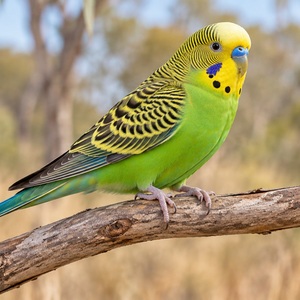
Water availability helps shape flock movements. Birds may use a productive area temporarily and move when conditions change. Budgerigars are another Australian parrot adapted to open landscapes.
Diet and feeding
Many seeds are collected on the ground. The curved bill removes the husk while the tongue positions the seed. Rainfall changes the growth and seeding of food plants.
A seed-only captive diet can create nutritional imbalances. Appropriate formulated food, suitable vegetables and fresh water support a varied diet. Food changes should be gradual, with attention to what the bird actually eats.
Reproduction and life cycle
Pairs nest in tree hollows, often in eucalypts. Breeding timing varies geographically and responds to favourable feeding conditions. BirdLife Australia describes three to five eggs as usual, with variation.
Both parents incubate and feed their chicks. Incubation takes roughly 18–20 days, and chicks spend around a month in the hollow. Flying and feeding skills continue developing after they emerge.
Name and history
The scientific name is Nymphicus hollandicus. Cockatiels belong to Cacatuidae, the cockatoo family. Their movable crest is a visible feature of that relationship.
Long-standing popularity in aviculture has produced many plumage variations within the same species.
Conservation and threats
Cockatiels are globally classified as Least Concern. Their range is extensive, but nesting places and water remain important local resources.
Removing old trees reduces available hollows. Repeated fires and changing rainfall can alter local conditions. Retaining cavity-bearing trees benefits cockatiels and other hollow-nesting birds.
Frequently asked questions
Can cockatiels learn words?
Some imitate short words, although whistles and melodies are more characteristic. Ability varies between individuals.
Are white cockatiels a separate species?
They are colour varieties of the same species. Plumage colour alone does not establish origin or temperament.
Why does the seed bowl contain empty shells?
Cockatiels remove seed husks before eating. A bowl that looks full may contain mostly empty husks.
How can a young cockatiel be sexed?
Young birds look similar. If plumage is inconclusive, a veterinarian can advise on DNA sex testing.