CrabInteresting facts and information
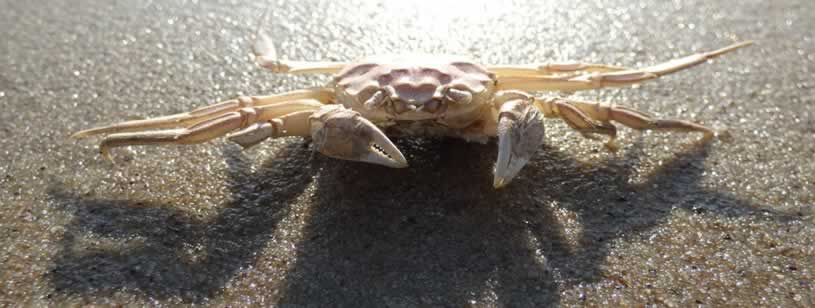
True crabs belong to the group Brachyura. They are crustaceans with a hard external skeleton and jointed limbs, and many have a broad body and prominent claws. Crabs occur in marine, freshwater and land habitats; their diets and behaviour differ between species.
Many crabs scavenge or catch small prey, while others eat algae or leaves. Some animals called crabs, such as hermit crabs and the coconut crab, belong to a related group of crustaceans rather than to the true crabs.
Quick facts
| Common name | Crab |
| Scientific name | Brachyura |
| Typical lifespan | From about 1 year to several decades, depending on the species |
| Maximum speed | Ghost crabs can run at over 15 km/h; most crabs are slower |
| Size | From a few millimetres to about 3.7 m leg span (Japanese spider crab) |
| Weight | From under a gram to about 19 kg (Japanese spider crab) |
| Diet type | Mostly omnivores (algae, small invertebrates, carrion, plant matter) |
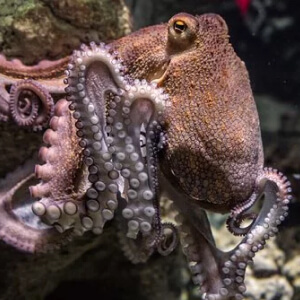
| Main predators | Fish, octopuses, seabirds, otters, raccoons, humans |
| Conservation status | Assess separately by species and population; different taxa and regions have different needs |
| Distribution | Oceans, seas, rivers, lakes and coasts around the world |
| Habitat | Coral reefs, rocky shores, estuaries, mangroves, fresh water, tropical forests |
- Primary category:Crustaceans
- Explore this animal's categories:
Interesting facts
- Crabs can walk forwards, but most prefer to walk sideways - The way their leg joints bend makes moving sideways faster and easier.
- Crabs can regrow lost limbs - If they lose a claw or a leg, a new one gradually grows back over the next few moults.
- The Japanese spider crab has the longest legs of any arthropod - From claw tip to claw tip, it can measure about 3.7 metres.
- Some crabs are poisonous to eat - Certain reef crabs in the Indian and Pacific Oceans contain toxins that can kill people who eat them.
- Crabs communicate with movements and sounds - Some wave their claws, drum on the ground or rub body parts together to send signals to other crabs.
- Some crabs climb trees - The coconut crab (Birgus latro), the largest land-living arthropod, can climb trees and crack coconuts.
- Crabs often fight - Many species fight over territory or mates, using their claws to push and grab their rivals.
- Hermit crabs borrow their homes - They have soft abdomens and live in empty snail shells, moving to bigger shells as they grow.
- Eyes on stalks - Crabs' eyes sit on movable stalks, giving them a wide view of danger and prey.
- A star sign - In astrology, the sign of Cancer is represented by a crab.
Records and remarkable features
- Crabs shed their external skeleton as they grow. Their bodies are vulnerable until the new covering hardens.
- The Japanese spider crab (Macrocheira kaempferi) can weigh up to about 19 kg and has the greatest leg span of any arthropod.
- Every year, tens of millions of red crabs on Christmas Island, in the Indian Ocean, migrate from the forest to the sea to breed.
Characteristics
Crabs are decapod crustaceans, which means they have ten legs; in true crabs, the front pair is usually armed with strong claws. Their hard exoskeleton protects them from predators and supports their bodies, and their broad, flat shape lets them hide in sand or among rocks.
Main physical characteristics
- A hard exoskeleton - Made of chitin hardened with calcium, it protects the crab from predators and from drying out.
- Sideways walking - In most crabs, the leg joints are adapted for fast sideways movement, although some species can walk forwards.
- Powerful claws - Used for defence and for catching and tearing food; some crabs have one claw much bigger than the other.
- Eyes on movable stalks - Give a wide view, which helps them spot predators.
- Sensitive antennae - Help them detect smells and vibrations in the water.
- Regeneration - If a crab loses a leg or claw, it can grow a new one when it moults.
Special adaptations for survival
- Moulting - Crabs shed their shell from time to time so they can grow. While the new shell hardens, they are very vulnerable to predators.
- Camouflage - Many crabs blend in with sand, mud or rocks, and decorator crabs even stick seaweed and sponges onto their shells.
- Life on land - Land crabs, such as the Christmas Island red crab, and the coconut crab keep their gills moist so they can breathe air for long periods.
Habits and behaviour
Crab behaviour varies greatly between species, but many live alone and are most active at night or at low tide. Many are opportunistic feeders and help recycle dead matter.
Social behaviour
- Territoriality - Many crabs defend their burrows or territories, using their claws to drive away intruders.
- Fights - Males often fight over burrows, food or mates.
- Signals - Male fiddler crabs (Uca) wave their huge claw to attract females and warn rivals.
- Mass migration - The red crabs of Christmas Island (Gecarcoidea natalis) march in huge numbers to the sea to breed, a spectacular natural event.
Breeding season
- Mating after moulting - In many species, females mate soon after moulting, while their new shell is still soft.
- Protecting the eggs - Females carry their eggs stuck under their folded abdomen until they hatch.
- Releasing larvae - The tiny larvae hatch and drift in the sea, passing through several stages before becoming young crabs.
Defence and survival methods
- Hiding - Crabs avoid predators by hiding in burrows, under stones or in sand.
- Fighting with their claws - They use their claws both to defend themselves and to attack.
- Dropping a limb - If a predator grabs a leg, a crab can drop it and escape; the limb grows back later.
Habitat and geographic distribution
Crabs live in almost every part of the world, from the deep ocean to beaches, rivers and rainforests.
Habitat types
- Seas and oceans - Most species live in salt water, from the deep sea floor to rocky shores.
- Fresh water - Some species, such as freshwater crabs of the genus Potamon, live in rivers and lakes.
- Mangrove forests - Crabs are very important there, recycling leaves and nutrients.
- Sandy beaches - Ghost crabs dig burrows and can bury themselves quickly to escape predators.
- Tropical forests and islands - Land crabs and coconut crabs live in forests, and coconut crabs can climb trees.
Geographic distribution
| Region | Examples of crabs | Situation |
|---|---|---|
| Pacific and Atlantic Oceans | Japanese spider crab, blue crab, king crabs, edible crab | Many species are important in fisheries |
| Indian Ocean | Mangrove crabs, Christmas Island red crab | Many populations are large, but some are affected by habitat loss |
| North America and Europe | Green shore crab, freshwater crabs in southern Europe | The European green crab has become invasive in other parts of the world |
| Indian and Pacific Ocean islands | Coconut crab, reef crabs | The coconut crab is Vulnerable because of overharvesting |
Impact of climate change and pollution
- Warming seas - Rising ocean temperatures can change when and where crabs breed and migrate.
- Plastic pollution - Some hermit crabs now use bottle caps and other plastic waste instead of natural shells.
- Overfishing - Heavily fished species, such as king crabs and blue crabs, can decline quickly.
Crabs are important for healthy seas and coasts, and protecting their habitats helps keep nature in balance.
Diet and feeding
Most crabs are opportunistic omnivores that eat a wide variety of food, from algae to small animals and dead remains. This flexible diet helps them live in many habitats and recycle nutrients.
Main food
- Plants - Algae, seaweed and fallen mangrove leaves.
- Small animals - Worms, snails, clams, smaller crustaceans and small fish.
- Carrion - The remains of dead fish and other animals are a valuable source of protein.
- Food in sand and mud - Some species sift sand and mud to eat tiny organisms and particles.
- Human waste - In harbours and on beaches, crabs eat scraps of human food.
Diet by habitat
| Habitat | Types of food |
|---|---|
| Coral reefs | Algae, small invertebrates, coral mucus |
| Intertidal areas | Worms, small crustaceans, algae, decaying matter |
| Mangroves and estuaries | Leaves, seeds, insects, small fish |
| Fresh water | Plant matter, insects, snails |
Feeding methods
- Using their claws - Most crabs use their claws to tear food into small pieces and pass it to their mouths.
- Sifting sediment - Fiddler crabs and soldier crabs scoop up sand or mud and sift out tiny bits of food.
- Scavenging - Many crabs feed on dead animals, helping to clean up the seashore.
- Storing food - Some land crabs drag leaves into their burrows to eat later.
Reproduction and life cycle
Crab reproduction is a complex process, and young crabs pass through several larval stages before they look like adults.
Mating
- Breeding season - Depends on the temperature and habitat; many species breed in the warmer months.
- Courtship - Males use claw-waving, drumming and dances to attract females.
- Mating after moulting - In many species, females mate right after moulting, when their shell is still soft.
Eggs and larvae
- The female carries the eggs - After fertilisation, the eggs are kept safe under the female's folded abdomen until they hatch.
- Larvae in the plankton - The larvae are released into the sea, where they drift and grow through several stages.
- Becoming a crab - After a few weeks or months, the larvae settle on the bottom and develop into small crabs.
Longevity
- Small species - Live about 1-5 years.
- Large species - Can live for decades; coconut crabs may live about 60 years.
Growth and moulting
- Moulting is essential for growth - Crabs must shed their exoskeleton to grow, which makes them vulnerable for a while.
- How often - Young crabs moult often, several times a year, while adults may moult only once a year or less.
Name and history
People have eaten crabs and told stories about them for thousands of years.
Origin of the name
- The English word "crab" comes from Old English crabba, a Germanic word; the Latin word for crab is cancer and the Greek word is karkinos.
- The scientific name Brachyura means "short tail" in Greek, because a crab's abdomen is short and folded under its body.
Taxonomic classification
| Taxonomic category | Name |
|---|---|
| Kingdom | Animalia |
| Phylum | Arthropoda |
| Class | Malacostraca |
| Order | Decapoda |
| Infraorder | Brachyura (true crabs) |
| Example species | Carcinus maenas (green shore crab), Macrocheira kaempferi (Japanese spider crab), Callinectes sapidus (blue crab) |
Discovery and documentation
- Ancient times - Greek and Roman writers described crabs, and many people ate them.
- The Middle Ages - Crabs were used in folk medicine.
- The 19th and 20th centuries - Marine biologists began to study crab behaviour and their role in ecosystems.
The role of crabs in mythology and culture
- The sign of Cancer - In Western astrology, Cancer is represented by a crab.
- Greek mythology - The goddess Hera sent a giant crab to help the Hydra fight Heracles; after Heracles crushed it, Hera placed it among the stars as the constellation Cancer.
- China - Hairy crabs are a famous autumn delicacy, especially around Shanghai.
- Japan - According to legend, the Heikegani crab carries on its shell the faces of samurai warriors who drowned in a famous 12th-century sea battle.
Crabs are valued not only as food but also as symbols of protection, toughness and renewal.
Cultural significance and mythology
Crabs appear in the myths, symbols and traditions of many cultures. Because of their armour, their sideways walk and their moulting, they are linked with protection, renewal and the mysteries of the sea.
Crabs in mythology and religion
- Greek mythology - In one of the labours of Heracles, Hera sent a giant crab to help the Hydra. After the crab was crushed, Hera turned it into the constellation Cancer.
- China - Crabs are a famous autumn food, eaten during the season of the Mid-Autumn Festival.
- Japanese folklore - The Heikegani crab is said to carry the faces of samurai who died in the Battle of Dan-no-ura in 1185, and fishermen used to throw these crabs back into the sea out of respect.
- Sideways walking - In several languages, "walking like a crab" means moving awkwardly or going backwards.
Crab symbolism
- Protection and toughness - The hard shell makes the crab a symbol of defence and resilience.
- Adaptability - Because many crabs live both in water and on land, they stand for flexibility and survival.
- Renewal - Because crabs moult and can regrow lost limbs, they are linked with healing and new beginnings.
Conservation status and threats
Although crabs are a very adaptable group, many species face serious threats from human activities, climate change and overfishing.
Conservation status
- Common species (e.g. the green shore crab) - Populations are large and not at risk; the green crab is even invasive in some regions.
- Vulnerable species (e.g. the coconut crab) - Suffer from habitat loss and overharvesting.
- Threatened freshwater crabs - About one in six freshwater crab species is threatened by pollution, habitat destruction and climate change.
Main threats
- Overfishing - Some crab species are caught in huge numbers for food, which can make populations crash.
- Water pollution - Plastic, chemical waste and pesticides harm crabs in estuaries and coastal waters.
- Habitat destruction - Coastal building, harbours and the loss of mangroves destroy the places where crabs live and breed.
- Climate change - Warmer and more acidic oceans can weaken crabs' shells and change their life cycles.
Conservation efforts
- Fishing rules - Many countries limit how many crabs can be caught and protect females carrying eggs.
- Protected areas - Marine reserves protect crab habitats.
- Research on pollution - Marine biologists study the effects of plastics and chemicals on crabs.
- Helping crabs cross roads - On Christmas Island, special bridges and tunnels help millions of red crabs cross roads safely during their migration.
In popular culture
Crabs appear in books, films, cartoons and video games, often as funny, grumpy or wise characters.
Crabs in literature
- Alice's Adventures in Wonderland (Lewis Carroll, 1865) - After the Caucus-race, an old crab tells her daughter to learn a lesson from Alice and "never lose your temper".
- Aesop's fables - In "The Crab and Its Mother", a mother crab scolds her child for walking sideways, until the child asks her to show how to walk straight.
- Fairy tales - In many stories, the crab is a clever character, protected by its hard shell.
Crabs in film and animation
- The Little Mermaid (Disney, 1989) - Sebastian, the red crab, is Princess Ariel's wise and protective adviser and sings "Under the Sea".
- Moana (Disney, 2016) - Tamatoa, a giant golden crab inspired by the coconut crab, is a vain villain.
- SpongeBob SquarePants - Mr Krabs, a money-loving crab, owns the Krusty Krab restaurant.
Crabs in video games and comics
- Pokémon - Krabby and Kingler are crab Pokémon inspired by real crabs.
- Dark Souls - Giant crabs attack players in shallow lakes.
Crabs as symbols
- The sign of Cancer - In Western astrology, Cancer is represented by a crab, linked with sensitivity and protection.
- Maryland - The blue crab is the official state crustacean of Maryland, in the USA, and a symbol of its cuisine.
- Ferris - A friendly orange crab is the unofficial mascot of the Rust programming language.
Crabs in music and art
- "Under the Sea" - Sebastian's song from The Little Mermaid won an Oscar and is one of the most famous crab songs.
- Paintings and sculptures - Crabs appear in traditional Japanese art and in European paintings of sea life.