HawkInteresting facts and information
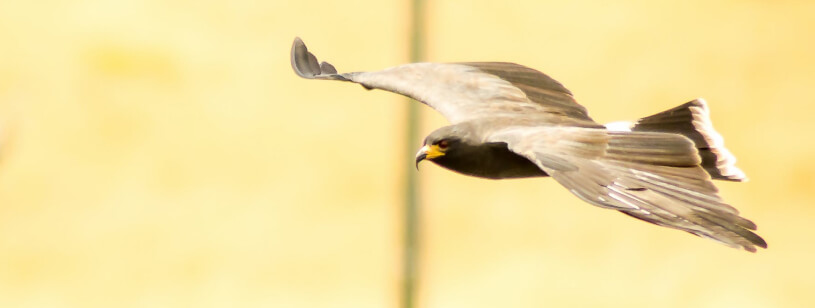
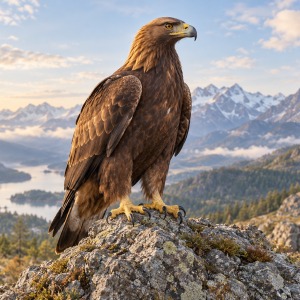
Hawks are birds of prey in the family Accipitridae. Woodland hunters such as goshawks and sparrowhawks have strong feet and agile flight. Recent classification places the Eurasian goshawk in Astur gentilis, rather than the older combination Accipiter gentilis.
Many woodland hawks hunt among trees, while some also use towns and farmland where prey is available.
Examples of woodland hawks include:
- Eurasian sparrowhawk (Accipiter nisus)
- Eurasian goshawk (Astur gentilis; formerly Accipiter gentilis)
- Black sparrowhawk — an African woodland hawk.
- Brown goshawk — an Australian hawk that uses woodland and other habitats.
Quick facts
| Common name | Hawk |
| Scientific name | Accipitridae; includes Accipiter and Astur |
| Typical lifespan | Often 3-10 years in the wild, up to about 20 years |
| Maximum speed | Fast in short chases; exact speeds vary by species |
| Wingspan | Varies by species and sex; for example, about 103–117 cm in the American goshawk |
| Length | About 20-70 cm |
| Weight | About 75 g to 2 kg |
| Diet type | Carnivore (birds, small mammals, reptiles, insects) |
| Main predators | Eagle-owls, eagles and larger hawks; people (illegal killing) |
| Conservation status | Assess separately by species and population; different taxa and regions have different needs |
| Geographical distribution | Every continent except Antarctica |
| Habitat | Forests, woodland, farmland, mountains, towns |
| Social behaviour | Solitary, territorial |
| Special adaptations | Excellent vision, sharp talons, fast flight and high manoeuvrability |
- Primary category:Birds
- Explore this animal's categories:Animals of AfricaAnimals of AsiaAnimals of AustraliaAnimals of EuropeAnimals of North AmericaAnimals of Romania’s forestsAnimals of South AmericaBirdsBirds of preyBirds of RomaniaBirds that winter in RomaniaCarnivoresEgg-laying animalsFeathered animalsFlying animalsHPredatory animals of RomaniaVertebrates
Interesting facts
- Sharp eyesight - Hawks see much more sharply than people and can spot small movements from far away.
- Bird-catching specialists - Many true hawks, such as sparrowhawks and goshawks, specialise in catching birds in flight, which needs lightning-fast reflexes.
- Hawks capture prey with their feet and talons. The effects of gripping and injury depend on predator and prey; killing should not be described simply as blocking breathing.
- Big females - In many hawks the female is much larger than the male; a female Eurasian sparrowhawk can weigh almost twice as much as the male and catch larger prey.
- Surprise attacks - Hawks often hide in trees and burst out to surprise their prey, or use hedges and buildings as cover.
- Some hawks migrate - Species such as the Chinese sparrowhawk and the sharp-shinned hawk travel thousands of kilometres between their breeding and wintering areas.
Records and remarkable features
- Hawks are birds of prey in the family Accipitridae. Woodland hunters such as goshawks and sparrowhawks have strong feet and agile flight. Recent classification places the Eurasian goshawk in Astur gentilis, rather than the older combination Accipiter gentilis.
- The largest - The Eurasian goshawk is one of the largest true hawks: females can be about 60-70 cm long, with a wingspan of up to about 1.25 m, and weigh up to about 2 kg.
- The smallest - The little sparrowhawk of Africa is one of the smallest, weighing only about 75-105 g.
- A word with two meanings - In North America, the word "hawk" is also used for buzzards, such as the red-tailed hawk.
Characteristics
The hawk is an agile predator with a muscular, streamlined body, built for fast flight and surprise attacks. It is very manoeuvrable, which helps it hunt birds among trees.
Physical aspect
- Compact, powerful body - Allows fast, controlled flight.
- Short, rounded wings - Allow quick turns among trees, unlike falcons, which have long, pointed wings built for speed in open country.
- A long tail - Works like a rudder, helping the hawk change direction suddenly during a chase.
- Long, strong legs - Let it reach out and grab prey, even in the air.
- Sharp, curved talons - Used to grip and kill prey.
- A short, hooked beak - Used to tear meat.
Special adaptations
- Speed and agility - Hawks can fly fast through woodland, twisting between branches to catch prey.
- Camouflage - Many hawks are grey or brown above and barred below, which helps them blend into trees.
- Sharp eyesight - Their eyes can detect the smallest movements of prey.
- Surprise attacks - Instead of chasing prey over long distances, hawks rely on a sudden, close-range attack.
Habits and behaviour
Hawks are solitary, territorial birds that are active by day and rely on speed, precision and surprise to catch their prey.
Social behaviour
- Territorial and solitary - A hawk defends its territory against other hawks, especially in the breeding season.
- Larger females - In many species, females are bigger and stronger than males.
- Sky dances - In the breeding season, pairs perform display flights over their territory, and males bring food to the female.
- Nests - Most true hawks build stick nests high in trees.
Survival Techniques
- Ambush - They hide in vegetation and attack suddenly, before the prey has time to react.
- Changing the diet - When birds are scarce, some hawks catch more mammals, reptiles or insects.
- Low flight - Hawks often fly low along hedges and woodland edges to approach prey unseen.
Habitat and geographic distribution
Hawks live on every continent except Antarctica. Most prefer forests and woodland, but some have adapted to towns, farmland and open country.
| Region | Example species | Habitat Preferred |
|---|---|---|
| Europe | Eurasian sparrowhawk (Accipiter nisus); Eurasian goshawk (Astur gentilis) | Forests, farmland, towns |
| North America | Cooper's hawk, sharp-shinned hawk, American goshawk | Mixed forests, towns and parks |
| Africa | Black sparrowhawk, African goshawk | Woodland, forests, plantations |
| Asia | Crested goshawk, Chinese sparrowhawk | Tropical forests, woodland |
| Australia | Brown goshawk, collared sparrowhawk | Eucalyptus woodland, dry areas |
Types of Habitat
- Forests - Most species prefer woods, where they can hide and attack by surprise.
- Open country - Some hawks also hunt over farmland and savanna.
- Towns - Sparrowhawks, Cooper's hawks and goshawks now live in many cities, where they hunt pigeons and songbirds.
- Mountains - Some species live in mountain forests.
Human Impact and Threats
- Habitat loss - Deforestation reduces nesting places and prey.
- Illegal persecution - In some regions, hawks are still shot or poisoned because they take poultry or game birds.
- Pesticides and poisons - Hawks can be poisoned by chemicals in their prey.
- Climate change - Changes in climate may affect the birds they hunt and their migration.
Diet and feeding
Hawks hunt animal prey, using their eyesight, flight and feet. Hunting methods vary between species.
What does the hawk eat?
| Type of food | Example hawks |
|---|---|
| Small and medium-sized birds (sparrows, finches, pigeons, starlings) | Eurasian sparrowhawk, Cooper's hawk, black sparrowhawk |
| Mammals (squirrels, rabbits, rats) | Eurasian goshawk |
| Reptiles (lizards, small snakes) | Brown goshawk, African goshawk |
| Large insects and frogs | Chinese sparrowhawk |
Hunting Techniques
- Ambush - It hides among leaves and attacks by surprise.
- Chasing - Sometimes it chases prey in flight, with fast turns and sudden changes of direction.
- Grabbing - It seizes prey with its talons and holds it tightly.
- Eating in a safe place - Hawks carry their prey to a branch or a hidden spot on the ground, often called a "plucking post", where they pluck and eat it.
- Leftovers - Goshawks sometimes leave part of a large kill and come back to it later.
Reproduction and life cycle
Hawks have elaborate courtship displays, and both parents work hard to raise their chicks.
| Characteristic | Details |
|---|---|
| Age of sexual maturity | About 1-3 years |
| Breeding season | Spring and early summer in temperate regions |
| Type of reproduction | Oviparous (lays eggs) |
| Number of eggs per nest | About 2-6 eggs |
| Incubation time | About 30-40 days |
| Leaving the nest | At about 4-6 weeks; independent a few weeks later |
| Lifetime | Often 3-10 years in the wild, up to about 20 years |
Mating process
- Pairs perform display flights over their territory, soaring in circles and making undulating dives.
- The male brings food to the female during courtship, showing that he is a good hunter.
- Nests are built high in trees, where they are safer from predators.
Breeding of chicks
- Usually only the female incubates the eggs, while the male brings her food.
- The chicks hatch covered in white down and depend completely on their parents; the female stays with them while the male hunts.
- At about 4-6 weeks, the young leave the nest, but their parents keep feeding them for several more weeks.
- Young hawks then become independent and leave to find their own territory.
Name and history
The hawk family (Accipitridae) is ancient: fossils show that its members already lived more than 30 million years ago.
Origin and etymology of the name
- The English word "hawk" comes from Old English hafoc, an old Germanic word that may be related to the idea of seizing.
- The genus name Accipiter is the Latin word for "hawk", probably linked to accipere, "to take hold of".
Hawks in the History of Humanity
- Falconry - For thousands of years, people have trained goshawks and sparrowhawks to hunt; a person who flies hawks is called an austringer.
- Medieval Europe - Hawks were status symbols, and different classes of people were traditionally linked with different birds of prey.
- Norse mythology - The goddess Freyja owned a cloak of falcon feathers that let its wearer fly between worlds.
- Folk names - In North America, some hawks were long called "chicken hawks" because people blamed them for taking poultry.
Hawks in Folklore and Superstition
- Messengers - In many cultures, hawks and other birds of prey were seen as messengers between people and the gods.
- Native American traditions - Many Native American peoples see the hawk as a symbol of vision, protection and courage, and use its feathers in ceremonies.
Cultural significance and mythology
Hawks and their relatives have been symbols of power, speed and keen sight for thousands of years.
- Ancient Egypt - The god Horus is often described as hawk-headed, although the bird shown is usually a falcon.
- Heraldry - Hawks and other birds of prey appear on many coats of arms as symbols of courage and vigilance.
- Politics - In English, a "hawk" is a person who prefers a tough, warlike policy, the opposite of a "dove".
Conservation status and threats
Hawks include several species with different population trends and threats. Habitat loss and persecution can affect them, but there is no single conservation assessment for all hawks.
| IUCN Status | Species Affected | Affected Regions |
|---|---|---|
| Least Concern (LC) | Eurasian sparrowhawk (Accipiter nisus), Cooper's hawk | Europe, Asia, North America |
| Least Concern (LC) | Eurasian goshawk (Astur gentilis), black sparrowhawk | Europe, Asia, Africa |
| Vulnerable (VU) | Imitator sparrowhawk | Solomon Islands |
| Endangered (EN) | Gundlach's hawk | Cuba |
Main threats
- Deforestation - Logging and expanding cities and farms destroy the forests where many hawks nest.
- Pesticides - In the 1950s and 1960s, DDT and similar chemicals made hawks lay eggs with thin shells, and sparrowhawks almost disappeared from parts of Britain.
- Persecution - In some regions, hawks are still illegally shot, trapped or poisoned.
- Climate change - Changes in climate may affect the birds they hunt and their migration.
Conservation efforts
- Banning harmful pesticides - After DDT was banned in many countries, sparrowhawk and Cooper's hawk populations recovered.
- Protected areas - Nature reserves protect the habitats of rare hawks.
- Monitoring - Birds are ringed and counted, and migration watch points such as Hawk Mountain in Pennsylvania, the world's first refuge for birds of prey (1934), count migrating hawks every year.
- Legal protection - In Europe and North America, all hawks are protected by law.
In popular culture
- H Is for Hawk (Helen Macdonald, 2014) - A prize-winning memoir about training a goshawk named Mabel after the death of the author's father.
- Ladyhawke (1985) - A fantasy film in which a cursed woman turns into a hawk by day.
- Hawkeye and Hawkman - Two comic-book heroes named after the bird.
- Sport - Teams such as the Atlanta Hawks (basketball) use the hawk as a symbol of speed and determination.