HawfinchCoccothraustes coccothraustes — habitat, diet and reproduction
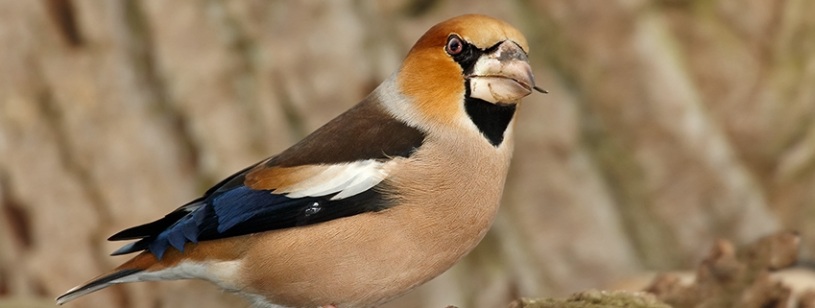
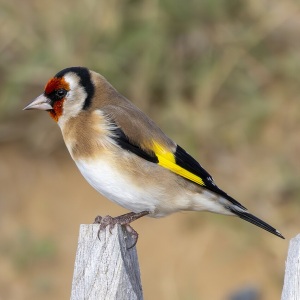
Hawfinch (Coccothraustes coccothraustes) on a branch. · Martin Mecnarowski (http://www.photomecan.eu/) / CC BY-SA 3.0 (http://creativecommons.org/licenses/by-sa/3.0/). Cropped and resized.
The hawfinch is a woodland bird with a large head and a massive bill. It opens hard seeds and fruit stones that many other small birds cannot crack. It occurs year-round in Romania but may move between feeding areas. Much of its time is spent in trees, where it can be difficult to see.
Quick facts
| Common name | Hawfinch |
| Scientific name | Coccothraustes coccothraustes |
| Length | 16–18 cm |
| Weight | 46–72 g |
| Diet | Omnivore, adults feeding predominantly on seeds |
| Conservation status | Least Concern (LC), globally |
| Distribution | Europe, temperate Asia and north-western Africa |
| Habitat | Mainly deciduous woodland and mature wooded areas |
| Family | Fringillidae |
| Reproduction | Usually 3–5 eggs in a tree nest |
| Occurrence in Romania | Resident, with food-related movements |
| Adaptation | Massive bill and strong muscles for opening hard seeds |
- Primary category:Birds
- Explore this animal's categories:Animals of AfricaAnimals of AsiaAnimals of EuropeAnimals of RomaniaAnimals of Romania’s forestsAnimals of Romania’s gardens and parksArboreal animalsBirdsBirds of RomaniaBirds that winter in RomaniaEgg-laying animalsFeathered animalsFlying animalsForest animalsHInsect-eating animalsOmnivoresVertebratesWild animals
Interesting facts
- Hornbeam seeds can be an important food.
- The bill is paler in winter and darker during the warmer season.
- Chicks receive many invertebrates despite the adults’ reputation as seed eaters.
- Winter birds may gather to feed or roost.
Characteristics
A large head, thick neck and relatively short tail produce a compact outline. The conical bill is very broad at its base. Strong head muscles work with it to open hard coverings.
Plumage combines chestnut, warm brown and pale areas, with a black throat patch. Dark wing feathers have bluish reflections and a white band, especially visible in flight. The sexes look similar. Bill colour changes seasonally.
Behaviour
Hawfinches can remain inconspicuous in tree crowns even where present. They also collect fallen seeds before retreating into cover. Their outline and brief movements between branches help reveal them.
Outside breeding they may move in groups. Seed-rich sites attract several birds, and food supply affects winter distribution. Being resident in a country does not mean each individual stays in one patch of trees.
Habitat and distribution
The range extends from Europe to eastern Asia and includes north-western Africa. Romanian breeding habitats are mainly deciduous woodland, including hornbeam and oak woods.
Other mature wooded places may offer food and shelter. Vegetation structure matters more than the mere presence of a few ornamental trees. Birds can also occur in green areas near settlements.
Diet and feeding
Adults eat many seeds, along with buds and flowers. Hornbeam seeds are important in many areas, and hard cherry stones can be cracked to reach the nutritious contents.
The bird positions food within its bill and applies jaw pressure. This gives access to resources unavailable to many smaller-billed birds. During chick rearing, small invertebrates become important nestling food, so seed-eater alone does not describe the full life cycle.
Reproduction and life cycle
A tree nest is built from twigs and lined with finer plant material, often high and hidden by leaves. Pairs nest separately or in small groups.
Females usually lay three to five eggs and undertake most incubation, lasting about 11–13 days. Young remain in the nest for a further 12–13 days while being fed. Removing occupied branches can interrupt breeding before young can leave.
Name and history
The Romanian name refers to its thick bill. Coccothraustes coccothraustes likewise combines Greek roots connected with seeds and breaking.
It belongs to the finch family Fringillidae, whose varied bill shapes reflect different feeding methods.
Conservation and threats
The global category is Least Concern, although regional situations differ. In Britain breeding decline has led to national Red-listing.
Mature woodland and seed-producing trees provide habitat. Reduced invertebrate availability may affect nestlings, and breeding-season forestry can destroy nests. Hawfinches can also be observed in Romania during winter.
Frequently asked questions
Can a hawfinch crack cherry stones?
Yes. Its massive bill and strong head muscles can open hard coverings to reach the seed.
Does it eat only seeds?
No. It uses other foods, and chicks receive many small invertebrates.
Does it leave Romania in winter?
It is mainly resident there, but makes food-related movements and may form groups.
Why does the bill look different between photographs?
Its colour changes seasonally, being paler in winter and darker during the warmer season.