SnakeInteresting facts and information
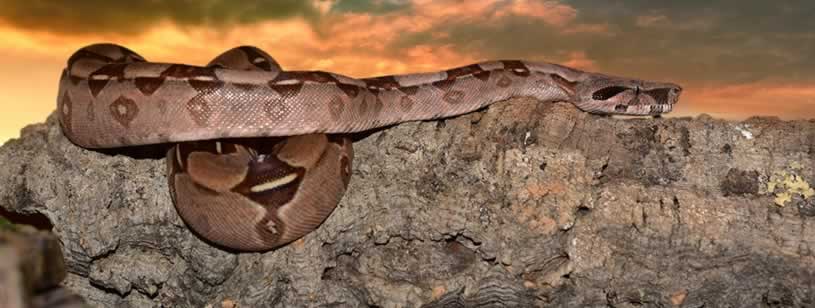
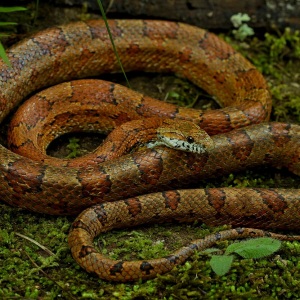
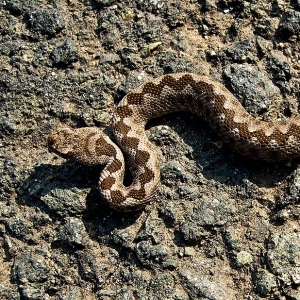
Snakes (Serpentes) are limbless carnivorous reptiles, having an elongated body and flexible scales. They are among the most diverse and widespread groups of reptiles, living in all corners of the world, from the Amazon jungle to hot deserts and underground caves.
Some snakes subdue prey with venom, while others use constriction or swallow small prey directly. Venomous does not always mean medically dangerous to people. Avoid handling an unfamiliar snake and give it space.
In mythology and culture, snakes are considered either symbols of wisdom and rebirth, or dangerous and demonic creatures. Beyond human perceptions, they play an essential role in the ecosystem, controlling populations of rodents and other small animals.
Quick facts
| Common name | Snake |
| Scientific name | Serpentes (suborder of reptiles) |
| Typical lifespan | 5-30 years (depending on the species); some live over 40 years in captivity |
| Maximum speed | Most snakes are slow; the black mamba, one of the fastest, reaches roughly 15-20 km/h in short bursts |
| Length | From about 10 cm (Barbados threadsnake) to over 6 m (reticulated python) |
| Weight | From a few grams to more than 100 kg (green anaconda) |
| Diet type | Carnivore (rodents, birds, eggs, amphibians, fish, other reptiles, insects) |
| Main predators | Birds of prey, mongooses, other snakes, large mammals, humans |
| Conservation status | Varies by species; several snakes face serious conservation threats |
| Geographic distribution | On all continents except Antarctica |
| Habitat | Rainforests, savannas, deserts, mountains, fresh and salt water |
| Social behaviour | Most are solitary except during mating season; some share winter dens |
| Special adaptations | Camouflage and specialised feeding; venom and constriction occur in different groups |
- Primary category:Reptiles
- Explore this animal's categories:
Interesting facts
- Snakes have no eyelids and never blink – Each eye is covered by a clear scale, which is replaced every time the snake sheds its skin.
- Some snakes can sense the heat of their prey – Pit vipers (such as rattlesnakes), pythons and boas have heat-sensing pits that let them "see" warm-blooded animals in the dark.
- The reticulated python is the longest snake – It can grow longer than 6 metres; the longest reliably measured was about 7.5 m.
- The black mamba is one of the fastest snakes – It can move at roughly 15-20 km/h in short bursts.
- Some snakes give birth to live young – In many vipers and boas, the young develop inside the mother's body.
- The green anaconda is the heaviest snake in the world – Big females can weigh more than 100 kg.
- The king cobra builds a nest for its eggs – It is the only snake known to do this, and the female guards the nest.
- The bullsnake can imitate a rattlesnake – It hisses loudly and shakes its tail to scare away predators.
Records and remarkable features
- Very long snakes – Reticulated pythons are among the longest living snakes. Exceptional length reports require reliable measurements.
- Heaviest snake – The green anaconda (Eunectes murinus), which can weigh more than 100 kg.
- Potent venom – The inland taipan (Oxyuranus microlepidotus) has highly toxic venom. Laboratory toxicity does not translate into a dependable number of people killed by one bite.
- One of the fastest snakes – The black mamba (Dendroaspis polylepis), at roughly 15-20 km/h.
- Smallest snake – The Barbados threadsnake (Tetracheilostoma carlae), which is only about 10 cm long.
- Long snakes in Europe – The Caspian whipsnake (Dolichophis caspius) can reach about 2.5 m, and the Aesculapian snake (Zamenis longissimus) about 2 m.
Characteristics
Snakes are highly adaptable reptiles with long, legless bodies and special senses that help them find prey and survive in many environments.
Appearance
- A body covered with scales – Scales protect the body, and wide belly scales grip the ground as the snake moves.
- A forked tongue – Picks up scent particles from the air and the ground and carries them to the Jacobson's organ in the roof of the mouth.
- Curved, sharp teeth – Most snakes have backward-pointing teeth that stop prey from escaping.
- Venom (in venomous species) – Venom glands are connected to special fangs that inject toxins affecting the nervous system, blood or tissues of the prey.
- Constriction – Pythons and boas coil around prey and squeeze, stopping its blood flow.
- Many colours and patterns – Some species are superbly camouflaged, while others have bright colours that warn predators.
Special adaptations
- No eyelids – The eyes are protected by a clear scale, so they are always open.
- Stretchy jaws – Snakes can swallow prey much wider than their head, because their jaw bones are loosely connected by stretchy ligaments.
- Sensing vibrations – Snakes have no external ears, but they have inner ears and pick up vibrations from the ground and low sounds.
- Winter rest – In cold climates, many species go into brumation, a period of inactivity similar to hibernation.
Habits and behaviour
Snakes are mostly solitary animals that spend most of their time hunting, hiding from predators or warming up and cooling down as the temperature changes.
Social behaviour
- Mostly solitary – Most species live alone and meet mainly in the breeding season.
- Shared winter dens – In cold regions, rattlesnakes, garter snakes and some vipers gather in dens to spend the winter, sometimes in their hundreds or thousands.
- Home ranges – Most snakes do not defend territories, but many use the same hunting grounds and shelters year after year.
Defence and survival techniques
- Camouflage – Many species blend in with their surroundings to avoid predators.
- Threat displays – Cobras raise their heads and spread their hoods, and vipers coil and hiss to look more dangerous.
- Mimicry – The harmless milk snake has red, black and yellow bands like the venomous coral snake, which scares away predators (Batesian mimicry).
- Defensive biting – A snake may bite if threatened or unable to escape; bites can be medically serious.
- Playing dead – The hognose snake rolls over, lets its tongue hang out, releases a strong smell and lies still to put off predators.
Habitat and geographic distribution
Snakes live on every continent except Antarctica and in almost every type of habitat, but some islands, such as Ireland, Iceland and New Zealand, have no native land snakes.
| Region | Examples of species | Habitat examples |
|---|---|---|
| North America | Rattlesnakes, coral snakes, garter snakes | Forests, deserts, swamps |
| South America | Green anaconda, coral snakes, lanceheads | Tropical forests, rivers |
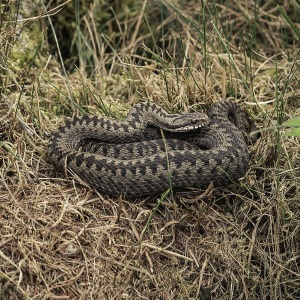
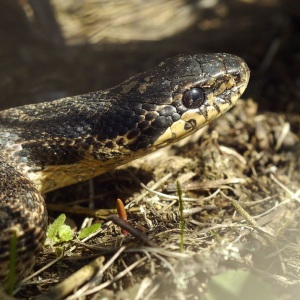
| Europe | Common European adder, grass snake | Temperate forests, meadows, rocky areas |
| Africa | Black mamba, Egyptian cobra, African rock python | Savannas, tropical forests, deserts |
| Asia | King cobra, Russell's viper, reticulated python | Jungles, mountains, rivers |
| Australia | Inland taipan, carpet python | Deserts, tropical forests |
Habitat types
- Rainforests – Anacondas, tree vipers, tree pythons and coral snakes thrive here.
- Deserts and savannas – Black mambas, cobras and horned vipers are adapted to dry conditions.
- Mountains – Some vipers live high in the mountains, where it is cooler.
- Aquatic habitats – Anacondas use freshwater habitats, while most sea snakes live in marine or coastal waters.
Human pressures and threats
- Habitat destruction – Deforestation and farming reduce the places where snakes can live.
- Killing – Many snakes are killed out of fear or superstition, even when they are harmless.
- Hunting for skins and medicine – In some places, snakes are hunted for their skin, meat and organs, which are used in traditional medicine.
- Pet trade – Pythons, boas and other species are often captured for the pet market.
- Climate change – Changing temperatures can affect the winter rest and breeding of snakes.
Diet and feeding
All snakes are carnivores. They hunt in different ways, from using venom to constriction, and depending on the species and habitat they eat a wide range of prey.
What do snakes eat?
| Type of food | Examples of snakes that eat it |
|---|---|
| Rodents (mice, rats, squirrels) | Pythons, vipers, rattlesnakes, rat snakes |
| Birds and eggs | Cobras, tree snakes, egg-eating snakes |
| Fish and amphibians | Anacondas, water snakes, grass snakes |
| Lizards and other snakes | King cobras, kingsnakes, coral snakes |
| Insects and other invertebrates | Small snakes, such as threadsnakes and blind snakes, which eat ants and termites |
| Large animals (deer, pigs, capybaras, caimans) | Green anacondas, reticulated pythons |
Feeding techniques
- Constriction – Pythons and boas wrap their bodies around their prey and squeeze until its blood flow stops.
- Venomous bite – Venom composition and effects vary between snake groups and species.
- Swallowing whole – Snakes cannot chew, so they swallow their prey whole, and strong digestive juices break it down over several days.
- Sit-and-wait ambush – Some species keep still for hours or days, waiting for prey to come to them.
Adapting to the food supply
- Large snakes can go for months without food, thanks to their slow metabolism.
- Some big snakes eat only a few large meals a year.
- Desert snakes eat mainly lizards and rodents, which are common there.
Reproduction and life cycle
Snakes reproduce in different ways: most lay eggs, but some give birth to live young.
| Feature | Details |
|---|---|
| Age at maturity | 1-5 years (depending on the species) |
| Breeding season | Varies with region, species and local seasons |
| Type of reproduction | Egg-laying or live-bearing |
| Eggs or young per breeding | From 1-2 to about 100 |
| Incubation | About 1-3 months (depending on the species) |
| Survival of the young | Juvenile survival varies greatly between species and environments |
| Lifespan | 5-30 years (some over 40 in captivity) |
Types of reproduction in snakes
- Egg-laying – About 70% of snakes, including pythons, cobras and many colubrids, lay eggs. Most leave them, but female pythons coil around their eggs to protect them.
- Eggs kept inside the body – In many vipers, such as rattlesnakes and the European adder, the young develop inside the mother and are born alive.
- Live birth in boas – Boas and anacondas also give birth to live young; carrying the young inside the body protects them from cold and predators.
Breeding and mating
- Males follow the female's scent trail to find her.
- In some species, males wrestle to win the right to mate.
- Fertilisation is internal; males have paired organs called hemipenes.
Survival strategies of the young
- The young are independent from birth; most species give no parental care.
- Their colours help them hide from predators.
- The young of venomous species are dangerous from birth, as they already have working venom.
Name and history
Snakes have been feared, honoured and studied for thousands of years and play an important role in mythology, medicine and science.
Origin of the name
- The word "snake" comes from Old English snaca, a Germanic word linked to crawling; the word "serpent" comes from the Latin serpens, "creeping".
- The scientific name "Serpentes" comes from the Latin verb serpere, "to creep", which is related to the Greek herpein.
Snakes in human history
- Ancient Egypt – The goddess Wadjet, protector of the pharaohs, was shown as a cobra, which also appeared on the royal crown.
- Ancient Greece – Snakes were symbols of healing and were linked with the god Asclepius.
- The Bible – The serpent tempts Eve in the story of Adam and Eve.
- Norse mythology – The giant serpent Jörmungandr was said to encircle the world.
- Mesoamerica – The Aztec god Quetzalcoatl was shown as a feathered serpent, linked with wind, learning and life.
Snakes in folklore
- Romania – In traditional belief, the "house snake" lived under the home and protected the family, so it must never be killed.
- Japan – White snakes are seen as bringers of good luck and wealth, linked with the goddess Benzaiten.
- India – During the festival of Nag Panchami, people honour snakes with offerings of milk and flowers.
Cultural significance and mythology
Snakes have always been mysterious figures in mythology, standing for wisdom, rebirth, danger or supernatural power.
Snakes in mythology and religion
- Ancient Egypt – The cobra goddess Wadjet protected the pharaohs.
- Ancient Greece – The snake was linked with Asclepius, god of healing, and his snake-entwined staff is still a symbol of medicine.
- The Bible and Christianity – The serpent in the Garden of Eden is a symbol of temptation and sin.
- Norse mythology – The giant serpent Jörmungandr encircled the world and will fight the god Thor at Ragnarök.
- Aztec mythology – Quetzalcoatl, the feathered serpent god, was linked with life, knowledge and the winds.
- Hinduism and Buddhism – The nāgas are snake-like beings linked with water, which guard treasures and holy places.
Snake symbols
- The ouroboros – A snake swallowing its own tail, an ancient symbol of eternity and the cycle of life.
- Rebirth – Because snakes shed their skin, they are often symbols of renewal and transformation.
- Danger and temptation – In many stories, snakes stand for hidden danger and deceit.
Conservation status and threats
Snakes live on every continent except Antarctica. Some species face habitat loss, persecution and unsustainable trade.
| IUCN status | Example species | Regions |
|---|---|---|
| Least Concern (LC) | Common European adder (Vipera berus), grass snake (Natrix natrix) | Europe, Asia |
| Vulnerable (VU) | Python molurus (Indian python) | South Asia |
| Vulnerable (VU) | Vipera ursinii (meadow viper) | Europe, Central Asia |
| Critically Endangered (CR) | Bothrops insularis (golden lancehead) | Queimada Grande Island, Brazil |
Main threats
- Deforestation and urban sprawl – Greatly reduce snake habitats.
- Killing – Many snakes are killed out of fear or superstition.
- Hunting for skins and meat – Species such as pythons and cobras are hunted for the fashion industry and traditional medicine.
- Pet trade – Some species are captured and sold illegally as pets.
- Climate change – Affects the winter rest and breeding of snakes.
Conservation work
- Protecting natural habitats – Reserves and national parks protect threatened species.
- Education and awareness – Teaching people about the useful role of snakes, for example in controlling rodents.
- Captive breeding – Some rare species, such as the Antiguan racer and some meadow vipers, are bred or protected to rebuild wild populations.
- International trade controls – The CITES agreement regulates international trade in listed species; implementation is the responsibility of participating countries.
In popular culture
Snakes have inspired many books, films and video games, where they appear either as dangerous monsters or as wise, powerful creatures.
Literature and stories
- The Jungle Book (Rudyard Kipling, 1894) – Kaa, a huge, wise python, is one of Mowgli's mentors.
- Harry Potter (J. K. Rowling, 1997-2007) – The snake Nagini is Voldemort's companion, and Slytherin house has a snake as its emblem.
- The Little Prince (Antoine de Saint-Exupéry, 1943) – The mysterious snake is a symbol of death and return.
Film and animation
- Anaconda (1997) – A giant snake attacks a film crew in the Amazon.
- The Jungle Book (Disney, 1967 and 2016) – Kaa is a hypnotising snake.
- Snakes on a Plane (2006) – A thriller in which venomous snakes are let loose on a passenger plane.
- Rango (2011) – Rattlesnake Jake is a feared outlaw in the Wild West.
Video games
- Snake – The simple game of a growing snake became famous on Nokia mobile phones from 1997.
- Metal Gear Solid – The hero's code name is Solid Snake.
- Resident Evil – Yawn is a giant snake that attacks the players.
The snake as a symbol
- A symbol of medicine – The rod of Asclepius, a snake coiled around a staff, is a worldwide symbol of medicine.
- Coats of arms and logos – The serpent of the Visconti family of Milan appears on the city's arms and on the Alfa Romeo car badge.
- Tattoos and art – Snakes are popular symbols of power, rebirth and protection.