FireflyInteresting facts and information
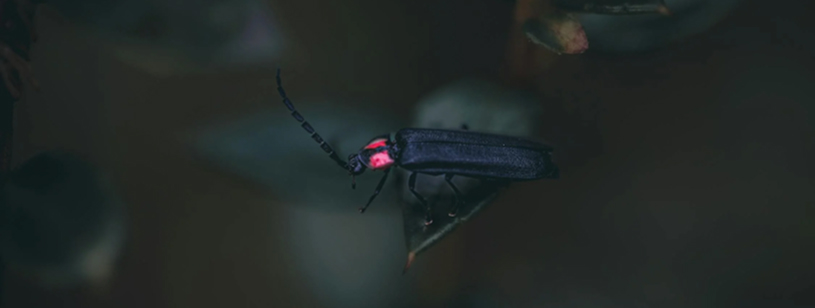
Fireflies are beetles in the family Lampyridae. Many produce light through a chemical reaction and use it to communicate. Not all adult fireflies flash: some species rely on other signals.
Although they are often associated with warm summer nights, fireflies live on every continent except Antarctica. In many places their numbers have fallen in recent decades because of light pollution, pesticides and the loss of natural habitats.
Quick facts
| Common name | Firefly (lightning bug) |
| Scientific name | Lampyridae (family) |
| Typical lifespan | Usually 1-2 years, mostly as a larva; adults live a few weeks |
| Length | About 5-25 mm |
| Weight | About 0.01-0.05 g |
| Diet type | Larvae are predators (snails, slugs, worms); many adults eat little or nothing |
| Main predators | Birds, bats, frogs, spiders, ants, other fireflies |
| Conservation status | Assess separately by species and population; different taxa and regions have different needs |
| Distribution | Every continent except Antarctica; most diverse in warm, humid regions |
| Living environment | Forests, meadows, wetlands, gardens |
Interesting facts
- "Cold light" - Firefly light is made by a chemical reaction and gives off very little heat, unlike an ordinary light bulb.
- Each species has its own signal - Males and females recognise each other by the colour, length and rhythm of their flashes.
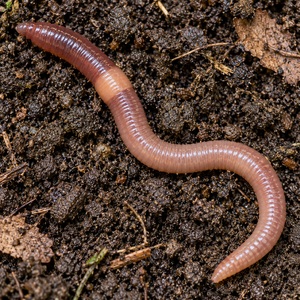
- Predatory larvae - Firefly larvae hunt snails, slugs and worms, injecting them with digestive juices that paralyse them.
- Females of some Photuris fireflies mimic the signals of other fireflies and can attract them as prey.
- Not all fireflies glow as adults - Some species, especially those active by day, do not glow as adults and find mates mainly by scent.
Records and remarkable features
- Fireflies are beetles in the family Lampyridae. Many produce light through a chemical reaction and use it to communicate. Not all adult fireflies flash: some species rely on other signals.
Physical characteristics and adaptations
Fireflies are soft-bodied beetles, with special organs that produce light.
Key physical adaptations
- A long, soft body - Fireflies have softer bodies than most beetles.
- Elytra - Hardened front wings that protect the delicate flying wings underneath.
- Light organs - Special cells called photocytes, usually in the last segments of the abdomen, produce light by bioluminescence.
- Dark colours - Most fireflies are black or brown, often with red, orange or yellow markings on the shield behind the head.
- Large eyes - Help them see the flashes of other fireflies in the dark.
- Wingless females - In some species, such as the European glow-worm, females have no wings and look like larvae; they glow on the ground to attract flying males.
How does bioluminescence work?
Fireflies produce light through a chemical process in which the enzyme luciferase catalyses the oxidation of a molecule called luciferin, generating a cold light emission.
The reaction needs:
- Luciferin (the light-producing molecule)
- Luciferase (the enzyme that drives the reaction)
- Oxygen (required for the reaction)
- Adenosine triphosphate (ATP) (the energy molecule)
Firefly light is produced by a chemical reaction and releases little heat. An exact universal conversion efficiency is not assigned here.
Habits and behaviour
Most fireflies are active at dusk and at night. They spend the day hidden in vegetation and use their light after sunset to find partners.
Daily life
- Alone or in large numbers - Many species live scattered, but some gather in places where thousands flash together.
- Low flight - Males of many species fly slowly, often only a metre or two above the ground, searching for females.
- Choosy partners - Males and females exchange flashes to recognise members of their own species.
Light signals and communication
- Species-specific signals - The rhythm, length and colour of the flashes differ between species.
- Males fly and flash - Females usually stay on vegetation and answer with their own flashes.
- Synchronous flashing - In some places, such as the Great Smoky Mountains in the USA and mangroves in Southeast Asia, thousands of fireflies flash in unison.
Defence strategies
- Bad taste - Many fireflies contain defensive chemicals, called lucibufagins in some species, that make them distasteful to birds and other predators.
- Light as a warning - The glow of larvae and adults may warn predators that they are distasteful.
- Hiding by day - Their dark colours help them stay hidden when they are not active.
Habitat and geographic distribution
Fireflies live on every continent except Antarctica, but they are most diverse in warm, humid regions.
Distribution context
| Region | Population information | Trends |
|---|---|---|
| North America | Many species, especially in the east | Declining locally; affected by light pollution |
| Europe | Fewer species, including the common glow-worm | Declining in many areas |
| Southeast Asia | Many species | Synchronous fireflies attract tourists |
| South America | Very many species | Tropical forests support great diversity |
| Africa and Australia | Present in many regions | Not well known |
Habitat types
- Forests - Many species live in damp forests with dense vegetation.
- Grassland and wetlands - Fireflies like tall grass, marshes and damp soil, where larvae find snails and worms.
- Gardens and parks - Some species live near people, where there is enough cover and food.
Environmental change
- Light pollution - Artificial lights make it harder for fireflies to see each other's signals.
- Habitat loss - Building, farming and draining wetlands reduce the places where fireflies can live.
- Pesticides - Insecticides and slug pellets kill fireflies and the snails and slugs their larvae eat.
- Climate change - Higher temperatures and droughts can harm larvae, which need damp conditions.
Diet and feeding
The diet of fireflies depends on their life stage. Larvae are predators, while adults of many species eat little or nothing.
What do fireflies eat?
| Life stage | Food group |
|---|---|
| Larvae | Snails, slugs, earthworms, insect larvae |
| Adults | Some eat nectar or pollen, Photuris females eat other fireflies, and many adults do not feed at all |
Feeding methods
- Larvae are active predators - They bite snails and worms and inject digestive juices that paralyse and partly digest the prey.
- Adults may visit flowers - Some species take nectar or pollen.
- Some adults do not eat at all - They live only a few weeks, using energy stored during the larval stage.
Reproduction and life cycle
Fireflies go through complete metamorphosis: egg, larva, pupa and adult.
Breeding season
- In temperate regions, adults appear mainly in early summer and are active after sunset.
- Males send out light signals specific to their species.
- Females answer with their own flashes to show they are ready to mate.
Egg laying and larvae development
| Stage | Duration | Details |
|---|---|---|
| Egg | About 2-4 weeks | Laid in damp soil, moss or leaf litter |
| Larva | Usually 1-2 years | Grows through several moults and hunts snails and worms |
| Pupa | About 1-3 weeks | The stage in which the larva turns into an adult |
| Adult | A few weeks | Mates and lays eggs, then dies |
Survival strategies
- Glowing larvae - All known firefly larvae can glow, probably as a warning that they taste bad.
- Species-specific signals - Help adults find partners of their own species.
- Damp places - Eggs are laid in damp places, where larvae will find food.
Name and history
Origin of the name
- The English name "firefly" simply combines "fire" and "fly", although fireflies are beetles, not flies.
- The family name Lampyridae comes from the Greek lampein, "to shine".
- In other languages: American English - "lightning bug"; French - "luciole"; Spanish - "luciérnaga"; Romanian - "licurici".
Taxonomic classification
| Classification | Name |
|---|---|
| Kingdom | Animalia |
| Phylum | Arthropoda |
| Class | Insecta |
| Order | Coleoptera |
| Family | Lampyridae |
Evolution and fossils
- There are about 2,000 known species of fireflies.
- Fossil fireflies have been found in amber about 99 million years old, from the Cretaceous period.
- Bioluminescence probably evolved first in larvae as a warning to predators and was later used by adults to find mates.
Cultural significance and mythology
Fireflies have long been seen as symbols of mystery, hope and the beauty of summer nights, and they appear in the traditions of many cultures.
Fireflies in myths and symbolism
- Japan - Fireflies (hotaru) are sometimes linked with the souls of the dead, and firefly viewing in early summer is a long tradition.
- China - An old belief held that fireflies were born from rotting grass; a famous story tells of a poor scholar who studied at night by the light of fireflies in a bag.
- Summer symbol - In Europe and North America, fireflies are a symbol of warm summer nights and childhood.
Fireflies in popular traditions
- In many countries, children catch fireflies in jars and then let them go.
- In Romania, fireflies (licurici) are part of the familiar magic of summer nights in the countryside.
Conservation status and threats
Firefly populations are declining in many parts of the world, mainly because of light pollution, habitat loss and pesticides.
Main pressures
- Light pollution - Artificial light interferes with the signals they use to find partners.
- Habitat loss - Deforestation, the spread of cities and the destruction of wetlands.
- Pesticides - Insecticides and slug pellets kill fireflies and their prey.
- Climate change - Changes in temperature and rainfall affect their life cycle.
- Tourism - Too many visitors at firefly sites can trample larvae and females.
Protection measures
- Reducing artificial light in natural areas, so fireflies can communicate.
- Protecting wetlands and meadows that are essential for their life cycle.
- Limiting the use of pesticides in gardens and on farmland.
- Firefly-friendly gardens - Leaving long grass, logs and leaf litter, and switching off outdoor lights at night.
Fireflies in popular culture
Fireflies in literature
- Japanese haiku - Poets such as Matsuo Bashō and Kobayashi Issa wrote haiku about fireflies.
- Children's books - Fireflies often appear as small helpers that light the way.
- In Romanian stories and poems, fireflies are part of the magic of summer nights.
Fireflies in movies and animations
- "Grave of the Fireflies" (1988) - A moving Studio Ghibli film about two children in wartime Japan, in which fireflies are an important symbol.
- "The Princess and the Frog" (2009) - Ray, a friendly Cajun firefly, helps the main characters.
- "Firefly" (2002) - A science-fiction television series named after its spaceship.
Fireflies as symbol and inspiration
- Music - "Fireflies" (2009) by Owl City was a number one hit in the USA.
- Hope and beauty - Fireflies are used as symbols of hope, guidance and short-lived beauty.