Brown marmorated stink bugHalyomorpha halys — habitat, diet and reproduction
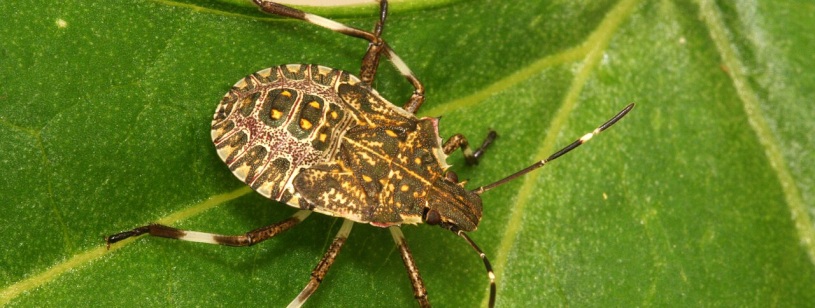
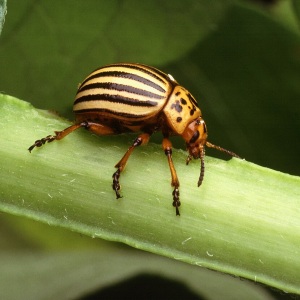
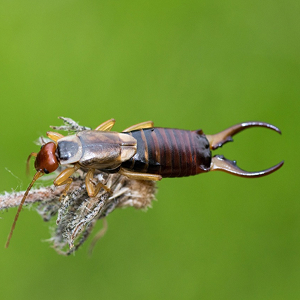
Brown marmorated stink bug (Halyomorpha halys) on a leaf. · Yerpo / CC BY-SA 3.0 (https://creativecommons.org/licenses/by-sa/3.0). Cropped and resized.
The brown marmorated stink bug is a brown, shield-shaped insect native to China, Japan and Korea. It has reached Europe and Romania in recent years and multiplied quickly. In autumn it enters homes in large numbers to find a warm place for winter, and when touched it releases an unpleasant smell.
Quick facts
| Common name | Brown marmorated stink bug |
| Scientific name | Halyomorpha halys |
| Lifespan | Several months; overwintering adults live up to a year |
| Length | About 1.7 cm |
| Diet | Herbivore: sap of fruit, seeds and leaves |
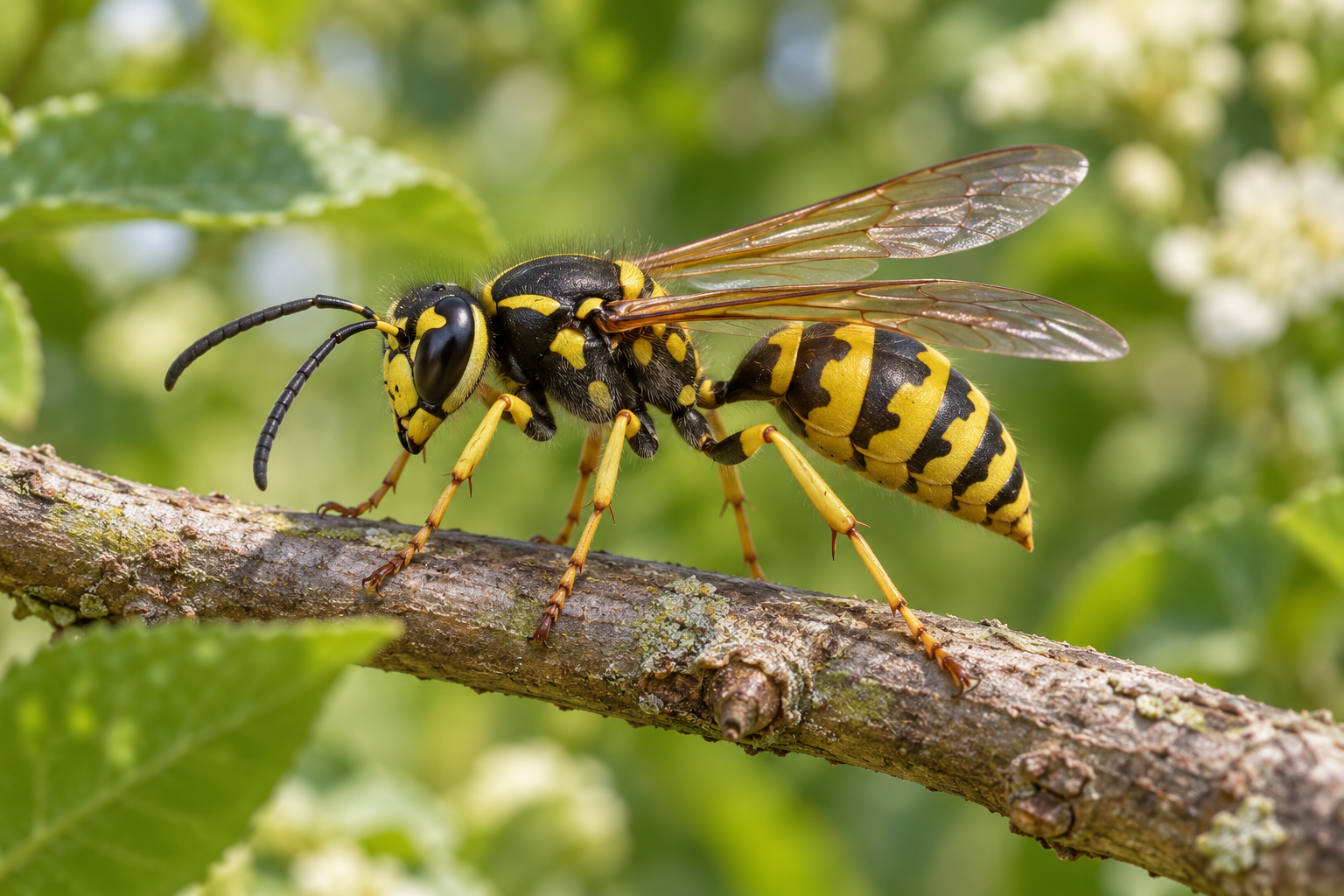
| Predators | Birds, spiders, parasitic wasps |
| Conservation status | Not evaluated; invasive species |
| Distribution | Native to East Asia; now in Europe and North America |
| Habitat | Orchards, gardens, crops; homes and buildings in winter |
| Family | Pentatomidae |
| Defence | Unpleasant smell from special glands |
Interesting facts
- The brown marmorated stink bug does not bite people or spread disease.
- A female can lay up to 400 eggs in her lifetime.
- In winter, hundreds can gather in the same loft or window frame.
- Its antennae have white bands, which distinguish it from native stink bugs.
Characteristics
The stink bug has a flat, shield-shaped body about as wide as it is long. It is brown, marbled with lighter and darker spots.
The antennae have white bands, and the edges of the abdomen show alternating light and dark bands. Young nymphs are rounder and more brightly coloured, with red and black.
Behaviour
In summer it lives in orchards, gardens and crops, piercing fruit and seeds. In autumn, as days cool, adults fly to buildings and look for cracks to enter.
Indoors they stay inactive over winter in lofts, behind frames or in walls. On warm winter days or in spring they wake and appear on windows. When crushed or disturbed, they release a strong smell.
Habitat and distribution
The species is native to China, Japan, Korea and Taiwan. It was accidentally carried to the United States in the 1990s and to Europe with goods shipments.
In recent years it has spread in Romania, especially in towns and areas with orchards and vineyards.
Diet and feeding
The stink bug feeds on plant sap, piercing fruit such as apples, pears, peaches and grapes, as well as maize, soybeans and vegetables.
Its feeding leaves spots and deformities on fruit, making them unsellable, so it causes major agricultural damage. It is related to the bed bug but does not feed on blood.
Reproduction and life cycle
The female lays eggs in clusters of about 28 on the underside of leaves. Eggs are pale green and turn white.
Nymphs hatch and moult five times before becoming adults, in about 35–45 days in warm weather. Warm regions may have several generations a year.
Name and history
The scientific name Halyomorpha halys was given in the nineteenth century. The English name “stink bug” refers to the smell from its glands.
Some people say the smell resembles coriander. Stink bugs also use similar substances to communicate with each other.
Conservation and threats
The brown marmorated stink bug is an invasive species and a major orchard pest. Researchers are testing Asian parasitic wasps that attack its eggs as a natural control.
At home, the best approach is to seal cracks around windows and doors and fit screens. Bugs indoors can be vacuumed up or put outside without crushing them.
Frequently asked questions
Is the stink bug dangerous?
Not to people. It does not bite or spread disease, but it smells and damages orchards.
Why do stink bugs come indoors?
In autumn they seek a warm, sheltered place for winter and enter through cracks around windows and doors.
How do you get rid of them indoors?
Seal cracks, fit window screens and vacuum them up without crushing them.
Why does it smell?
Its glands release a foul-smelling substance when touched or alarmed, as a defence.