ImpalaInteresting facts and information
The impala (Aepyceros melampus) is a slender antelope of eastern and southern Africa. It lives in grassland and woodland habitats, feeds on grasses and leaves, and is prey for several large carnivores. Fast running and powerful leaps help it escape danger. Related profile: Animals of Africa.
Impalas live in herds whose composition changes with the season and breeding activity. Habitat loss and hunting affect some populations, even though the species is widespread.
Quick facts
| Common name | Impala |
| Scientific name | Aepyceros melampus |
| Typical lifespan | About 12-15 years in the wild, up to about 20 years in captivity |
| Maximum speed | Fast runner; speeds depend on conditions and measurement |
| Height at shoulder | About 75-95 cm |
| Length | About 120-160 cm |
| Weight | About 45-75 kg (males), 30-50 kg (females) |
| Diet type | Herbivore (grass, leaves, shoots, pods, fruit) |
| Main predators | Lions, leopards, cheetahs, hyenas, African wild dogs and crocodiles |
| Conservation status | Least Concern (IUCN); the black-faced impala is Vulnerable |
| Distribution | Eastern and southern Africa: Kenya, Tanzania, Zambia, Botswana, Zimbabwe, South Africa, Namibia and others |
| Living environment | Savannas, open woodland and woodland–grassland edges |
- Primary category:Mammals
- Explore this animal's categories:
Interesting facts
- Incredible jumps - An impala can leap about 3 metres high and up to about 10 metres long, helping it escape predators and clear bushes and obstacles.
- A flexible diet - Impalas are among the antelopes that both graze on grass and browse on leaves, switching with the seasons, which helps them survive in many conditions. Related profile: Antelope.
- Escape tactics - When chased, impalas run in zigzags, change direction suddenly and leap in all directions, which confuses predators.
- Changing herds - Impalas live in groups of females and young, groups of young males called bachelor herds, and territorial males, and these groups change with the seasons.
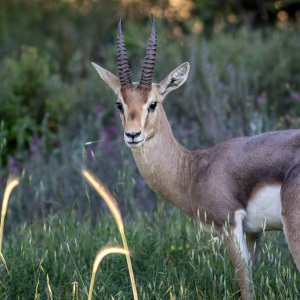
- Lyre-shaped horns - Only males have horns, which are ridged and shaped like a lyre and can be up to about 90 cm long; they use them in fights during the breeding season.
- Freezing - Sometimes, instead of running away at once, impalas stand completely still for a few seconds, watching and listening to work out where the danger is.
- Shaping the savanna - By eating grass and the leaves of bushes, impalas help keep woodland edges open.
- Drinking - Impalas usually need to drink every day in the dry season, but when plants are green they get much of their water from their food.
Records and remarkable features
- Running and jumping – Impalas combine fast running with high and long leaps when escaping predators; this is not a measured ranking of antelopes.
- Large herds - In the dry season, impalas may gather in herds of more than 100 animals, which gives them better protection against predators.
- Reproduction – Female impalas generally give birth to a single calf. Reproductive success depends on habitat, weather and individual condition.
- Flexible feeding – Impalas both graze on grasses and browse on leaves.
- Scent glands – Glands on the hind legs produce scent used in communication.
Physical characteristics and adaptations
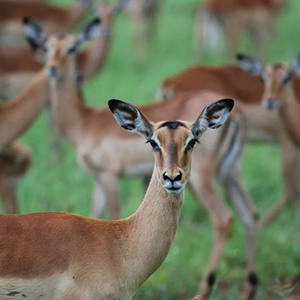
The impala (Aepyceros melampus) is a medium-sized antelope with a slender body, long legs and muscles built for speed and agility. Its short coat is reddish-brown on the back, paler on the sides and white on the belly, with black marks on the tail, the backs of the thighs, the ear tips and the hind legs.
Key physical adaptations
- Strong, springy legs - Slim but muscular legs let impalas run fast and make huge leaps to escape predators.
- Lyre-shaped horns (males only) - Males have ridged horns up to about 90 cm long, used in fights for dominance.
- A light, slender body - Built for speed and quick turns.
- Scent glands - Glands on the hind legs, under tufts of black hair, release a scent that may help impalas keep together when fleeing.
- Black "M" marking - The black stripes on the back of the thighs and tail form an "M" shape, which may help herd members follow each other.
- A white tail - When alarmed, impalas raise their tail and show its white underside as a warning.
Habits and behaviour
Impalas are very social and live in herds whose size and make-up change with the season and the food supply.
Social structure
- Female herds - Groups of about 10 to more than 50 females and their young, with no single leader, which give each other protection.
- Territorial males - In the breeding season, strong males defend territories and try to keep groups of females inside them, fighting off rivals.
- Bachelor herds - Young males and males without a territory live in separate groups until they are strong enough to win a territory.
Defence and escape techniques
- Zigzag leaps - Impalas do not run in a straight line; they change direction suddenly and leap in all directions, making them hard to catch.
- Freezing - Impalas may keep still for a moment to locate the danger before deciding to flee.
- Group alarms - When an impala spots a predator, it gives a loud snort, and the whole herd runs, sometimes "exploding" in all directions.
Daily and seasonal activity
- Active by day - Impalas feed mainly in the morning and late afternoon and rest in the shade during the hottest hours; they also feed at night.
- Seasonal changes - In the dry season, they eat more leaves, pods and fruit, and they stay closer to water.
Habitat and geographic distribution
Impalas live in the savannas and open woodlands of eastern and southern Africa, especially where woodland meets grassland.
Regional distribution
| Region | Population information |
|---|---|
| Kenya, Tanzania, Uganda | Common |
| Zambia, Zimbabwe, Botswana | Healthy populations |
| South Africa | Very common in national parks and reserves |
| Northwestern Namibia and southwestern Angola | Home of the rare black-faced impala |
Habitat types
- Savannas - Areas of grass with scattered trees, ideal for grazing and for spotting predators.
- Open woodland - Areas with more bushes and trees, which provide leaves to eat all year.
- Near water - Impalas usually live within reach of rivers, lakes or waterholes.
See other animals that start with the letter "A." Related profile: Animals beginning with A.
Climate and habitat change
- Long droughts reduce grazing and browsing, affecting the food supply.
- Farms and settlements break up habitats and limit the movements of herds.
- Changes in rainfall could shift the areas where impalas can live.
Diet and feeding
The impala is an adaptable herbivore that changes its diet with the seasons and the food available. This flexibility lets it thrive in many habitats, even in difficult conditions.
What do impalas eat?
| Food group | Examples and context |
|---|---|
| Grasses | Fresh green grass, especially in the rainy season |
| Leaves | Leaves of acacias, shrubs and bushes |
| Shoots and twigs | Young shoots and tender twigs |
| Flowers, pods and fruit | Acacia pods, flowers and fallen fruit |
| Juicy plants | Plants with a lot of water, in the dry season |
Feeding adaptations
- A mixed diet - Impalas switch between grass and leaves depending on what is available, which makes them resilient to seasonal changes.
- Choosing carefully - They pick the most nutritious parts of plants and avoid poor-quality food.
- Water from food - When plants are green, impalas get much of their water from their food, but in the dry season they need to drink regularly.
Reproduction and life cycle
Impalas breed quickly, which helps keep their populations stable despite many predators.
Breeding season
- In southern Africa, the rut takes place mainly at the end of the rainy season and the start of the dry season (about April to June).
- During the rut, males roar and grunt loudly, chase females and fight rivals for the right to hold a territory.
Pregnancy and birth
| Feature | Details |
|---|---|
| Pregnancy | About 6.5-7 months |
| Young per birth | 1 calf |
| Birth season | In southern Africa, mainly at the start of the rainy season (November - December), when food is plentiful |
| Place of birth | The female goes to a hidden place to give birth |
Raising the young
- Newborn calves stay hidden in vegetation for the first days to avoid predators.
- The mother returns regularly to nurse her calf, but does not stay close, so as not to attract predators.
- After a few days to weeks, the calves join the herd and gather in "nurseries" with other calves of the same age.
- Young females usually stay with their mother's herd, while young males are driven out and join bachelor herds.
Survival
- Many calves are killed by predators in their first months, but births are timed so that predators cannot eat them all at once.
- Impalas that survive can live about 12-15 years in the wild and up to about 20 years in captivity.
Name and history
Origin of the name
- The word "impala" comes from Zulu, a language of southern Africa.
- The scientific name Aepyceros melampus means "high-horned, black-footed", referring to the male's tall horns and the black tufts on the hind legs.
Taxonomic classification
| Classification | Name |
|---|---|
| Kingdom | Animalia |
| Phylum | Chordata |
| Class | Mammalia |
| Order | Artiodactyla |
| Family | Bovidae |
| Subfamily | Aepycerotinae |
| Genus | Aepyceros |
| Species | Aepyceros melampus |
Fossils and evolution
- Fossils of impala-like antelopes date back about 5-6 million years, and impalas have changed little since then.
- Unlike many antelopes that became specialised for narrow habitats, the impala has stayed versatile and adaptable throughout its history.
See the list of all wild animals.
Cultural significance and mythology
Impalas are among the most familiar animals of the African savanna. Although they play a smaller role in myths than lions or elephants, they appear in African art, stories and everyday life. Related profile: Elephant.
- A common sight - Impalas are so common in many parks that safari guides jokingly call them "the McDonald's of the bush", because of the black "M" on their rear and because so many predators eat them.
- Names - In Swahili, the impala is called swala pala.
- A symbol of grace - Because of their elegant leaps, impalas stand for speed, grace and alertness.
Conservation status and threats
The impala is widespread, but conservation needs differ between populations and regions.
Conservation status
| Population | Status | Population information |
|---|---|---|
| Common impala (Aepyceros melampus melampus) | The species is listed as Least Concern by the IUCN | Common in many protected areas |
| Black-faced impala (Aepyceros melampus petersi) | Listed as Vulnerable | A few thousand animals in Namibia and Angola |
Major threats
- Habitat loss - Farming and urban growth reduce the savannas where impalas live.
- Poaching - Although the impala is not threatened, it is hunted illegally for meat in some regions.
- Competition with livestock - Cattle and goats compete with impalas for food and water.
- Droughts and climate change - Long droughts reduce food and water and can cause local populations to fall.
Protection measures
- National parks and reserves - Many impalas live in protected areas such as Kruger National Park (South Africa) and the Serengeti (Tanzania).
- Protecting the black-faced impala - In Namibia, black-faced impalas have been moved to protected areas to increase their numbers.
- Hunting rules - In many countries, impala hunting is strictly controlled, so that populations stay healthy.
In popular culture
Because of its elegance and speed, the impala has become a symbol of agility and survival.
Symbols and brands
- The Chevrolet Impala - The famous American car, first made in 1958, was named after the antelope.
- The Atlas Impala - A South African military jet aircraft was named after the impala.
Films and television
- Nature documentaries - Impalas often appear in wildlife films, usually escaping from lions, leopards or cheetahs.
- Supernatural (2005-2020) - The heroes of this TV series drive a black 1967 Chevrolet Impala, which became one of the show's best-known "characters".
Did you know? About impala
- The common name impala comes from a southern African language; no exact translation is asserted here.
- Impalas can make powerful leaps while escaping predators.
- An impala can leap about 3 metres high and about 10 metres long.
- Only male impalas have horns, which are shaped like a lyre.
- Impalas both graze on grass and browse on leaves.
- In southern Africa, most impala calves are born within a few weeks of each other, at the start of the rainy season.
- Impalas have black tufts of hair over scent glands on their hind legs.
- The black-faced impala of Namibia and Angola is a rare subspecies.
- The Chevrolet Impala car was named after this antelope.