WaspInteresting facts and information
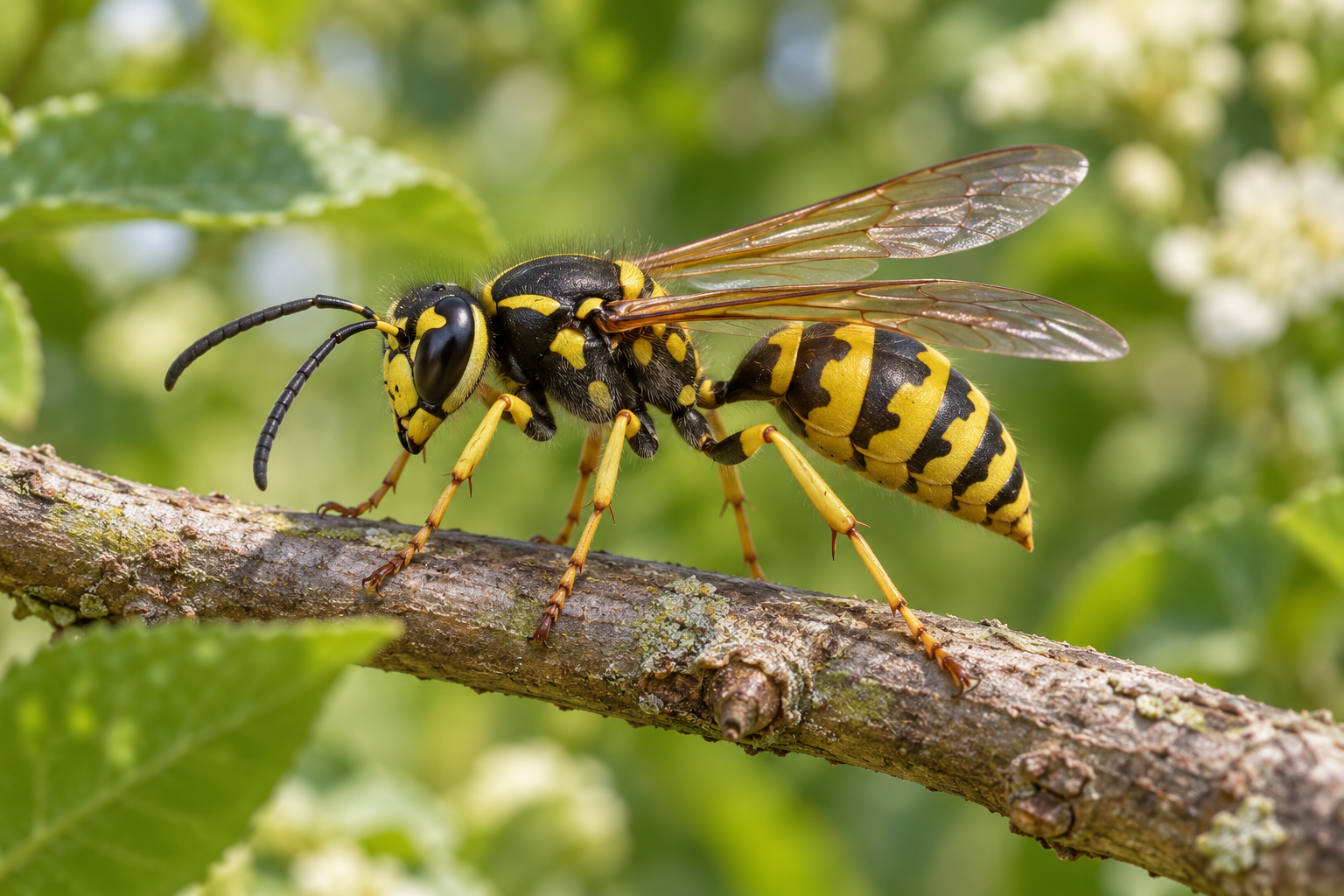
Wasps are insects in the order Hymenoptera. They include many solitary and social species, with different diets and ways of nesting. Some are predators or parasitoids of other insects, and some also contribute to pollination.
Wasp species differ greatly. Some catch other insects for their larvae, some develop in or on animal hosts, and some adults visit flowers.
Wasps contribute to food webs and can help control other insects. Introduced species can also harm local ecosystems.
Quick facts
| Common name | Wasp |
| Scientific name | Hymenoptera: several wasp families, including Vespidae |
| Typical lifespan | Lifespan varies with species, sex and caste; worker and queen examples do not apply to every wasp |
| Maximum speed | Varies with species; large hornets are strong, fast fliers |
| Size | From about 0.14 mm (fairyflies) to about 5 cm (giant hornets and tarantula hawks) |
| Weight | Body mass varies greatly between species; many wasps weigh far less than a gram |
| Diet | Adults mainly eat nectar and other sugary foods; larvae of many species are fed on insects |
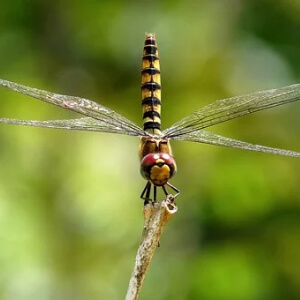
| Main predators | Birds (such as bee-eaters and honey buzzards), badgers, spiders, dragonflies |
| Conservation status | Assess separately by species and population; regional trends and needs differ |
| Geographic distribution | Worldwide except Antarctica |
| Habitat | Forests, gardens, grasslands, deserts, towns |
| Social behaviour | Most species are solitary; others form organised colonies |
| Special adaptations | Sting (in females of many species), strong jaws, a keen sense of smell, paper nests |
- Primary category:Insects
- Explore this animal's categories:Animals of AfricaAnimals of AsiaAnimals of AustraliaAnimals of EuropeAnimals of North AmericaAnimals of South AmericaArthropodsEgg-laying animalsFlying animalsInsect-eating animalsInsectsInsects of RomaniaInvertebratesNectar-feeding animalsOmnivoresPollinating insectsPredatory animals of RomaniaVenomous animalsW
Interesting facts
- Many female stinging wasps can sting repeatedly. Males do not sting, and many wasp groups lack a defensive sting.
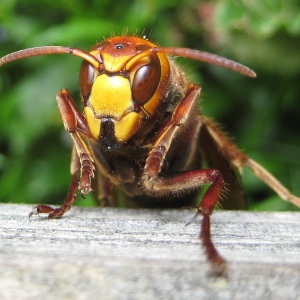
- The northern giant hornet (Vespa mandarinia) is a large social wasp. It should not be described as the largest of every wasp group.
- Parasitoid wasps develop in or on a host that is eventually killed. Host use differs between species.
- Wasps communicate through pheromones - If a social wasp is attacked near its nest, it can release a chemical alarm signal that calls nestmates to defend the colony.
- Wasps were the first papermakers - Social wasps build their nests from paper made of chewed wood fibres mixed with saliva.
Records and remarkable features
- Wasps are insects in the order Hymenoptera.
- The smallest known insects are tiny wasps called fairyflies: the male of Dicopomorpha echmepterygis is only about 0.14 mm long, and Kikiki huna, about 0.15 mm long, is one of the smallest flying insects.
- Tarantula hawks, large wasps that hunt tarantulas, have one of the most painful stings of any insect.
- Fig wasps and fig trees depend on each other: the tiny wasps pollinate the figs and raise their young inside them.
Characteristics
Wasps are agile insects with streamlined bodies, keen senses and, in many species, a sting. These features make them effective hunters, occasional pollinators and fierce defenders of their nests.
Appearance
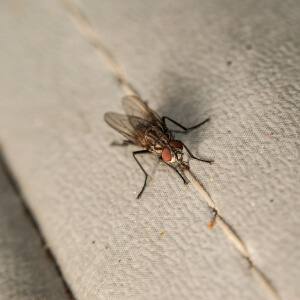
- A body in three parts - Head, thorax and abdomen, joined by a narrow "wasp waist".
- Thin, see-through wings - Wasps have two pairs of wings; the front wings are larger than the hind wings, and the two are hooked together in flight.
- Long, flexible antennae - Used to detect smells and air movements.
- Long, slender legs - Help them land, walk and carry prey.
- Varied colours - Many are yellow and black, but others are red, brown, black or metallic.
Special adaptations
- A sting is present in females of some wasp groups. It is derived from the egg-laying apparatus; males do not have one.
- Strong jaws (mandibles) - Used to catch and cut up prey and to scrape wood for nest-building.
- A tough exoskeleton - Protects them from injury and drying out.
Habits and behaviour
Wasp behaviour differs greatly between species: some are social and live in organised colonies, while most are solitary.
Social behaviour
- Social wasps (e.g. Vespula, Polistes) live in colonies with a queen, workers and, later in the season, males; yellowjacket nests can hold thousands of wasps, while paper wasp nests are much smaller.
- Solitary wasps (e.g. Sphex, Ammophila) do not form colonies; each female hunts alone and feeds her young with paralysed insects.
- In temperate social wasps, only the young queens survive the winter - In spring, each queen builds a new nest and starts a new colony.
- Workers rarely breed - They find food, build the nest and defend it.
Defence and aggression
- Some social wasps defend their nests. A universal aggression ranking against all bees is not justified.
- Alarm pheromones - If a wasp is attacked near the nest, it releases a chemical signal that calls other members of the colony.
- Repeated stings - Female social wasps can sting several times, injecting venom that causes pain, swelling and, in some people, allergic reactions.
Habitat and geographic distribution
Wasps are very adaptable insects found on every continent except Antarctica, in many different habitats.
| Region | Preferred habitat | Example species |
|---|---|---|
| Europe | Gardens, forests, towns | Vespula vulgaris, Polistes dominula |
| North America | Open land, farms, forests | Vespula pensylvanica, Dolichovespula maculata |
| Asia | Forests, mountains | Vespa mandarinia (northern giant hornet) |
| Africa | Savannas, dry areas | Belonogaster juncea |
| Australia | Towns, forests | Vespula germanica (introduced) |
| South America | Tropical forests, plains | Polybia paulista |
Types of habitat
- Forests and woodland edges - Good places for nests hanging from branches.
- Towns - Wasps quickly adapt to buildings, bridges and roofs.
- Fields and gardens - Where they find nectar, fruit and other insects.
- Deserts and dry areas - Specialised species survive in harsh climates.
Human impact and threats
- Invasive wasps - Introduced species, such as the German wasp (Vespula germanica) in Australia and New Zealand, harm native insects and birds.
- Pesticides and pollution - Damage natural habitats and reduce wasp populations.
- Climate change - Rising temperatures help invasive species, such as the yellow-legged hornet (Vespa velutina), spread in Europe.
Diet and feeding
Adult wasps mainly eat sugary foods, such as nectar and fruit juice, while the larvae of many species are fed on insects. This makes wasps important predators of pests and occasional pollinators.
What do wasps eat?
| Type of food | Who eats it | Benefits |
|---|---|---|
| Nectar | Adults | Main source of energy |
| Fruit juice, tree sap and honeydew | Adults, especially in late summer | Extra sugar for an active life |
| Insects (flies, caterpillars, aphids, spiders) | Larvae, fed by adults | Protein needed for growth |
| Meat and carrion | Collected by some social wasps for their larvae | Extra protein |
| Honey and bee larvae | Some hornets and wasps that raid beehives | Sugar and protein |
Feeding methods
- Hunting - Social wasps catch insects in the air or on leaves.
- Paralysing prey - Solitary hunting wasps sting insects or spiders to paralyse them and then store them as live food for their larvae.
- Feeding the larvae - Workers chew up insects into a paste for the larvae, and in return the larvae release a sugary liquid that the adults drink.
- Raiding beehives - Some wasps and hornets enter beehives to steal honey or catch bees and their larvae.
Reproduction and life cycle
Some temperate social wasps have annual colonies. Tropical and solitary species can have different life cycles.
| Feature | Details (temperate social wasps) |
|---|---|
| Lifespan | About 2-4 weeks (workers), up to about 1 year (queen) |
| Type of reproduction | Egg-laying |
| Eggs per queen | Thousands in one season |
| Development | About 3-6 weeks from egg to adult |
| Colony organisation | Queen, workers and males |
Stages of the life cycle
- Spring - The queen that survived the winter builds a small nest and lays her first eggs.
- Summer - The first workers emerge and take over the work of the colony, which grows quickly.
- Autumn - New queens and males are produced. After mating, the males die, and the young queens look for safe places to spend the winter.
- Winter - The old colony dies, and the cycle starts again the next spring.
Mating and reproduction
- Males do not survive long - Their only role is to mate with young queens.
- The queen stores sperm and lays fertilised eggs, which become females (workers or new queens), and unfertilised eggs, which become males.
- The eggs are laid in paper cells - The nest is made of chewed wood fibres mixed with saliva.
Name and history
People have known and studied wasps since ancient times, fearing their stings but admiring their skill as hunters and builders.
Origin of the name
- The English word "wasp" comes from Old English wæsp, related to the Latin vespa; both probably come from an ancient root meaning "to weave", after the wasp's woven paper nest.
- The family Vespidae includes social wasps such as yellowjackets (Vespula), paper wasps (Polistes) and hornets (Vespa), as well as solitary potter wasps.
Wasps in history and science
- Aristotle (384-322 BC) described wasps and their nests in his writings on animals.
- In 1719, the French scientist René-Antoine de Réaumur noticed that wasps made paper from wood and suggested that people could do the same; today, most paper is made from wood.
- In many wasps, unfertilised eggs develop into males. This should not be presented as automatically producing female-only colonies.
- Modern studies show that wasps are important for controlling crop pests, and tiny parasitoid wasps are widely used in biological pest control.
Wasps in folklore
Cultural significance and mythology
- Ancient Greece - In 422 BC, the playwright Aristophanes wrote The Wasps, a comedy that compared bad-tempered jurors to angry wasps.
- The "wasp waist" - The narrow waist of wasps gave its name to a fashion for very tight waists, especially in the 19th century.
- A symbol of danger - Because of their sting and their black-and-yellow warning colours, wasps are often seen as symbols of anger and danger.
Conservation status and threats
Although many wasp species are common and some are invasive, others are threatened by habitat destruction and climate change.
| Situation | Examples | Regions |
|---|---|---|
| Not threatened | Most common species | Worldwide |
| Declining | Some parasitoid and solitary wasps | Europe, North America |
| Invasive | Vespa velutina (yellow-legged hornet) | Europe, the USA |
Main threats
- Habitat destruction - Deforestation and urban growth reduce the natural areas where wasps nest.
- Pesticides - Farm chemicals harm many wasps, including useful predators and parasitoids.
- Climate change - Rising temperatures change when and where wasps can breed.
- Destruction of nests - People often destroy wasp nests, including those of harmless or useful species.
Conservation efforts
- Controlling invasive species - Measures are being taken to control the yellow-legged hornet in Europe; in the USA, the northern giant hornet was found in 2019 and declared eradicated in 2024.
- Protecting useful wasps - Wildlife-friendly farming helps predatory and parasitoid wasps.
- Public education - Campaigns explain the useful role of wasps in nature to reduce unnecessary killing.
In popular culture
- The Wasps (Aristophanes, 422 BC) - One of the oldest surviving comedies, with a chorus of old men dressed as wasps.
- The Wasp (Marvel Comics) - A superheroine, first created in 1963, who can shrink and fly; a new Wasp stars in the film Ant-Man and the Wasp (2018).
- The Wasp Factory (Iain Banks, 1984) - A dark Scottish novel whose title comes from a strange device used to kill wasps.