Bristlenose plecoAncistrus — habitat, diet and reproduction
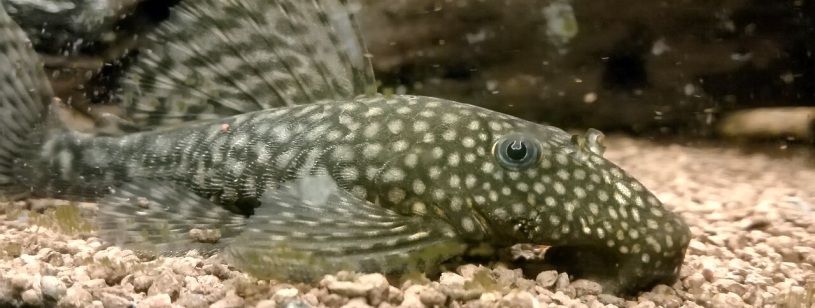
Bristlenose pleco (Ancistrus sp.) on an aquarium floor. · Júlio Reis / CC BY-SA 4.0 (https://creativecommons.org/licenses/by-sa/4.0). Cropped and resized.
Ancistrus is a genus of small South American catfish, very popular in aquariums as algae-eaters. Their sucker-like mouth lets them cling to glass, stones and roots. Males have soft, branching bristles on the snout, which give the English name “bristlenose”.
Quick facts
| Common name | Bristlenose pleco, bushynose |
| Scientific name | Ancistrus (genus) |
| Lifespan | About 5–10 years in aquariums |
| Length | Usually 10–15 cm |
| Diet | Omnivore, mainly algae and plants; also animal food |
| Predators | Larger fish and waterbirds in the wild |
| Conservation status | Most species not assessed or Least Concern |
| Distribution | South America, especially the Amazon basin |
| Habitat | Flowing rivers with stones and fallen wood |
| Family | Loricariidae |
| Reproduction | Eggs in cavities, guarded by the male |
- Primary category:Fish
- Explore this animal's categories:
Interesting facts
- Its body is covered in bony plates rather than ordinary scales.
- The male guards the eggs and young alone in a cavity.
- Bristlenose plecos also rasp soft wood, so driftwood in the aquarium is useful.
- Aquarium forms include albino, golden and long-finned varieties.
Characteristics
Ancistrus has a body flattened underneath, covered in bony plates, and a broad head. It is usually dark brown or grey with pale spots and has a tall, sail-like dorsal fin.
The mouth is underneath, like a sucker, with small teeth that rasp algae. Males have longer and more numerous snout bristles than females, which have them only around the mouth or not at all.
Behaviour
Bristlenose plecos are most active at dusk and night, hiding by day under roots, stones or in small caves.
They are peaceful with other fish, but males defend their hiding place against other males. Their sucker mouths let them cling to surfaces even in fast water.
Habitat and distribution
The genus lives in South America and southern Central America, especially the Amazon and Orinoco basins, in clean, oxygen-rich rivers with stony beds and fallen wood.
Almost all Ancistrus sold in shops are captive-bred and suit community aquariums.
Diet and feeding
Their main food is algae and plant debris rasped from stones and wood. They also eat soft wood, insect larvae and other small invertebrates.
In aquariums algae are not enough; they need sinking tablets, blanched vegetables such as courgette or cucumber, and a piece of driftwood.
Reproduction and life cycle
The male chooses a cavity such as a cave or pipe. The female lays a cluster of sticky orange eggs there and leaves.
The male guards, fans and cleans the eggs for about a week and stays near the young for a few days after hatching.
Name and history
The name Ancistrus comes from the Greek “ankistron”, hook, after small hook-like spines on the cheeks.
Aquarists often call them “plecos”, a name used for several sucker-mouthed catfish. Ancistrus is a better choice for small tanks than pleco species that can exceed 40 cm.
Conservation and threats
Few Ancistrus species have been assessed for the Red List. Most do not seem threatened, but some live in small areas and are sensitive to pollution and dams.
Because nearly all traded Ancistrus are captive-bred, the aquarium trade has little effect on wild populations. Like all aquarium fish, they must never be released into natural waters.
Frequently asked questions
How big does a bristlenose pleco get?
Usually 10–15 cm, much smaller than other “plecos”.
What does it eat?
Algae, blanched vegetables, sinking tablets and soft wood.
How do you tell males from females?
Males have more, longer and branching snout bristles; females have few or none.
Does it clean the aquarium by itself?
It eats algae but does not replace tank cleaning and water changes.