PiranhaInteresting facts and information
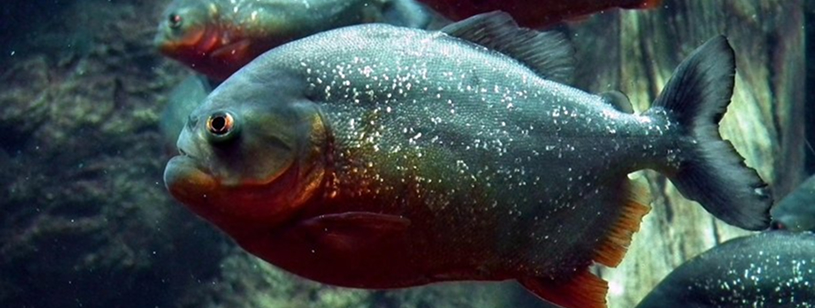
Piranhas are freshwater fishes native to South America. Their diets vary between species and can include fish, invertebrates and plant material. Their reputation in fiction does not describe every species or encounter.
Despite their image as "killer monsters", piranhas are mostly opportunistic feeders. Many eat fish, fins, insects, crustaceans, fruit and seeds, although some species, such as the red-bellied piranha (Pygocentrus nattereri), can quickly strip a carcass in groups.
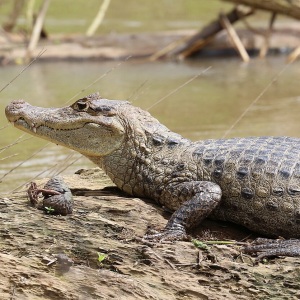
Piranhas are important in South American rivers, where they eat dead and weak animals and are food for caimans, otters, river dolphins and people.
Quick facts
| Common name | Piranha |
| Scientific name | Serrasalmidae: piranhas, including Pygocentrus and Serrasalmus |
| Typical lifespan | Often about 8-10 years in the wild; up to about 20 years in captivity |
| Maximum speed | Varies with species or individual, distance and conditions |
| Size | Usually about 15 - 35 cm; up to about 50 cm |
| Weight | From a few hundred grams to about 3.5 kg |
| Diet type | Carnivore / Omnivore (fish, fins, crustaceans, insects, carrion, fruit, seeds) |
| Main predators | Caimans, giant otters, river dolphins, herons, large fish, people |
| Conservation status | Assess separately by species and population; different taxa and regions have different needs |
| Distribution | South America (Amazon, Orinoco, Paraná-Paraguay and São Francisco river basins) |
| Habitat | Rivers, lakes, floodplains and flooded forests |
- Primary category:Fish
- Explore this animal's categories:
Interesting facts
- A very strong bite - The black piranha (Serrasalmus rhombeus) can bite with a force about 30 times its body weight, one of the strongest bites of any fish relative to its size.
- Noisy fish - Red-bellied piranhas make barking, drumming and croaking sounds, especially when they compete for food or warn rivals.
- Plant-eating relatives - Some close relatives of piranhas, such as pacus, eat mainly fruit, seeds and plants.
- Fast eaters - A shoal of red-bellied piranhas can strip a carcass very quickly, which has fed their fearsome reputation.
- An exaggerated reputation - Piranhas rarely attack people; most bites happen when fish are crowded in shrinking pools or attracted by fish waste.
- Surviving the dry season - When rivers fall, piranhas can survive crowded together in pools and lakes until the floods return.
Records and remarkable features
- Piranhas are freshwater fishes native to South America. Their diets vary between species and can include fish, invertebrates and plant material. Their reputation in fiction does not describe every species or encounter.
- Piranhas replace their teeth in batches, losing and regrowing the teeth of one side of the jaw at a time.
Characteristics
Piranhas are deep-bodied, muscular fish with very sharp teeth and powerful jaws. Their size and colours vary between species.
Main physical characteristics:
| Characteristic | Details |
|---|---|
| Body shape | Deep, flattened from side to side |
| Size | Usually about 15-35 cm; up to about 50 cm in the largest species |
| Weight | From a few hundred grams to about 3.5 kg |
| Colour | Silver, grey, black, often with red or orange belly (depending on species) |
| Fins | Forked tail; a small fatty adipose fin on the back |
| Teeth | Triangular, razor-sharp and interlocking, like a saw blade |
| Jaws | Short and very powerful |
| Senses | Good smell and hearing; they react quickly to blood and splashing |
Special adaptations:
- A powerful bite - Strong jaw muscles give piranhas a very strong bite for their size.
- Interlocking teeth - The upper and lower teeth fit together like scissors and cut flesh cleanly; lost teeth are replaced.
- Colour changes - Young piranhas are often spotted and silvery, while adults of many species are darker, with red or orange tints.
- Quick bursts - Piranhas are not long-distance swimmers, but they can dart forward very quickly.
Habits and behaviour
Piranhas are opportunistic fish that eat living prey, dead animals and, in some species, plant matter. Many live in shoals, mainly for protection.
Social behaviour:
- Shoals - Many piranhas live in shoals, which protect them from predators; they do not always hunt together.
- Safety in numbers - Shoaling helps protect them from caimans, giant otters, river dolphins and birds.
- Dry season - When water levels fall and fish are crowded, piranhas can become more aggressive.
Feed and hunting methods:
- Opportunistic feeders - They eat fish, crustaceans, insects, fruit, seeds and carrion.
- Fin and scale biters - Some piranha species bite pieces of fins and scales from other fish.
- Feeding frenzies - Red-bellied piranhas (Pygocentrus nattereri) can gather around a carcass and strip it quickly.
- Ambush - Some species hide in vegetation and attack passing prey.
Defence and survival strategies:
- Fast escapes - Piranhas dart away in short bursts when threatened.
- Shoaling - Fish in the middle of a shoal are safer than those on the edge.
- Sounds - Their barks and drumming may warn other piranhas.
Habitat and geographic distribution
Piranhas are freshwater fish of South America. They live in rivers, lakes and flooded forests.
Habitats:
| Habitat | Prevalent regions |
|---|---|
| Amazon River | Brazil, Peru, Colombia, Bolivia |
| Orinoco River | Venezuela, Colombia |
| Paraguay and Paraná rivers | Brazil, Paraguay, Argentina, Bolivia |
| Lakes, floodplains and swamps | The Amazon basin, the Pantanal |
Geographical distribution:
- The Amazon - The Amazon basin has the greatest number of piranha species.
- The Orinoco - Species such as Pygocentrus cariba live in Venezuela and Colombia.
- Southern South America - Some species live in the Paraná and Paraguay rivers and in the Pantanal wetland.
- Outside South America - Released aquarium piranhas are sometimes found elsewhere, so their sale is banned in many US states.
Impact of climate change and human activities:
- Habitat loss - Deforestation, dams and long droughts change rivers and floodplains.
- Warmer water - Higher temperatures change the behaviour and feeding of fish.
- The aquarium trade - Piranhas are caught for aquariums in some areas.
- Fishing - Piranhas are caught and eaten in many parts of South America.
Diet and feeding
Piranhas are opportunistic feeders. Many species eat both animal food and plant matter.
Food types consumed:
| Food type | Examples |
|---|---|
| Fish and aquatic invertebrates | Small fish, fish fins and scales, crustaceans, snails |
| Other small animals | Frogs, birds or small mammals that fall into the water |
| Carcasses | Dead animals, including large ones such as capybaras or cattle |
| Fruit and seeds | Fruit and seeds that fall into flooded forests |
| Insects | Aquatic insects and their larvae |
Method of feeding:
- Ambush - Some hide among plants and attack quickly.
- Feeding in groups - When food is scarce, many may feed together on a carcass.
- Scavenging - They often eat dead or dying animals, helping to clean the water.
- Diets vary across the family Serrasalmidae, which includes piranhas and related fishes. A plant-eating relative should not automatically be described as a carnivorous piranha.
Studies suggest that piranhas live in shoals mainly to protect themselves from predators, not to hunt in packs.
Reproduction and life cycle
Piranhas usually breed in the rainy season, when rivers flood and there is plenty of food for the young.
Life cycle stages:
| Stage | Approximate duration | Characteristics |
|---|---|---|
| Spawning | Seasonal (rainy season) | The female lays up to a few thousand eggs in a nest among plants or on the bottom. |
| Incubation | About 2-3 days | A parent, often the male, guards the eggs until they hatch. |
| Larval stage | About 1-2 weeks | The larvae feed on tiny animals in the water. |
| Juvenile | Months | Young piranhas eat small invertebrates and the fins of other fish. |
| Sexual maturity | About 1-2 years | The fish become able to reproduce. |
| Lifespan | Often about 8-10 years in the wild; up to about 20 years in captivity | Depends on the species and conditions. |
Reproductive behaviour:
- Pairs - In red-bellied piranhas, a pair clears a nest site and the female lays eggs there.
- Parental care - The parents guard the eggs and chase away other fish.
- Rainy season breeding - High water brings more food and shelter for the young.
Thanks to their many eggs and fast growth, piranhas can recover quickly when conditions are good.
Name and history
Piranhas have been known for a long time to the Indigenous peoples of South America, who use them as food and use their teeth as tools.
Origin and etymology of the name:
- "Piranha" - The name comes from the Tupi language and is usually explained as "tooth fish" or "cutting fish".
- Scientific names - Piranhas belong to genera such as Pygocentrus, Serrasalmus and Pristobrycon.
- Other names - In Spanish-speaking countries, piranhas are often called caribes or pirañas.
Taxonomic classification:
| Taxonomic category | Name |
|---|---|
| Kingdom | Animalia |
| Phylum | Chordata |
| Class | Actinopterygii |
| Order | Characiformes |
| Family | Serrasalmidae |
| Genera | Pygocentrus, Serrasalmus, Pristobrycon |
Piranha in history and culture:
- Indigenous peoples - Piranha jaws and teeth have been used as cutting tools, for example to cut hair or sharpen arrow tips.
- Theodore Roosevelt - In his book "Through the Brazilian Wilderness" (1914), the former US president described piranhas stripping a cow, a scene that greatly increased their fame.
- Food - Piranhas are eaten in many parts of South America, for example in piranha soup.
Piranhas have often been presented as monsters, but they are important members of South American river ecosystems.
Cultural significance and mythology
Piranhas are well known in South America as both food and dangerous fish, and around the world they have become a symbol of danger.
Piranha in mythology and popular beliefs:
- Tools and ornaments - Piranha teeth and jaws are used by some Indigenous peoples as tools and in decorations.
- Folk beliefs - In some regions, piranha soup is believed to give strength, though there is no evidence for this.
- Fishermen's caution - Local fishermen know when and where piranhas may bite and avoid bathing near fish waste or in crowded dry-season pools.
Piranha symbolism:
- Danger and aggression - Piranhas are a worldwide symbol of danger and ferocity.
- Teamwork - Their feeding frenzies make them a symbol of a group acting together.
- Nature's cleaners - They are also seen as useful scavengers that help keep rivers clean.
Conservation status and threats
Most piranha species have not been assessed by the IUCN, and widespread species such as the red-bellied piranha are common. Habitat loss could affect some species in the future.
Conservation status
| Species | Status |
|---|---|
| Red-bellied piranha (Pygocentrus nattereri) | Widespread and common |
| Black piranha (Serrasalmus rhombeus) | Widespread in the Amazon and Orinoco basins |
| San Francisco piranha (Pygocentrus piraya) | Found only in the São Francisco River basin in Brazil |
Main threats:
- Habitat destruction - Deforestation and dams change rivers and floodplains.
- River pollution - Mining, pesticides and other pollution harm fish in parts of South America.
- Fishing - Piranhas are caught for food and the aquarium trade.
- Climate change - Droughts and changes in flooding can affect breeding.
Conservation efforts:
- Research - Scientists study the effects of dams, pollution and climate change on river fish.
- Fishing rules - Some countries limit fishing during breeding periods.
- Education - Campaigns try to correct the exaggerated image of piranhas and protect their habitats.
Piranhas are not currently in danger, but the health of their rivers is important for their future.
In popular culture
Piranhas are often shown in films, books and games as fierce, dangerous predators.
Piranha in literature:
- "Through the Brazilian Wilderness" (Theodore Roosevelt, 1914) - His dramatic account made piranhas famous worldwide.
- Nature books - Piranhas are popular subjects of books about the Amazon.
- Horror stories - In horror fiction, piranhas are often shown as unstoppable killers.
Piranha in cinematography and television:
- "Piranha" (1978) - Joe Dante's horror film, followed by "Piranha 3D" (2010) and "Piranha 3DD" (2012).
- "You Only Live Twice" (1967) - The James Bond villain Blofeld keeps piranhas in a pool.
- Nature documentaries show piranhas more realistically, as shy shoaling fish.
Piranha in video games:
- "Super Mario" games - The famous Piranha Plant enemy takes its name from the fish.
- Many adventure games include piranhas as dangers in rivers.
Piranha as a cultural symbol:
- Sport - Some sports teams use the piranha as a symbol of aggression and determination.
- Souvenirs - Dried piranhas and their teeth are sold as souvenirs in South America.
- Language - In several languages, "piranha" is used for a greedy or aggressive person.