SawfishInteresting facts and information
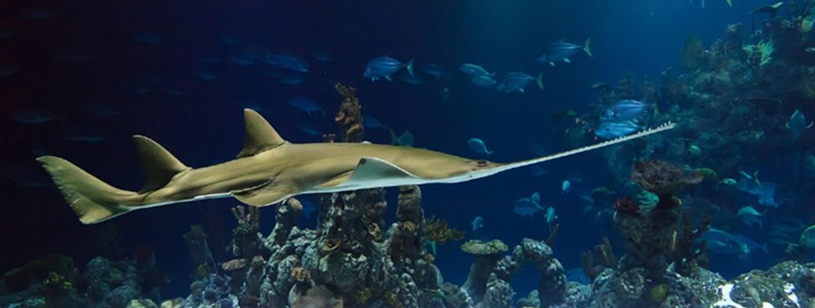
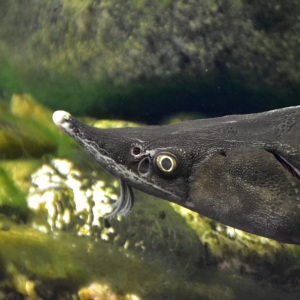
Sawfish (Pristidae) are rays with a long, flattened snout edged with tooth-like structures. They use this sensitive snout to detect and capture prey. Sawfish are different from sawsharks.
With their saw, sawfish can sense the electric fields of hidden prey and stun fish with fast sideways strikes.
Sadly, sawfish are among the most threatened fish in the world because of fishing, bycatch in nets and the loss of their coastal habitats.
Quick facts
| Common name | Sawfish |
| Scientific name | Pristidae |
| Typical lifespan | About 30 - 50 years |
| Maximum speed | Varies with species or individual, distance and conditions |
| Size | Adults usually about 3 - 6 metres; up to about 7 metres |
| Weight | Up to several hundred kilograms |
| Diet type | Carnivore (fish, crustaceans, cephalopods) |
| Main predators | Large sharks, crocodiles, humans |
| Conservation status | All five species are threatened; three are Critically Endangered (IUCN) |
| Distribution | Tropical and warm coastal waters of the Atlantic, Indian and Pacific Oceans; some rivers and lakes |
| Habitat | Shallow coastal waters, mangroves, estuaries, rivers |
- Primary category:Fish
- Explore this animal's categories:
Interesting facts
- A multi-purpose "saw" - Sawfish use their long snout, called a rostrum, to slash at fish and to stir up the bottom to uncover hidden prey.
- Sensing electric fields - The saw is covered in tiny sense organs (ampullae of Lorenzini) that detect the weak electric fields of prey, even in murky water.
- From the sea into rivers - Some species, such as the largetooth sawfish (Pristis pristis), can live in fresh water and have been found far up rivers and in lakes.
- Rays, not sharks - Although they look like sharks, sawfish are rays: their gill slits are on the underside of the body.
- Giants - The largest sawfish can reach about 7 metres in length.
Records and remarkable features
- Sawfish (Pristidae) are rays with a long, flattened snout edged with tooth-like structures. They use this sensitive snout to detect and capture prey. Sawfish are different from sawsharks.
- Virgin births - Scientists discovered that some female smalltooth sawfish in Florida had produced young without mating, the first time this was found in a wild vertebrate.
Characteristics
Sawfish have a long, flat snout with tooth-like structures along each side, like a saw blade. They use this unique organ to find and catch prey and to defend themselves.
Main physical characteristics:
| Characteristic | Details |
|---|---|
| Body shape | Long and shark-like, with a flattened head and a saw-like snout |
| Size | Adults usually about 3-6 metres; up to about 7 metres |
| Weight | Up to several hundred kilograms |
| Colour | Grey, brown or greenish on the back, pale underneath |
| Skeleton | Cartilaginous, as in sharks and other rays |
| Dorsal fins | Two large dorsal fins |
| Gills | On the underside of the body, as in other rays |
| Snout ("saw") | Covered with electrical sense organs and edged with tooth-like structures |
Special adaptations:
- A hunting tool - Sawfish swing their saw sideways to stun or injure fish and then pick them up from the bottom.
- Electrical sense - Ampullae of Lorenzini on the saw detect the electric fields of other animals.
- Living in fresh water - Some species can control the salt balance of their bodies and live in rivers and lakes.
- Defence - A swing of the saw can drive away predators such as sharks.
Habits and behaviour
Sawfish usually live alone and spend much of their time near the bottom in shallow coastal waters, estuaries and rivers.
Social behaviour:
- Mostly solitary - Sawfish usually hunt and travel alone.
- Gatherings - Several sawfish may be found in the same area at certain times, for example in nursery areas.
- No territory - They do not defend territories but prefer shallow water with sandy or muddy bottoms.
Feed and hunting methods:
- Carnivores - They feed on fish, shrimps, crabs and other bottom-dwelling animals.
- Sensing prey - Using the sense organs on their saw, they find prey even in dark or muddy water.
- Slashing and stunning - They swing their saw quickly from side to side, hitting fish.
- Eating - Once the prey is stunned, they pin it to the bottom and swallow it whole.
Defence and survival strategies:
- Camouflage - Their colours help them blend in with the bottom.
- Using the saw - Against a predator, they can swing the saw hard.
- Shallow nurseries - Young sawfish live in very shallow water and mangroves, where large sharks cannot easily follow.
Habitat and geographic distribution
Sawfish live in warm coastal waters, lagoons, mangroves and estuaries, and some species also move into large rivers and lakes.
Habitats:
| Habitat | Prevalent regions |
|---|---|
| Shallow coastal waters and mangroves | Florida, northern Australia, West Africa, South and Southeast Asia |
| Lagoons and estuaries | Coasts of Africa, Asia, Australia and the Americas |
| Rivers and lakes | For example, northern Australian rivers, the Amazon basin and Lake Nicaragua |
Geographical distribution:
- Atlantic, Indian and Pacific Oceans - Sawfish live in tropical and warm temperate waters.
- Rivers - The largetooth sawfish can travel far up rivers, for example in South America and northern Australia.
- Shrinking range - Sawfish have disappeared from the waters of many countries where they were once common.
Impact of climate change and human activities:
- Habitat loss - Clearing of mangroves, coastal building and dams destroy nursery areas.
- Overfishing - Sawfish are caught for their fins, meat and saws, and they easily get tangled in nets.
- Pollution - Pollution can harm sawfish in coastal waters and rivers.
Diet and feeding
The sawfish is a predator that uses its sense organs and fast strikes of its saw to catch prey. The saw helps it both to find food hidden in the sand and to stun fish.
Food types consumed:
| Food type | Examples |
|---|---|
| Small fish | Mullet, herrings, sardines and other schooling fish |
| Crustaceans | Shrimps, small crabs |
| Cephalopods | Squid, octopus |
| Bottom invertebrates | Marine worms, molluscs |
| Carrion | Dead or injured fish |
Method of feeding:
- Finding prey - Ampullae of Lorenzini on the saw sense the electric fields of prey hidden in the sand.
- Striking - The sawfish swings its saw quickly through schools of fish, stunning or injuring them.
- Digging - It can also use its saw to stir up the bottom and uncover crabs and shrimps.
As large predators, sawfish help keep coastal food webs in balance.
Reproduction and life cycle
Sawfish grow slowly, mature late and have few young, which makes them very vulnerable to fishing.
Life cycle stages:
| Stage | Approximate duration | Characteristics |
|---|---|---|
| Mating | Seasonal | Fertilisation takes place inside the female's body. |
| Pregnancy | About 5-12 months, depending on species | The embryos develop inside the mother, fed by their yolk sacs. |
| Birth | Usually every one or two years | A female gives birth to about 1-20 pups, each about 60-90 cm long. |
| Juvenile | Several years | Young sawfish grow up in shallow nursery areas. |
| Sexual maturity | About 7-10 years or more | Sawfish can breed when they are about 3-4 metres long. |
| Lifespan | About 30-50 years | They grow slowly and have relatively few young in their lives. |
Reproductive behaviour:
- Internal fertilisation - As in other sharks and rays, the male fertilises the eggs inside the female.
- Live birth - The female gives birth to live young; their saws are soft and covered with a sheath at birth, so they do not injure their mother.
- Slow growth - Young sawfish take many years to reach adult size.
Because they reproduce slowly and mature late, sawfish populations recover very slowly, and all species are now threatened.
Name and history
Sawfish have been known for thousands of years to coastal peoples in tropical regions, and their saws have been used as tools, weapons and ritual objects.
Origin and etymology of the name:
- "Sawfish" - The name comes from its long snout lined with tooth-like structures, like a saw blade.
- Scientific name - Pristidae comes from the Greek pristis, meaning "saw".
- Not sawsharks - Sawsharks are true sharks with a similar saw, but they are smaller and have gills on the sides of the head.
Taxonomic classification:
| Taxonomic category | Name |
|---|---|
| Kingdom | Animalia |
| Phylum | Chordata |
| Class | Chondrichthyes (cartilaginous fish) |
| Order | Rhinopristiformes |
| Family | Pristidae |
Sawfish in history and culture:
- The Aztecs - Sawfish saws have been found among the offerings buried at the Templo Mayor in Mexico City.
- West Africa - In the Bijagós Islands of Guinea-Bissau, sawfish masks have been used in traditional ceremonies.
- Collections - Sawfish saws were popular as souvenirs and curiosities in European collections.
Sawfish have a long history with people, but today they are among the most threatened marine fish.
Cultural significance and mythology
Sawfish have been important to many coastal and river peoples, who have used their saws and given them a place in their stories and ceremonies.
Sawfish in mythology and popular beliefs:
- Northern Australia - Sawfish appear in Aboriginal stories and art, and in some stories they helped shape rivers.
- West Africa - Sawfish masks and imagery are part of the traditions of some coastal peoples.
- Papua New Guinea - Sawfish saws and images have been used in ritual objects and decorations.
- Traditional medicine - In some regions, parts of sawfish have been used in traditional remedies, which adds to the pressure on them.
Sawfish symbolism:
- Strength - Its powerful saw makes it a symbol of strength and defence.
- Guardian of waters - In some cultures, it is seen as a guardian of rivers and coasts.
- Endangered wildlife - Today, the sawfish is a symbol of how quickly overfishing can push large fish to the edge of extinction.
Conservation status and threats
Sawfish are among the most threatened fish in the world. Three of the five species are listed as Critically Endangered by the IUCN, and the other two as Endangered.
Conservation status
| Species | Status (IUCN) |
|---|---|
| Largetooth sawfish (Pristis pristis) | Critically Endangered |
| Smalltooth sawfish (Pristis pectinata) | Critically Endangered |
| Green sawfish (Pristis zijsron) | Critically Endangered |
Main threats:
- Fishing - Sawfish are caught for their fins, meat and saws.
- Bycatch - Their long saw gets tangled easily in fishing nets, and they are difficult to release without injury.
- Habitat destruction - Clearing of mangroves, coastal building and dams have destroyed many nursery areas.
- Pollution - Pollution of coastal waters and rivers harms sawfish.
- Trade - Saws are sold as souvenirs and curiosities, and fins are traded.
Conservation efforts:
- Legal protection - Catching sawfish is illegal in many countries, and international trade is banned under CITES.
- Protected areas - Protected areas in Australia, the USA and other countries help the remaining populations.
- Safe release - Fishermen are taught how to release accidentally caught sawfish safely.
- Awareness - International Sawfish Day, on 17 October, raises awareness of their plight.
Sawfish have disappeared from many parts of their former range, and strong protection is needed for them to survive.
In popular culture
Sawfish are less famous than sharks or whales, but their unusual shape makes them popular in aquariums, museums and documentaries.
Sawfish in literature:
- Nature books - Sawfish appear in books about unusual marine animals.
- Children's books - Their strange shape makes them popular in illustrations of sea creatures.
Sawfish in cinematography and television:
- Nature documentaries show sawfish hunting and the efforts to save them.
- Shark programmes often include sawfish because of their shark-like appearance.
Sawfish as a cultural symbol:
- Museum objects - Old sawfish saws are displayed in many museums.
- Science - Researchers study the sawfish's saw to understand how it senses and catches prey.