GoatInteresting facts and information
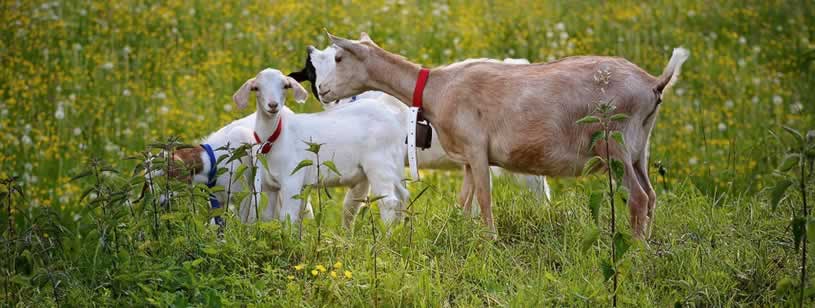
The domestic goat (Capra aegagrus hircus, also called Capra hircus) is raised for products including milk, meat and fibre. It is related to wild goats such as the bezoar and the Alpine ibex. Chamois belong to Rupicapra, a different genus, and should not be listed as species of Capra.
Wild goats such as the Alpine ibex (Capra ibex) belong to Capra. The chamois (Rupicapra rupicapra) belongs to a different genus. Domestic goat breeds differ in size, coat, milk production and care needs.
Quick facts
| Common name | Goat |
| Scientific name | Domestic goat: Capra aegagrus hircus or Capra hircus, depending on taxonomic treatment |
| Typical lifespan | 10-18 years (depending on breed and conditions) |
| Maximum speed | A reliable maximum for all goats is not given here |
| Height | 50 - 120 cm at the withers |
| Length | 100 - 170 cm (including tail) |
| Weight | 20 - 140 kg, depending on breed |
| Diet type | Herbivore (leaves, grass, shoots, tree bark) |
| Main predators | Wolves, lynxes, jackals, eagles, humans |
| Conservation status | Domestic animal; wild relatives and rare domestic breeds are assessed separately |
| Main species | Domestic goat (Capra aegagrus hircus or Capra hircus); wild goat (Capra aegagrus); Alpine ibex (Capra ibex). Chamois (Rupicapra rupicapra) belong to a different genus. |
| Distribution | Europe, Asia, Africa, the Americas, Australia |
| Habitat | Mountains, grasslands, forests, semi-dry regions |
- Primary category:Mammals
- Explore this animal's categories:
Interesting facts
- Goats can read human facial expressions - Studies have shown that goats prefer to approach photos of happy human faces rather than angry ones.
- They have rectangular pupils - These give them a very wide field of view, which helps them spot predators quickly.
- They are excellent climbers - Goats can climb steep, rocky slopes, and in some places they even climb trees to feed.
- They can manage on little water - Their efficient digestive system helps them get moisture even from dry plants.
- Milk as food – Goat milk contains lactose. It is not automatically suitable for someone with lactose intolerance or a milk allergy.
- Some wild goats have huge horns - The horns of a male Alpine ibex (Capra ibex) can be about 1 metre long.
- They are clever and curious - Goats can solve simple problems, learn tricks and remember what they have learned for a long time.
- Goats communicate with sounds - Mothers and kids recognise each other's calls, and goats use different calls to warn of danger.
- They have a complex digestive system - Like other ruminants, goats have a stomach with four compartments that helps them digest fibrous food.
- Domestic goats include many breeds raised for milk, meat and fibre; counts depend on the registry and breed definition.
Records and remarkable features
- Boer goats are a large meat breed developed in South Africa; individual size varies.
- A tall wild goat - A male Alpine ibex (Capra ibex) can stand about 1 metre tall at the shoulder.
- Long-lived - Domestic goats can live up to about 20 years or more in good care, while wild goats usually live about 10-15 years.
- Skilled climbers - Alpine ibex can move across extremely steep cliffs and even climb nearly vertical dam walls to lick minerals.
- Saanen goats are kept for milk production; yield depends on breeding, feeding, health and stage of lactation.
- Nubian goats are one of several domestic dairy breeds; the claim that they are the most common breed is not retained.
Characteristics
Goats are ruminant mammals of the family Bovidae, known for their remarkable adaptability and their ability to survive in harsh environments. They exist both as wild species and as domestic animals raised for milk, meat, fibre and leather.
Main physical features:
- Variable size - Domestic goats stand about 50-120 cm at the shoulder and weigh about 20-140 kg, depending on the breed.
- Rectangular pupils - An unusual feature that gives them a very wide field of view and helps them spot predators.
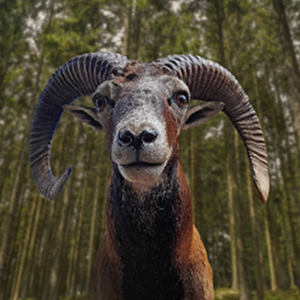
- Curved or straight horns - Both males and females can have horns, which keep growing throughout life. Some domestic breeds are naturally hornless.
- Varied coats - The coat can be short, long or very thick, depending on the habitat and breed. Angora goats produce a fine fibre called mohair.
- A specialised digestive system - Goats are ruminants with a four-chambered stomach that efficiently digests fibrous food.
- Strong legs and split hooves - Give an excellent grip on rough ground and help them climb steep slopes.
Special adaptations for survival:
- They eat many kinds of plants - Goats eat leaves, bark, dry grass and even plants that other herbivores avoid.
- Drought tolerance - Goats can cope with long periods with little water, getting moisture from their food.
- Great agility - They can climb steep slopes and even man-made structures to reach food.
- Good memory and curiosity - Goats are intelligent animals that learn quickly and remember routes and food sources.
Habits and behaviour
Goats are social animals that live in groups of various sizes. Their behaviour combines curiosity, adaptability and a clear social order.
Social behaviour:
- They live in herds - In the wild, goats form groups of about 5-30 animals; females and young often live apart from adult males for much of the year.
- A clear ranking - Males establish dominance by clashing horns, and females have their own ranking within the herd.
- Communication with sounds and gestures - Goats use special calls to find their kids, warn of danger and interact with the herd.
Defence and adaptation:
- Avoiding fights - Goats generally prefer to flee rather than fight, although males hold ritual contests to establish dominance.
- Escaping upwards - Wild goats use steep, rocky ground to escape wolves, lynxes and other predators.
- Constant exploring - Goats are curious and use their lips and tongue to investigate new objects.
Daily activity:
- Active by day - Goats feed mainly in the morning and evening and rest in the hottest part of the day.
- Chewing the cud - After eating, goats bring food back up and chew it again to help digestion.
Habitat and geographic distribution
Goats are among the most widespread domestic mammals and are found on every inhabited continent, in many different climates. Wild goats live mainly in mountainous regions.
Habitat types:
- Mountains - Wild goats such as the Alpine ibex (Capra ibex) live at high altitudes, where there are fewer predators.
- Rugged highlands - The West Caucasian tur (Capra caucasica) lives on the steep slopes and alpine meadows of the Caucasus.
- Mountain forests and meadows - The chamois (Rupicapra rupicapra), a goat-like relative from a different genus, lives in mountain forests and alpine meadows.
- Dry and semi-desert areas - The domestic goat is very adaptable and can survive in dry environments.
Geographic distribution:
| Region | Examples | Situation |
|---|---|---|
| Europe | Alpine ibex, chamois (a goat relative) | Stable after successful conservation |
| Asia | Wild goat (bezoar), Siberian ibex | Declining in some areas |
| Africa | Domestic goat, Walia ibex (Ethiopia) | Domestic goats very common; the Walia ibex is rare |
| North America | Mountain goat (Oreamnos americanus), a goat relative from a different genus | About 100,000 animals |
| South America | Domestic goat | Common, especially in dry regions |
| Australia | Feral domestic goats | Millions; considered invasive |
The impact of climate change and human activities:
- Warming mountains - Wild goats are being pushed to higher altitudes as temperatures rise.
- Habitat loss - In parts of Asia and Europe, the loss of natural habitat affects wild goat populations.
- Feral goats - In Australia and on many islands, goats that have gone wild damage vegetation and compete with native animals.
Domestic goats are extremely widespread and not at risk of extinction, but some wild goats, such as the Walia ibex, are threatened by poaching and habitat loss.
Diet and feeding
Goats are opportunistic herbivores that can feed on many kinds of plants, including species other animals avoid. Thanks to their complex digestive system, they can get nutrients even from dry or thorny vegetation.
Main food:
- Grass and green shoots - An important food in fertile areas.
- Leaves and bark - Goats eat tough leaves and even tree bark when other food is scarce.
- Thorny plants and shrubs - Their tough mouths let them eat plants that other ruminants avoid.
- Flowers and fruit - They sometimes eat wild fruit and seeds.
- Mineral-rich plants and lichens - Some wild goats seek out plants and soils rich in minerals.
Digestive adaptations:
- A four-chambered stomach - Digests fibre efficiently through rumination.
- Tolerance of plant toxins - Goats can cope with plants containing more tannins and other bitter or toxic substances than many herbivores can.
- Low water needs - They can survive in semi-dry environments, getting much of the water they need from food.
Diet by habitat:
| Habitat | Main food |
|---|---|
| Meadows and steppes | Grass, green shoots |
| Mountains | Shrubs, lichens, dry leaves |
| Temperate forests | Leaves, tree shoots, fungi |
| Dry regions | Thorny plants, dry bushes |
Reproduction and life cycle
Goats reproduce efficiently, which helped them become one of the most widespread domestic mammals.
Mating and pregnancy:
- Breeding season - Wild goats usually mate in autumn and early winter; in domestic goats, the season varies with breed and climate.
- Contests for dominance - Males compete by clashing horns.
- Pregnancy - About 150 days.
- Number of kids - Usually 1-2, but some domestic breeds often have 3-4.
How kids develop
- Kids are well developed at birth - They can stand and start suckling within the first few hours.
- Nursing lasts about 2-6 months, depending on the breed and conditions.
- Maturity - Females can breed from about 6-12 months, and males from about 12-18 months.
Lifespan:
- In the wild - About 10-15 years, although many fall prey to predators earlier.
- In captivity - About 15-20 years, depending on care.
Name and history
Goats were among the first animals domesticated by people and played an important role in the development of farming.
Origin of the name:
- The English word "goat" comes from Old English gāt and is related to words in other Germanic languages.
- The scientific name Capra aegagrus hircus shows that the domestic goat descends from the wild goat, Capra aegagrus.
Taxonomic classification:
| Taxonomic rank | Name |
|---|---|
| Kingdom | Animalia |
| Phylum | Chordata |
| Class | Mammalia |
| Order | Artiodactyla |
| Family | Bovidae |
| Genus | Capra |
| Examples of species | Capra aegagrus, Capra ibex (the chamois, Rupicapra rupicapra, belongs to a different genus) |
History of domestication:
- About 10,000 years ago - The earliest evidence of goat domestication comes from the Middle East, including the area of today's Iran.
- The Bronze Age - Goats spread across Europe and Asia and became an important source of food.
- The Middle Ages - Goats were essential to rural communities, raised for milk, meat and leather.
- Modern times - Goats have been taken to every continent and are among the most widespread domestic animals.
The role of goats in history:
- A symbol in mythology - The Greek god Pan was shown with the horns and legs of a goat.
- Economic importance - Goat milk and meat were essential for the survival of many communities.
- Scientific research - Goats are studied for their hardiness and adaptability.
Goats remain important in farming and the economy and are a valuable resource for millions of people around the world.
Cultural significance and mythology
Goats have influenced human cultures for thousands of years and are linked with fertility, sacrifice, perseverance and even supernatural forces. They appear often in mythology, religion and folk traditions around the world.
Goats in mythology and religion:
- Norse mythology - The god Thor had two goats, Tanngrisnir and Tanngnjóstr, which pulled his chariot; they could be killed and eaten and then brought back to life.
- Christianity - In the Bible's parable of the sheep and the goats, the goats stand for those who are judged unworthy.
What the goat symbolises in different cultures:
- Fertility and abundance - Because goats breed quickly and provide milk, they were seen as symbols of prosperity.
- Independence - In some cultures, goats are seen as free-spirited and clever.
- Evil - In Western culture, goats became linked with the devil and the occult, for example in images of Baphomet.
Conservation status and threats
Domestic goats are among the most common farm animals, but some wild goats face serious threats from habitat destruction and overhunting.
Conservation status
- Domestic goat (Capra aegagrus hircus) - Not threatened; a very large population worldwide.
- Alpine ibex (Capra ibex) - Almost wiped out in the 19th century, but reintroduction programmes have restored its population.
- Walia ibex (Capra walie) – A wild goat native to Ethiopia. Consult the current species assessment rather than an undated population estimate.
- Siberian ibex (Capra sibirica) - Declining in some areas because of poaching and habitat loss.
Main threats:
- Habitat loss - Deforestation and the spread of towns reduce the areas available to wild goats.
- Poaching and hunting - In many regions, wild goats are hunted for meat, fur and horns.
- Competition with domestic animals - In some areas, livestock grazing leaves less food for wild goats and can spread diseases.
- Climate change - Rising temperatures shrink the cold mountain habitats that some species need.
Conservation efforts:
- Protection and reintroduction - The Alpine ibex has been reintroduced to many parts of the Alps, where its numbers have recovered.
- Protected areas - Some species benefit from protected areas such as Simien Mountains National Park in Ethiopia.
- Monitoring - Scientists follow threatened species to prevent further declines.
In popular culture
Goats appear in books, films, cartoons and folklore, often as stubborn, funny or mythological characters.
Goats in film and animation:
- Heidi (several film adaptations, including 1952, 1993 and 2015) - The story of a little girl who grows up in the Alps with her grandfather and his goats.
- Ferdinand (2017) - Includes Lupe, a funny goat who becomes the bull's "calming goat".
Goats in literature:
- "Three Billy Goats Gruff" - A Norwegian folk tale about three goats who must outwit a troll to cross a bridge.
- Aesop's fables - Goats appear in several fables, sometimes as clever and sometimes as foolish characters.
- Folk tales - In many European tales, goats are clever or cunning characters.
Goats in sport:
- GOAT - In sport, "GOAT" stands for "Greatest of All Time" and is used for the best athlete in a field, often with a goat emoji.
- The Curse of the Billy Goat - A famous baseball legend says that in 1945 a tavern owner cursed the Chicago Cubs after his goat was turned away from a game.
Goats in traditions:
- The Romanian "Capra" - Around the New Year, in many regions of Romania, people dress up in colourful goat costumes and dance from house to house.