Northern pikeEsox lucius — habitat, diet and reproduction
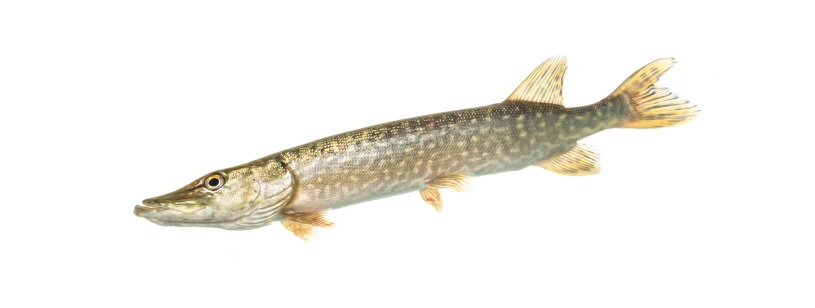
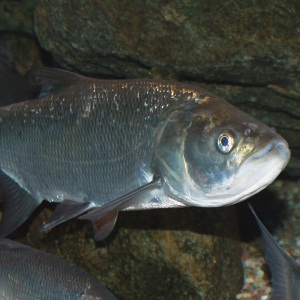
Northern pike photographed at Gavins Point National Fish Hatchery. · Sam Stukel / USFWS, public domain
Northern pike (Esox lucius) are freshwater predators that wait among aquatic plants before striking at passing prey. Their long bodies, flattened snouts and rear-set dorsal fins make them distinctive. They inhabit lakes and quiet river habitats across the Northern Hemisphere, including Romania’s Danube Delta.
Quick facts
| Common name | Northern pike |
| Scientific name | Esox lucius |
| Lifespan | Can exceed 20 years; varies between populations |
| Length | Often around 40–100 cm; exceptional individuals reach about 150 cm |
| Weight | Frequently below 6 kg in Ontario adult data; large individuals exceed this range |
| Diet | Carnivorous, mainly fish; also amphibians and invertebrates |
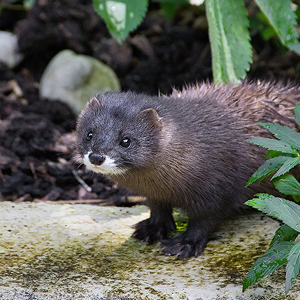
| Predators | Larger fish, fish-eating birds and otters, especially for young pike |
| Conservation status | Least Concern (LC), globally |
| Distribution | Europe, northern Asia and North America |
| Habitat | Vegetated lakes, ponds and slow-flowing river habitats |
| Family | Esocidae |
| Reproduction | Sticky eggs scattered over vegetation in spring |
- Primary category:Fish
- Explore this animal's categories:
Interesting facts
- Pale markings help pike blend into the changing light among aquatic plants.
- A pike may curve its body before launching a short attack.
- Large individuals sometimes eat smaller pike.
- Newly hatched larvae initially use nutrients stored in their yolk sacs.
Records and extremes
FishBase reports exceptional lengths of about 150 cm and a maximum recorded age of 30 years. These represent the upper limits in compiled observations.
Adults in Ontario records range from roughly 46 to 100 cm and 0.6 to 5.8 kg. Growth depends on food, temperature and age. Many fish encountered in the wild are several tens of centimetres long.
Characteristics
Northern pike have elongated bodies, broad, flattened snouts and large mouths armed with sharp teeth. Their dorsal fins sit far back, near the tail.
The back is usually greenish or olive, with a paler belly. Light spots or short bars mark the darker sides. Fins may be reddish and carry dark markings. Mucus helps protect the body surface and reduce friction in water.
Behaviour
Pike are generally solitary. They can remain nearly motionless beside plants, watching nearby fish. Sight plays an important role in locating prey.
A short acceleration brings the predator within reach. Pike may reposition captured fish before swallowing them. In warm weather, larger individuals can move into deeper, cooler water.
Habitat and distribution
The species occurs across Europe, northern Asia and North America. It favours vegetated freshwater habitats, including lakes, sheltered bays and quiet river stretches.
Northern pike in Romania
In the Danube Delta, pike are associated with clear lakes and submerged vegetation. These plants provide hunting cover and breeding habitat. Other suitable lowland waters also support the species.
Flooded margins become important during spring spawning. Connections between permanent water and shallow vegetated areas allow adults to reach breeding sites.
Diet and feeding
Adult northern pike mainly eat fish. They also take frogs, crustaceans and other invertebrates. Large pike occasionally capture small waterbirds or mammals in the water.
Larvae begin with tiny organisms such as zooplankton, the small animals drifting in water. As they grow, they take larger invertebrates and fish. Young pike also become prey for larger fish, birds and otters.
Reproduction and life cycle
Spawning takes place in early spring, near ice melt in cold regions. Adults enter shallow, sheltered water and flooded vegetation. Females scatter eggs, which are fertilised externally and stick to plants.
The adults leave after spawning. USFWS describes hatching after approximately 10–14 days, with timing affected by temperature. Larvae initially rely on their yolk sacs before feeding independently.
In some populations, males mature at around 2–3 years and females at 3–4 years. Maturity can occur later in northern regions. Changing water levels affect access to spawning habitat and the survival of eggs.
Name and history
Carl Linnaeus established the name Esox lucius in 1758. The species belongs to the family Esocidae and order Esociformes.
People have introduced pike to waters outside their native range. Some introduced populations have harmed local fish communities. Their management differs from the protection of native populations.
Conservation and threats
Northern pike are classified globally as Least Concern. Local populations still depend on healthy habitats.
Researchers in the Danube Delta have linked pike declines to the loss of clear-water, plant-rich lakes. Excess nutrients encourage algal growth. Cloudier water reduces the light reaching submerged plants, affecting shelter and breeding areas.
Protecting aquatic vegetation and connected floodplain habitats supports reproduction. In introduced ranges, including some Washington waters, authorities instead manage pike spread to protect native fish.
Frequently asked questions
How can I recognise a northern pike?
Look for a flattened snout, an elongated body and a dorsal fin close to the tail.
Why do pike stay among plants?
Plants provide hunting cover for adults and shelter for smaller fish.
Do pike eat other pike?
Yes. Larger individuals may capture smaller members of their own species.
How large can they grow?
Exceptional individuals reach about 150 cm. Most adults are smaller.
Do they guard their eggs?
Adults leave after spawning, while the adhesive eggs remain on vegetation.
Are northern pike threatened?
They are globally Least Concern, although habitat degradation can reduce local populations.