Smooth snakeCoronella austriaca — habitat, diet and reproduction
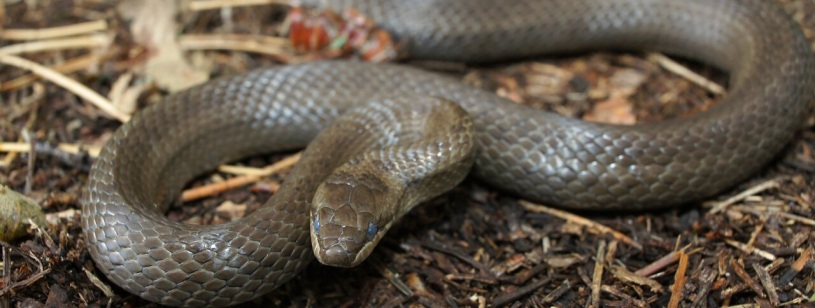
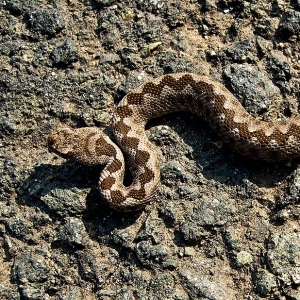
Smooth snake (Coronella austriaca) coiled in leaf litter. · S.A. Antipov / CC BY 4.0 (https://creativecommons.org/licenses/by/4.0). Cropped and resized.
The smooth snake is a small, slender grey or brown snake with small dark spots on the back. It has no venom, but it is often killed because people mistake it for an adder. It lives in sunny, stony places and hunts mainly lizards.
Quick facts
| Common name | Smooth snake |
| Scientific name | Coronella austriaca |
| Lifespan | Up to about 20 years in the wild |
| Length | Usually 50–70 cm |
| Diet | Carnivore: lizards, slow worms, small snakes, baby rodents |
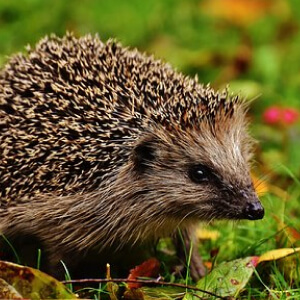
| Predators | Birds of prey, storks, hedgehogs, foxes, cats |
| Conservation status | Least Concern (LC); protected in Romania and the EU |
| Distribution | Europe and western Asia, to Kazakhstan and northern Iran |
| Habitat | Sunny slopes, scree, woodland edges and shrubby grassland |
| Family | Colubridae |
| Reproduction | Gives birth to live young |
Interesting facts
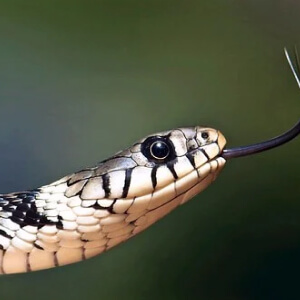
- The smooth snake has round pupils; the adder has vertical, slit-like pupils.
- It kills prey by constriction, like a small constrictor.
- Young are born alive, wrapped in a thin membrane they leave at once.
- Its scales are smooth, hence its English name.
Characteristics
The smooth snake has a slim body and a small head, only slightly distinct from the neck. The back is brown, grey or reddish with two rows of small dark spots, and the nape often has a dark horseshoe-shaped mark.
A dark stripe runs from the nostril through the eye to the corner of the mouth. Scales are smooth and glossy; the belly is grey or reddish.
Behaviour
It is a secretive, day-active snake that hides under stones and in grass. It basks in the morning, often partly hidden.
If grabbed, it hisses and bites quickly, sometimes holding on. The bite is not venomous. In winter it hibernates in crevices and burrows.
Habitat and distribution
The species lives across almost all of Europe, from Iberia and southern Scandinavia to Russia, and in western Asia.
In Romania it occurs from hills to mountains, more rarely in lowlands. It favours sunny stony slopes, woodland edges and shrubby grassland.
Diet and feeding
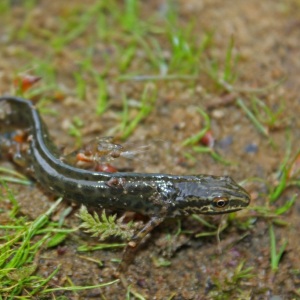
Its main prey is lizards, including wall lizards and slow worms. It also takes small snakes, baby mice and sometimes large insects.
It seizes prey with its mouth, then constricts it. Young snakes eat mostly small lizards.
Reproduction and life cycle
Mating takes place in spring. Eggs develop inside the female, and live young are born in late summer, usually 2–15 of them.
Newborns are about 15 cm long and independent at once. Females usually breed every other year.
Name and history
The scientific name Coronella austriaca means “little Austrian crown”, after the mark on the nape and the place where the species was described.
The Romanian name “de alun” probably comes from its hazel-brown colour or from the hazel thickets in its habitat.
Conservation and threats
The species is assessed as Least Concern, but local populations are fragile because it has few young and grows slowly. In the EU it is strictly protected under Annex IV of the Habitats Directive.
Threats include destruction of grassland and scrub, fires and killing through confusion with the adder. The simplest rule is to leave every snake alone.
Frequently asked questions
Is the smooth snake venomous?
No. It has no venom. It may bite if grabbed, but the bite is not dangerous.
How do you tell it from an adder?
The smooth snake has round pupils, a slim body and small spots. The adder has vertical pupils, a thick body and a zigzag.
What does it eat?
Mostly lizards and slow worms, plus small snakes and baby rodents.
Does it lay eggs?
No. It gives birth to live young, usually in late summer.