CraneInteresting facts and information
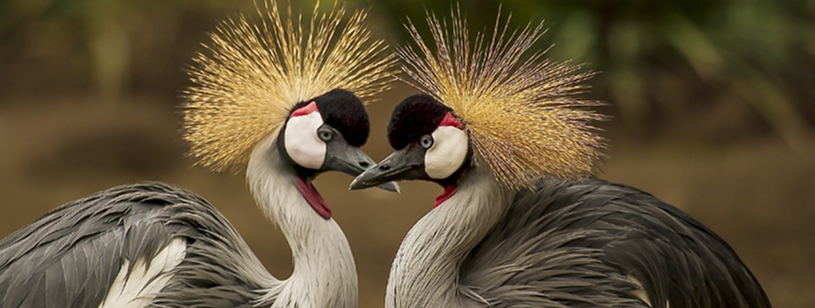
This crane profile focuses on the common crane (Grus grus), a large bird of wetlands and open feeding areas. It is known for calling, courtship displays and seasonal movements. The crane family includes other species with different ranges and conservation needs.
Common cranes use wetlands and open feeding areas. Many migrate, while the route and distance depend on the population.
Common cranes often form lasting pair bonds. This does not guarantee that every pair remains together for life; habitat loss and disturbance can affect populations.
Quick facts
| Common name | Common crane |
| Scientific name | Grus grus |
| Typical lifespan | Often 20 years or more in the wild; over 40 years in captivity |
| Length | About 100-130 cm |
| Wingspan | About 180-240 cm |
| Weight | About 4.5-6 kg |
| Diet type | Omnivorous (seeds, grain, roots, acorns, insects, amphibians, small vertebrates) |
| Main predators | Foxes, wolves, eagles, wild boar; crows and ravens (eggs and chicks) |
| Conservation status | Least Concern (IUCN); increasing in Europe |
| Distribution | Breeds in northern Europe and Asia; winters in southern Europe, North Africa, the Middle East, India and China |
| Living environment | Bogs, marshes, lakes, fields, open woodland |
Interesting facts
- High flyers - Cranes can migrate at great heights; demoiselle cranes, for example, cross the Himalayas on their way to India.
- Common cranes can maintain pair bonds over several seasons, but partner changes occur.
- Dancing birds - Cranes leap, bow, run and throw up sticks or grass in lively dances, both during courtship and at other times.
- Flying in formation - On migration, cranes often fly in V-shapes or long lines, which helps save energy.
- Very loud calls - A long, coiled windpipe inside the breastbone makes their trumpeting calls carry for kilometres.
Records and remarkable features
- Common cranes perform elaborate displays and make calls that help them communicate.
Physical characteristics and adaptations
The common crane (Grus grus) is a tall, elegant bird with a long neck, long legs and broad wings that allow it to fly long distances. It is one of the most impressive migratory birds of Europe and Asia.
Key physical adaptations
- A long neck and legs - Suited to walking through wetlands and fields and searching for food.
- Large, broad wings - With a wingspan of up to about 2.4 metres, cranes can soar and travel thousands of kilometres on migration.
- Grey plumage - The body is mainly grey, with a black-and-white head and neck and a "bustle" of drooping feathers over the tail.
- A red crown - Adults have a small patch of bare red skin on top of the head.
- A coiled windpipe - Its long trachea, coiled inside the breastbone, makes its calls very loud.
Dimensions and variations between sexes
| Characteristic | Males | Females |
|---|---|---|
| Body length | About 110-130 cm | About 100-120 cm |
| Weight | About 5-6 kg | About 4.5-5.5 kg |
| Wingspan | About 200-240 cm | About 180-220 cm |
| Plumage colour | Grey, with a black-and-white head and neck | Similar to the male |
Habits and behaviour
Cranes are social, intelligent birds known for their long migrations, loud calls and dances.
Daily life
- They are active by day, feeding in fields and wetlands.
- They gather in large flocks on migration and in winter, sometimes tens of thousands together.
- Pairs often maintain long-term bonds, although mating history differs between individuals.
- They are territorial in the breeding season but social for the rest of the year.
Communication
- Trumpeting calls - Used to keep in contact with the partner and the flock.
- Unison calls - Pairs call together in a duet, with their heads raised.
- Dances and postures - Leaps, bows and spread wings are used in courtship and social interactions.
Defence techniques
- Fast take-off - When threatened, cranes take off and fly away.
- Strong kicks - Adults can kick hard with their long legs to defend their nest or chicks.
- Alarm calls - When danger is near, cranes give loud calls to alert the group.
Habitat and geographic distribution
Cranes nest in wetlands and feed in open fields; they need safe places to roost and plenty of food.
Distribution context
| Region | Population information |
|---|---|
| Northern Europe | Main breeding area in Europe; numbers increasing |
| Central Europe | Increasing; important stopover sites, for example in Germany and Hungary |
| Russia and Central Asia | Large breeding populations |
| Southern Europe and North Africa (wintering areas) | Many winter in Spain, France and North Africa |
| Middle East and Asia (wintering areas) | Large wintering flocks in Israel, India and China |
Habitat types
- Bogs, marshes and lakes - Used for nesting and for roosting at night in shallow water.
- Fields and farmland - Used mainly outside the breeding season for feeding.
- Open woodland - In Spain, many cranes winter in open oak woodland, where they eat acorns.
- Coastal and delta areas - Important on migration and in winter.
Environmental change
- Drainage of wetlands - Destroys nesting sites and roosts.
- Disturbance - Building and uncontrolled tourism disturb cranes in breeding and roosting areas.
- Pollution - Reduces the quality of wetland habitats.
- Collisions with power lines - An important cause of death for migrating cranes.
Diet and feeding
The common crane is omnivorous and eats many kinds of food depending on the season and habitat, from seeds and roots to insects and small animals.
What does the crane eat?
| Food group | Examples and context |
|---|---|
| Insects and invertebrates | Beetles, grasshoppers, worms, snails |
| Amphibians and small reptiles | Tadpoles, frogs, lizards |
| Seeds and grains | Wheat, maize, barley, rice |
| Roots, tubers and acorns | Roots of wetland plants, potatoes, acorns |
| Small vertebrates (occasionally) | Small rodents, eggs and chicks of other birds |
Feeding methods
- Probing the soil - Cranes use their strong bills to dig in mud and soil for insects, larvae and roots.
- Eating grain - Outside the breeding season, they feed in fields on grain left after the harvest.
- Catching small animals - Frogs, snails and insects are caught with quick jabs of the bill.
- Seasonal diet - In spring and summer they eat more animal food, and in autumn and winter more seeds, acorns and tubers.
Reproduction and life cycle
Common cranes often maintain pair bonds and perform courtship displays. Lasting bonds are common, but lifelong exclusivity is not guaranteed for every pair.
Breeding season
- It begins in April-May in most of the breeding range.
- Pairs set up separate territories, which they defend.
- Males and females dance and call together, with leaps, spread wings and loud duets.
Nest and chicks
| Characteristic | Details |
|---|---|
| Place of the nest | On the ground in bogs and marshes, often surrounded by water |
| Materials used | A mound of reeds, grass and other plants |
| Eggs | Usually 2 eggs per clutch |
| Incubation | About 28-31 days (by both parents) |
| Feeding chicks | Both parents feed the chicks, mostly with insects and other invertebrates |
| Fledging | Chicks can fly at about 9-10 weeks |
Raising young
- The chicks can walk and leave the nest within a day of hatching.
- Both parents look after them and bring them food.
- After they learn to fly, the young stay with their parents during the autumn migration and the first winter.
Name and history
Origin of the name
- The English word "crane" comes from Old English cran and is related to the Greek geranos and the Latin grus; these old names may imitate the bird's call.
- The scientific name Grus grus simply repeats the Latin word for crane.
- The lifting machine called a crane and the plant geranium (from the Greek word for crane, because of its beak-shaped fruit) are both named after the bird.
Taxonomic classification
| Classification | Name |
|---|---|
| Kingdom | Animalia |
| Phylum | Chordata |
| Class | Aves |
| Order | Gruiformes |
| Family | Gruidae |
| Genus | Grus |
| Species | Grus grus |
Evolution and fossils
- The crane family is old, and fossil cranes are known from many millions of years ago.
- There are 15 living species of cranes, found on every continent except South America and Antarctica.
- Its relatives include the red-crowned crane of East Asia and the whooping crane of North America.
Cultural significance and mythology
The crane is one of the most symbolic birds in the world, associated with long life, luck, peace and faithfulness.
The crane in myths and symbolism
- Japan - The crane is a symbol of long life and good fortune; an old saying claims that cranes live for a thousand years.
- China - The crane is a symbol of longevity and immortality, and it appeared on the rank badges of the highest civil officials.
- Ancient Greece - In Homer's "Iliad", cranes fly south to fight the Pygmies, and in legend cranes helped reveal the murderers of the poet Ibycus.
- Migration and seasons - In many European countries, the return of the cranes is a sign of spring and their departure a sign of autumn.
The crane in modern symbolism
- Peace - Folded paper cranes have become an international symbol of peace.
- Faithfulness - Because pairs often stay together for many years, cranes are a symbol of love and loyalty.
- Freedom and travel - Because of its long migrations, the crane is a symbol of journeys and freedom.
Conservation status and threats
The common crane (Grus grus) is listed as Least Concern by the IUCN, and its numbers in Europe have increased in recent decades, but it still depends on protected wetlands.
Conservation status
| Region | Population information | Trends |
|---|---|---|
| Northern Europe | Large breeding population | Increasing |
| Central Europe | Growing breeding population | Increasing |
| Russia and Central Asia | Large population | Not well known |
| North Africa (wintering areas) | Wintering flocks | Fluctuating |
| Middle East | Wintering and migrating flocks | Depends on the site |
Main pressures
- Loss of wetlands - Drainage destroys nesting and roosting areas.
- Intensive agriculture - Pesticides and changes in farming affect food supply.
- Collisions with power lines - Cranes fly in large flocks, and power lines can kill many birds.
- Illegal hunting - In some countries, cranes are still shot.
- Climate change - Changing conditions affect migration routes and food resources.
Protection measures
- Protecting wetlands - Nature reserves protect breeding, stopover and wintering sites.
- Marking power lines - Visible markers help prevent collisions.
- Monitoring - Counts and tracking show how cranes migrate and which sites are important.
- Crane watching - Places such as Lake Hornborga in Sweden and the Hula Valley in Israel attract thousands of visitors to watch cranes.
In popular culture
The crane appears in literature, music, films and traditions as a symbol of freedom, beauty and hope.
The crane in literature
- The thousand paper cranes - In Japan, it is said that a person who folds 1,000 origami cranes (senbazuru) will have a wish granted.
- "Sadako and the Thousand Paper Cranes" (Eleanor Coerr, 1977) - A book based on the true story of Sadako Sasaki, a Japanese girl who became ill after the atomic bombing of Hiroshima and folded paper cranes.
- "The Crane Wife" - A Japanese folk tale about a crane that turns into a woman to repay a man's kindness.
The crane in music
- "Zhuravli" (Cranes, 1969) - A famous Soviet song, sung by Mark Bernes, based on a poem by Rasul Gamzatov in which fallen soldiers turn into cranes.
- Crane calls are often used in film soundtracks to suggest autumn and migration.
The crane in movies and animations
- "The Cranes Are Flying" (1957, USSR) - A classic film by Mikhail Kalatozov about love and war, which won the Palme d'Or at Cannes in 1958.
- "Kung Fu Panda" (2008) - Master Crane, one of the Furious Five, is a red-crowned crane.
The crane as mascot and symbol
- Peace - Paper cranes are left at the Children's Peace Monument in Hiroshima.
- Airline logos - Both Lufthansa and Japan Airlines use a stylised crane in their logos.
- Longevity - In East Asia, cranes are a popular motif in paintings, textiles and wedding decorations.